Loading...
Plutarco Elias Calles vs Shi Dakai
Shi Dakai leads by 1.1 pts · 2 figures compared
…
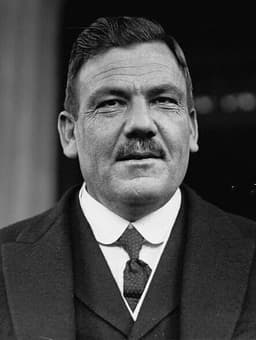
Plutarco Elias Calles
General · Modern
58.5Total
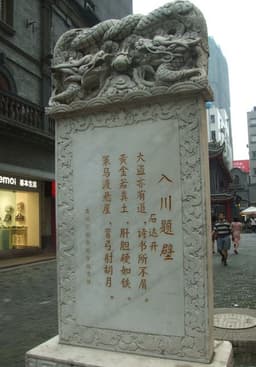
Shi Dakai
General · Modern
59.6Total
Basic Information
Born
1877
1831
Died
1945
1863
Era
Modern
Modern
Nationality
Mexico
China
Occupation
General
General
Civilization
Western
Eastern
Score Comparison
Military (10%)
40.0
76.0
Political (20%)
70.3
45.0
Influence (20%)
68.0
56.7
Legacy (20%)
40.0
54.0
Leadership (15%)
78.0
72.0
Strategy (15%)
52.5
68.1
TOTAL
58.5
59.6
Plutarco Elias Calles — Complete Timeline
1915 AD
Governorship of SonoraPolitical Action
Calles served as Governor of Sonora from 1915 to 1919, implementing radical reforms including land redistribution, anti-clerical laws, and labor rights. His governorship established him as a key figure in the Sonoran dynasty and a proponent of revolutionary change.
GovernorshipSonoraReforms
Impact: regionalconstructive
1924 AD
Presidency of MexicoPolitical Action◆ Major
Calles was elected President of Mexico in 1924, serving until 1928. His administration continued revolutionary reforms, including land reform, labor rights, and secularization, but also faced opposition from the Catholic Church and conservative groups.
PresidencyMexican RevolutionReforms
Impact: nationalconstructive
1926 AD
Cristero WarWar◆ Major
Calles enforced anti-clerical laws, including the Calles Law, which restricted the Catholic Church's role in society. This sparked the Cristero War (1926-1929), a violent rebellion by Catholic peasants against the state, resulting in tens of thousands of deaths.
Cristero WarAnti-clericalismReligious Conflict
Impact: nationaldestructive
1928 AD
MaximatoPolitical Action◆ Major
After his presidency, Calles remained the de facto ruler of Mexico during the Maximato (1928-1934), controlling puppet presidents. He continued to influence policy, but his power waned as President L
MaximatoPolitical ControlCárdenas
Impact: national
1929 AD
Founding of the National Revolutionary Party (PNR)Political Action
Calles founded the National Revolutionary Party (PNR) in 1929, which later became the Institutional Revolutionary Party (PRI). This party dominated Mexican politics for over 70 years, institutionalizing the revolution's legacy and centralizing power.
Political PartyPRIInstitutionalization
Impact: nationalconstructive
Shi Dakai — Complete Timeline
1851 AD
Jintian UprisingWar◆ Major
Shi Dakai joined the Taiping Rebellion at its inception in Jintian, Guangxi. As a core leader, he helped organize the rebel forces and was appointed Wing King, becoming one of the key military commanders of the Taiping Heavenly Kingdom.
Taiping RebellionUprisingMilitary Command
Impact: national
1854 AD
Battle of XiangtanWar◆ Major
Shi Dakai led Taiping forces to a major victory at Xiangtan, Hunan, defeating Qing imperial troops. This battle secured Taiping control over key territories in the Yangtze River valley and demonstrated his military skill.
Taiping RebellionBattleVictory
Impact: regional
1856 AD
Tianjing IncidentPolitical Action
Shi Dakai returned to Tianjing (Nanjing) after the internal purge of the Eastern King Yang Xiuqing and the murder of the Northern King Wei Changhui. He condemned the violence and was forced to flee, leading to a split in Taiping leadership.
Taiping RebellionInternal ConflictPurge
Impact: nationaltragic
1858 AD
Campaign in Zhejiang and FujianWar
Shi Dakai led a separate Taiping army into Zhejiang and Fujian provinces, capturing several cities. This campaign expanded Taiping influence into southeastern China but also isolated his forces from the main Taiping base.
Taiping RebellionCampaignExpansion
Impact: regional
1863 AD
Battle of Baishui RiverWar◆ Major
Shi Dakai's army was trapped and defeated by Qing forces at the Baishui River in Sichuan. He was captured and executed shortly after, marking the end of his military career and a significant loss for the Taiping cause.
Taiping RebellionBattleDefeatDeath
Impact: nationaltragic
Expert Analysis
Shi Dakai vs Plutarco Elias Calles
# The Shadow and the Sword
In the summer of 1926, Plutarco Elías Calles sat in the National Palace in Mexico City, signing into law a set of decrees that would ban religious orders, close church-run schools, and strip the Catholic Church of its property. Across the world, in the gorges of Sichuan, Shi Dakai, the Wing King of the Taiping Heavenly Kingdom, was marching his army toward a river crossing that would become his grave. One man was building a state that would last for seventy years; the other was fighting for a kingdom that had already collapsed. Both were generals. Both were reformers. But their paths—and their ends—could not have been more different.
Origins
Plutarco Elías Calles was born in 1877 in Guaymas, Sonora, into a Mexico still scarred by the French intervention and the long dictatorship of Porfirio Díaz. His father died when he was young, and Calles grew up in poverty, working as a schoolteacher, a bartender, and a mill hand before the Mexican Revolution gave him a rifle and a cause. He was a product of the revolutionary generation—pragmatic, ruthless, and convinced that Mexico’s future depended on breaking the power of the old elites, especially the Church.
Shi Dakai was born in 1831 in Guigang, Guangxi, into a prosperous landowning family in a China staggering under the weight of the Qing Dynasty’s decline. Educated in the Confucian classics, he was a scholar as well as a swordsman. But when Hong Xiuquan, a failed civil service examinee who claimed to be the younger brother of Jesus Christ, began preaching a bizarre blend of Christianity and Chinese millenarianism, Shi Dakai was among the first to join him. The Taiping Rebellion was a war of faith, and Shi Dakai was its most brilliant military commander.
Rise to Power
Calles rose through the ranks of the revolutionary army not by battlefield charisma but by administrative competence. In 1915, he was appointed Governor of Sonora, where he implemented radical land redistribution and anti-clerical policies that earned him a reputation as a man who got things done. By 1924, when he was elected President of Mexico, he had already become the strongman the revolution needed to consolidate its gains.
Shi Dakai’s rise was swifter and more dramatic. In 1851, at the Jintian Uprising, he was appointed a core leader of the Taiping forces. By 1854, his victory at the Battle of Xiangtan had secured Hunan for the Heavenly Kingdom. He was only twenty-three years old, and his soldiers called him the “Wing King” for the speed and grace of his maneuvers. Where Calles built power through institutions, Shi Dakai built it through victory.
Leadership & Governance
Calles governed Mexico with a cold, bureaucratic hand. His presidency (1924–1928) was a whirlwind of reform: he expanded public education, built roads, and broke the power of the landed oligarchy. But his defining act was the Calles Law of 1926, which triggered the Cristero War—a brutal three-year conflict in which Catholic peasants rose up against the state. Calles crushed the rebellion with systematic violence, killing thousands. He was not a man who sought love; he sought obedience.
Shi Dakai governed differently. In the territories he controlled, he was known for his fairness and his refusal to indulge in the orgiastic violence that marked other Taiping leaders. He tried to implement land reform and tax relief, but his kingdom was always at war. His governance was the governance of the camp—mobile, provisional, and dependent on the next battle.
The Tianjing Incident of 1856 was the turning point. Hong Xiuquan, paranoid and unstable, ordered the murder of the Eastern King Yang Xiuqing and then the execution of the Northern King Wei Changhui. Shi Dakai, who had tried to mediate, barely escaped with his life. He returned to Tianjing to find his family slaughtered. From that moment, he was a man walking toward his own end.
Triumph & Tragedy
Calles’s greatest triumph was the founding of the National Revolutionary Party (PNR) in 1929. It was a masterstroke of political engineering: a party that could absorb every faction, suppress every rebellion, and ensure that power passed not through bullets but through ballots—controlled ballots, but ballots nonetheless. After his presidency ended in 1928, he ruled through puppet presidents during the Maximato (1928–1934), a shadow emperor who never wore the crown.
Shi Dakai’s greatest triumph was the campaign in Zhejiang and Fujian in 1858, when he led a separate army deep into Qing territory, capturing cities and spreading the Taiping banner. But it was a triumph of desperation. The Heavenly Kingdom was already rotting from within, and Shi Dakai knew it. He was fighting not to win, but to survive.
His tragedy came in 1863 at the Battle of Baishui River. Trapped by Qing forces in Sichuan, his army exhausted and starving, Shi Dakai surrendered on the promise that his men would be spared. The Qing executed him by slow slicing. His soldiers were slaughtered anyway.
Character & Destiny
Calles was a builder. He saw Mexico as a machine that needed to be assembled, and he was willing to weld every part with fire if necessary. His personality was cold, calculating, and patient. He understood that power was not about glory but about permanence.
Shi Dakai was a warrior. He believed in loyalty, honor, and the righteousness of his cause. He was brave, brilliant, and ultimately naive. He thought that if he fought well enough, the Heavenly Kingdom would survive. He did not understand that the kingdom was already dead.
Legacy
Calles’s legacy is the Institutional Revolutionary Party (PRI), which ruled Mexico for seventy-one years. It brought stability, but also corruption and one-party authoritarianism. Today, Calles is remembered as the father of modern Mexico—and as the man who started the Cristero War. His scores reflect this: a political score of 79.8, a military score of 64.3. He was more politician than general.
Shi Dakai’s legacy is the memory of a lost cause. He is remembered as the most honorable of the Taiping leaders, a man who fought for a vision that was doomed from the start. His military score of 84.6 and strategy score of 81.6 mark him as a true genius of war. But his political score of 64.8 reveals the truth: he was never meant to rule.
Conclusion
Calles and Shi Dakai stand at opposite ends of the revolutionary spectrum. One built a state; the other died for a dream. One understood that power is about institutions; the other believed that power is about faith. Both were men of their time—Calles the modernizer, Shi Dakai the millenarian. And both were consumed by the forces they tried to control. In the end, Calles died in his bed in 1945, an old man in a country he had remade. Shi Dakai died on a execution ground in 1863, a young man in a country that had broken him. The difference between them is the difference between the builder and the believer—and history, as always, has room for both.
Rankings
🥇
Shi DakaiLeader
Mil: 76.0Pol: 45.0Inf: 56.7
59.6
🥈
Plutarco Elias Calles
Mil: 40.0Pol: 70.3Inf: 68.0
58.5
+1.1 behind
How This Comparison Works
Algorithm
Each figure is scored on 6 dimensions (0—100 scale) based on structured historical data: Military (10%), Political (20%), Influence (20%), Legacy (20%), Leadership (15%), Strategy (15%). The weighted total produces the final ranking.
Data Sources
Scores are computed from structured sub-indicators in the database. Scale factors adjust for era (Ancient ×0.85, Modern ×1.0) and civilization size (Eastern ×1.05, Other ×0.80) to account for differences in population and military scale.
Maximum 3 Figures
Comparisons are limited to 2—3 figures to ensure readability and statistical meaningfulness.
Error Margins
±5 points per dimension — Sub-scores are derived from historical records with inherent uncertainty. Two figures within 5 points on a dimension should be considered roughly equivalent in that area.
Total Score Accuracy
±3 points overall — The weighted combination of 6 dimensions produces a total score with approximately ±3 points of uncertainty. Differences of less than 3 points are not statistically significant— the figures are effectively tied.
Known Limitations
- Historical records are incomplete and uneven across civilizations
- Figures from oral-tradition societies may be underrepresented
- Occupation labels can misclassify multi-role figures
- Scores measure capability and impact, not moral character
- Quantitative scoring is a comparison tool, not absolute truth
Capability Radar
Military (10%) — Battles & Warfare
Battles
45
75
Win Rate
50
70
Expansion
30
75
Political (20%) — Governance & Reform
Reform
85
50
Diplomacy
65
45
Economy
60
40
Influence (20%) — Cultural & Global Reach
Cultural
70
55
Global
60
40
Legacy (20%) — Historical Impact
Historical
75
60
Longevity
70
45
Leadership (15%) — Power & Stability
Tenure
70
55
Stability
55
35
Strategy (15%) — Tactics & Innovation
Strategy
55
80
Tactics
40
85
Reform
60
60
Similar Comparisons
Comments & Discussion
火海刀锋6/16/2026
石达开是太平天国最后的良心,一个精通兵法却输在政治上的悲情英雄。大渡河绝不是败给清军,而是败给了命运——老天爷选在关键时刻涨水,他连像样的仗都没打成就被俘了。反观卡列斯,纯粹是个政治算盘精通的狠角色,他那些反教法令硬是把教会势力打趴下七十多年。一个刀下留名,一个改写历史,差距不在勇气在手腕。
BloodyBoots6/16/2026
Calles wasn’t a general; he was a bureaucrat with a gun. Compare his Cristero War body count—estimated 100,000 dead—to Shi Dakai’s single disastrous campaign in Sichuan where over 30,000 Taiping troops were slaughtered or drowned. Calles won by legislation and terror, not tactics. Shi lost because his army was starving and his allies had already betrayed him. Ones a nation-builder, sure, but the other died for a dream, not a desk job. Give me the Wing King any day.
数据拆解师6/16/2026
别被悲情叙事骗了。石达开后期战略完全崩盘:他带着二十万大军西征,结果天京事变后军队散了大半,最后剩不到四万人被包围。这叫军事天才?卡列斯至少算清了账——他搞土地改革时精准打击教会和地主,把底层农民拉到自己这边。石达开连根据地都没守住,跑路都能被河水拦住。浪漫化失败没用,数字不会骗人。
ClassicsQuill6/16/2026
Shi Dakai writes his final poem before execution—lines comparing himself to Xiang Yu, the ancient general who chose death over retreat. Calles drafts the Calles Law, with its cold juridical prose. One man’s legacy is a couplet; the other’s is a constitutional clause. That says it all. The Wing King was a martyr of Confucian honor; Calles, a modernizer who gutted his own culture for power. I know which story survives the centuries.
炮灰观察员6/16/2026
少吹什么英雄对比,两个都是踩着别人命往上爬的。石达开西征时沿途抓壮丁,几万没受过训练的农民被拉去填清军枪口。卡列斯更绝,克里斯特罗战争里政府军烧村子、吊死神父,农民被夹在教堂和国家之间当炮灰。一个封建最后的挣扎,一个现代国家的诞生——但底下流的血都一样红。谁也别装好人。