Loading...
Plutarco Elias Calles vs Prayut Chan-o-cha
Plutarco Elias Calles leads by 10.4 pts · 2 figures compared
…
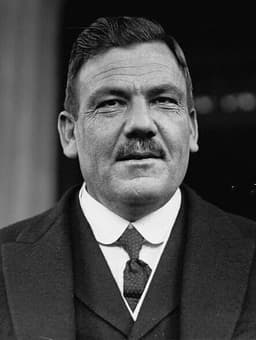
Plutarco Elias Calles
General · Modern
58.5Total
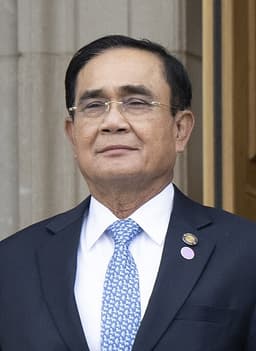
Prayut Chan-o-cha
General · Modern
48.1Total
Basic Information
Born
1877
1954
Died
1945
—
Era
Modern
Modern
Nationality
Mexico
Thailand
Occupation
General
General
Civilization
Western
Eastern
Score Comparison
Military (10%)
40.0
10.2
Political (20%)
70.3
68.0
Influence (20%)
68.0
51.8
Legacy (20%)
40.0
40.8
Leadership (15%)
78.0
68.0
Strategy (15%)
52.5
35.7
TOTAL
58.5
48.1
Plutarco Elias Calles — Complete Timeline
1915 AD
Governorship of SonoraPolitical Action
Calles served as Governor of Sonora from 1915 to 1919, implementing radical reforms including land redistribution, anti-clerical laws, and labor rights. His governorship established him as a key figure in the Sonoran dynasty and a proponent of revolutionary change.
GovernorshipSonoraReforms
Impact: regionalconstructive
1924 AD
Presidency of MexicoPolitical Action◆ Major
Calles was elected President of Mexico in 1924, serving until 1928. His administration continued revolutionary reforms, including land reform, labor rights, and secularization, but also faced opposition from the Catholic Church and conservative groups.
PresidencyMexican RevolutionReforms
Impact: nationalconstructive
1926 AD
Cristero WarWar◆ Major
Calles enforced anti-clerical laws, including the Calles Law, which restricted the Catholic Church's role in society. This sparked the Cristero War (1926-1929), a violent rebellion by Catholic peasants against the state, resulting in tens of thousands of deaths.
Cristero WarAnti-clericalismReligious Conflict
Impact: nationaldestructive
1928 AD
MaximatoPolitical Action◆ Major
After his presidency, Calles remained the de facto ruler of Mexico during the Maximato (1928-1934), controlling puppet presidents. He continued to influence policy, but his power waned as President L
MaximatoPolitical ControlCárdenas
Impact: national
1929 AD
Founding of the National Revolutionary Party (PNR)Political Action
Calles founded the National Revolutionary Party (PNR) in 1929, which later became the Institutional Revolutionary Party (PRI). This party dominated Mexican politics for over 70 years, institutionalizing the revolution's legacy and centralizing power.
Political PartyPRIInstitutionalization
Impact: nationalconstructive
Prayut Chan-o-cha — Complete Timeline
2014 AD
Led the 2014 military coupPolitical Action
General Prayut Chan-o-cha, as Army Commander-in-Chief, led a coup d'
CoupMilitaryThailand
Impact: nationaldestructive
Appointed Prime Minister by military legislaturePolitical Action◆ Major
Following the coup, Prayut was appointed Prime Minister by the military-controlled National Legislative Assembly. He assumed executive power, leading a government that promised reforms and national reconciliation.
AppointmentMilitary RuleThailand
Impact: national
2017 AD
Promulgation of the 2017 ConstitutionReform◆ Major
Prayut's government oversaw the drafting and approval of a new constitution that strengthened the military's political role and created a fully appointed Senate. The charter was criticized for entrenching military influence.
ConstitutionMilitaryThailand
Impact: national
2019 AD
Re-elected Prime Minister after 2019 electionPolitical Action◆ Major
Prayut was re-elected Prime Minister following a general election that was criticized for being manipulated to favor pro-military parties. He formed a coalition government, continuing his rule under a civilian facade.
ElectionContinuityThailand
Impact: national
Expert Analysis
Plutarco Elias Calles vs Prayut Chan-o-cha
# The General as Statesman: Plutarco Elías Calles and Prayut Chan-o-cha
In 1926, a Mexican president stood before Congress and declared that the nation’s clergy would be registered, foreign priests expelled, and religious schools shuttered. In 2014, a Thai army commander sat in a Bangkok television studio, uniform crisp, and announced that the military had seized power to restore order. Both men were generals who became rulers. Both built systems meant to outlast them. Yet one founded a political dynasty that held power for seven decades, while the other presides over a fragile hybrid of military rule and managed democracy. Why did their paths diverge so sharply? The answer lies not in their uniforms, but in the revolutions they inherited—and the ones they chose to make.
Origins
Plutarco Elías Calles was born in 1877 in Guaymas, Sonora, into a Mexico still scarred by the Reform Wars and the dictatorship of Porfirio Díaz. His father died before he was born; his mother raised him in poverty. He worked as a teacher, a baker, a hotel clerk—and then the Mexican Revolution erupted in 1910. Calles joined the Constitutionalist Army under Venustiano Carranza, learning war in the chaotic crucible of a society tearing itself apart. He was a self-made man in a self-made nation.
Prayut Chan-o-cha was born in 1954 in Nakhon Ratchasima, Thailand, a kingdom that had never been colonized but had endured a dozen coups since 1932. His father was a police officer; his family was comfortable but not elite. Prayut entered the Chulachomklao Royal Military Academy, a path that led straight into the Thai army’s officer corps—an institution that saw itself as the guardian of the monarchy and the nation. He rose through the ranks in a system where coups were routine, not revolutionary. Calles fought to create a new state; Prayut joined a state that already had its rules.
Rise to Power
Calles’s ascent was a story of survival and ambition. After the revolution, he became governor of Sonora in 1915, where he implemented radical land redistribution and attacked the Catholic Church’s influence. He was not just a warlord; he was a builder. In 1924, he was elected president of Mexico, the first peaceful transfer of power after the revolution’s bloodshed. His presidency was not a coup—it was an election, however flawed, that gave him a mandate.
Prayut’s rise was more direct. In 2014, as Army Commander-in-Chief, he led a coup that overthrew a caretaker government paralyzed by protests. He cited chaos and corruption. The military appointed him prime minister. He did not campaign; he commanded. His legitimacy came from the barrel of a gun, not the ballot box—a distinction that would haunt his rule.
Leadership & Governance
Calles governed as a revolutionary modernizer. His Calles Law of 1926 restricted the Catholic Church’s role in education, property, and public life. The result was the Cristero War (1926–1929), a brutal rebellion by Catholic peasants that left perhaps 90,000 dead. Calles did not flinch. He saw the Church as a rival to the state, and he crushed it. But he also understood that no ruler lasts forever. In 1929, he founded the National Revolutionary Party (PNR), a coalition of regional strongmen, labor unions, and military factions. It was a machine designed to manage conflict—not through democracy, but through negotiation, patronage, and controlled succession. After his presidency ended in 1928, Calles became the power behind the throne during the *Maximato* (1928–1934), installing puppet presidents while holding the real reins.
Prayut governed as a stabilizer. His 2017 constitution strengthened the military’s role, creating a Senate appointed by the junta and ensuring that no future government could challenge the army’s interests. He allowed elections in 2019, but the rules were rigged: the military’s party won, and Prayut became prime minister again. His governance was not about transforming society—it was about controlling it. He did not launch a war on the Church; he launched a war on dissent, arresting activists and journalists. His reforms were procedural, not ideological.
Triumph & Tragedy
Calles’s greatest triumph was the PNR, which evolved into the Institutional Revolutionary Party (PRI), the party that ruled Mexico until 2000. He created a system that absorbed conflict, distributed spoils, and maintained stability. His tragedy was the Cristero War—a conflict born of his own inflexibility. He could not see that Mexican Catholicism was not an enemy to be destroyed, but a force to be co-opted.
Prayut’s triumph was simply surviving. He held power through a referendum, an election, and a pandemic. His tragedy was the emptiness of his achievement. He restored order, but at the cost of democratic legitimacy. Thailand’s economy stagnated, its politics polarized, and his legacy became synonymous with authoritarian drift.
Character & Destiny
Calles was a man of iron will and strategic vision. He believed in the state as an engine of progress, and he was willing to burn the country to save it. His personality—ruthless, calculating, but institution-minded—shaped Mexico for a century. Prayut is a man of caution and control. He does not dream of remaking Thailand; he dreams of keeping it from breaking. His personality—authoritarian but reactive, firm but not visionary—reflects a general who never had a revolution to lead.
Legacy
Calles is remembered as the *Jefe Máximo*—the maximum chief. He is vilified for the Cristero War and revered for founding the PRI. He is a figure of debate, but not of indifference. Prayut is remembered as the general who ended a crisis and then prolonged it. His legacy is still being written, but early signs suggest a footnote: a ruler who held power but changed little.
Conclusion
Calles and Prayut both wore uniforms and ruled nations. But Calles governed in the wake of a revolution that demanded a new order; he built a party-state that shaped Mexico’s destiny. Prayut governed in the shadow of a monarchy and a military tradition that demanded only stability; he built a system that preserved the status quo. The difference is not in their ambition—it is in their historical moment. Calles had a country to forge. Prayut had a country to freeze. The general as statesman succeeds when he has a revolution to complete; he falters when he has only a crisis to contain.
Rankings
🥇
Plutarco Elias CallesLeader
Mil: 40.0Pol: 70.3Inf: 68.0
58.5
🥈
Prayut Chan-o-cha
Mil: 10.2Pol: 68.0Inf: 51.8
48.1
+10.4 behind
How This Comparison Works
Algorithm
Each figure is scored on 6 dimensions (0—100 scale) based on structured historical data: Military (10%), Political (20%), Influence (20%), Legacy (20%), Leadership (15%), Strategy (15%). The weighted total produces the final ranking.
Data Sources
Scores are computed from structured sub-indicators in the database. Scale factors adjust for era (Ancient ×0.85, Modern ×1.0) and civilization size (Eastern ×1.05, Other ×0.80) to account for differences in population and military scale.
Maximum 3 Figures
Comparisons are limited to 2—3 figures to ensure readability and statistical meaningfulness.
Error Margins
±5 points per dimension — Sub-scores are derived from historical records with inherent uncertainty. Two figures within 5 points on a dimension should be considered roughly equivalent in that area.
Total Score Accuracy
±3 points overall — The weighted combination of 6 dimensions produces a total score with approximately ±3 points of uncertainty. Differences of less than 3 points are not statistically significant— the figures are effectively tied.
Known Limitations
- Historical records are incomplete and uneven across civilizations
- Figures from oral-tradition societies may be underrepresented
- Occupation labels can misclassify multi-role figures
- Scores measure capability and impact, not moral character
- Quantitative scoring is a comparison tool, not absolute truth
Capability Radar
Military (10%) — Battles & Warfare
Battles
45
5
Win Rate
50
5
Expansion
30
5
Political (20%) — Governance & Reform
Reform
85
30
Diplomacy
65
40
Economy
60
35
Influence (20%) — Cultural & Global Reach
Cultural
70
20
Global
60
20
Legacy (20%) — Historical Impact
Historical
75
20
Longevity
70
15
Leadership (15%) — Power & Stability
Tenure
70
60
Stability
55
25
Strategy (15%) — Tactics & Innovation
Strategy
55
15
Tactics
40
10
Reform
60
20
Similar Comparisons
Comments & Discussion
SonoraStrongarm6/16/2026
Calles wasn't just a general—he was the architect of Mexico's one-party state. The PNR he created in 1929 didn't die with him; it evolved into the PRI, ruling until 2000. That's institutional genius, not just military strong-arming. Prayut, by contrast, launched a coup in 2014 and still can't get a lasting political vehicle. His Palang Pracharath Party barely outlasted his own term. One built a dynasty; the other built a delay.
历史考据狂6/16/2026
Calles在1926年推动《改革法》时,关闭了墨西哥73所修道院和近200所宗教学校,这并非单纯反教权,而是革命制度化的关键一步。Prayut的2014年政变后,泰国军政府却只修订了宪法第44条,让自己拥有绝对权力,却未建立长效治理框架。Calles懂制度,Prayut只懂命令——这才是差距。历史会记住建造者,而非只是秩序的维护者。
NortenoRealist6/16/2026
Calles is romanticized because he "stabilized" Mexico after the Revolution, but let's not forget the Cristero War—up to 250,000 dead, mostly peasants who just wanted to go to Mass. His religious crackdown was genocidally stupid. Prayut at least didn't start a civil war; he inherited a fractured Thailand and kept the violence localized to the Deep South. Calles was more ambitious, but ambition without moral compass just means bigger graves.
泰南观察者6/16/2026
Prayut的政变不是个人野心,而是2013-2014年曼谷街头黄红两派流血冲突的唯一刹车。没有军政府介入,泰国可能步入内战。Calles的1929年PNR建立,是革命后权力废墟里的拼图,可他手段过于激进。Prayut懂得妥协——他让王室、军方、财阀共存,即便是脆弱的平衡。一个是从废墟到帝国,一个是从悬崖拉回一步。谁更明智?时间不等人。