Loading...
Philip the Good vs Zhao Kuangyin
Zhao Kuangyin leads by 12.0 pts · 2 figures compared
…
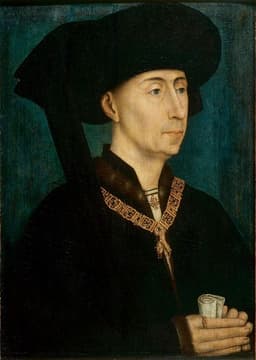
Philip the Good
Emperor · Medieval
59.5Total
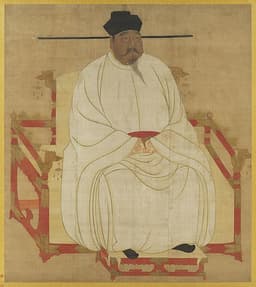
Zhao Kuangyin
Emperor · Medieval
71.5Total
Basic Information
Born
1396
927
Died
1467
976
Era
Medieval
Medieval
Nationality
Burgundy
China
Occupation
Emperor
Emperor
Civilization
Western
Eastern
Score Comparison
Military (10%)
47.5
78.0
Political (20%)
62.7
84.0
Influence (20%)
56.7
68.0
Legacy (20%)
54.0
65.0
Leadership (15%)
78.0
74.0
Strategy (15%)
60.0
68.0
TOTAL
59.5
71.5
Philip the Good — Complete Timeline
1429 AD
Acquired the County of NamurPolitical Action◆ Major
Philip purchased the County of Namur from the impoverished Count John III, expanding Burgundian territory. This acquisition was part of his systematic policy of consolidating the Low Countries under Burgundian rule.
Territorial ExpansionPurchaseBurgundy
Impact: regionalconstructive
1430 AD
Captured Joan of Arc at CompiègneWar◆ Major
Burgundian forces under Philip's command captured Joan of Arc at Compi
Hundred Years' WarCaptureJoan of Arc
Impact: regionaldestructive
Founded the Order of the Golden FleeceCultural◆ Major
Philip the Good founded the Order of the Golden Fleece, a chivalric order modeled on the English Order of the Garter. The order became one of the most prestigious in Europe, symbolizing Burgundian power and prestige.
ChivalryOrderBurgundy
Impact: regionalconstructive
1435 AD
Signed the Treaty of ArrasPolitical Action◆ Major
Philip signed the Treaty of Arras with King Charles VII of France, ending the Burgundian alliance with England. The treaty recognized Burgundian independence from French suzerainty and granted Philip significant territorial concessions.
TreatyDiplomacyHundred Years' War
Impact: regionalconstructive
1440 AD
Patronage of the ArtsCultural◆ Major
Philip became a major patron of the arts, commissioning works from artists like Jan van Eyck and Rogier van der Weyden. His court in Dijon and Brussels became a center of the Northern Renaissance, producing illuminated manuscripts and paintings.
PatronageRenaissanceArt
Impact: regionalconstructive
Zhao Kuangyin — Complete Timeline
960 AD
Founded Song dynastyPolitical Action
Zhao Kuangyin, a general of Later Zhou, was proclaimed emperor by his troops at Chenqiao. He established the Song dynasty, ending the Five Dynasties period and beginning a new era of Chinese history.
Song dynastyFoundingChenqiao
Impact: globalconstructive
961 AD
Removed military power from generalsPolitical Action◆ Major
Zhao Kuangyin invited senior generals to a banquet and persuaded them to retire peacefully. This 'removal of military power over wine' prevented military coups and centralized control.
Song dynastyMilitary reformCentralization
Impact: nationalconstructive
963 AD
Unified southern ChinaWar◆ Major
Zhao Kuangyin launched campaigns to conquer the southern kingdoms, including Jingnan, Later Shu, and Southern Tang. By his death, most of China was reunified under Song rule.
Song unificationConquestSouthern kingdoms
Impact: national
Expert Analysis
Zhao Kuangyin vs Philip the Good
# The Emperor and the Duke: Two Paths to Power in a Fractured World
On a spring evening in 961, Zhao Kuangyin, the newly crowned Emperor Taizu of Song, invited his most powerful generals to a banquet. Wine flowed freely, laughter echoed through the hall, and then—with the calm of a man who had already decided the fate of an empire—the emperor spoke. He told them that he understood their loyalty, but also that he understood the nature of power. By dawn, the generals had accepted generous estates and retired peacefully. A thousand miles away and half a century later, Philip the Good, Duke of Burgundy, was doing something very different: he was founding the Order of the Golden Fleece, a brotherhood of knights bound by oaths of loyalty to him alone. One man disarmed his rivals with a cup of wine; the other bound them with a golden chain. Both sought stability, but their worlds—and their methods—could not have been more different.
Origins
Zhao Kuangyin was born in 927, a child of chaos. The Tang dynasty had collapsed decades earlier, and China had splintered into the Five Dynasties and Ten Kingdoms—a brutal era where generals routinely overthrew emperors, and where a man with an army could become a king overnight. Zhao grew up in a military family, learned to ride and fight, and watched as one regime after another rose and fell. He knew that power in China was a sword that could be turned on its wielder at any moment.
Philip the Good, born in 1396, inherited a very different kind of chaos. Burgundy was not a kingdom but a duchy, a patchwork of wealthy territories straddling France and the Holy Roman Empire. His father, John the Fearless, was assassinated in 1419 by the French Dauphin’s men. Philip grew up in a world of courtly intrigue, shifting alliances, and the endless Hundred Years’ War between England and France. Where Zhao learned to command armies, Philip learned to negotiate treaties.
Rise to Power
Zhao’s path was forged in blood and ambition. In 960, as a general of the Later Zhou dynasty, he was leading his army north to repel a foreign invasion when his troops stopped at Chenqiao, draped a yellow imperial robe over his shoulders, and proclaimed him emperor. This was a classic move in the Five Dynasties playbook—but Zhao was determined to be the last general to do it. He accepted the throne, founded the Song dynasty, and immediately began planning how to prevent anyone else from following his example.
Philip’s rise was slower and more deliberate. He inherited the Duchy of Burgundy in 1419 after his father’s murder, and spent the next decade consolidating power through purchase, marriage, and diplomacy. In 1429, he acquired the County of Namur simply by buying it from its impoverished count—a transaction that would have been unthinkable in Zhao’s China, where land was taken by the sword. Philip understood that money, like wine, could dissolve resistance without bloodshed.
Leadership & Governance
Here the two men diverged most sharply. Zhao Kuangyin’s leadership was defined by his famous “removal of military power over wine” in 961. He did not kill his generals; he retired them. He then restructured the Song military so that no single commander could threaten the throne, and shifted the empire’s focus from conquest to civil administration. His military score of 74.6 reflects competence rather than genius, but his political score of 75.9 reveals a ruler who understood that the greatest victory is the one that doesn’t need to be fought. His strategy score of 69.8 suggests that he was a pragmatist, not a visionary.
Philip the Good, by contrast, was a master of political theater. His founding of the Order of the Golden Fleece in 1430 was a stroke of genius: a chivalric order that bound the most powerful nobles of Burgundy to him personally, creating a network of loyalty that transcended mere feudal obligation. His political score of 80.0 is the highest of any metric, and it shows. He also captured Joan of Arc at Compiègne in 1430—a controversial act that he treated as a business transaction, selling her to the English for a tidy sum. His military score of 36.1 is low, but he didn’t need to be a great general; he needed to be a great patron.
Triumph & Tragedy
Zhao’s greatest triumph was the unification of southern China. Beginning in 963, he launched campaigns that conquered Jingnan, Later Shu, and Southern Tang, bringing the fractured kingdoms under Song control. By the time of his death in 976, he had laid the foundation for a dynasty that would rule for over three centuries. His tragedy was that he never completed the work: the northern territories of the Sixteen Prefectures remained in foreign hands, a wound that would haunt the Song forever.
Philip’s triumph was the Treaty of Arras in 1435, where he abandoned his English allies and reconciled with King Charles VII of France. This treaty ended the Burgundian-English alliance and reshaped the Hundred Years’ War, effectively handing France the victory. His tragedy was that he never became a king. He ruled a territory richer than many kingdoms, but the crown of Burgundy remained forever out of reach.
Character & Destiny
Zhao Kuangyin was cautious, calculating, and deeply aware of history’s patterns. He once said, “The empire is vast, and there are many things to be done.” He understood that the greatest danger to his dynasty was not external enemies but internal ambition. His decision to civilianize the Song military made the dynasty stable—but it also made it weak, unable to resist the barbarian invasions that would eventually destroy it.
Philip the Good was ambitious, cultured, and extravagant. He surrounded himself with artists like Jan van Eyck and Rogier van der Weyden, turning his court into the cultural capital of Europe. He was a builder of alliances, not armies. His character was shaped by the murder of his father, which taught him that trust was a luxury and that power must be woven, not seized.
Legacy
Zhao Kuangyin left behind a unified China, a stable dynasty, and a model of civilian governance that would influence Chinese politics for a thousand years. His legacy score of 75.1 reflects a ruler who is remembered as wise, not warlike. Yet the Song dynasty’s military weakness was his shadow: a peace bought at the cost of strength.
Philip the Good left behind the Order of the Golden Fleece, a Burgundian state that was a marvel of medieval statecraft, and a cultural legacy that includes some of the greatest art of the Northern Renaissance. His legacy score of 69.7 is lower, perhaps because his achievements were more ephemeral: the Burgundian state dissolved after his death, and the Order of the Golden Fleece outlived him as a Habsburg possession.
Conclusion
Zhao Kuangyin and Philip the Good were both builders of order in an age of chaos. One built with iron and wine, the other with gold and art. One disarmed his enemies; the other bound them. Their different paths reflect the different worlds they inhabited: a Chinese empire where power was a sword that could be turned on its wielder, and a European patchwork where power was a tapestry that could be woven thread by thread. In the end, both succeeded—and both left behind worlds that would not last forever. But that is the fate of all builders: to raise walls that time will eventually erode, and to hope that what they built was beautiful enough to be remembered.
Rankings
🥇
Zhao KuangyinLeader
Mil: 78.0Pol: 84.0Inf: 68.0
71.5
🥈
Philip the Good
Mil: 47.5Pol: 62.7Inf: 56.7
59.5
+12.0 behind
How This Comparison Works
Algorithm
Each figure is scored on 6 dimensions (0—100 scale) based on structured historical data: Military (10%), Political (20%), Influence (20%), Legacy (20%), Leadership (15%), Strategy (15%). The weighted total produces the final ranking.
Data Sources
Scores are computed from structured sub-indicators in the database. Scale factors adjust for era (Ancient ×0.85, Modern ×1.0) and civilization size (Eastern ×1.05, Other ×0.80) to account for differences in population and military scale.
Maximum 3 Figures
Comparisons are limited to 2—3 figures to ensure readability and statistical meaningfulness.
Error Margins
±5 points per dimension — Sub-scores are derived from historical records with inherent uncertainty. Two figures within 5 points on a dimension should be considered roughly equivalent in that area.
Total Score Accuracy
±3 points overall — The weighted combination of 6 dimensions produces a total score with approximately ±3 points of uncertainty. Differences of less than 3 points are not statistically significant— the figures are effectively tied.
Known Limitations
- Historical records are incomplete and uneven across civilizations
- Figures from oral-tradition societies may be underrepresented
- Occupation labels can misclassify multi-role figures
- Scores measure capability and impact, not moral character
- Quantitative scoring is a comparison tool, not absolute truth
Capability Radar
Military (10%) — Battles & Warfare
Battles
45
75
Win Rate
50
85
Expansion
60
75
Political (20%) — Governance & Reform
Reform
70
90
Diplomacy
80
85
Economy
85
80
Influence (20%) — Cultural & Global Reach
Cultural
65
70
Global
50
60
Legacy (20%) — Historical Impact
Historical
60
80
Longevity
55
75
Leadership (15%) — Power & Stability
Tenure
75
65
Stability
70
85
Strategy (15%) — Tactics & Innovation
Strategy
55
80
Tactics
40
70
Reform
30
90
Similar Comparisons
Comments & Discussion
Gilded Daggers6/16/2026
Zhao Kuangyin’s “cup of wine” wasn’t generosity—it was surgical terror dressed as hospitality. He knew every general at that table had watched him overthrow the previous dynasty, and could read the subtext: retire rich, or die poor. Meanwhile, Philip plastered his power with chivalric theater, but the Golden Fleece was just a bribe with better branding. Both men bought loyalty; one was honest enough to call it a transaction. Give me Zhao’s clear-eyed pragmatism over Philip’s courtly pantomime an
锈色权杖6/16/2026
说菲利普用金链子拴住人心,那是把封建把戏当圣旨了。金羊毛骑士团本质就是勃艮第版的“杯酒释兵权”——选一群实力派封为骑士,让他们互相盯着,谁造反谁先暴露。赵匡胤用酒桌解决的是五代十国以来兵变的恶性循环,菲利普呢?他连个稳定的王位都没混上,儿子还是靠联姻才算真正坐上公爵。别美化贵族仪式了,那不过是给囚徒镀了一层金而已。
Bronze Reckoning6/16/2026
The comparison is rigged: Zhao reshaped China’s imperial DNA while Philip merely rented a duchy. Zhao’s 961 banquet didn’t just retire generals—it dismantled the military dictatorship cycle that had killed China’s Tang dynasty. By contrast, the Golden Fleece was a medieval times dinner show; Philip’s power lasted exactly as long as his gold could buy swords. Zhao’s solution endured centuries; Philip’s knights were bankrupt the moment Burgundy’s treasury ran dry. Give me the man who fixed a syste
铁饭碗锁链6/16/2026
一个数据:赵匡胤通过那次酒宴,直接废掉了晚唐以来藩镇割据的根基,宋代之后三百年没有大军阀叛乱。而菲利普的金羊毛不过32个骑士,全西欧加起来不到一百人的小圈子,能管什么用?他那套“忠诚金链”说白了就是给贵族发勋章充门面,赵匡胤才是真把权力握在了手里。别把勋位当奇迹,看看勃艮第传给哈布斯堡时,这些骑士有几个跟着原地跳槽了?