Loading...
Philip I of France vs Vladislaus II of Hungary
Vladislaus II of Hungary leads by 3.4 pts · 2 figures compared
…
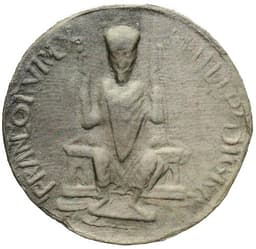
Philip I of France
Emperor · Medieval
45.4Total
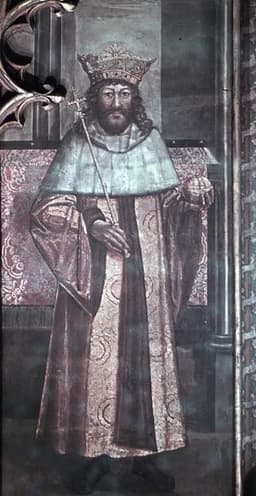
Vladislaus II of Hungary
Emperor · Medieval
48.8Total
Basic Information
Born
1052
1456
Died
1108
1516
Era
Medieval
Medieval
Nationality
France
Bohemia
Occupation
Emperor
Emperor
Civilization
Western
Western
Score Comparison
Military (10%)
50.0
50.0
Political (20%)
36.5
43.7
Influence (20%)
49.4
51.8
Legacy (20%)
40.8
43.3
Leadership (15%)
65.7
65.7
Strategy (15%)
25.0
35.7
TOTAL
45.4
48.8
Philip I of France — Complete Timeline
1060 AD
Reign as King of the FranksPolitical Action◆ Major
Philip I succeeded his father Henry I as King of the Franks. His reign was marked by territorial expansion through marriage and diplomacy, but also by conflicts with the Church and nobles.
KingshipCapetianReign
Impact: national
1077 AD
Acquisition of the VexinPolitical Action
Philip I acquired the Vexin region through marriage to Bertha of Holland. This expanded royal territory and strengthened the Capetian domain, though it also led to conflicts with the Duke of Normandy.
Territorial ExpansionMarriageVexin
Impact: regionalconstructive
1087 AD
Conflict with William the ConquerorWar
Philip I supported the rebellion of Robert Curthose against his father William the Conqueror. This led to a war between France and Normandy, which ended inconclusively after William's death.
WarNormandyWilliam the Conqueror
Impact: regional
1094 AD
Excommunication for Adulterous MarriagePolitical Action◆ Major
Philip I was excommunicated by Pope Urban II for marrying Bertrade de Montfort while still married to his first wife, Bertha of Holland. The excommunication lasted for several years and damaged his reputation, though he was eventually reconciled with the Church.
ExcommunicationMarriageScandal
Impact: nationaltragic
Vladislaus II of Hungary — Complete Timeline
1479 AD
Peace of OlomoucPolitical Action◆ Major
Vladislaus II signed the Peace of Olomouc with Matthias Corvinus, dividing the Bohemian crown lands. Vladislaus retained Bohemia while Matthias held Moravia, Silesia, and Lusatia, ending a period of conflict between the two kings.
TreatyTerritorial DivisionConflict Resolution
Impact: regional
1490 AD
Vladislaus BenePolitical Action◆ Major
Vladislaus II was elected King of Hungary after the death of Matthias Corvinus. His reign was marked by weak governance, earning him the nickname 'Vladislaus Bene' for his tendency to agree with all petitioners, leading to administrative decay.
ElectionWeak RuleHungary
Impact: regional
Expert Analysis
Origins
Philip I of France (born 1052) was the son of Henry I of France and Anne of Kiev. He inherited the throne at age seven, with his mother serving as regent until 1065. His upbringing was shaped by the struggle to consolidate Capetian authority over powerful nobles. Vladislaus II of Hungary (born 1456) was the son of Casimir IV of Poland and Elizabeth of Austria. He was educated in the Jagiellonian court, which emphasized diplomacy over military prowess. His early life was marked by the death of his elder brother, which positioned him as heir to both Bohemia and Hungary.
Rise to Power
Philip I became king in 1060 under a regency, but his effective rule began in 1066. He expanded the royal domain through marriage to Bertha of Holland in 1072, gaining the Vexin region. His conflict with William the Conqueror (1087–1091) involved supporting Robert Curthose, but ended in stalemate. Vladislaus II was elected King of Bohemia in 1471 after the death of George of Poděbrady. He was crowned King of Hungary in 1490 following the death of Matthias Corvinus, despite opposition from John Corvinus. His rise was facilitated by the Peace of Olomouc (1479), which divided Bohemian lands with Matthias.
Leadership & Governance
Philip I governed through a mix of diplomacy and occasional military action. He excommunicated for marrying Bertrade de Montfort while still married to Bertha, leading to a papal interdict. His political score of 36.5 reflects his inability to control the church or nobles effectively. He did, however, expand the royal domain, securing the Vexin and parts of Berry. Vladislaus II, known as 'Vladislaus Bene' (meaning 'good'), was a weak ruler who often deferred to his nobles. He signed the Peace of Olomouc, which limited his authority. His political score of 43.7 is slightly higher, but his leadership score of 65.7 matches Philip's. Both struggled with centralization, but Vladislaus faced the growing Ottoman threat, which he failed to address.
Triumph & Tragedy
Philip I's greatest success was territorial expansion, increasing the Capetian domain from around 12,000 km² to over 20,000 km². His tragedy was the excommunication (1094), which undermined his authority and led to a decade of conflict with the papacy. Vladislaus II's triumph was his election to both Bohemia and Hungary, creating a short-lived Jagiellonian union. His tragedy was the Battle of Mohács (1526), where his son Louis II died, leading to Ottoman domination. Vladislaus himself avoided direct conflict, but his inaction set the stage for disaster. Both leaders scored 50.0 in military, indicating mediocre martial achievements.
Character & Destiny
Philip I was pragmatic but flawed by personal desires. His decision to marry Bertrade alienated the church and nobles, scoring only 25.0 in strategy. Vladislaus II was passive and indecisive, earning the nickname 'Bene' for his leniency. His strategy score of 35.7 is slightly higher, but both were reactive rather than proactive. Historical assessments note Philip's role in strengthening the monarchy despite setbacks, while Vladislaus is criticized for failing to prepare for the Ottoman threat.
Legacy
Philip I's legacy is mixed. He expanded royal territory, but his excommunication weakened the crown's moral authority. The Capetian dynasty continued, but his reign is often overshadowed by his son Louis VI. Vladislaus II's legacy is similarly ambiguous. He presided over the Jagiellonian union, but his weak rule contributed to its collapse. His influence score of 51.8 is slightly higher than Philip's 49.4, but both are minor figures in their respective histories. The Battle of Mohács became a national trauma for Hungary.
Conclusion
While Vladislaus II has a higher total score (48.8 vs 45.4), neither ruler had transformative impact. Philip I's territorial gains were more concrete and lasting, as the Capetian domain continued to grow. Vladislaus's union was ephemeral, undone by Ottoman expansion. Therefore, Philip I had slightly greater impact on the long-term development of France, despite his personal failings. The data supports this: Philip's legacy score of 40.8 is only slightly below Vladislaus's 43.3, but his political and strategic weaknesses were offset by tangible territorial expansion.
Rankings
🥇
Vladislaus II of HungaryLeader
Mil: 50.0Pol: 43.7Inf: 51.8
48.8
🥈
Philip I of France
Mil: 50.0Pol: 36.5Inf: 49.4
45.4
+3.4 behind
How This Comparison Works
Algorithm
Each figure is scored on 6 dimensions (0—100 scale) based on structured historical data: Military (10%), Political (20%), Influence (20%), Legacy (20%), Leadership (15%), Strategy (15%). The weighted total produces the final ranking.
Data Sources
Scores are computed from structured sub-indicators in the database. Scale factors adjust for era (Ancient ×0.85, Modern ×1.0) and civilization size (Eastern ×1.05, Other ×0.80) to account for differences in population and military scale.
Maximum 3 Figures
Comparisons are limited to 2—3 figures to ensure readability and statistical meaningfulness.
Error Margins
±5 points per dimension — Sub-scores are derived from historical records with inherent uncertainty. Two figures within 5 points on a dimension should be considered roughly equivalent in that area.
Total Score Accuracy
±3 points overall — The weighted combination of 6 dimensions produces a total score with approximately ±3 points of uncertainty. Differences of less than 3 points are not statistically significant— the figures are effectively tied.
Known Limitations
- Historical records are incomplete and uneven across civilizations
- Figures from oral-tradition societies may be underrepresented
- Occupation labels can misclassify multi-role figures
- Scores measure capability and impact, not moral character
- Quantitative scoring is a comparison tool, not absolute truth
Capability Radar
Military (10%) — Battles & Warfare
Battles
15
20
Win Rate
20
25
Expansion
10
10
Political (20%) — Governance & Reform
Reform
30
30
Diplomacy
35
55
Economy
30
35
Influence (20%) — Cultural & Global Reach
Cultural
20
30
Global
15
20
Legacy (20%) — Historical Impact
Historical
25
35
Longevity
20
25
Leadership (15%) — Power & Stability
Tenure
60
60
Stability
25
25
Strategy (15%) — Tactics & Innovation
Strategy
15
20
Tactics
10
15
Reform
10
10
Similar Comparisons
Comments & Discussion
No comments yet. Be the first to share your thoughts!