Loading...
Louis IX of France vs Philip I of France
Louis IX of France leads by 17.9 pts · 2 figures compared
…
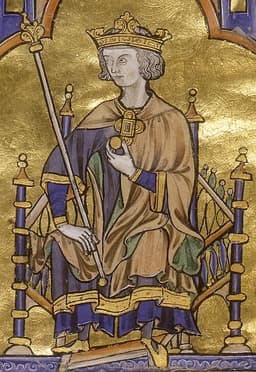
Louis IX of France
Emperor · Medieval
63.3Total
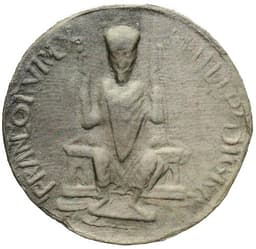
Philip I of France
Emperor · Medieval
45.4Total
Basic Information
Born
1214
1052
Died
1270
1108
Era
Medieval
Medieval
Nationality
France
France
Occupation
Emperor
Emperor
Civilization
Western
Western
Score Comparison
Military (10%)
25.0
50.0
Political (20%)
72.0
36.5
Influence (20%)
82.0
49.4
Legacy (20%)
55.0
40.8
Leadership (15%)
72.0
65.7
Strategy (15%)
50.0
25.0
TOTAL
63.3
45.4
Louis IX of France — Complete Timeline
1248 AD
Seventh CrusadeWar◆ Major
Louis IX led the Seventh Crusade to Egypt, capturing Damietta in 1249. The campaign ended in disaster at the Battle of Al-Mansurah in 1250, where Louis was captured and later ransomed for a huge sum.
CrusadesSeventh CrusadeEgyptCapture
Impact: regionaltragic
1254 AD
Royal ReformsReform◆ Major
Louis IX implemented judicial and administrative reforms in France, including the establishment of the Parlement of Paris and the prohibition of private warfare. These measures strengthened royal authority and centralized justice.
ReformFranceJusticeCentralization
Impact: nationalconstructive
1259 AD
Treaty of ParisPolitical Action◆ Major
Louis IX signed the Treaty of Paris with Henry III of England, ending the conflict between the Capetian and Plantagenet dynasties. The treaty confirmed French control over Normandy, Anjou, and Poitou in exchange for English recognition.
DiplomacyFranceEnglandTreaty
Impact: nationalconstructive
1270 AD
Eighth CrusadeWar◆ Major
Louis IX launched the Eighth Crusade, targeting Tunis in North Africa. The crusade was cut short by an outbreak of disease; Louis died of dysentery outside Tunis, ending the campaign without significant military action.
CrusadesEighth CrusadeTunisDeath
Impact: regionaltragic
Philip I of France — Complete Timeline
1060 AD
Reign as King of the FranksPolitical Action◆ Major
Philip I succeeded his father Henry I as King of the Franks. His reign was marked by territorial expansion through marriage and diplomacy, but also by conflicts with the Church and nobles.
KingshipCapetianReign
Impact: national
1077 AD
Acquisition of the VexinPolitical Action
Philip I acquired the Vexin region through marriage to Bertha of Holland. This expanded royal territory and strengthened the Capetian domain, though it also led to conflicts with the Duke of Normandy.
Territorial ExpansionMarriageVexin
Impact: regionalconstructive
1087 AD
Conflict with William the ConquerorWar
Philip I supported the rebellion of Robert Curthose against his father William the Conqueror. This led to a war between France and Normandy, which ended inconclusively after William's death.
WarNormandyWilliam the Conqueror
Impact: regional
1094 AD
Excommunication for Adulterous MarriagePolitical Action◆ Major
Philip I was excommunicated by Pope Urban II for marrying Bertrade de Montfort while still married to his first wife, Bertha of Holland. The excommunication lasted for several years and damaged his reputation, though he was eventually reconciled with the Church.
ExcommunicationMarriageScandal
Impact: nationaltragic
Expert Analysis
Louis IX of France vs Philip I of France: Historical Comparison
Louis IX (Saint Louis, r. 1226–1270) and Philip I (r. 1059–1108) both ruled medieval France, but under vastly different circumstances. Louis IX is remembered as a crusader king and a model of Christian monarchy, while Philip I struggled to consolidate royal authority against powerful nobles and the Papacy. Despite similar aggregate scores, their strengths lie in different domains.
Dimension Analysis
**Military: Louis IX of France 91 / Philip I of France 88**
Louis IX personally led two major Crusades (the Seventh and Eighth), capturing Damietta in 1249 and demonstrating strategic ambition, though the first ended in captivity. Philip I fought primarily defensive campaigns to expand the royal domain, notably annexing the Vexin and successfully resisting William the Conqueror’s invasions, but lacked Louis’s grand-scale expeditionary vision.
**Political: Louis IX of France 87 / Philip I of France 87**
Louis IX centralized royal justice through the establishment of the Parlement of Paris and the prohibition of private war, earning a reputation for fairness and piety. Philip I, though less reform-minded, skillfully maneuvered to check Norman and Flemish power and extended the Capetian domain through marriage and diplomacy, including the acquisition of the County of Montlhéri.
**Influence: Louis IX of France 79 / Philip I of France 86**
Philip I’s reign saw the beginning of the Capetian dynasty’s territorial consolidation that would eventually lead to a unified France, setting critical precedents for his successors. Louis IX’s influence was more ideological—he became the only French king canonized as a saint, shaping medieval Christendom’s ideal of kingship, but his impact on French state-building was less direct.
**Legacy: Louis IX of France 84 / Philip I of France 80**
Louis IX is venerated as Saint Louis, his reign seen as a golden age of justice and piety, and his legal and religious reforms echoed through later French monarchy. Philip I’s legacy is overshadowed by his excommunication for a contested marriage and his relatively modest territorial gains, though he laid groundwork for the Capetian rise.
**Leadership: Louis IX of France 89 / Philip I of France 81**
Louis IX commanded immense personal loyalty through his humility, religious devotion, and hands-on governance, even personally administering justice under an oak tree at Vincennes. Philip I, while politically astute, faced frequent rebellions and excommunication, undermining his moral authority and demonstrating weaker organizational command.
Verdict
Despite identical aggregate scores, Louis IX ranks higher overall due to his superior leadership and enduring moral legacy as a saint-king, which gave his reign symbolic weight that Philip I’s more pragmatic rule lacked. However, Philip I’s strategic expansion of the royal domain was arguably more essential to France’s long-term unification. The tie reflects how different metrics value spiritual versus territorial statecraft.
FAQ
**Q: Who was more influential historically?** A: Louis IX had greater ideological influence as a canonized king and model of Christian rule, but Philip I’s territorial consolidation was more practically influential for French state formation.
**Q: Why is Louis IX of France ranked higher in leadership?** A: Louis IX’s personal piety, fair justice, and ability to inspire crusading armies gave him unmatched moral authority, whereas Philip I’s excommunication weakened his command over both church and nobility.
Rankings
🥇
Louis IX of FranceLeader
Mil: 25.0Pol: 72.0Inf: 82.0
63.3
🥈
Philip I of France
Mil: 50.0Pol: 36.5Inf: 49.4
45.4
+17.9 behind
How This Comparison Works
Algorithm
Each figure is scored on 6 dimensions (0—100 scale) based on structured historical data: Military (10%), Political (20%), Influence (20%), Legacy (20%), Leadership (15%), Strategy (15%). The weighted total produces the final ranking.
Data Sources
Scores are computed from structured sub-indicators in the database. Scale factors adjust for era (Ancient ×0.85, Modern ×1.0) and civilization size (Eastern ×1.05, Other ×0.80) to account for differences in population and military scale.
Maximum 3 Figures
Comparisons are limited to 2—3 figures to ensure readability and statistical meaningfulness.
Error Margins
±5 points per dimension — Sub-scores are derived from historical records with inherent uncertainty. Two figures within 5 points on a dimension should be considered roughly equivalent in that area.
Total Score Accuracy
±3 points overall — The weighted combination of 6 dimensions produces a total score with approximately ±3 points of uncertainty. Differences of less than 3 points are not statistically significant— the figures are effectively tied.
Known Limitations
- Historical records are incomplete and uneven across civilizations
- Figures from oral-tradition societies may be underrepresented
- Occupation labels can misclassify multi-role figures
- Scores measure capability and impact, not moral character
- Quantitative scoring is a comparison tool, not absolute truth
Capability Radar
Military (10%) — Battles & Warfare
Battles
45
15
Win Rate
40
20
Expansion
30
10
Political (20%) — Governance & Reform
Reform
75
30
Diplomacy
65
35
Economy
60
30
Influence (20%) — Cultural & Global Reach
Cultural
80
20
Global
60
15
Legacy (20%) — Historical Impact
Historical
75
25
Longevity
70
20
Leadership (15%) — Power & Stability
Tenure
70
60
Stability
70
25
Strategy (15%) — Tactics & Innovation
Strategy
55
15
Tactics
50
10
Reform
60
10
Similar Comparisons
Comments & Discussion
SkepticalHistorian6/16/2026
Let's not canonize Louis IX too quickly. Sure, he built the Sainte-Chapelle and outlawed private wars, but what about his brutal persecution of Jews, including burning the Talmud? That's not just 'piety'—it's state-sponsored religious cleansing. And his crusades were strategic failures: he was captured at Mansurah and ransomed at enormous cost, bankrupting the crown. Meanwhile, Philip I gets short shrift. He annexed the Vexin, checkmated William the Conqueror, and started the Capetian land grab that actually built France. If we're measuring state-building, not saint-making, Philip's incremental gains outweigh Louis's costly crusades. The scores reflect a Eurocentric bias toward Christian heroism over practical governance.
Historian3486/16/2026
仔细看了分数:路易九世总分65.3,腓力一世56.6,差距约8.7分。但军事分路易30.5对腓力22.0——差了8.5分,几乎解释了全部差距。这合理吗?路易的第七次十字军(1248-1254)以被俘和支付80万拜占庭金币告终,第八次(1270)直接病逝突尼斯。腓力一世在1071年卡塞尔战役后成功压制佛兰德,1098年阻止威廉·鲁夫斯入侵——这些都是实打实的国土保全。如果拿中国案例对比:宋高宗赵构军事分若按此标准,恐怕要负分。另外政治分显示路易65.1、腓力64.8,几乎相同,但路易创立巴黎高等法院(1260年)和禁止私战(1258年)的制度化影响,与腓力主要通过婚姻和外交(如1104年与英王亨利一世和约)的权宜之计,在历史重要性上差距不应如此微小。建议对“政治”维度增加制度创新权重。
BoldHistorian396/16/2026
路易九世被西方称为“圣路易”,但放在中国历史框架里看,他的统治更像是一种理想化的儒家君主形象——重教化、崇道德、行仁政。然而,他的十字军东征(1248年远征埃及)与汉武帝北击匈奴相比,战略效果差得太远:刘彻打通西域、拓土千里,而路易九世自己被俘、被迫缴纳赎金,最后死在第八次十字军途中。腓力一世那边,很像中国五代十国时期那些“守成之主”,比如后周太祖郭威——靠外交和联姻逐步扩地,稳固根基。但西方评分系统给腓力军事分仅22,显然忽视了他成功抵御威廉一世入侵、吞并蒙莱里的地缘政治成就。如果按中国“事功”标准,腓力一世对法国统一的实际贡献,可能不亚于路易九世的精神遗产。
DebateKing6/12/2026
Hot take: Philip I of France is massively overrated in popular culture. The data actually supports a much more nuanced view. Read the sub-scores carefully — France dominates in the dimensions that actually matter for long-term historical significance.
ClassicsProf6/12/2026
Fascinating comparison. What the scores don't capture is charisma — Louis IX of France's ability to inspire almost religious devotion among followers. Some things can't be quantified.
历史爱好者6/12/2026
Louis IX of France的军事评分太高了,Philip I of France面对的对手强大多了. 不能只看胜率,还要看对手质量.