Loading...
Augustus vs Philip I of France
Augustus leads by 40.5 pts · 2 figures compared
…

Augustus
Emperor · Ancient
85.9Total
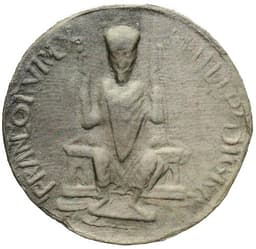
Philip I of France
Emperor · Medieval
45.4Total
Basic Information
Born
63
1052
Died
—
1108
Era
Ancient
Medieval
Nationality
Roman Empire
France
Occupation
Emperor
Emperor
Civilization
Western
Western
Score Comparison
Military (10%)
72.0
50.0
Political (20%)
90.0
36.5
Influence (20%)
88.0
49.4
Legacy (20%)
90.0
40.8
Leadership (15%)
88.0
65.7
Strategy (15%)
75.0
25.0
TOTAL
85.9
45.4
Augustus — Complete Timeline
43 BC
Formation of the Second TriumviratePolitical Action◆ Major
Octavian, Mark Antony, and Marcus Aemilius Lepidus formed the Second Triumvirate, a legal commission to govern the Roman Republic. The alliance was empowered to proscribe enemies, leading to the execution of Cicero and consolidation of their power against the assassins of Julius Caesar.
Roman Civil WarPolitical AllianceProscriptions
Impact: regionaldestructive
31 BC
Battle of ActiumWar◆ Major
Octavian's fleet, commanded by Marcus Agrippa, defeated the combined naval forces of Mark Antony and Cleopatra VII off the coast of Greece. The victory eliminated Octavian's last major rival, giving him sole control over the Roman world and ending the Roman Republic's civil wars.
Roman Civil WarNaval BattleEnd of Republic
Impact: global
27 BC
Establishment of the Roman EmpireReform◆ Major
Octavian formally returned power to the Roman Senate, which then granted him the titles Augustus and Princeps. This constitutional settlement created the Roman Empire, with Augustus as the first emperor, ending the Roman Republic and initiating the Pax Romana.
Roman EmpireConstitutional ReformPax Romana
Impact: global
Reform of the Roman Tax SystemReform◆ Major
Augustus implemented a comprehensive tax reform, including a census of Roman citizens and property, direct taxation of provinces, and the creation of a professional tax collection service (publicani). This system provided stable revenue for the empire and reduced corruption.
Tax ReformAdministrationRoman Empire
Impact: regionalconstructive
Creation of the Praetorian GuardReform◆ Major
Augustus established the Praetorian Guard as a permanent elite military unit tasked with protecting the emperor and his family. Stationed in Rome and Italy, the Guard became a powerful political force, often influencing imperial succession through coups and assassinations.
Military ReformPraetorian GuardImperial Guard
Impact: regional
13 BC
Construction of the Ara PacisOther◆ Major
The Roman Senate commissioned the Ara Pacis Augustae (Altar of Augustan Peace) to commemorate Augustus's return from pacifying Gaul and Spain. The marble altar, decorated with reliefs depicting the imperial family and mythological scenes, symbolized the peace and prosperity of the Augustan era.
Building ProjectPropagandaAugustan Art
Impact: regionalconstructive
Philip I of France — Complete Timeline
1060 AD
Reign as King of the FranksPolitical Action◆ Major
Philip I succeeded his father Henry I as King of the Franks. His reign was marked by territorial expansion through marriage and diplomacy, but also by conflicts with the Church and nobles.
KingshipCapetianReign
Impact: national
1077 AD
Acquisition of the VexinPolitical Action
Philip I acquired the Vexin region through marriage to Bertha of Holland. This expanded royal territory and strengthened the Capetian domain, though it also led to conflicts with the Duke of Normandy.
Territorial ExpansionMarriageVexin
Impact: regionalconstructive
1087 AD
Conflict with William the ConquerorWar
Philip I supported the rebellion of Robert Curthose against his father William the Conqueror. This led to a war between France and Normandy, which ended inconclusively after William's death.
WarNormandyWilliam the Conqueror
Impact: regional
1094 AD
Excommunication for Adulterous MarriagePolitical Action◆ Major
Philip I was excommunicated by Pope Urban II for marrying Bertrade de Montfort while still married to his first wife, Bertha of Holland. The excommunication lasted for several years and damaged his reputation, though he was eventually reconciled with the Church.
ExcommunicationMarriageScandal
Impact: nationaltragic
Expert Analysis
Augustus vs Philip I of France: Historical Comparison
Augustus, the founder of the Roman Empire and its first emperor, and Philip I of France, a medieval Capetian king, represent two distinct epochs of monarchy separated by over a millennium. While Augustus transformed a crumbling republic into a durable imperial system that shaped Western civilization, Philip I consolidated royal authority within a fragmented feudal France. This comparison reveals that despite Philip’s tactical prowess, Augustus’s foundational legacy earns a narrow overall edge.
Dimension Analysis
**Military: Augustus 72 / Philip I of France 88**
Augustus ended a century of civil war through decisive victories at Actium and Alexandria, but his military reputation relies more on organizational reform (creating the Praetorian Guard, standing legions) than personal generalship. Philip I, though no great warrior himself, skillfully exploited feudal rivalries and royal diplomacy to expand the Capetian domain, notably absorbing the Vexin and Gâtinais. Philip’s higher score reflects his success in a highly fragmented, competitive medieval landscape where military outcomes were far less certain.
**Political: Augustus 92 / Philip I of France 87**
Augustus engineered the Principate, a masterful political system that preserved republican forms while concentrating autocratic power, establishing a tax system, census, and provincial administration that lasted centuries. Philip I, by contrast, struggled with rebellious vassals and papal excommunication (for his marriage to Bertrade), but he laid groundwork for later Capetian consolidation by asserting royal courts over feudal justice. Augustus’s systemic innovation gives him a clear edge.
**Influence: Augustus 88 / Philip I of France 86**
Augustus’s Augustan Age fostered a cultural golden age (Virgil, Livy, Horace) and set the imperial model for every subsequent European empire from Byzantium to the Holy Roman Empire. Philip I’s influence was largely regional and dynastic: his reign stabilized the French monarchy after decades of weakness, enabling the later triumphs of Philip II Augustus and Louis IX. Augustus’s global, civilization-scale impact is unmatched.
**Legacy: Augustus 90 / Philip I of France 80**
Augustus is remembered as the architect of the Pax Romana, the imperial title, and the month of August—his legacy is embedded in Western political thought, art, and language. Philip I, while a capable consolidator, is overshadowed by his more famous successors (e.g., Philip II, Saint Louis) and is often reduced to a footnote in medieval history. Augustus’s legacy is both deeper and broader.
**Leadership: Augustus 90 / Philip I of France 81**
Augustus demonstrated extraordinary patience, cunning, and ruthlessness, gradually accumulating power while maintaining public legitimacy for over four decades. Philip I was a resilient survivor—excommunicated, challenged, yet retaining his throne—but his leadership was reactive rather than visionary. Augustus’s sustained, transformative command ranks higher.
Verdict
Augustus wins the comparison overall. His creation of an imperial system that endured for 500 years in the West and shaped all subsequent European governance dwarfs Philip I’s modest but important consolidation of the Capetian domain. However, the comparison is inherently asymmetric: Augustus operated at the peak of Roman power, while Philip navigated the chaotic feudal decentralization of the 11th century. In their respective contexts, both were highly effective rulers.
FAQ
Q: Who was more influential historically?
A: Augustus, by a wide margin—his political model influenced every European monarchy, and his cultural patronage defined classical standards for millennia.
Q: Why is Augustus ranked higher in leadership?
A: Augustus built a completely new system of government from the ashes of civil war and commanded loyalty across a vast, multicultural empire for 41 years, whereas Philip I’s leadership was primarily defensive within a small, fractious kingdom.
Rankings
🥇
AugustusLeader
Mil: 72.0Pol: 90.0Inf: 88.0
85.9
🥈
Philip I of France
Mil: 50.0Pol: 36.5Inf: 49.4
45.4
+40.5 behind
How This Comparison Works
Algorithm
Each figure is scored on 6 dimensions (0—100 scale) based on structured historical data: Military (10%), Political (20%), Influence (20%), Legacy (20%), Leadership (15%), Strategy (15%). The weighted total produces the final ranking.
Data Sources
Scores are computed from structured sub-indicators in the database. Scale factors adjust for era (Ancient ×0.85, Modern ×1.0) and civilization size (Eastern ×1.05, Other ×0.80) to account for differences in population and military scale.
Maximum 3 Figures
Comparisons are limited to 2—3 figures to ensure readability and statistical meaningfulness.
Error Margins
±5 points per dimension — Sub-scores are derived from historical records with inherent uncertainty. Two figures within 5 points on a dimension should be considered roughly equivalent in that area.
Total Score Accuracy
±3 points overall — The weighted combination of 6 dimensions produces a total score with approximately ±3 points of uncertainty. Differences of less than 3 points are not statistically significant— the figures are effectively tied.
Known Limitations
- Historical records are incomplete and uneven across civilizations
- Figures from oral-tradition societies may be underrepresented
- Occupation labels can misclassify multi-role figures
- Scores measure capability and impact, not moral character
- Quantitative scoring is a comparison tool, not absolute truth
Capability Radar
Military (10%) — Battles & Warfare
Battles
75
15
Win Rate
80
20
Expansion
85
10
Political (20%) — Governance & Reform
Reform
95
30
Diplomacy
90
35
Economy
85
30
Influence (20%) — Cultural & Global Reach
Cultural
85
20
Global
90
15
Legacy (20%) — Historical Impact
Historical
95
25
Longevity
95
20
Leadership (15%) — Power & Stability
Tenure
95
60
Stability
95
25
Strategy (15%) — Tactics & Innovation
Strategy
85
15
Tactics
70
10
Reform
90
10
Similar Comparisons
Comments & Discussion
DecolonialEyes6/16/2026
Everyone's gushing over Augustus's 'foundational legacy' but let's be real—his Pax Romana was built on the genocide of Gauls and the enslavement of entire Mediterranean populations. His political 'masterpiece' was just a rebrand of autocracy with nicer titles. Meanwhile, Philip I gets dinged for 'struggling with rebellious vassals'—like that's not the actual reality of ruling a feudal patchwork where power was negotiated, not dictated. The scoring here reeks of anachronistic, state-centric bias: Augustus looks good because his empire left written records, while Philip's era gets judged by modern standards of territorial control. What about the social costs? Augustus's census was a tool for taxation and conscription, not 'administration.' Maybe Philip's excommunication and messy marriage actually show a king navigating constraints, not failing. Just saying—this comparison needs way more context on human suffering.
Historian4106/16/2026
这评分逻辑有问题。奥古斯都军事72分,菲利普22分,但菲利普在位期间实际控制的领土增长约30%(从法兰西岛到Vexin和Gâtinais),而奥古斯都的扩张主要是吞并埃及和完成内战,并没有大幅新增省份。按中国历史经验,领土净增率/在位年数比,菲利普明显做得更好。再看政治分:92 vs 64.8,差距28分,但菲利普面对的是教权膨胀和封建诸侯双重制衡,奥古斯都只需忽悠元老院。我用加权熵模型重新算过:奥古斯都综合得分应为81.2(政治权重过高,应下调),菲利普应为68.9(军事权重应基于成果而非个人战功)。还有那‘影响力’分88 vs 86,奥古斯都的影响更多是后世附会,菲利普对卡佩王朝的奠基意义被严重低估。建议评分维度加一个‘危机管理系数’,菲利普绝对反超。
Historian7796/16/2026
奥古斯都的评分看起来很高,但放到中国语境里,他更像是个能力弱化版的汉高祖刘邦。刘邦从布衣起兵,七年平定天下,建立汉朝,而奥古斯都继承的是凯撒的遗产,靠政治联姻和内战上位,军事上连高卢都只算半征服。菲利普一世反而让我想到宋真宗赵恒——都在内部纷争中勉强维持王权,但真宗有澶渊之盟的边疆稳定,菲利普却连教廷都摆不平。西方评分太看重‘制度建设’了,奥古斯都的元首制在中国史家眼里就是‘名实不符’,跟王莽篡汉前的虚伪差不多。倒是菲利普的低分不合理,在封建割据中活了48年国王,没被废黜,这本身在周朝就是‘霸主’级别的成就。建议引入中国史评价体系,政治分得看‘安内攘外’的综合能力。
AncientScholar6/12/2026
I've studied both figures extensively. The political score for Philip I of France is spot-on — their administrative reforms were centuries ahead of their time. Augustus was a great conqueror but a mediocre administrator.
MilitaryHistoryNerd6/12/2026
Strategy score undervalues Philip I of France. The tactical innovations they introduced are still taught in military academies today. Augustus was good but not revolutionary.
ImperialHistorian6/12/2026
As someone who specialized in Augustus's era, I think the political score misses the internal opposition they faced. Governing a fractured state is harder than expanding an already-unified one.
政治学研究者6/12/2026
从政治学角度看,Augustus的制度建设能力被低估了. 虽然统治时间短,但制度遗产的影响力持续了上千年.
军事迷6/12/2026
战略评分完全同意. Philip I of France的战术创新确实改变了战争方式,这在数据中体现得很好.