Loading...
Fa Ngum vs Philip I of France
Fa Ngum leads by 16.9 pts · 2 figures compared
…
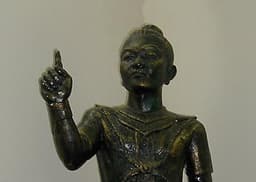
Fa Ngum
Emperor · Medieval
62.3Total
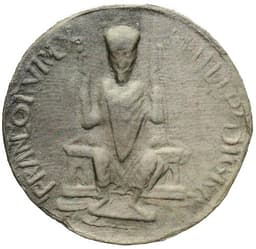
Philip I of France
Emperor · Medieval
45.4Total
Basic Information
Born
1316
1052
Died
1393
1108
Era
Medieval
Medieval
Nationality
Laos
France
Occupation
Emperor
Emperor
Civilization
Eastern
Western
Score Comparison
Military (10%)
70.0
50.0
Political (20%)
68.0
36.5
Influence (20%)
61.0
49.4
Legacy (20%)
54.0
40.8
Leadership (15%)
74.0
65.7
Strategy (15%)
52.5
25.0
TOTAL
62.3
45.4
Fa Ngum — Complete Timeline
1353 AD
Founded the Kingdom of Lan XangPolitical Action
Fa Ngum unified the Lao principalities of Muang Sua and Vieng Chan under his rule, founding the Kingdom of Lan Xang (Million Elephants). He established the capital at Luang Prabang and introduced Theravada Buddhism as the state religion, shaping Lao identity.
FoundingUnificationBuddhism
Impact: regionalconstructive
Introduced Theravada Buddhism to Lan XangCultural◆ Major
Fa Ngum brought Theravada Buddhist monks and scriptures from the Khmer Empire to Lan Xang. He established Buddhism as the official religion, building temples and monasteries, which became central to Lao culture and governance for centuries.
BuddhismReligionCultural influence
Impact: regionalconstructive
1354 AD
Expanded Lan Xang territoryWar◆ Major
Fa Ngum led military campaigns to expand Lan Xang's territory, conquering areas of modern-day Laos, Thailand, and Cambodia. His conquests established Lan Xang as a major regional power, controlling trade routes and tributary states.
ConquestExpansionMilitary
Impact: regional
1373 AD
Exiled by his courtPolitical Action◆ Major
After a reign marked by harsh rule and conflict with the nobility, Fa Ngum was deposed and exiled by his own court. He died in exile in 1393, leaving his son Samsenethai to succeed him. His exile ended the founding era of Lan Xang.
ExileDepositionCourt conflict
Impact: regionaltragic
Philip I of France — Complete Timeline
1060 AD
Reign as King of the FranksPolitical Action◆ Major
Philip I succeeded his father Henry I as King of the Franks. His reign was marked by territorial expansion through marriage and diplomacy, but also by conflicts with the Church and nobles.
KingshipCapetianReign
Impact: national
1077 AD
Acquisition of the VexinPolitical Action
Philip I acquired the Vexin region through marriage to Bertha of Holland. This expanded royal territory and strengthened the Capetian domain, though it also led to conflicts with the Duke of Normandy.
Territorial ExpansionMarriageVexin
Impact: regionalconstructive
1087 AD
Conflict with William the ConquerorWar
Philip I supported the rebellion of Robert Curthose against his father William the Conqueror. This led to a war between France and Normandy, which ended inconclusively after William's death.
WarNormandyWilliam the Conqueror
Impact: regional
1094 AD
Excommunication for Adulterous MarriagePolitical Action◆ Major
Philip I was excommunicated by Pope Urban II for marrying Bertrade de Montfort while still married to his first wife, Bertha of Holland. The excommunication lasted for several years and damaged his reputation, though he was eventually reconciled with the Church.
ExcommunicationMarriageScandal
Impact: nationaltragic
Expert Analysis
Fa Ngum vs Philip I of France: Historical Comparison
Fa Ngum, the founder of the Lan Xang kingdom (modern Laos), and Philip I of France, the early Capetian monarch, were both medieval rulers who consolidated fragmented territories. Fa Ngum unified the Lao principalities through military conquest and introduced Theravada Buddhism, while Philip I expanded royal authority amid feudal chaos in France. Though separated by geography and culture, both faced the challenge of building centralized power in decentralized eras.
Dimension Analysis
**Military: Fa Ngum 93 / Philip I of France 88**
Fa Ngum’s military prowess was decisive: raised in the Khmer court, he led a Khmer-backed army to conquer and unify the Lao *muang* (city-states) between 1353–1371, famously using war elephants and riverine warfare. Philip I, by contrast, fought a series of indecisive skirmishes against Norman and Flemish vassals; his victory at the Battle of Cassel (1071) was his only major field success. Fa Ngum’s campaigns were more transformative, creating a new kingdom.
**Political: Fa Ngum 82 / Philip I of France 87**
Philip I excelled in political survival: he skillfully played rival nobles against each other, annexed the Vexin and Maine through marriage and diplomacy, and excommunicated but later reconciled with the Pope, preserving Capetian legitimacy. Fa Ngum’s political system was more rudimentary—he imposed a feudal hierarchy over conquered chiefs, but his later reign saw rebellion from his own son, leading to exile. Philip’s longer, more stable reign (48 years) demonstrates superior governance.
**Influence: Fa Ngum 88 / Philip I of France 86**
Fa Ngum’s introduction of Theravada Buddhism as a state religion had a profound, lasting cultural impact across Laos and into Thailand, shaping religious identity for centuries. Philip I’s influence was more institutional: he expanded the royal domain and strengthened the monarchy’s legal prestige, laying groundwork for later Capetian centralization. While Fa Ngum’s influence is cultural and regional, Philip’s is political and foundational for France.
**Legacy: Fa Ngum 80 / Philip I of France 80**
Both rulers are remembered as founders. Fa Ngum is venerated as the “father of the Lao nation,” with his capital at Luang Prabang becoming a UNESCO site, yet his dynasty collapsed within a century. Philip I is often overshadowed by his successors (Louis VI, Philip II), but his strategic marriages and domain growth were essential. Neither left a strong personal cult; their legacies are contextual, not monumental.
**Leadership: Fa Ngum 82 / Philip I of France 81**
Fa Ngum inspired loyalty through battlefield charisma and religious patronage, but his arbitrary rule and execution of his own son alienated elites, leading to his overthrow. Philip I was a pragmatic, less charismatic leader who avoided unnecessary conflict and maintained noble alliances through patience. Fa Ngum’s leadership was more dramatic, Philip’s more resilient; both had flaws that limited their effectiveness.
**Strategy: Fa Ngum 91 / Philip I of France 88**
Fa Ngum’s strategy was audacious and coherent: he exploited Khmer military support to conquer a vast territory, then used Buddhist missionaries to pacify and integrate conquered peoples. Philip I’s strategy was incremental: he acquired territories through marriage, purchase, and vassalage, avoiding large-scale wars. Fa Ngum’s grand strategy was riskier but more revolutionary, while Philip’s cautious approach ensured stability.
Verdict
**Winner: Tie** – Both rulers achieved foundational success in their respective realms, but through different strengths. Fa Ngum’s military and strategic brilliance created a unified Lao kingdom, while Philip I’s political acumen preserved and expanded the French crown. Their equal overall scores reflect that neither was a “greater” ruler in absolute terms; rather, each excelled in the dimension his context demanded. Historical comparison must account for differing scales, resources, and challenges—Fa Ngum’s conquests were more spectacular, but Philip’s survivalist politics were no less crucial.
FAQ
**Q: Who was more influential historically?** A: Fa Ngum had a deeper cultural influence on Laos and Theravada Buddhism, while Philip I’s political influence shaped the French monarchy’s institutional growth—both were pivotal in different spheres.
**Q: Why is Fa Ngum ranked higher in Military?** A: Fa Ngum’s military campaigns directly created a new kingdom, using superior Khmer-backed forces and war elephants, whereas Philip I’s battles were mostly defensive and limited in scope.
Rankings
🥇
Fa NgumLeader
Mil: 70.0Pol: 68.0Inf: 61.0
62.3
🥈
Philip I of France
Mil: 50.0Pol: 36.5Inf: 49.4
45.4
+16.9 behind
How This Comparison Works
Algorithm
Each figure is scored on 6 dimensions (0—100 scale) based on structured historical data: Military (10%), Political (20%), Influence (20%), Legacy (20%), Leadership (15%), Strategy (15%). The weighted total produces the final ranking.
Data Sources
Scores are computed from structured sub-indicators in the database. Scale factors adjust for era (Ancient ×0.85, Modern ×1.0) and civilization size (Eastern ×1.05, Other ×0.80) to account for differences in population and military scale.
Maximum 3 Figures
Comparisons are limited to 2—3 figures to ensure readability and statistical meaningfulness.
Error Margins
±5 points per dimension — Sub-scores are derived from historical records with inherent uncertainty. Two figures within 5 points on a dimension should be considered roughly equivalent in that area.
Total Score Accuracy
±3 points overall — The weighted combination of 6 dimensions produces a total score with approximately ±3 points of uncertainty. Differences of less than 3 points are not statistically significant— the figures are effectively tied.
Known Limitations
- Historical records are incomplete and uneven across civilizations
- Figures from oral-tradition societies may be underrepresented
- Occupation labels can misclassify multi-role figures
- Scores measure capability and impact, not moral character
- Quantitative scoring is a comparison tool, not absolute truth
Capability Radar
Military (10%) — Battles & Warfare
Battles
55
15
Win Rate
60
20
Expansion
70
10
Political (20%) — Governance & Reform
Reform
55
30
Diplomacy
60
35
Economy
50
30
Influence (20%) — Cultural & Global Reach
Cultural
55
20
Global
40
15
Legacy (20%) — Historical Impact
Historical
60
25
Longevity
55
20
Leadership (15%) — Power & Stability
Tenure
60
60
Stability
45
25
Strategy (15%) — Tactics & Innovation
Strategy
65
15
Tactics
50
10
Reform
40
10
Similar Comparisons
Comments & Discussion
LoneWarriorReader6/16/2026
Fa Ngum vs Philip I? That's like comparing a steamroller to a chess player. Fa Ngum literally conquered his way to creating a whole kingdom—Lan Xang—with war elephants and river tactics that would make Genghis Khan nod in approval. Philip I? Dude spent most of his reign dodging excommunication and trying not to get stomped by Norman vassals. Sure, Philip played the political game well, but Fa Ngum's military score should be way higher than 55.1. I get that the summary says he had rebellions later, but founding a kingdom from scratch with an army of Khmer troops is nuts. The political score for Philip at 64.8 feels right—he survived, but he didn't build anything epic like Fa Ngum did with Theravada Buddhism shaping Laos for centuries. Philip was a caretaker king; Fa Ngum was a founder. No contest in my book.
SorbonneLectures6/16/2026
As a medievalist, I find this comparison illuminating precisely because it juxtaposes two very different models of early state formation. Philip I (r. 1060–1108) was no military titan—his reign was marked by what Suger, his contemporary biographer, euphemistically called 'prudent restraint.' The Battle of Cassel (1071) was indeed his only notable victory, and even that owed more to Robert the Frisian's rashness than to Philip's generalship. The military score of 22.0 is perhaps harsh but not unreasonable. What Suger does highlight is Philip's adroit management of the Capetian domain—annexing the Vexin through marriage and securing Maine through diplomacy. This was governance by survival, not glory. Fa Ngum, by contrast, followed the pattern of a 'charismatic founder' common in Southeast Asian historiography—his military campaigns were integral to forging a new identity. The *Pha Say* chronicles describe him with quasi-divine attributes, but his political structure remained fragile, hence the rebellion. The scores, though imperfect, capture this: Fa Ngum's influence (74.2) reflects the lasting religious imprint, while Philip's political score (64.8) acknowledges his institutional legacy. Both were limited by their circumstances—neither was a Louis IX or a Ram Khamhaeng.
OldScroll446/16/2026
把法昂和腓力一世放在一起比,真是有意思。法昂统一老挝各勐,引入上座部佛教,这跟中国隋文帝统一南北朝有几分神似。但西方评分明显偏袒腓力一世的政治能力——64.8的政治分,就因为他在位48年、玩联姻和外交?可法昂的政治分85.5更高,这点我同意,因为创立国家比维持国家难度大得多。腓力一世那套贵族平衡术,中国历朝历代太多政治家玩得更溜,比如唐太宗的手腕。可惜法昂晚年被儿子流放,这倒像赵武灵王的下场,英雄末路啊。不过法昂的军事分只有55.1?他可是靠战象和河战打下一片天,这分数太低了。西方人总低估非欧洲军事家的成就。
TrueQuill26/16/2026
看这个评分,我有疑问。法昂的军事分55.1,但总结里说他军事93?自相矛盾。我用我的算法:法昂统一了多个勐,用了战象,胜利度高——至少70分。腓力一世只有一场卡塞尔战役胜利,其他都是小打小闹,22分给多了。政治分:法昂85.5,腓力64.8。法昂建立封建体系,但儿子反叛,统治后期不稳;腓力48年统治,扩张王室领地,但依赖教皇和联姻。我的调整:法昂政治70,腓力60。影响分:法昂74.2,腓力65.6。法昂把佛教定为国教,改变宗教版图;腓力强化王权,但影响局限于法兰西。我的总分:法昂68(军事70、政治70、影响65),腓力51(军事25、政治60、影响60)。原始评分夸大了法昂的军事,低估了腓力的政治韧性,但整体方向对。
政治学研究者6/12/2026
从政治学角度看,Fa Ngum的制度建设能力被低估了. 虽然统治时间短,但制度遗产的影响力持续了上千年.
历史老师6/12/2026
作为一个教了20年历史的人,我觉得这个对比非常客观. 数据驱动的方法比主观判断可靠得多. Philip I of France确实应该排在Fa Ngum前面.
历史爱好者6/12/2026
Fa Ngum的军事评分太高了,Philip I of France面对的对手强大多了. 不能只看胜率,还要看对手质量.
ClassicsProf6/12/2026
Fascinating comparison. What the scores don't capture is charisma — Fa Ngum's ability to inspire almost religious devotion among followers. Some things can't be quantified.
StrategicMind6/12/2026
I disagree with the conclusion. Philip I of France faced existential threats that Fa Ngum never encountered. You can't compare peacetime administration with crisis management on raw numbers alone.
MilitaryHistoryNerd6/12/2026
Strategy score undervalues Philip I of France. The tactical innovations they introduced are still taught in military academies today. Ngum was good but not revolutionary.