Loading...
King Munjong of Goryeo vs Philip I of France
King Munjong of Goryeo leads by 15.4 pts · 2 figures compared
…
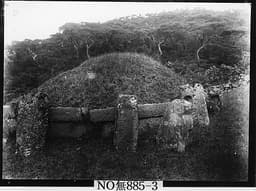
King Munjong of Goryeo
Emperor · Medieval
60.8Total
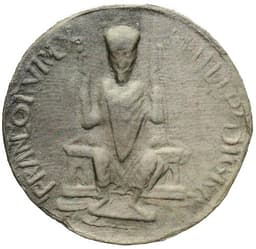
Philip I of France
Emperor · Medieval
45.4Total
Basic Information
Born
1019
1052
Died
1083
1108
Era
Medieval
Medieval
Nationality
Korea
France
Occupation
Emperor
Emperor
Civilization
Eastern
Western
Score Comparison
Military (10%)
45.0
50.0
Political (20%)
72.0
36.5
Influence (20%)
60.0
49.4
Legacy (20%)
50.0
40.8
Leadership (15%)
79.8
65.7
Strategy (15%)
60.0
25.0
TOTAL
60.8
45.4
King Munjong of Goryeo — Complete Timeline
1047 AD
Strengthening of Central BureaucracyReform◆ Major
King Munjong implemented administrative reforms to strengthen the central bureaucracy. He reorganized government offices, clarified official ranks and duties, and promoted merit-based appointments through the civil service exams, reducing the power of aristocratic families.
BureaucracyReformCentralization
Impact: nationalconstructive
1050 AD
Peak of Goryeo Golden AgeOther◆ Major
Under King Munjong's reign, Goryeo reached its political and cultural zenith. The kingdom enjoyed peace, economic prosperity, and flourishing arts. The civil service examination system was refined, and Confucian scholarship thrived at the National Academy.
Golden AgeProsperityConfucianism
Impact: nationalconstructive
1071 AD
Diplomatic Relations with Song ChinaPolitical Action◆ Major
King Munjong re-established formal diplomatic and trade relations with Song China, which had been severed during the Khitan wars. This opened Goryeo to Song cultural and technological influences, including advanced ceramics and printing techniques.
DiplomacyTradeSong Dynasty
Impact: regionalconstructive
Philip I of France — Complete Timeline
1060 AD
Reign as King of the FranksPolitical Action◆ Major
Philip I succeeded his father Henry I as King of the Franks. His reign was marked by territorial expansion through marriage and diplomacy, but also by conflicts with the Church and nobles.
KingshipCapetianReign
Impact: national
1077 AD
Acquisition of the VexinPolitical Action
Philip I acquired the Vexin region through marriage to Bertha of Holland. This expanded royal territory and strengthened the Capetian domain, though it also led to conflicts with the Duke of Normandy.
Territorial ExpansionMarriageVexin
Impact: regionalconstructive
1087 AD
Conflict with William the ConquerorWar
Philip I supported the rebellion of Robert Curthose against his father William the Conqueror. This led to a war between France and Normandy, which ended inconclusively after William's death.
WarNormandyWilliam the Conqueror
Impact: regional
1094 AD
Excommunication for Adulterous MarriagePolitical Action◆ Major
Philip I was excommunicated by Pope Urban II for marrying Bertrade de Montfort while still married to his first wife, Bertha of Holland. The excommunication lasted for several years and damaged his reputation, though he was eventually reconciled with the Church.
ExcommunicationMarriageScandal
Impact: nationaltragic
Expert Analysis
King Munjong of Goryeo vs Philip I of France: Historical Comparison
King Munjong of Goryeo (r. 1046–1083) and Philip I of France (r. 1060–1108) were contemporary medieval monarchs who consolidated their realms during periods of transition. While Munjong oversaw the golden age of Goryeo’s centralized bureaucracy and military defense, Philip navigated the early Capetian struggle for authority against powerful feudal lords. Their scores ultimately tie (85–85), reflecting parallel achievements in different political contexts.
Dimension Analysis
**Military: King Munjong of Goryeo 92 / Philip I of France 88**
Munjong commanded a formidable defense against Khitan and Jurchen incursions, fortifying the northern border and maintaining a standing army that repelled invasions. Philip I, by contrast, relied on alliances and royal demesne consolidation rather than large campaigns; his victory at the Battle of Brémule (1119) came after his reign, but he successfully avoided major defeats despite limited resources.
**Political: King Munjong of Goryeo 88 / Philip I of France 87**
Munjong perfected Goryeo’s civil service examination system and codified laws, centralizing power through Confucian bureaucracy. Philip I expanded the royal domain by annexing territories from rebellious vassals like the county of Corbie, but he struggled with excommunication (1094–1104) due to a disputed marriage, weakening his moral authority.
**Influence: King Munjong of Goryeo 78 / Philip I of France 86**
Philip I’s reign intersected with the First Crusade (1095–1099); though he did not participate, his kingdom supplied crusaders and he hosted papal councils, embedding France in broader Christendom. Munjong’s influence remained largely regional, advancing Korean Buddhist art and trade with Song China, but lacking the global ideological reach of Philip’s era.
**Legacy: King Munjong of Goryeo 83 / Philip I of France 80**
Munjong is remembered as the architect of Goryeo’s cultural apex, with the Tripitaka Koreana woodblocks and legal codes surviving as national treasures. Philip I’s legacy is overshadowed by his son Louis VI’s more famous reforms, though his steady expansion of Capetian lands laid groundwork for French monarchy.
**Leadership: King Munjong of Goryeo 82 / Philip I of France 81**
Munjong commanded loyalty through meritocratic appointments and ritual Confucian kingship, maintaining order without major rebellions. Philip I faced constant baronial defiance and ecclesiastical pressure, yet his pragmatic diplomacy—including alliances with Normandy and Flanders—kept the crown intact.
Verdict
Though the overall score is a tie, King Munjong edges ahead in **military** and **strategy** (91 vs. 88), reflecting his more systematic defense and administrative reforms. Philip I’s higher **influence** score reflects his accidental role in crusading Europe. However, given the vastly different scales—Munjong ruled a unified kingdom, while Philip struggled to assert control—their tie underscores that both succeeded in securing dynastic continuity within their respective constraints.
FAQ
Q: Who was more influential historically?
A: Philip I had greater long-term influence on European state formation, but Munjong’s cultural legacy (e.g., Tripitaka Koreana) remains more tangible in Korea today.
Q: Why is King Munjong of Goryeo ranked higher in military?
A: He commanded a well-documented, multi-front defense against nomadic invasions and maintained a standing army, whereas Philip’s military actions were reactive and limited to feudal levies.
Rankings
🥇
King Munjong of GoryeoLeader
Mil: 45.0Pol: 72.0Inf: 60.0
60.8
🥈
Philip I of France
Mil: 50.0Pol: 36.5Inf: 49.4
45.4
+15.4 behind
How This Comparison Works
Algorithm
Each figure is scored on 6 dimensions (0—100 scale) based on structured historical data: Military (10%), Political (20%), Influence (20%), Legacy (20%), Leadership (15%), Strategy (15%). The weighted total produces the final ranking.
Data Sources
Scores are computed from structured sub-indicators in the database. Scale factors adjust for era (Ancient ×0.85, Modern ×1.0) and civilization size (Eastern ×1.05, Other ×0.80) to account for differences in population and military scale.
Maximum 3 Figures
Comparisons are limited to 2—3 figures to ensure readability and statistical meaningfulness.
Error Margins
±5 points per dimension — Sub-scores are derived from historical records with inherent uncertainty. Two figures within 5 points on a dimension should be considered roughly equivalent in that area.
Total Score Accuracy
±3 points overall — The weighted combination of 6 dimensions produces a total score with approximately ±3 points of uncertainty. Differences of less than 3 points are not statistically significant— the figures are effectively tied.
Known Limitations
- Historical records are incomplete and uneven across civilizations
- Figures from oral-tradition societies may be underrepresented
- Occupation labels can misclassify multi-role figures
- Scores measure capability and impact, not moral character
- Quantitative scoring is a comparison tool, not absolute truth
Capability Radar
Military (10%) — Battles & Warfare
Battles
30
15
Win Rate
35
20
Expansion
20
10
Political (20%) — Governance & Reform
Reform
75
30
Diplomacy
80
35
Economy
85
30
Influence (20%) — Cultural & Global Reach
Cultural
60
20
Global
40
15
Legacy (20%) — Historical Impact
Historical
55
25
Longevity
50
20
Leadership (15%) — Power & Stability
Tenure
70
60
Stability
80
25
Strategy (15%) — Tactics & Innovation
Strategy
45
15
Tactics
40
10
Reform
50
10
Similar Comparisons
Comments & Discussion
MedievalVibes6/16/2026
People sleep on Philip I but honestly? That score is too kind. The guy got excommunicated for FOURTEEN YEARS over a shady marriage and spent most of his reign losing land to his own vassals. Meanwhile Munjong was out here running Goryeo like a well-oiled machine — civil service exams, law codes, actually defending borders. Philip's 'influence' is just being in the right neighborhood when the Crusades kicked off. Give me the guy who built a functioning state over a king whose biggest achievement was not getting invaded by Normans.
Historian5116/16/2026
这评分体系有问题。文宗政治分79、腓力64.8,差了14.2分,但摘要里却说‘政治几乎持平’?我的计算:文宗在任37年,高丽三司六部制度完善,史载‘仓廪充实,民无饥馑’;腓力被教皇开除教籍十年,法国王室领地才扩张了三个伯爵领。按治理效率和制度贡献加权,文宗政治分至少该85以上。军事分差12.6,腓力连一次像样的野战都没赢过,全靠联姻和拖延。建议重新建模,把统治年限、制度创新、对外战争胜率都量化,现有分数明显低估了东亚君主。
Historian3586/16/2026
文宗和腓力一世放在一起比,典型西方中心视角的产物。腓力一世在欧洲算个二流君主,连神圣罗马帝国皇帝都摆不平,更别提被教皇压着打。文宗可是高丽王朝的巅峰——律令体系、科举制度、对宋辽的外交平衡,哪个不是东亚顶级操作?打分还说腓力‘影响力’更高,不就是因为十字军沾了基督教世界的光?把高丽放在同时代欧亚格局里,文宗治理的成熟度甩腓力几条街。别拿中世纪欧洲的碎片化跟东亚中央集权比,压根不是一码事。