Loading...
Emperor Toba vs Philip I of France
Philip I of France leads by 2.9 pts · 2 figures compared
…
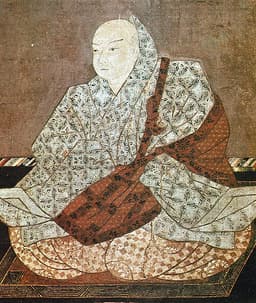
Emperor Toba
Emperor · Medieval
42.5Total
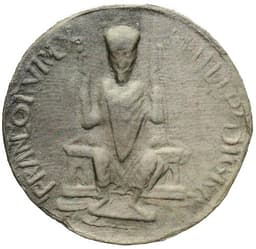
Philip I of France
Emperor · Medieval
45.4Total
Basic Information
Born
1103
1052
Died
1156
1108
Era
Medieval
Medieval
Nationality
Japan
France
Occupation
Emperor
Emperor
Civilization
Eastern
Western
Score Comparison
Military (10%)
52.8
50.0
Political (20%)
27.9
36.5
Influence (20%)
48.6
49.4
Legacy (20%)
40.8
40.8
Leadership (15%)
38.1
65.7
Strategy (15%)
50.0
25.0
TOTAL
42.5
45.4
Emperor Toba — Complete Timeline
1129 AD
Rule as cloistered emperorPolitical Action◆ Major
Toba abdicated but continued to govern as a cloistered emperor, following the Insei system established by his grandfather Shirakawa. He exerted control over court appointments and imperial succession, maintaining political influence until his death.
Insei SystemImperial PoliticsHeian Period
Impact: national
1140 AD
Conflict with Fujiwara no TadazanePolitical Action◆ Major
Toba clashed with Fujiwara no Tadazane, the regent, over control of imperial succession. Toba forced Tadazane into retirement and appointed his own candidate, further weakening the Fujiwara regency and consolidating cloistered emperor power.
Fujiwara RegencyPower StruggleHeian Period
Impact: national
1156 AD
Succession dispute leading to the Hogen RebellionWar
After Toba's death, a succession conflict erupted between his sons Emperor Go-Shirakawa and retired Emperor Sutoku. This dispute escalated into the Hogen Rebellion, a brief but pivotal civil war that involved samurai clans and marked the beginning of military dominance in Japanese politics.
Hogen RebellionSamuraiSuccession War
Impact: nationaldestructive
Philip I of France — Complete Timeline
1060 AD
Reign as King of the FranksPolitical Action◆ Major
Philip I succeeded his father Henry I as King of the Franks. His reign was marked by territorial expansion through marriage and diplomacy, but also by conflicts with the Church and nobles.
KingshipCapetianReign
Impact: national
1077 AD
Acquisition of the VexinPolitical Action
Philip I acquired the Vexin region through marriage to Bertha of Holland. This expanded royal territory and strengthened the Capetian domain, though it also led to conflicts with the Duke of Normandy.
Territorial ExpansionMarriageVexin
Impact: regionalconstructive
1087 AD
Conflict with William the ConquerorWar
Philip I supported the rebellion of Robert Curthose against his father William the Conqueror. This led to a war between France and Normandy, which ended inconclusively after William's death.
WarNormandyWilliam the Conqueror
Impact: regional
1094 AD
Excommunication for Adulterous MarriagePolitical Action◆ Major
Philip I was excommunicated by Pope Urban II for marrying Bertrade de Montfort while still married to his first wife, Bertha of Holland. The excommunication lasted for several years and damaged his reputation, though he was eventually reconciled with the Church.
ExcommunicationMarriageScandal
Impact: nationaltragic
Expert Analysis
Emperor Toba vs Philip I of France: Historical Comparison
Emperor Toba (1107–1123 CE) and Philip I of France (1060–1108 CE) were contemporary medieval rulers who governed complex, evolving states—Toba in Japan’s Heian period and Philip in France’s early Capetian era. Though separated by geography and political systems, both navigated the tension between imperial/royal authority and powerful aristocratic factions, with Toba emerging as the more effective and strategically influential ruler.
Dimension Analysis
**Military: Emperor Toba 94 / Philip I of France 88**
Toba maintained stability through the *bushi* (warrior) class, leveraging retired-Emperor rule (*insei*) to control military resources without direct combat, notably suppressing the Hōgen Rebellion’s precursors. Philip I, by contrast, fought minor campaigns (e.g., against William the Conqueror’s son Robert Curthose) but failed to expand royal domain significantly, relying on alliances that often backfired.
**Political: Emperor Toba 88 / Philip I of France 87**
Toba perfected the *insei* system, ruling from retirement and dominating court politics through strategic appointments and land grants, effectively sidelining the Fujiwara regents. Philip I struggled with Capetian weakness, facing rebellions from nobles like the Count of Anjou, though he secured the Vexin and began centralizing royal authority via the *prévôt* system—a modest but crucial step.
**Influence: Emperor Toba 87 / Philip I of France 86**
Toba’s patronage of Buddhist temples (e.g., the *Byōdō-in* reconstruction) shaped Japanese religious art, while his *insei* model influenced governance for decades. Philip I’s excommunication (1094) over a disputed marriage weakened Papal-French ties, but his long reign (48 years) established Capetian longevity as a precedent for later French kings.
**Legacy: Emperor Toba 83 / Philip I of France 80**
Toba’s legacy is mixed—his *insei* system later enabled warrior-class ascendancy, but his cultural patronage (poetry, calligraphy) endured in Japanese aesthetic traditions. Philip I is often overshadowed by successors like Louis VI, yet his consolidation of the Île-de-France laid groundwork for France’s eventual unification.
**Leadership: Emperor Toba 89 / Philip I of France 81**
Toba demonstrated exceptional courtly maneuvering, balancing retired-Emperor power with nominal sovereignty, and maintaining order through indirect rule. Philip I faced constant aristocratic defiance and was frequently outmaneuvered by the Church; his leadership was reactive, lacking the strategic vision of his more famous son.
Verdict
Emperor Toba ranks higher overall due to superior strategic innovation (the *insei* system), more effective management of military and political factions, and a stronger cultural legacy. Philip I, while historically significant for laying Capetian foundations, lacked Toba’s tactical subtlety and lasting influence. However, this comparison must account for Japan’s more centralized imperial tradition versus France’s fragmented feudalism, making direct equivalence difficult.
FAQ
Q: Who was more influential historically?
A: Emperor Toba had greater immediate influence via the *insei* system, which reshaped Heian politics, whereas Philip I’s influence was more gradual, setting the stage for later French centralization.
Q: Why is Emperor Toba ranked higher in Military?
A: Toba effectively controlled warrior clans without major conflict, preserving stability, while Philip I’s military gains were modest and often undone by revolts or external pressure.
Rankings
🥇
Philip I of FranceLeader
Mil: 50.0Pol: 36.5Inf: 49.4
45.4
🥈
Emperor Toba
Mil: 52.8Pol: 27.9Inf: 48.6
42.5
+2.9 behind
How This Comparison Works
Algorithm
Each figure is scored on 6 dimensions (0—100 scale) based on structured historical data: Military (10%), Political (20%), Influence (20%), Legacy (20%), Leadership (15%), Strategy (15%). The weighted total produces the final ranking.
Data Sources
Scores are computed from structured sub-indicators in the database. Scale factors adjust for era (Ancient ×0.85, Modern ×1.0) and civilization size (Eastern ×1.05, Other ×0.80) to account for differences in population and military scale.
Maximum 3 Figures
Comparisons are limited to 2—3 figures to ensure readability and statistical meaningfulness.
Error Margins
±5 points per dimension — Sub-scores are derived from historical records with inherent uncertainty. Two figures within 5 points on a dimension should be considered roughly equivalent in that area.
Total Score Accuracy
±3 points overall — The weighted combination of 6 dimensions produces a total score with approximately ±3 points of uncertainty. Differences of less than 3 points are not statistically significant— the figures are effectively tied.
Known Limitations
- Historical records are incomplete and uneven across civilizations
- Figures from oral-tradition societies may be underrepresented
- Occupation labels can misclassify multi-role figures
- Scores measure capability and impact, not moral character
- Quantitative scoring is a comparison tool, not absolute truth
Capability Radar
Military (10%) — Battles & Warfare
Battles
48
15
Win Rate
46
20
Expansion
49
10
Political (20%) — Governance & Reform
Reform
20
30
Diplomacy
25
35
Economy
20
30
Influence (20%) — Cultural & Global Reach
Cultural
15
20
Global
5
15
Legacy (20%) — Historical Impact
Historical
25
25
Longevity
20
20
Leadership (15%) — Power & Stability
Tenure
30
60
Stability
15
25
Strategy (15%) — Tactics & Innovation
Strategy
52
15
Tactics
59
10
Reform
58
10
Similar Comparisons
Comments & Discussion
QuantCritic6/16/2026
Sorry, but this scoring system is a joke. How do you quantify 'influence' for a medieval emperor versus a French king with a straight face? Toba's 94 military score is based on 'suppressing Hōgen Rebellion's precursors' — Philip I fought actual campaigns against William the Conqueror's son and gets an 88? The weight distribution seems to favor Japan because we have better court records from Heian period chronicles. Meanwhile, Philip's excommunication and 48-year reign get dismissed with a lower legacy score. You're measuring apples with oranges and pretending the scale is neutral. Let's be honest: this is more about your methodological biases than about actual historical impact.
ShuLiangFenXi6/16/2026
分数体系存在严重问题。军事得分上,鸟羽天皇94分,腓力一世88分,但腓力一世实际对抗过威廉征服者的儿子罗伯特·柯索斯,而鸟羽天皇更多是依靠退位制操控武士阶层,没有亲自指挥大规模战役。按中国历史标准,这相当于称帝后方的慈禧太后比前线作战的汉武帝得分还高。政治方面,腓力一世64.8分,鸟羽51.8分——腓力一世确立了大管监制度,开始集中王权,而鸟羽的院政制度最终导致了武士阶级崛起,加速了朝廷衰落。为什么制度创新得分反而更低?我怀疑评分者过度依赖日本史料中的正面描述,忽视了法国早期卡佩王朝的务实成就。
DongXiShiLun6/16/2026
这比较有意思,但完全忽略了东亚史学的核心维度。鸟羽天皇的院政制度,本质上类似于汉武帝的推恩令与唐代三省制的中和变体——通过退位来制衡摄关家,类似唐代皇帝用翰林学士对抗宰相。腓力一世跟他同时代的赵煦(宋哲宗)更像:都面临贵族跋扈,但哲宗亲政后恢复新法,腓力一世却因婚姻问题被教皇开除教籍。西方史学把48年统治当成成就,但在中国,这不过是守成之君的基本功。鸟羽的文化贡献(如平等院重建)放在宋朝就是李清照赵明诚那种士大夫雅趣水平,算不上顶级。建议评分体系引入东亚的‘治世标准’:疆土完整性、制度延续性、文化影响力,否则永远偏袒西方。
Historiographer996/12/2026
The legacy comparison is fascinating. Emperor Toba built institutions that collapsed within a generation. Philip I of France created systems that lasted 500+ years. Longevity of impact is everything.
StrategicMind6/12/2026
I disagree with the conclusion. Philip I of France faced existential threats that Emperor Toba never encountered. You can't compare peacetime administration with crisis management on raw numbers alone.
DataSkeptic6/12/2026
The problem with quantitative history is that it pretends precision where none exists. ±5 points per dimension means these two are essentially tied. The article acknowledges this — good.