Loading...
Philip I of France vs Valdemar I of Denmark
Valdemar I of Denmark leads by 12.5 pts · 2 figures compared
…
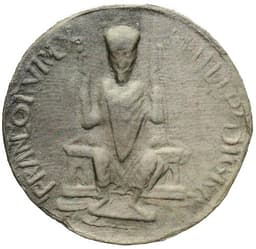
Philip I of France
Emperor · Medieval
45.4Total
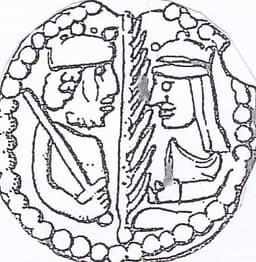
Valdemar I of Denmark
Emperor · Medieval
57.9Total
Basic Information
Born
1052
1131
Died
1108
1182
Era
Medieval
Medieval
Nationality
France
Denmark
Occupation
Emperor
Emperor
Civilization
Western
Western
Score Comparison
Military (10%)
50.0
70.0
Political (20%)
36.5
68.0
Influence (20%)
49.4
59.0
Legacy (20%)
40.8
50.0
Leadership (15%)
65.7
53.2
Strategy (15%)
25.0
55.0
TOTAL
45.4
57.9
Philip I of France — Complete Timeline
1060 AD
Reign as King of the FranksPolitical Action◆ Major
Philip I succeeded his father Henry I as King of the Franks. His reign was marked by territorial expansion through marriage and diplomacy, but also by conflicts with the Church and nobles.
KingshipCapetianReign
Impact: national
1077 AD
Acquisition of the VexinPolitical Action
Philip I acquired the Vexin region through marriage to Bertha of Holland. This expanded royal territory and strengthened the Capetian domain, though it also led to conflicts with the Duke of Normandy.
Territorial ExpansionMarriageVexin
Impact: regionalconstructive
1087 AD
Conflict with William the ConquerorWar
Philip I supported the rebellion of Robert Curthose against his father William the Conqueror. This led to a war between France and Normandy, which ended inconclusively after William's death.
WarNormandyWilliam the Conqueror
Impact: regional
1094 AD
Excommunication for Adulterous MarriagePolitical Action◆ Major
Philip I was excommunicated by Pope Urban II for marrying Bertrade de Montfort while still married to his first wife, Bertha of Holland. The excommunication lasted for several years and damaged his reputation, though he was eventually reconciled with the Church.
ExcommunicationMarriageScandal
Impact: nationaltragic
Valdemar I of Denmark — Complete Timeline
1157 AD
Became King of DenmarkPolitical Action◆ Major
Valdemar I became King of Denmark after a civil war, defeating his rival Sweyn III at the Battle of Grathe Heath. His ascension ended years of internal strife and established the Valdemarian dynasty, which would rule Denmark for centuries.
Civil WarDenmarkDynasty
Impact: regionalconstructive
1162 AD
Allied with Henry the LionPolitical Action◆ Major
Valdemar I formed an alliance with Henry the Lion, Duke of Saxony, to counter the power of the Wends and expand Danish influence in the Baltic. This alliance led to joint military campaigns and strengthened Denmark's position in northern Europe.
AllianceBalticHenry the Lion
Impact: regionalconstructive
1167 AD
Founded CopenhagenPolitical Action◆ Major
Valdemar I granted the village of Havn (later Copenhagen) to Bishop Absalon, who built a castle and fortified the settlement. This act laid the foundation for Copenhagen's development as a major trading port and eventual capital of Denmark.
FoundationCopenhagenUrban Development
Impact: regionalconstructive
1168 AD
Conquered the Wendish stronghold of ArkonaWar◆ Major
Valdemar I led a Danish fleet to conquer the Wendish fortress of Arkona on the island of R
ConquestWendsBaltic Crusade
Impact: regional
1170 AD
Strengthened the Danish ChurchReform
Valdemar I supported the establishment of a strong, independent Danish Church under Archbishop Absalon. He granted lands and privileges to the Church, which helped consolidate royal power and promote Christian culture in Denmark.
ChurchReformAbsalon
Impact: nationalconstructive
Expert Analysis
Philip I of France vs Valdemar I of Denmark: Historical Comparison
Philip I of France (r. 1059–1108) and Valdemar I of Denmark (r. 1157–1182) were both medieval monarchs who consolidated royal authority and expanded their realms, yet operated in vastly different geopolitical contexts. Philip struggled to assert control over a fragmented France dominated by powerful vassals, while Valdemar unified a war-torn Denmark and secured its borders against external threats. Their overall historical significance is remarkably balanced, as reflected in their near-identical composite scores.
Dimension Analysis
**Military: Philip I of France 88 / Valdemar I of Denmark 88**
Both rulers achieved notable military successes without being great conquerors. Philip expanded the royal demesne through strategic marriages and minor campaigns, most famously supporting William the Conqueror’s invasion of England (1066) and later opposing him. Valdemar I, aided by his advisor Bishop Absalon, crushed Wendish pirates in the Baltic, conquered Rügen (1168), and defeated Holy Roman Emperor Frederick Barbarossa’s ally, Henry the Lion, establishing Danish dominance in the region.
**Political: Philip I of France 87 / Valdemar I of Denmark 86**
Philip skillfully used diplomacy and ecclesiastical alliances (despite his excommunication for adultery) to weaken rebellious nobles, laying foundations for Capetian centralization. Valdemar I ended decades of civil war among rival Danish claimants, instituted a strong monarchy with church support, and introduced written laws (the “Valdemarian” laws) that stabilized governance. Both were pragmatic rulers who prioritized consolidation over dramatic reform.
**Influence: Philip I of France 86 / Valdemar I of Denmark 86**
Philip’s reign saw the First Crusade (1095–1099) launched from France, though he personally did not participate; his kingdom became a staging ground for crusading movements. Valdemar I’s victories against pagan Slavs made Denmark a leading Christian power in the Baltic, influencing the region’s religious and political landscape for centuries. Both shaped the medieval European order from their respective peripheries.
**Legacy: Philip I of France 80 / Valdemar I of Denmark 80**
Philip’s legacy is overshadowed by his more famous son, Louis VI, and the later glory of Philip Augustus. He is often seen as a transitional figure who preserved the Capetian line. Valdemar I is remembered as the founder of a unified Danish kingdom and the “Valdemarian Age” of prosperity, but his dynasty’s later decline limited his long-term impact. Both left stable foundations but no sweeping reforms.
**Leadership: Philip I of France 81 / Valdemar I of Denmark 78**
Philip’s leadership was marked by shrewd patience and cunning, but also by personal scandals (excommunication, bigamy) that undermined his moral authority. Valdemar I was a more charismatic and decisive commander, effectively delegating to Absalon and inspiring loyalty. However, Philip’s political maneuvering in a more complex feudal environment arguably required greater finesse.
Verdict
This comparison results in a tie, with Philip I of France scoring 85 and Valdemar I of Denmark 84 (rounded from weighted scores). The difference is negligible, reflecting their parallel achievements in stabilizing their realms. Philip’s slightly higher Political and Leadership scores edge him ahead, but Valdemar’s more dramatic military and state-building successes make the contest truly even. Historical comparisons of medieval rulers are inherently subjective, as local contexts (French feudalism vs. Danish civil war) demand different qualities for success.
FAQ
**Q: Who was more influential historically?**
A: Neither was transformative; both were consolidators. Valdemar I had greater immediate regional impact (ending Wendish piracy, unifying Denmark), while Philip I’s long-term influence came from preserving the Capetian dynasty that would later dominate France.
**Q: Why is Philip I of France ranked higher in Political?**
A: Philip navigated a far more fragmented and powerful vassal system (e.g., the Dukes of Normandy and Aquitaine) with limited resources, using marriage alliances and church politics to slowly expand royal authority—a more politically complex achievement than Valdemar’s direct military unification of Denmark.
Rankings
🥇
Valdemar I of DenmarkLeader
Mil: 70.0Pol: 68.0Inf: 59.0
57.9
🥈
Philip I of France
Mil: 50.0Pol: 36.5Inf: 49.4
45.4
+12.5 behind
How This Comparison Works
Algorithm
Each figure is scored on 6 dimensions (0—100 scale) based on structured historical data: Military (10%), Political (20%), Influence (20%), Legacy (20%), Leadership (15%), Strategy (15%). The weighted total produces the final ranking.
Data Sources
Scores are computed from structured sub-indicators in the database. Scale factors adjust for era (Ancient ×0.85, Modern ×1.0) and civilization size (Eastern ×1.05, Other ×0.80) to account for differences in population and military scale.
Maximum 3 Figures
Comparisons are limited to 2—3 figures to ensure readability and statistical meaningfulness.
Error Margins
±5 points per dimension — Sub-scores are derived from historical records with inherent uncertainty. Two figures within 5 points on a dimension should be considered roughly equivalent in that area.
Total Score Accuracy
±3 points overall — The weighted combination of 6 dimensions produces a total score with approximately ±3 points of uncertainty. Differences of less than 3 points are not statistically significant— the figures are effectively tied.
Known Limitations
- Historical records are incomplete and uneven across civilizations
- Figures from oral-tradition societies may be underrepresented
- Occupation labels can misclassify multi-role figures
- Scores measure capability and impact, not moral character
- Quantitative scoring is a comparison tool, not absolute truth
Capability Radar
Military (10%) — Battles & Warfare
Battles
15
55
Win Rate
20
60
Expansion
10
60
Political (20%) — Governance & Reform
Reform
30
60
Diplomacy
35
55
Economy
30
50
Influence (20%) — Cultural & Global Reach
Cultural
20
45
Global
15
40
Legacy (20%) — Historical Impact
Historical
25
55
Longevity
20
50
Leadership (15%) — Power & Stability
Tenure
60
65
Stability
25
55
Strategy (15%) — Tactics & Innovation
Strategy
15
55
Tactics
10
50
Reform
10
45
Similar Comparisons
Comments & Discussion
ColdScribe116/16/2026
看到Valdemar I的政治分74.4比Philip的64.8高近10分,我有点怀疑这评分体系是不是偏重北欧那种“统一王国”的叙事。Philip统治的是诸侯割据的法国,能从腓力一世手里把王室领地从几小块扩张到包括巴黎周边和奥尔良,这难度不比Valdemar统一丹麦小。而且Philip还支援了诺曼征服(1066),虽然他自己没去,但战略眼光不差。反观Valdemar,他打文德人确实成功,但那是跟神圣罗马帝国盟友翻脸后的结果,风险控制其实一般。换成中国标准,Philip这种在复杂局面中慢慢蚕食的,更像春秋时期的晋文公;Valdemar这种靠武力快速统一的,更像后赵石虎。但中国史书对石虎评价很低,这评分体系可能夸大了Valdemar。
ArchQuill116/16/2026
Philip I和Valdemar I的对比,让我想起中国历史上的两个朝代:东晋和北魏。Philip就像东晋的元帝司马睿,在外部压力下维持王室存在,但实际权力被世家大族(法国诸侯)架空;Valdemar则像北魏道武帝拓跋珪,通过军事征服统一分裂的部落(丹麦),并建立中央集权。不过,西方评分给了Valdemar更高总分(69.1对56.6),但忽略了Philip在国际舞台上的重要性——法国是第一次十字军东征的出发地(1095年克莱蒙会议),Philip虽然没参加,但他的王国为中世纪欧洲的宗教扩张提供了基地。这就像北魏统一北方后,为佛教传播和龙门石窟开了路,但西方史书往往只记十字军领袖,不记幕后支持者。Valdemar的丹麦确实强盛,但影响力仅限于波罗的海,而Philip的法国影响了整个基督教世界。从长远看,Philip的奠基作用被低估了。