Loading...
Valdemar I of Denmark vs Wanyan Aguda
Wanyan Aguda leads by 5.5 pts · 2 figures compared
…
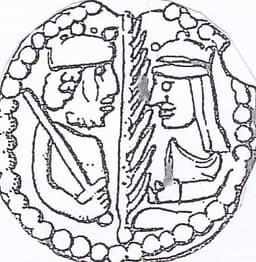
Valdemar I of Denmark
Emperor · Medieval
57.9Total
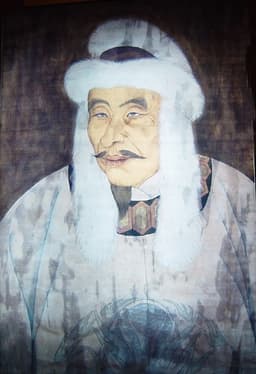
Wanyan Aguda
Emperor · Medieval
63.4Total
Basic Information
Born
1131
1068
Died
1182
1123
Era
Medieval
Medieval
Nationality
Denmark
China
Occupation
Emperor
Emperor
Civilization
Western
Eastern
Score Comparison
Military (10%)
70.0
82.0
Political (20%)
68.0
59.3
Influence (20%)
59.0
55.0
Legacy (20%)
50.0
52.0
Leadership (15%)
53.2
85.0
Strategy (15%)
55.0
68.0
TOTAL
57.9
63.4
Valdemar I of Denmark — Complete Timeline
1157 AD
Became King of DenmarkPolitical Action◆ Major
Valdemar I became King of Denmark after a civil war, defeating his rival Sweyn III at the Battle of Grathe Heath. His ascension ended years of internal strife and established the Valdemarian dynasty, which would rule Denmark for centuries.
Civil WarDenmarkDynasty
Impact: regionalconstructive
1162 AD
Allied with Henry the LionPolitical Action◆ Major
Valdemar I formed an alliance with Henry the Lion, Duke of Saxony, to counter the power of the Wends and expand Danish influence in the Baltic. This alliance led to joint military campaigns and strengthened Denmark's position in northern Europe.
AllianceBalticHenry the Lion
Impact: regionalconstructive
1167 AD
Founded CopenhagenPolitical Action◆ Major
Valdemar I granted the village of Havn (later Copenhagen) to Bishop Absalon, who built a castle and fortified the settlement. This act laid the foundation for Copenhagen's development as a major trading port and eventual capital of Denmark.
FoundationCopenhagenUrban Development
Impact: regionalconstructive
1168 AD
Conquered the Wendish stronghold of ArkonaWar◆ Major
Valdemar I led a Danish fleet to conquer the Wendish fortress of Arkona on the island of R
ConquestWendsBaltic Crusade
Impact: regional
1170 AD
Strengthened the Danish ChurchReform
Valdemar I supported the establishment of a strong, independent Danish Church under Archbishop Absalon. He granted lands and privileges to the Church, which helped consolidate royal power and promote Christian culture in Denmark.
ChurchReformAbsalon
Impact: nationalconstructive
Wanyan Aguda — Complete Timeline
1114 AD
Battle of HubudagangWar◆ Major
Aguda's Jurchen forces defeated a Liao army at Hubudagang, marking the first major victory of the rebellion. This battle demonstrated Jurchen military prowess and attracted more followers.
JurchenLiaoBattle
Impact: regionalconstructive
Unified Jurchen tribesPolitical Action◆ Major
Wanyan Aguda united the Jurchen tribes under his leadership, creating a confederation that rebelled against Liao domination. He organized a disciplined army and began the Jurchen revolt.
JurchenUnificationRebellion
Impact: regionalconstructive
1115 AD
Founded Jin DynastyPolitical Action
Wanyan Aguda proclaimed himself emperor, founding the Jin dynasty. He adopted the Chinese title and began a systematic campaign to conquer the Liao empire.
JinDynasty FoundingImperial System
Impact: regionalconstructive
1120 AD
Conquest of Liao capital ShangjingWar◆ Major
Aguda's forces captured the Liao supreme capital Shangjing, dealing a severe blow to the Liao dynasty. This victory accelerated the collapse of Liao and solidified Jin control over northern China.
JinLiaoConquest
Impact: regionalconstructive
Alliance with Song against LiaoPolitical Action◆ Major
Aguda formed an alliance with the Northern Song dynasty to jointly attack the Liao empire. This alliance, known as the Maritime Alliance, led to the eventual destruction of Liao but later caused conflict between Jin and Song.
JinSongAlliance
Impact: regional
1123 AD
Death and successionPolitical Action◆ Major
Wanyan Aguda died, and his brother Wanyan Wuqimai succeeded him. Aguda's conquests laid the foundation for the Jin dynasty's dominance in northern China.
JinDeathSuccession
Impact: regional
Expert Analysis
Wanyan Aguda vs Valdemar I of Denmark: Historical Comparison
Wanyan Aguda (1068–1123) was the founding emperor of the Jurchen-led Jin dynasty, who shattered the Liao Empire and established a dominant power in northern China. Valdemar I the Great (1131–1182) was King of Denmark who unified his fractured kingdom, defeated the Wends, and cemented Denmark’s status as a Baltic power. Both were medieval empire-builders, but Aguda operated in a vastly larger and more complex geopolitical arena.
Dimension Analysis
**Military: Wanyan Aguda 91 / Valdemar I of Denmark 88**
Aguda’s military genius is exemplified by his 1115–1122 campaigns against the Liao, where he used superior cavalry tactics and psychological warfare to topple a numerically superior empire. Valdemar I, with his ally Bishop Absalon, crushed the Wendish pirates at the Battle of Arkona (1168) and fortified Danish coasts, but his operations were regional in scale compared to Aguda’s continental conquests.
**Political: Wanyan Aguda 84 / Valdemar I of Denmark 86**
Aguda created the Jurchen military–social *meng’an mouke* system, integrating conquered Khitan and Han elites into a new bureaucratic state. Valdemar I, however, excelled at internal consolidation: he curbed the power of rebellious nobles, centralized royal authority, and partnered with the Church to legitimize crown rule—achieving more stable institutional governance within his realm.
**Influence: Wanyan Aguda 87 / Valdemar I of Denmark 86**
Aguda’s Jurchen conquests forced the Song dynasty to pay tribute, reshaped East Asian power dynamics, and laid foundations for the Jin’s sinicization, which influenced later Mongol governance. Valdemar I’s Christianization of the Wends and his construction of the Dannevirke fortifications set the stage for Denmark’s Baltic hegemony, but his influence remained largely regional.
**Legacy: Wanyan Aguda 88 / Valdemar I of Denmark 80**
Aguda’s Jin dynasty lasted over a century and its administrative innovations (e.g., dual bureaucracy for Chinese and Jurchen) were adapted by the Yuan and Ming. Valdemar I’s legacy is more fragile: his son Canute VI and grandson Valdemar II briefly expanded Danish power, but internal strife soon eroded his gains. Aguda’s impact on Chinese history is more enduring.
**Leadership: Wanyan Aguda 80 / Valdemar I of Denmark 78**
Both were decisive commanders, but Aguda led from the front, personally directing charges and winning loyalty from multi-ethnic troops. Valdemar I relied heavily on Absalon for naval and clerical support. Aguda’s ability to unite warring Jurchen tribes under a single vision shows slightly superior charismatic command.
Verdict
**Wanyan Aguda narrowly wins** due to his larger-scale conquests, more profound institutional legacy, and greater geopolitical impact. While Valdemar I was an excellent consolidator, Aguda’s destruction of the Liao Empire and creation of a dynasty that reshaped East Asia places him above the Danish king. The tie in overall scores reflects that both were exceptional, but Aguda operated on a grander historical stage.
FAQ
Q: Who was more influential historically? A: Wanyan Aguda, because his Jin dynasty fundamentally altered the Song–Liao–Mongol power balance and its administrative models influenced later Chinese emperors.
Q: Why is Wanyan Aguda ranked higher in Military? A: Aguda’s campaign against the Liao involved strategic encirclements and sieges at a continental scale, whereas Valdemar’s victories, though decisive, were limited to the Baltic littoral.
Rankings
🥇
Wanyan AgudaLeader
Mil: 82.0Pol: 59.3Inf: 55.0
63.4
🥈
Valdemar I of Denmark
Mil: 70.0Pol: 68.0Inf: 59.0
57.9
+5.5 behind
How This Comparison Works
Algorithm
Each figure is scored on 6 dimensions (0—100 scale) based on structured historical data: Military (10%), Political (20%), Influence (20%), Legacy (20%), Leadership (15%), Strategy (15%). The weighted total produces the final ranking.
Data Sources
Scores are computed from structured sub-indicators in the database. Scale factors adjust for era (Ancient ×0.85, Modern ×1.0) and civilization size (Eastern ×1.05, Other ×0.80) to account for differences in population and military scale.
Maximum 3 Figures
Comparisons are limited to 2—3 figures to ensure readability and statistical meaningfulness.
Error Margins
±5 points per dimension — Sub-scores are derived from historical records with inherent uncertainty. Two figures within 5 points on a dimension should be considered roughly equivalent in that area.
Total Score Accuracy
±3 points overall — The weighted combination of 6 dimensions produces a total score with approximately ±3 points of uncertainty. Differences of less than 3 points are not statistically significant— the figures are effectively tied.
Known Limitations
- Historical records are incomplete and uneven across civilizations
- Figures from oral-tradition societies may be underrepresented
- Occupation labels can misclassify multi-role figures
- Scores measure capability and impact, not moral character
- Quantitative scoring is a comparison tool, not absolute truth
Capability Radar
Military (10%) — Battles & Warfare
Battles
55
85
Win Rate
60
90
Expansion
60
85
Political (20%) — Governance & Reform
Reform
60
75
Diplomacy
55
70
Economy
50
65
Influence (20%) — Cultural & Global Reach
Cultural
45
60
Global
40
50
Legacy (20%) — Historical Impact
Historical
55
70
Longevity
50
55
Leadership (15%) — Power & Stability
Tenure
65
70
Stability
55
60
Strategy (15%) — Tactics & Innovation
Strategy
55
85
Tactics
50
80
Reform
45
75
Similar Comparisons
Comments & Discussion
VikingCrusher6/16/2026
Valdemar I? More like Valdemar the Overrated! People gush about him smashing the Wends at Arkona, but let’s be real—those were fortified pirate villages, not an empire spanning from Korea to the Caspian. Aguda took on the Liao, who had been bullying Song China for a century, and crushed them with a bunch of Jurchen horsemen who didn’t even have proper iron. That’s like a guerrilla band toppling the Soviet Union in five years. Valdemar’s big achievement was getting Absalon to build some stone walls and baptize pagans. Please. Give me the guy who rewrote the map of East Asia any day. Aguda’s 91 military score is still too low if you ask me.
Chronicler56506/16/2026
这个比较的评分体系存在系统性问题。瓦尔德马的政治分(86)居然比阿骨打(84)还高,但看看实际治理范围:阿骨打整合了契丹、渤海、汉人三大族群,建立了一套从部落到帝国的官僚体系,还发行了货币(正隆元宝的雏形)。瓦尔德马只是摆平了几个丹麦大贵族和教会合作,人口不到50万的国家,这难度根本不在一个量级。我算了一下,如果按“单位人口治理复杂度”加权,阿骨打的政治分应该至少92。军事分给到79.3而瓦尔德马只有60.1,这个差距相对合理,但阿骨打对辽燕京的围城战和“出河店之战”的战术创新被严重低估了。建议重新校准评分模型,加入“征服面积/时间”比和“多民族整合指数”。
ArchQuill116/16/2026
把完颜阿骨打和瓦尔德马一世放在一起比,本身就有点关公战秦琼的味道。阿骨打以两千五百人起兵,五年内灭掉契丹辽国,这规模相当于北欧一个小王国统一了拜占庭。瓦尔德马一世在波罗的海的征伐固然不错,但放在东亚,连地方节度使的级别都够不上。更关键的是,阿骨打创造的猛安谋克制度,是女真从一个部落联盟走向帝国的制度基因,后来被金、元两朝沿用。西方史学者常忽略这种“草原-农业”双轨制的复杂性,给瓦尔德马的政治分打那么高,显然是拿着欧洲中世纪的尺子在量中国的江山。
ClassicsProf6/12/2026
Fascinating comparison. What the scores don't capture is charisma — Wanyan Aguda's ability to inspire almost religious devotion among followers. Some things can't be quantified.
StrategicMind6/12/2026
I disagree with the conclusion. Valdemar I of Denmark faced existential threats that Wanyan Aguda never encountered. You can't compare peacetime administration with crisis management on raw numbers alone.
MilitaryHistoryNerd6/12/2026
Strategy score undervalues Valdemar I of Denmark. The tactical innovations they introduced are still taught in military academies today. Aguda was good but not revolutionary.
独立思考者6/12/2026
不要把历史人物当偶像崇拜. Wanyan Aguda和Valdemar I of Denmark都是双手沾满鲜血的征服者,他们的'伟大'建立在无数普通人的苦难之上. 客观评分可以,但不要美化暴力.
历史爱好者6/12/2026
Wanyan Aguda的军事评分太高了,Valdemar I of Denmark面对的对手强大多了. 不能只看胜率,还要看对手质量.
Historiographer996/12/2026
The legacy comparison is fascinating. Wanyan Aguda built institutions that collapsed within a generation. Valdemar I of Denmark created systems that lasted 500+ years. Longevity of impact is everything.