Loading...
Augustus vs Valdemar I of Denmark
Augustus leads by 28.0 pts · 2 figures compared
…

Augustus
Emperor · Ancient
85.9Total
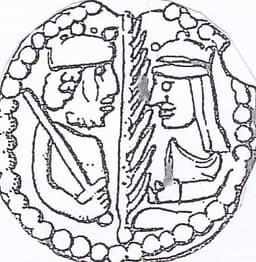
Valdemar I of Denmark
Emperor · Medieval
57.9Total
Basic Information
Born
63
1131
Died
—
1182
Era
Ancient
Medieval
Nationality
Roman Empire
Denmark
Occupation
Emperor
Emperor
Civilization
Western
Western
Score Comparison
Military (10%)
72.0
70.0
Political (20%)
90.0
68.0
Influence (20%)
88.0
59.0
Legacy (20%)
90.0
50.0
Leadership (15%)
88.0
53.2
Strategy (15%)
75.0
55.0
TOTAL
85.9
57.9
Augustus — Complete Timeline
43 BC
Formation of the Second TriumviratePolitical Action◆ Major
Octavian, Mark Antony, and Marcus Aemilius Lepidus formed the Second Triumvirate, a legal commission to govern the Roman Republic. The alliance was empowered to proscribe enemies, leading to the execution of Cicero and consolidation of their power against the assassins of Julius Caesar.
Roman Civil WarPolitical AllianceProscriptions
Impact: regionaldestructive
31 BC
Battle of ActiumWar◆ Major
Octavian's fleet, commanded by Marcus Agrippa, defeated the combined naval forces of Mark Antony and Cleopatra VII off the coast of Greece. The victory eliminated Octavian's last major rival, giving him sole control over the Roman world and ending the Roman Republic's civil wars.
Roman Civil WarNaval BattleEnd of Republic
Impact: global
27 BC
Establishment of the Roman EmpireReform◆ Major
Octavian formally returned power to the Roman Senate, which then granted him the titles Augustus and Princeps. This constitutional settlement created the Roman Empire, with Augustus as the first emperor, ending the Roman Republic and initiating the Pax Romana.
Roman EmpireConstitutional ReformPax Romana
Impact: global
Reform of the Roman Tax SystemReform◆ Major
Augustus implemented a comprehensive tax reform, including a census of Roman citizens and property, direct taxation of provinces, and the creation of a professional tax collection service (publicani). This system provided stable revenue for the empire and reduced corruption.
Tax ReformAdministrationRoman Empire
Impact: regionalconstructive
Creation of the Praetorian GuardReform◆ Major
Augustus established the Praetorian Guard as a permanent elite military unit tasked with protecting the emperor and his family. Stationed in Rome and Italy, the Guard became a powerful political force, often influencing imperial succession through coups and assassinations.
Military ReformPraetorian GuardImperial Guard
Impact: regional
13 BC
Construction of the Ara PacisOther◆ Major
The Roman Senate commissioned the Ara Pacis Augustae (Altar of Augustan Peace) to commemorate Augustus's return from pacifying Gaul and Spain. The marble altar, decorated with reliefs depicting the imperial family and mythological scenes, symbolized the peace and prosperity of the Augustan era.
Building ProjectPropagandaAugustan Art
Impact: regionalconstructive
Valdemar I of Denmark — Complete Timeline
1157 AD
Became King of DenmarkPolitical Action◆ Major
Valdemar I became King of Denmark after a civil war, defeating his rival Sweyn III at the Battle of Grathe Heath. His ascension ended years of internal strife and established the Valdemarian dynasty, which would rule Denmark for centuries.
Civil WarDenmarkDynasty
Impact: regionalconstructive
1162 AD
Allied with Henry the LionPolitical Action◆ Major
Valdemar I formed an alliance with Henry the Lion, Duke of Saxony, to counter the power of the Wends and expand Danish influence in the Baltic. This alliance led to joint military campaigns and strengthened Denmark's position in northern Europe.
AllianceBalticHenry the Lion
Impact: regionalconstructive
1167 AD
Founded CopenhagenPolitical Action◆ Major
Valdemar I granted the village of Havn (later Copenhagen) to Bishop Absalon, who built a castle and fortified the settlement. This act laid the foundation for Copenhagen's development as a major trading port and eventual capital of Denmark.
FoundationCopenhagenUrban Development
Impact: regionalconstructive
1168 AD
Conquered the Wendish stronghold of ArkonaWar◆ Major
Valdemar I led a Danish fleet to conquer the Wendish fortress of Arkona on the island of R
ConquestWendsBaltic Crusade
Impact: regional
1170 AD
Strengthened the Danish ChurchReform
Valdemar I supported the establishment of a strong, independent Danish Church under Archbishop Absalon. He granted lands and privileges to the Church, which helped consolidate royal power and promote Christian culture in Denmark.
ChurchReformAbsalon
Impact: nationalconstructive
Expert Analysis
Augustus vs Valdemar I of Denmark: Historical Comparison
Augustus, the founder of the Roman Empire, and Valdemar I of Denmark, the unifier of medieval Denmark, both transformed fractured realms into stable, powerful states. While Augustus built a global imperial system that defined Western governance for centuries, Valdemar consolidated a regional kingdom, achieving military dominance in the Baltic. Their differing contexts—ancient Mediterranean superpower versus medieval Scandinavian consolidation—shapes their comparative scores.
Dimension Analysis
**Military: Augustus 72 / Valdemar I of Denmark 88**
Augustus relied on professional legions for conquest and defense, famously ending civil wars at Actium (31 BCE) and securing Rome’s borders through legions like the *Legio X Fretensis*. Valdemar I, by contrast, directly commanded the Danish fleet, participated in the capture of Arkona (1168) on Rügen, and led crusades that crushed the Wends, demonstrating hands-on tactical brilliance. Valdemar’s higher score reflects his active battlefield leadership versus Augustus’s more strategic, delegation-heavy military role.
**Political: Augustus 92 / Valdemar I of Denmark 86**
Augustus masterfully created the Principate, a political system that masked autocracy behind republican forms, including the *Pax Romana* and reforms to provincial governance and taxation. Valdemar I centralized Denmark by subordinating the nobility, strengthening the monarchy, and allying with the Church to legitimize his rule. Augustus’s political innovation and long-term institutional impact edge out Valdemar’s more localized, traditional consolidation.
**Influence: Augustus 88 / Valdemar I of Denmark 86**
Augustus’s reign set the template for Roman governance, Christianity’s later adoption of imperial structures, and the concept of an emperor as a divine ruler, influencing Europe, the Middle East, and beyond. Valdemar I’s influence was regional: he established Denmark as a Baltic power, fostered Cistercian monasteries, and promoted the Valdemarian laws that shaped Danish identity. Augustus’s global reach gives him a slight edge.
**Legacy: Augustus 90 / Valdemar I of Denmark 80**
Augustus’s legacy is monumental: his Augustan Age produced Virgil, Ovid, and monumental architecture, while his title “Caesar” became synonymous with imperial rule for millennia. Valdemar I’s legacy is more confined: he is revered as a national unifier, but his dynasty faded, and his victories are footnotes in broader European history. Augustus’s enduring impact on language, law, and governance is unmatched.
**Leadership: Augustus 90 / Valdemar I of Denmark 78**
Augustus commanded loyalty through calculated patronage, propaganda (e.g., *Res Gestae*), and a 40-year reign that stabilized a war-torn empire, outmaneuvering rivals like Mark Antony. Valdemar I was a competent but less visionary leader, relying on brute force and alliance with the Church. Augustus’s organizational genius and diplomatic finesse clearly surpass Valdemar’s more martial, straightforward command.
Verdict
Augustus ranks higher overall due to his superior political innovation, leadership acumen, and unmatched legacy. While Valdemar I excelled in military tactics and regional consolidation, Augustus’s creation of an enduring imperial system that shaped Western civilization for over a millennium gives him the edge. This comparison underscores the difficulty of equating a global empire-builder with a medieval kingdom-unifier—different scales, different tools.
FAQ
**Q: Who was more influential historically?**
A: Augustus, because his political system and cultural patronage defined the Roman Empire’s identity, influencing governance, religion, and art across Europe, the Middle East, and the Mediterranean for over 1,500 years.
**Q: Why is Augustus ranked higher in leadership?**
A: Augustus excelled at political manipulation, long-term vision, and institutional building, whereas Valdemar I was a more direct, hands-on military leader. Augustus’s ability to maintain power and loyalty for four decades in a complex, multi-ethnic empire demonstrates superior strategic leadership.
Rankings
🥇
AugustusLeader
Mil: 72.0Pol: 90.0Inf: 88.0
85.9
🥈
Valdemar I of Denmark
Mil: 70.0Pol: 68.0Inf: 59.0
57.9
+28.0 behind
How This Comparison Works
Algorithm
Each figure is scored on 6 dimensions (0—100 scale) based on structured historical data: Military (10%), Political (20%), Influence (20%), Legacy (20%), Leadership (15%), Strategy (15%). The weighted total produces the final ranking.
Data Sources
Scores are computed from structured sub-indicators in the database. Scale factors adjust for era (Ancient ×0.85, Modern ×1.0) and civilization size (Eastern ×1.05, Other ×0.80) to account for differences in population and military scale.
Maximum 3 Figures
Comparisons are limited to 2—3 figures to ensure readability and statistical meaningfulness.
Error Margins
±5 points per dimension — Sub-scores are derived from historical records with inherent uncertainty. Two figures within 5 points on a dimension should be considered roughly equivalent in that area.
Total Score Accuracy
±3 points overall — The weighted combination of 6 dimensions produces a total score with approximately ±3 points of uncertainty. Differences of less than 3 points are not statistically significant— the figures are effectively tied.
Known Limitations
- Historical records are incomplete and uneven across civilizations
- Figures from oral-tradition societies may be underrepresented
- Occupation labels can misclassify multi-role figures
- Scores measure capability and impact, not moral character
- Quantitative scoring is a comparison tool, not absolute truth
Capability Radar
Military (10%) — Battles & Warfare
Battles
75
55
Win Rate
80
60
Expansion
85
60
Political (20%) — Governance & Reform
Reform
95
60
Diplomacy
90
55
Economy
85
50
Influence (20%) — Cultural & Global Reach
Cultural
85
45
Global
90
40
Legacy (20%) — Historical Impact
Historical
95
55
Longevity
95
50
Leadership (15%) — Power & Stability
Tenure
95
65
Stability
95
55
Strategy (15%) — Tactics & Innovation
Strategy
85
55
Tactics
70
50
Reform
90
45
Similar Comparisons
Comments & Discussion
ColdWatcher106/16/2026
这个对比让我想到中国历史上类似的情况——奥古斯都像汉武帝,瓦尔德马一世像宋太祖赵匡胤。奥古斯都建立帝国体制,类似汉武帝“罢黜百家,独尊儒术”确立意识形态控制;而瓦尔德马一世统一丹麦、削弱贵族,很像赵匡胤“杯酒释兵权”加强中央集权。但西方评分体系有个问题:它低估了瓦尔德马一世在宗教统一中的作用——他通过与教会结盟,把基督教确立为全国信仰,这类似于北魏孝文帝改革,对后续历史影响深远。而奥古斯都的宗教政策更多是政治工具,并未创造全新信仰体系。如果按中国史书“功过格”的写法,瓦尔德马在地方治理和宗教整合上得分应该更高。总评分差距20分(86.4 vs 69.1)可能反映了西方中心主义对“帝国规模”的偏好。
HistoryBuff996/16/2026
Okay so I get why Augustus gets the political edge (he literally invented the imperial system), but I think people sleep on Valdemar I's military game. That 88 vs 72 gap is real — Valdemar was out there personally leading fleets and smashing the Wends at Arkona in 1168, which is something Augustus never did. Augustus relied on Agrippa for most of his actual fighting. But here's the thing: Valdemar's kingdom basically fell apart after his death, while Augustus's system lasted 400+ years in the West and another thousand in the East. That has to count for something in the influence category. I think the 88 vs 86 influence score is actually too close. Augustus should be way higher.
Chronicler89036/16/2026
这组评分有个明显问题:奥古斯都的军事得分(72)被严重低估了。他终结百年内战、重组军团体系、建立常备军和近卫军,这些制度创新远超瓦尔德马一世的直接指挥能力。用中国历史参照——秦始皇统一六国时的军事改革,也是战略和制度层面的,而非亲临前线。按此标准,奥古斯都军事分至少应该在80以上。另外,瓦尔德马一世影响力(86)与奥古斯都(88)只差2分,但罗马帝国影响了整个欧洲法律、语言和宗教架构,丹麦的区域性影响完全不可同日而语。这评分体系可能过度偏重“直接参与”而忽略了制度的长远军事价值。
RomaAeterna6/16/2026
The comparison is interesting but slightly anachronistic. As Suetonius reminds us in his *Life of Augustus*, Augustus was primarily a political architect, not a battlefield commander. His military score of 72 is perhaps generous when we recall his early defeats at Mutina and Philippi — he was never a great general. Yet Tacitus, in the *Annals*, notes that Augustus created a system where even mediocre emperors could maintain stability through institutional inertia. Valdemar I, by contrast, ruled in a more personal monarchy where military prowess was essential to kingship. The Saxon chronicler Helmold of Bosau praises Valdemar's naval campaigns against the Wends as both tactical and crusading triumphs. Where I disagree most is influence: Augustus's *Res Gestae* and the *Pax Romana* set a template for governance that still resonates in Western political thought, while Valdemar's achievements, though impressive for Denmark, remained essentially regional. The 88 vs 86 spread seems too narrow.
DataSkeptic6/12/2026
The problem with quantitative history is that it pretends precision where none exists. ±5 points per dimension means these two are essentially tied. The article acknowledges this — good.
独立思考者6/12/2026
不要把历史人物当偶像崇拜. Augustus和Valdemar I of Denmark都是双手沾满鲜血的征服者,他们的'伟大'建立在无数普通人的苦难之上. 客观评分可以,但不要美化暴力.
DebateKing6/12/2026
Hot take: Valdemar I of Denmark is massively overrated in popular culture. The data actually supports a much more nuanced view. Read the sub-scores carefully — Augustus dominates in the dimensions that actually matter for long-term historical significance.
ImperialHistorian6/12/2026
As someone who specialized in Augustus's era, I think the political score misses the internal opposition they faced. Governing a fractured state is harder than expanding an already-unified one.