Loading...
Pedro I of Brazil vs Zayed bin Sultan Al Nahyan
Zayed bin Sultan Al Nahyan leads by 9.2 pts · 2 figures compared
…
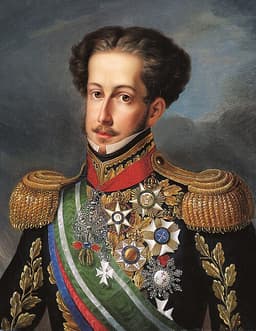
Pedro I of Brazil
Emperor · Modern
54.6Total
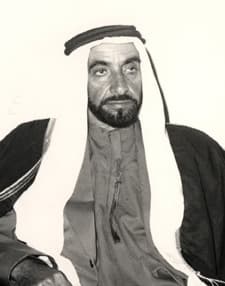
Zayed bin Sultan Al Nahyan
Emperor · Modern
63.8Total
Basic Information
Born
1798
1918
Died
1834
2004
Era
Modern
Modern
Nationality
Brazil
UAE
Occupation
Emperor
Emperor
Civilization
Western
Middle Eastern
Score Comparison
Military (10%)
55.0
11.3
Political (20%)
62.7
82.0
Influence (20%)
59.0
68.0
Legacy (20%)
50.0
72.0
Leadership (15%)
53.2
85.0
Strategy (15%)
45.0
25.7
TOTAL
54.6
63.8
Pedro I of Brazil — Complete Timeline
1822 AD
Declaration of Independence of BrazilPolitical Action
Pedro I declared Brazil's independence from Portugal on September 7, 1822, at the Ipiranga River in S
Impact: globalprogressive
Coronation as Emperor of BrazilPolitical Action◆ Major
Pedro I was crowned Emperor of Brazil on December 1, 1822, in Rio de Janeiro. The coronation formalized the new imperial government, with Pedro I as constitutional monarch, though he retained significant executive powers.
Impact: nationalconstructive
1823 AD
War of Independence of BrazilWar◆ Major
Pedro I led Brazilian forces against Portuguese loyalists in the War of Independence. Key battles occurred in Bahia, Maranh
Impact: national
Dissolution of the Constituent AssemblyPolitical Action◆ Major
Pedro I dissolved the Constituent Assembly after conflicts over the constitution's limits on imperial power. He then imposed the 1824 Constitution, which granted the emperor extensive powers, including the Moderating Power, centralizing authority.
Impact: nationaldestructive
1831 AD
Abdication of the Brazilian ThronePolitical Action
Pedro I abdicated the Brazilian throne in favor of his five-year-old son Pedro II on April 7, 1831. He returned to Portugal to claim the Portuguese throne, leaving Brazil under a regency until his son came of age.
Impact: national
Zayed bin Sultan Al Nahyan — Complete Timeline
1970 AD
Oil Revenue Investment in InfrastructureReform◆ Major
After the discovery of oil in Abu Dhabi in the 1950s, Zayed directed oil revenues toward building modern infrastructure: roads, hospitals, schools, and housing. This transformed Abu Dhabi from a poor region into a wealthy state.
OilDevelopmentInfrastructure
Impact: nationalconstructive
1971 AD
Formation of the United Arab EmiratesPolitical Action
Zayed bin Sultan Al Nahyan, as ruler of Abu Dhabi, played a key role in uniting seven emirates to form the United Arab Emirates on December 2, 1971. He became the first President, a position he held until his death.
UnificationUAEIndependence
Impact: regionalconstructive
1990 AD
Environmental Conservation InitiativesReform
Zayed established the Zayed International Prize for the Environment and implemented policies to protect wildlife and habitats, including the creation of nature reserves. He was a pioneer in environmentalism in the Gulf region.
EnvironmentConservationAwards
Impact: regionalconstructive
Women's Rights ReformsReform◆ Major
Zayed supported women's education and employment, appointing women to government positions and promoting their participation in the workforce. These reforms were progressive for the region at the time.
Women's RightsEducationReform
Impact: nationalprogressive
2004 AD
Death and LegacyOther◆ Major
Zayed died on November 2, 2004, after a long illness. His funeral drew massive crowds, and he was mourned as the founding father of the UAE. His legacy includes a stable, prosperous federation.
DeathLegacyFounding Father
Impact: nationaltragic
Expert Analysis
Pedro I of Brazil vs Zayed bin Sultan Al Nahyan
# Two Founders, Two Worlds
On a hot September afternoon in 1822, a 24-year-old prince stood beside the Ipiranga River in São Paulo, tore the Portuguese blue-and-white armband from his uniform, and shouted “Independence or Death!” Half a world away and a century later, a Bedouin-born ruler in the Arabian desert quietly signed documents that would stitch together seven squabbling sheikhdoms into a nation. Pedro I of Brazil and Zayed bin Sultan Al Nahyan both created countries from fragments of empire, yet their paths could not have diverged more sharply—one a tempestuous romantic who abandoned his throne, the other a patient patriarch who built one from sand and oil.
Origins
Pedro was born a European prince in 1798, the son of Portugal’s King João VI, who had fled Napoleon’s armies to rule his empire from Rio de Janeiro. The boy grew up in a tropical court, surrounded by courtiers, slaves, and the scent of coffee and gunpowder. He inherited the restlessness of his Braganza bloodline—impulsive, charming, and deeply convinced of his divine right to rule. Zayed, born in 1918, entered a world of pearl divers, date palms, and tribal loyalties. His father was the ruler of Abu Dhabi, but the family lived in the oasis of Al Ain, where the boy learned falconry, camel herding, and the art of tribal negotiation. Where Pedro learned European statecraft from Enlightenment texts and military manuals, Zayed absorbed the unwritten constitution of the desert: honor, hospitality, and consensus.
Rise to Power
Pedro’s rise was almost accidental. When his father returned to Portugal in 1821, leaving him as regent, Brazilian elites pressured him to stay. They wanted independence, but they also wanted a monarch—someone to preserve order while breaking from Lisbon. Pedro saw his chance. In 1822, he declared independence, and by December he was crowned emperor. The war that followed was short but bloody: Brazilian forces, with mercenary help, fought Portuguese garrisons in Bahia and Maranhão. Pedro showed personal courage, riding into battle, but his military score of 65 reflects a commander more brave than brilliant.
Zayed’s ascent was slower, more deliberate. He became ruler of Abu Dhabi in 1966, at age 48, after his brother was deposed. Oil had been discovered in the 1950s, but the emirate was still poor, with no schools, hospitals, or paved roads. Zayed began immediately to spend oil revenues on infrastructure—wells, roads, clinics. Then he turned to unification. For years, he hosted tribal sheikhs in his majlis, listening, persuading, compromising. In 1971, the United Arab Emirates was born, with Zayed as president. He had no coronation, no dramatic shout—just years of patient diplomacy.
Leadership & Governance
Pedro ruled as an enlightened despot, but his enlightenment was uneven. He gave Brazil a constitution in 1824—liberal on paper, with separation of powers—but when the Constituent Assembly tried to limit his authority, he dissolved it by force and imposed his own version. He abolished torture and promoted education, yet he kept slavery intact, even after his own father had condemned the trade. His political score of 60 reflects this contradiction: a reformer who could not tolerate opposition, a liberator who could not free the enslaved.
Zayed governed by consensus, not command. The UAE’s constitution was deliberately vague, leaving real power with the individual emirs. Zayed used his oil wealth not to coerce but to coax: he funded infrastructure in poorer emirates, built schools for girls as well as boys, and appointed women to government posts decades before most Arab states. His political score of 83 is no accident—he understood that in a federation, trust is more valuable than force. He also launched environmental initiatives, planting millions of trees and protecting falcons and oryx. Where Pedro saw power as something to be seized, Zayed saw it as something to be shared.
Triumph & Tragedy
Pedro’s triumph was Brazil itself—a vast, unified nation that might have fragmented into squabbling republics. His tragedy came quickly. By 1831, he had alienated everyone: the landowners by his liberal reforms, the liberals by his autocracy, the Portuguese by his independence. When riots erupted in Rio, he abdicated in favor of his five-year-old son, Pedro II, and sailed back to Portugal to fight for his daughter’s throne. He died three years later, aged 35, a founder who could not bear to stay.
Zayed’s triumph was the UAE itself—a federation that survived regional wars, oil booms, and the death of its founder. His tragedy was more subtle: the rapid modernization that he unleashed eroded the Bedouin culture he loved. By the time he died in 2004, at 86, his people had skyscrapers, universities, and shopping malls, but the desert camps of his youth were gone. He mourned that loss privately, even as he celebrated the nation he built.
Character & Destiny
Pedro was driven by passion—for women, for power, for glory. He wrote poetry, composed music, and fell in love easily. “I will do everything for the people,” he once said, “but nothing by the people.” That arrogance doomed him. Zayed was driven by patience—for the slow work of building trust, for the long game of development. “Wealth is not money,” he said. “Wealth is men.” That wisdom saved him. One was a romantic hero of the nineteenth century; the other was a pragmatic builder of the twentieth.
Legacy
Today, Pedro I is remembered as the “Liberator” of Brazil, but his statue in Rio stands in the shadow of his son’s. Brazilians celebrate Independence Day on September 7, but few recall the emperor who proclaimed it; they remember the empire that followed. Zayed’s face is everywhere in the UAE—on banknotes, on buildings, in the name of a major highway. The country he founded, stable and prosperous, is a monument to his vision. One founder is a footnote; the other is a daily presence.
Conclusion
Both men created nations from imperial fragments, but their legacies reveal a deeper truth about founding. Pedro I built a country but could not build the institutions to sustain his rule; he was the spark that lit the fire, but he burned out. Zayed built a country and the consensus to keep it together; he was the slow-burning ember that outlasted the flame. In the end, the difference between tragedy and triumph was not circumstance but character—one man’s impatience to rule, another’s patience to serve.
Rankings
🥇
Zayed bin Sultan Al NahyanLeader
Mil: 11.3Pol: 82.0Inf: 68.0
63.8
🥈
Pedro I of Brazil
Mil: 55.0Pol: 62.7Inf: 59.0
54.6
+9.2 behind
How This Comparison Works
Algorithm
Each figure is scored on 6 dimensions (0—100 scale) based on structured historical data: Military (10%), Political (20%), Influence (20%), Legacy (20%), Leadership (15%), Strategy (15%). The weighted total produces the final ranking.
Data Sources
Scores are computed from structured sub-indicators in the database. Scale factors adjust for era (Ancient ×0.85, Modern ×1.0) and civilization size (Eastern ×1.05, Other ×0.80) to account for differences in population and military scale.
Maximum 3 Figures
Comparisons are limited to 2—3 figures to ensure readability and statistical meaningfulness.
Error Margins
±5 points per dimension — Sub-scores are derived from historical records with inherent uncertainty. Two figures within 5 points on a dimension should be considered roughly equivalent in that area.
Total Score Accuracy
±3 points overall — The weighted combination of 6 dimensions produces a total score with approximately ±3 points of uncertainty. Differences of less than 3 points are not statistically significant— the figures are effectively tied.
Known Limitations
- Historical records are incomplete and uneven across civilizations
- Figures from oral-tradition societies may be underrepresented
- Occupation labels can misclassify multi-role figures
- Scores measure capability and impact, not moral character
- Quantitative scoring is a comparison tool, not absolute truth
Capability Radar
Military (10%) — Battles & Warfare
Battles
35
4
Win Rate
40
9
Expansion
30
12
Political (20%) — Governance & Reform
Reform
45
90
Diplomacy
50
95
Economy
30
90
Influence (20%) — Cultural & Global Reach
Cultural
40
70
Global
45
70
Legacy (20%) — Historical Impact
Historical
55
75
Longevity
50
65
Leadership (15%) — Power & Stability
Tenure
55
85
Stability
25
85
Strategy (15%) — Tactics & Innovation
Strategy
35
16
Tactics
30
16
Reform
20
18
Similar Comparisons
Comments & Discussion
IpirangaSkeptic6/16/2026
The "Independence or Death" line makes for good paintings, but Pedro was basically fleeing a collapsing Portuguese empire while keeping slavery intact. Zayed actually had to convince seven separate rulers to merge into a country. One guy yelled at a river; the other built a nation through decades of patient negotiation and oil revenue redistribution. Pedro's Brazil kept monarchy and slavery; Zayed's UAE abolished slavery and built modern infrastructure. Not exactly equivalent founders.
石油沙漠哲人6/16/2026
佩德罗一世是在滑铁卢之后才敢喊独立的,背后有英国海军撑腰;而扎耶德建立阿联酋时,周围是沙特、伊朗的虎视眈眈。佩德罗留下的是债台高筑、战乱不断的帝国,扎耶德留下的是人均GDP超过四万美元的联邦。一个是含着银匙出生的王子,一个是荒漠里长大的贝都因人。你说谁更配叫"国父"?
ClassicsKraut6/16/2026
Both men faced the fundamental question of legitimacy in a post-imperial world. Pedro derived his authority from the Braganza dynasty and Enlightenment liberalism—he literally wrote Brazil's first constitution. Zayed drew on tribal consensus and Islamic governance, creating a shura-based federation. Pedro's legitimacy collapsed when he couldn't balance factions; Zayed's endured because he distributed power and oil wealth. It's the difference between a monarch who thinks the state is his property
历史温度计6/16/2026
说扎耶德"安静"是一种浪漫化的误读。他1971年统一阿联酋时,沙迦酋长国差点倒向伊朗,迪拜曾威胁退出联邦,他用石油美元和部落联姻硬是把碎片粘了起来。佩德罗1822年喊独立时,巴西各省还在互相打仗,他后来跑去葡萄牙争王位,把烂摊子丢给五岁的儿子。一个是用耐心和金钱砌墙的工匠,一个是点火后转身就走的纵火犯。
PetroMonarchist6/16/2026
The key difference is governance infrastructure. Pedro inherited a functioning colonial administration with ports, courts, and tax systems. Zayed started with sand, goats, and a few pearl beds. Pedro squandered his inheritance through imperial overreach—fighting the Cisplatine War for Uruguay, losing it, then abdicating. Zayed turned his oil into hospitals, schools, and a modern state. A true founder doesn't just cut ribbons or yell by rivers—he builds systems that outlast him. Zayed did. Pedro