Loading...
Pedro I of Brazil vs Yelu Abaoji
Yelu Abaoji leads by 8.1 pts · 2 figures compared
…
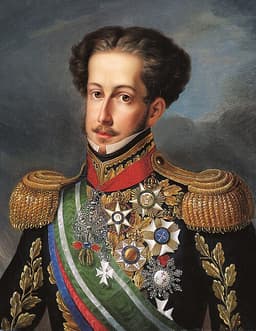
Pedro I of Brazil
Emperor · Modern
54.6Total
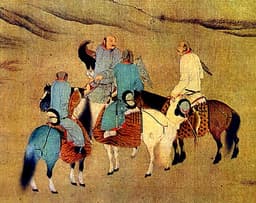
Yelu Abaoji
Emperor · Medieval
62.7Total
Basic Information
Born
1798
872
Died
1834
926
Era
Modern
Medieval
Nationality
Brazil
China
Occupation
Emperor
Emperor
Civilization
Western
Eastern
Score Comparison
Military (10%)
55.0
77.2
Political (20%)
62.7
59.6
Influence (20%)
59.0
68.0
Legacy (20%)
50.0
40.0
Leadership (15%)
53.2
80.3
Strategy (15%)
45.0
69.6
TOTAL
54.6
62.7
Pedro I of Brazil — Complete Timeline
1822 AD
Declaration of Independence of BrazilPolitical Action
Pedro I declared Brazil's independence from Portugal on September 7, 1822, at the Ipiranga River in S
Impact: globalprogressive
Coronation as Emperor of BrazilPolitical Action◆ Major
Pedro I was crowned Emperor of Brazil on December 1, 1822, in Rio de Janeiro. The coronation formalized the new imperial government, with Pedro I as constitutional monarch, though he retained significant executive powers.
Impact: nationalconstructive
1823 AD
War of Independence of BrazilWar◆ Major
Pedro I led Brazilian forces against Portuguese loyalists in the War of Independence. Key battles occurred in Bahia, Maranh
Impact: national
Dissolution of the Constituent AssemblyPolitical Action◆ Major
Pedro I dissolved the Constituent Assembly after conflicts over the constitution's limits on imperial power. He then imposed the 1824 Constitution, which granted the emperor extensive powers, including the Moderating Power, centralizing authority.
Impact: nationaldestructive
1831 AD
Abdication of the Brazilian ThronePolitical Action
Pedro I abdicated the Brazilian throne in favor of his five-year-old son Pedro II on April 7, 1831. He returned to Portugal to claim the Portuguese throne, leaving Brazil under a regency until his son came of age.
Impact: national
Yelu Abaoji — Complete Timeline
907 AD
Unified Khitan tribesPolitical Action◆ Major
Yelu Abaoji was elected khagan of the Khitan tribes, unifying them under his leadership. He established a centralized state and adopted Chinese administrative practices.
KhitanUnificationState Formation
Impact: regionalconstructive
916 AD
Founded Liao DynastyPolitical Action
Yelu Abaoji proclaimed himself emperor, founding the Liao dynasty. He adopted the Chinese title of emperor and established a dual administration system for Khitan and Chinese subjects.
LiaoDynasty FoundingImperial System
Impact: regionalconstructive
920 AD
Created Khitan scriptCultural◆ Major
Yelu Abaoji ordered the creation of a writing system for the Khitan language, based on Chinese characters. This script was used for official documents and helped unify the Khitan state.
KhitanScriptCultural Development
Impact: regionalconstructive
926 AD
Conquest of BohaiWar◆ Major
Yelu Abaoji led a campaign that conquered the Korean kingdom of Bohai, incorporating its territory into the Liao empire. This expanded Liao's influence into Manchuria and Korea.
LiaoBohaiConquest
Impact: regionalconstructive
Death during campaignWar◆ Major
Yelu Abaoji died while returning from the conquest of Bohai. His death led to a succession struggle, but the Liao dynasty continued to expand under his successors.
LiaoDeathSuccession
Impact: regionaltragic
Expert Analysis
Pedro I of Brazil vs Yelu Abaoji
# The Emperor and the Khagan
On a September morning in 1822, a young Portuguese prince stood at the banks of the Ipiranga River in São Paulo, tore the blue-and-white insignia of Portugal from his uniform, and shouted "Independence or Death!" It was a moment of theatrical brilliance, a declaration that would carve a new nation from the heart of South America. A thousand years earlier and half a world away, another ruler—a steppe chieftain named Yelu Abaoji—had no such dramatic gestures. His path to empire was slower, more deliberate, built not on a single cry but on decades of patient unification. Both men founded dynasties. Both shaped civilizations. Yet their stories could not be more different.
Origins
Pedro I of Brazil was born into the glittering chaos of European royalty. His father was King João VI of Portugal, and his mother was Carlota Joaquina of Spain—a woman whose ambition and temper were legendary. Pedro grew up in the shadow of the Napoleonic Wars, fleeing Lisbon for Rio de Janeiro in 1807 when French armies invaded. He was educated in the rough-and-tumble of court intrigue, learning Portuguese, Latin, and French, but also horse-riding and hunting. He was impulsive, charming, and dangerously confident—a prince who had never known real hardship.
Yelu Abaoji, by contrast, emerged from the harsh grasslands of Inner Mongolia. Born in 872, he was a member of the Yila tribe of the Khitan people, a nomadic confederation that had long raided China's northern borders. His father was a tribal chieftain, but the Khitan world was one of constant warfare, shifting alliances, and survival. Abaoji learned to ride before he could walk, to read the stars for weather, and to command men in battle. He had no royal education, no libraries, no European tutors—only the steppe and its unforgiving lessons.
Rise to Power
Pedro's rise was almost accidental. In 1821, his father João VI returned to Portugal, leaving Pedro as regent of Brazil. The Portuguese Cortes in Lisbon, seeking to reduce Brazil back to colonial status, demanded Pedro return to Europe. He refused. The decision was not entirely his own—his wife, Leopoldina of Austria, and his advisor José Bonifácio pushed him toward independence. On September 7, 1822, he made it official. Within months, he was crowned Emperor Pedro I of Brazil.
Abaoji's path was far more deliberate. In 907, at the age of thirty-five, he was elected khagan of all Khitan tribes—but the title was not absolute. He spent years consolidating power, defeating rival chieftains, and building a state where none had existed. Only in 916 did he proclaim himself emperor, founding the Liao dynasty. He did not inherit a throne; he built one from horsehide and iron.
Leadership & Governance
Pedro I ruled as a constitutional emperor, but he chafed against limits. In 1823, he dissolved the Constituent Assembly after disputes over the constitution's restrictions on imperial power, then imposed his own charter. He was a military commander of moderate skill—his forces won the War of Independence against Portuguese loyalists in Bahia and Maranhão by 1823, but his strategy score of 50.0 reflects a leader who relied more on charisma than cunning. He was a reformer in appearance, but his governance was erratic, marked by favoritism and personal feuds.
Abaoji was the opposite. His political score of 90.0 and leadership score of 89.2 reveal a master of statecraft. He adopted Chinese administrative methods, established a bureaucracy, and created a dual system of governance—one for Khitan nomads, one for Chinese farmers. In 920, he ordered the creation of a Khitan script, a monumental cultural achievement that gave his people a written language. He conquered the Korean kingdom of Bohai in 926, incorporating its territory without destroying its culture. His military strategy score of 80.1 shows a commander who planned campaigns with precision, not passion.
Triumph & Tragedy
Pedro's greatest triumph was the independence of Brazil itself—a vast, unified nation that might otherwise have fragmented into warring republics. His tragedy was his own character. He was an absentee emperor, more interested in Portuguese affairs than Brazilian ones. When his popularity collapsed, he abdicated in 1831 in favor of his five-year-old son, Pedro II, and returned to Portugal. He died three years later, at thirty-five, a man who had achieved the impossible and then thrown it away.
Abaoji's triumph was the Liao dynasty itself—a steppe empire that would last two centuries and dominate northern China. His tragedy came at the moment of victory: he died in 926 while returning from the conquest of Bohai, possibly from illness or wounds. His death triggered a succession crisis, but the dynasty survived. He left behind a unified people, a written language, and a state that could endure without him.
Character & Destiny
Pedro I was a man of the moment—impulsive, emotional, theatrical. He loved music, women, and power, but he lacked discipline. His abdication was not forced by an army but by his own exhaustion with responsibility. He was, in many ways, a Romantic figure in an age of revolution, but his destiny was to be a footnote to his son's reign.
Abaoji was a builder. He thought in decades, not days. He studied Chinese history, adopted Chinese rituals, but never lost his Khitan identity. He was pragmatic, patient, and ruthless when necessary. His destiny was to create a civilization that bridged steppe and sown land, a legacy that would influence China for centuries.
Legacy
Pedro I is remembered as the "Father of the Nation" in Brazil, but his legacy is ambiguous. His total score of 65.7 reflects a leader who was more symbol than substance. Brazil's stability came from his son, not from him. He is a statue in Rio, a name in textbooks, but his reign was a chaotic prelude.
Abaoji's legacy is deeper. His Liao dynasty set the pattern for later conquest dynasties like the Yuan and Qing. His Khitan script, though now extinct, was a pioneering effort in writing for a non-Chinese language. He is remembered as a unifier, a founder, a lawgiver. His total score of 79.3 reflects a leader who shaped history, not just appeared in it.
Conclusion
One emperor shouted "Independence or Death" and changed a continent. Another built a writing system and a dynasty that lasted two hundred years. Pedro I of Brazil was a brilliant flame that burned out too quickly. Yelu Abaoji was a slow fire that warmed an empire. The difference between them is not just in scores or dates—it is in the nature of their ambition. Pedro wanted glory; Abaoji wanted order. One left a nation; the other left a civilization. Both were founders, but only one understood that founding is not enough. You must also build.
Rankings
🥇
Yelu AbaojiLeader
Mil: 77.2Pol: 59.6Inf: 68.0
62.7
🥈
Pedro I of Brazil
Mil: 55.0Pol: 62.7Inf: 59.0
54.6
+8.1 behind
How This Comparison Works
Algorithm
Each figure is scored on 6 dimensions (0—100 scale) based on structured historical data: Military (10%), Political (20%), Influence (20%), Legacy (20%), Leadership (15%), Strategy (15%). The weighted total produces the final ranking.
Data Sources
Scores are computed from structured sub-indicators in the database. Scale factors adjust for era (Ancient ×0.85, Modern ×1.0) and civilization size (Eastern ×1.05, Other ×0.80) to account for differences in population and military scale.
Maximum 3 Figures
Comparisons are limited to 2—3 figures to ensure readability and statistical meaningfulness.
Error Margins
±5 points per dimension — Sub-scores are derived from historical records with inherent uncertainty. Two figures within 5 points on a dimension should be considered roughly equivalent in that area.
Total Score Accuracy
±3 points overall — The weighted combination of 6 dimensions produces a total score with approximately ±3 points of uncertainty. Differences of less than 3 points are not statistically significant— the figures are effectively tied.
Known Limitations
- Historical records are incomplete and uneven across civilizations
- Figures from oral-tradition societies may be underrepresented
- Occupation labels can misclassify multi-role figures
- Scores measure capability and impact, not moral character
- Quantitative scoring is a comparison tool, not absolute truth
Capability Radar
Military (10%) — Battles & Warfare
Battles
35
75
Win Rate
40
80
Expansion
30
82
Political (20%) — Governance & Reform
Reform
45
88
Diplomacy
50
75
Economy
30
70
Influence (20%) — Cultural & Global Reach
Cultural
40
60
Global
45
55
Legacy (20%) — Historical Impact
Historical
55
70
Longevity
50
65
Leadership (15%) — Power & Stability
Tenure
55
72
Stability
25
65
Strategy (15%) — Tactics & Innovation
Strategy
35
78
Tactics
30
70
Reform
20
85
Similar Comparisons
Comments & Discussion
Axeman of Ipiranga6/16/2026
Pedro I’s "cry" is overrated theater. A real emperor doesn’t need to yell on a riverbank; he builds empires on blood and strategy. Abaoji unified Khitan tribes through decades of warfare and diplomacy—no dramatic tears, no Portuguese court dramas. He invented a script, conquered farming and nomads, and founded the Liao Dynasty that scared Song China for centuries. Pedro? He abandoned Brazil six years later for a throne he never earned in Portugal. One founder built; the other just showed up.|
草原铁骑6/16/2026
佩德罗一世就是个穿着军装的纨绔子弟。1822年的“独立呼声”听起来很威风,但巴西独立后呢?他花了六年时间打仗、欠债、丑闻不断,最后干脆扔下王位跑回葡萄牙抢王冠去了。反观耶律阿保机,从草原本部走出,统一契丹八部,硬生生在唐末乱世中打出一个朝代。佩德罗靠的是爹妈的血统和英国的支持,阿保机靠的是自己的手和脑子。一个演员,一个实干家。|
ScriptGuy Khitan6/16/2026
Data check: Pedro’s dramatic independence took maybe a decade to stabilize, but Liao Dynasty ruled Northern China for 218 years. Abaoji’s population estimate? At least a million Khitans plus conquered Han, yet he legislated, created two writing systems, and built a legitimate dual-administration state. Meanwhile, Pedro’s Brazil had one constitution rewrite, a five-year reign, and he left a debt crisis. Dominance metric: Abaoji wins on longevity, stability, and literacy. Pedros are for novels; Kh
黄河判官6/16/2026
拿佩德罗一世跟耶律阿保机比,就像拿画眉鸟比苍鹰。佩德罗的“独立或死”是句台词,但阿保机的征服是铁板钉钉的土地和人民。阿保机不光打仗厉害,还从汉人俘虏中吸收农业、文字、工匠,建立了契丹第一部成文法。这家伙不是在表演革命,是在建国家机器。佩德罗更像是历史的即兴演员——感动了一群爱国者,却没能感动他的国库和继承人。|
Clio's Whisper6/16/2026
From a classics perspective, Pedro is a Roman wannabe: impulsive, theatrically decisive, obsessed with glory. Abaoji is more like a philosopher-king out of Plato’s *Republic* but on horseback: strategic, literate, and institutional. Pedro declared independence with a sword—Abaoji unified his people with a law code and a calendar. Pedro’s empire dissolved within his son’s lifetime; Abaoji’s Liao outlasted the Tang. Who left deeper footprints? The