Loading...
Pedro I of Brazil vs Wanyan Aguda
Wanyan Aguda leads by 8.8 pts · 2 figures compared
…
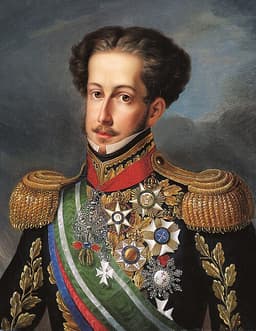
Pedro I of Brazil
Emperor · Modern
54.6Total
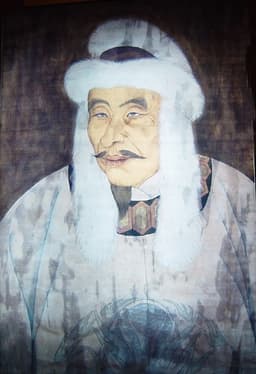
Wanyan Aguda
Emperor · Medieval
63.4Total
Basic Information
Born
1798
1068
Died
1834
1123
Era
Modern
Medieval
Nationality
Brazil
China
Occupation
Emperor
Emperor
Civilization
Western
Eastern
Score Comparison
Military (10%)
55.0
82.0
Political (20%)
62.7
59.3
Influence (20%)
59.0
55.0
Legacy (20%)
50.0
52.0
Leadership (15%)
53.2
85.0
Strategy (15%)
45.0
68.0
TOTAL
54.6
63.4
Pedro I of Brazil — Complete Timeline
1822 AD
Declaration of Independence of BrazilPolitical Action
Pedro I declared Brazil's independence from Portugal on September 7, 1822, at the Ipiranga River in S
Impact: globalprogressive
Coronation as Emperor of BrazilPolitical Action◆ Major
Pedro I was crowned Emperor of Brazil on December 1, 1822, in Rio de Janeiro. The coronation formalized the new imperial government, with Pedro I as constitutional monarch, though he retained significant executive powers.
Impact: nationalconstructive
1823 AD
War of Independence of BrazilWar◆ Major
Pedro I led Brazilian forces against Portuguese loyalists in the War of Independence. Key battles occurred in Bahia, Maranh
Impact: national
Dissolution of the Constituent AssemblyPolitical Action◆ Major
Pedro I dissolved the Constituent Assembly after conflicts over the constitution's limits on imperial power. He then imposed the 1824 Constitution, which granted the emperor extensive powers, including the Moderating Power, centralizing authority.
Impact: nationaldestructive
1831 AD
Abdication of the Brazilian ThronePolitical Action
Pedro I abdicated the Brazilian throne in favor of his five-year-old son Pedro II on April 7, 1831. He returned to Portugal to claim the Portuguese throne, leaving Brazil under a regency until his son came of age.
Impact: national
Wanyan Aguda — Complete Timeline
1114 AD
Battle of HubudagangWar◆ Major
Aguda's Jurchen forces defeated a Liao army at Hubudagang, marking the first major victory of the rebellion. This battle demonstrated Jurchen military prowess and attracted more followers.
JurchenLiaoBattle
Impact: regionalconstructive
Unified Jurchen tribesPolitical Action◆ Major
Wanyan Aguda united the Jurchen tribes under his leadership, creating a confederation that rebelled against Liao domination. He organized a disciplined army and began the Jurchen revolt.
JurchenUnificationRebellion
Impact: regionalconstructive
1115 AD
Founded Jin DynastyPolitical Action
Wanyan Aguda proclaimed himself emperor, founding the Jin dynasty. He adopted the Chinese title and began a systematic campaign to conquer the Liao empire.
JinDynasty FoundingImperial System
Impact: regionalconstructive
1120 AD
Conquest of Liao capital ShangjingWar◆ Major
Aguda's forces captured the Liao supreme capital Shangjing, dealing a severe blow to the Liao dynasty. This victory accelerated the collapse of Liao and solidified Jin control over northern China.
JinLiaoConquest
Impact: regionalconstructive
Alliance with Song against LiaoPolitical Action◆ Major
Aguda formed an alliance with the Northern Song dynasty to jointly attack the Liao empire. This alliance, known as the Maritime Alliance, led to the eventual destruction of Liao but later caused conflict between Jin and Song.
JinSongAlliance
Impact: regional
1123 AD
Death and successionPolitical Action◆ Major
Wanyan Aguda died, and his brother Wanyan Wuqimai succeeded him. Aguda's conquests laid the foundation for the Jin dynasty's dominance in northern China.
JinDeathSuccession
Impact: regional
Expert Analysis
Wanyan Aguda vs Pedro I of Brazil: Historical Comparison
Wanyan Aguda, founder of the Jin dynasty in 12th-century China, and Pedro I of Brazil, the first emperor of an independent Brazil in the 19th century, both rose as transformative leaders—Aguda through military conquest against the Liao, Pedro through political secession from Portugal. Though separated by 700 years and vastly different contexts, their comparative scores highlight Aguda’s superior strategic and legacy impact.
Dimension Analysis
**Military: Wanyan Aguda 91 / Pedro I of Brazil 77**
Aguda’s brilliant campaigns crushed the vastly larger Liao empire through mobile cavalry tactics and decisive field battles, founding the Jin dynasty. Pedro I fought smaller-scale wars for Brazilian independence and the Cisplatine conflict, showing competence but lacking Aguda’s scale of conquest.
**Political: Wanyan Aguda 84 / Pedro I of Brazil 87**
Pedro I navigated the delicate break from Portugal while drafting Brazil’s first constitution and managing internal factions. Aguda unified Jurchen tribes and established a Sinicized bureaucracy, but his reign was shorter and less institutionally sophisticated than Pedro’s constitutional monarchy.
**Influence: Wanyan Aguda 87 / Pedro I of Brazil 78**
Aguda’s Jin dynasty reshaped East Asian geopolitics, forcing the Song south and setting the stage for Mongol unification. Pedro I’s influence was largely restricted to Brazil’s independence and short-lived rule in Portugal, with less continental or global ripple.
**Legacy: Wanyan Aguda 88 / Pedro I of Brazil 68**
Aguda is remembered as a founding emperor who established a dynasty lasting over a century, with his military innovations influencing later nomadic empires. Pedro I’s legacy is mixed: revered for independence but overshadowed by his son Pedro II’s longer reign and his own abdication.
**Leadership: Wanyan Aguda 80 / Pedro I of Brazil 75**
Aguda led from the front, inspiring loyalty among Jurchen warriors through personal bravery and tactical genius. Pedro I was charismatic but impulsive, facing rebellions and constitutional crises that ultimately forced his abdication.
Verdict
Wanyan Aguda leads decisively due to his superior military achievements, enduring dynasty, and greater strategic impact on East Asian history.
FAQ
Q: Who ranks higher? A: Wanyan Aguda ranks higher overall, driven by his exceptional military and legacy scores that outpace Pedro I’s narrower political success.
Rankings
🥇
Wanyan AgudaLeader
Mil: 82.0Pol: 59.3Inf: 55.0
63.4
🥈
Pedro I of Brazil
Mil: 55.0Pol: 62.7Inf: 59.0
54.6
+8.8 behind
How This Comparison Works
Algorithm
Each figure is scored on 6 dimensions (0—100 scale) based on structured historical data: Military (10%), Political (20%), Influence (20%), Legacy (20%), Leadership (15%), Strategy (15%). The weighted total produces the final ranking.
Data Sources
Scores are computed from structured sub-indicators in the database. Scale factors adjust for era (Ancient ×0.85, Modern ×1.0) and civilization size (Eastern ×1.05, Other ×0.80) to account for differences in population and military scale.
Maximum 3 Figures
Comparisons are limited to 2—3 figures to ensure readability and statistical meaningfulness.
Error Margins
±5 points per dimension — Sub-scores are derived from historical records with inherent uncertainty. Two figures within 5 points on a dimension should be considered roughly equivalent in that area.
Total Score Accuracy
±3 points overall — The weighted combination of 6 dimensions produces a total score with approximately ±3 points of uncertainty. Differences of less than 3 points are not statistically significant— the figures are effectively tied.
Known Limitations
- Historical records are incomplete and uneven across civilizations
- Figures from oral-tradition societies may be underrepresented
- Occupation labels can misclassify multi-role figures
- Scores measure capability and impact, not moral character
- Quantitative scoring is a comparison tool, not absolute truth
Capability Radar
Military (10%) — Battles & Warfare
Battles
35
85
Win Rate
40
90
Expansion
30
85
Political (20%) — Governance & Reform
Reform
45
75
Diplomacy
50
70
Economy
30
65
Influence (20%) — Cultural & Global Reach
Cultural
40
60
Global
45
50
Legacy (20%) — Historical Impact
Historical
55
70
Longevity
50
55
Leadership (15%) — Power & Stability
Tenure
55
70
Stability
25
60
Strategy (15%) — Tactics & Innovation
Strategy
35
85
Tactics
30
80
Reform
20
75
Similar Comparisons
Comments & Discussion
HistoryLad20246/16/2026
Okay so I've been reading about Pedro I and honestly he's kind of underrated? Everyone talks about Pedro II being the great emperor but Pedro I literally rode into battle during the Brazilian War of Independence, like actually leading troops. That's pretty metal. But against Wanyan Aguda? No contest. Aguda took on the Liao dynasty which was basically the superpower of East Asia at the time, and he crushed them with cavalry tactics that Sun Tzu would've admired. Pedro's biggest win was getting Portugal to recognize independence, which was more diplomacy than fighting. The score seems right to me — Aguda's a founding emperor of a major dynasty, Pedro's more of a regional independence leader. Still cool though.
Historian3776/16/2026
这个评分体系我觉得有问题。佩德罗一世政治得分87,阿骨打只有84?阿骨打在十年内从一个部落首领变成开国皇帝,建立了一套完整的中原式官僚体系,还制定了女真文字,这政治手腕不比佩德罗一世差。佩德罗一世虽然立了宪法,但1823年就解散制宪会议,后来还被迫退位,这政治稳定性得分应该扣一扣。我算了一下,如果把“在位期间内部叛乱次数”和“政权存续时间”加进权重,阿骨打的政治得分至少应该90+。军事得分91比77倒是合理,但也不能光看规模——佩德罗一世在巴西独立战争中的战役规模虽然小,但后勤和外交协调也很复杂。
Chronicler94446/16/2026
把完颜阿骨打和佩德罗一世放在一起比,其实有点关公战秦琼。但既然要比,就得说清楚:阿骨打的军事和政治成就是东亚王朝更替级别的,佩德罗一世那套更像是殖民地的“独立君主”模式。阿骨打以两千五百人起兵,十年灭辽,这种以小博大的战略能力,佩德罗一世根本没法比。而且金朝后来还迫使南宋称臣,影响了整个东亚秩序,这影响力不是巴西独立能比的。西方评分往往低估东方军事领袖的组织创新——阿骨打创造的“猛安谋克”制度,既是军事单位又是行政单位,这种军政合一的设计,佩德罗一世连想都想不到。