Loading...
Pedro I of Brazil vs Qin Shi Huang
Qin Shi Huang leads by 30.6 pts · 2 figures compared
…
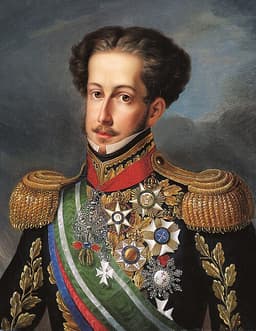
Pedro I of Brazil
Emperor · Modern
54.6Total
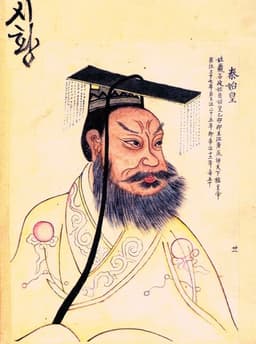
Qin Shi Huang
Emperor · Ancient
85.2Total
Basic Information
Born
1798
-259
Died
1834
-210
Era
Modern
Ancient
Nationality
Brazil
China
Occupation
Emperor
Emperor
Civilization
Western
Eastern
Score Comparison
Military (10%)
55.0
80.0
Political (20%)
62.7
90.0
Influence (20%)
59.0
85.0
Legacy (20%)
50.0
90.0
Leadership (15%)
53.2
78.0
Strategy (15%)
45.0
82.0
TOTAL
54.6
85.2
Pedro I of Brazil — Complete Timeline
1822 AD
Declaration of Independence of BrazilPolitical Action
Pedro I declared Brazil's independence from Portugal on September 7, 1822, at the Ipiranga River in S
Impact: globalprogressive
Coronation as Emperor of BrazilPolitical Action◆ Major
Pedro I was crowned Emperor of Brazil on December 1, 1822, in Rio de Janeiro. The coronation formalized the new imperial government, with Pedro I as constitutional monarch, though he retained significant executive powers.
Impact: nationalconstructive
1823 AD
War of Independence of BrazilWar◆ Major
Pedro I led Brazilian forces against Portuguese loyalists in the War of Independence. Key battles occurred in Bahia, Maranh
Impact: national
Dissolution of the Constituent AssemblyPolitical Action◆ Major
Pedro I dissolved the Constituent Assembly after conflicts over the constitution's limits on imperial power. He then imposed the 1824 Constitution, which granted the emperor extensive powers, including the Moderating Power, centralizing authority.
Impact: nationaldestructive
1831 AD
Abdication of the Brazilian ThronePolitical Action
Pedro I abdicated the Brazilian throne in favor of his five-year-old son Pedro II on April 7, 1831. He returned to Portugal to claim the Portuguese throne, leaving Brazil under a regency until his son came of age.
Impact: national
Qin Shi Huang — Complete Timeline
246 BC
Construction of the Mausoleum and Terracotta ArmyOther◆ Major
Qin Shi Huang commissioned a vast mausoleum complex near Xi'an, guarded by thousands of life-sized terracotta soldiers, horses, and chariots. The project employed hundreds of thousands of workers and reflected his obsession with immortality and imperial power.
Impact: global
230 BC
Conquest of the Six Warring StatesWar
From 230 to 221 BCE, Ying Zheng led the Qin state in a series of campaigns that conquered the Han, Zhao, Wei, Chu, Yan, and Qi states. This unified China under a single ruler for the first time, ending the Warring States period.
Impact: global
221 BC
Standardization of Writing, Currency, and MeasurementsReform◆ Major
Qin Shi Huang ordered the standardization of Chinese script, currency, and weights and measures across the unified empire. This facilitated administration, trade, and cultural integration, laying a foundation for future dynasties.
Impact: globalconstructive
Proclamation of the Qin DynastyPolitical Action
After conquering the last independent state, Ying Zheng declared himself Shi Huangdi (First Emperor), founding the Qin Dynasty. He adopted a new title to signify his supreme authority and initiated centralized imperial rule.
Impact: global
214 BC
Initiation of the Great Wall ConstructionOther◆ Major
Qin Shi Huang ordered the connection and extension of existing northern fortifications to create a unified defensive wall against nomadic Xiongnu raids. This project involved massive conscripted labor and became the precursor to the later Great Wall.
Impact: regional
213 BC
Burning of Books and Burying of ScholarsPolitical Action◆ Major
On the advice of Li Si, Qin Shi Huang ordered the burning of historical records and philosophical texts not aligned with Legalist doctrine. He also had 460 Confucian scholars buried alive to suppress dissent and consolidate ideological control.
Impact: nationaldestructive
Expert Analysis
pedro-i-of-brazil-vs-qin-shi-huang
# The Weight of a Throne
On a September morning in 1822, Pedro I stood at the Ipiranga River in São Paulo and cried out Brazil’s independence. He was twenty-three years old, a prince of the Portuguese royal house who had chosen to become a rebel. Two thousand years earlier and half a world away, another young ruler—barely older, at twenty-two—had begun a campaign that would end with him declaring himself the First Emperor of a unified China. Both men wore crowns they had forged themselves. But the metal was different, and so was the fire.
Origins
Qin Shi Huang was born Ying Zheng in 259 BC, during the chaos of the Warring States period. His father was a king, but a weak one; his mother was a former concubine who would later plot against him. The boy grew up in a court where poison was as common as wine and betrayal was a survival skill. He learned early that trust was a luxury no ruler could afford.
Pedro I was born in 1798 at the Queluz Palace in Portugal, the son of King João VI and Queen Carlota Joaquina. His childhood was shaped not by constant warfare but by the Napoleonic Wars that forced the entire Portuguese court to flee to Brazil in 1807. He grew up in Rio de Janeiro, a prince in exile, watching his father rule an empire from across the Atlantic. Where Qin Shi Huang learned to strike first, Pedro learned to wait.
Rise to Power
For Qin Shi Huang, power came through conquest. Between 230 and 221 BC, he led the armies of Qin in a relentless campaign against the six other warring states. Each victory tightened his grip; each defeat would have meant his death. When the last independent state fell, he did not simply take a new title—he invented one. *Shi Huangdi* meant “First Emperor,” a name that claimed not just the present but all of time.
Pedro I’s path was different. When his father returned to Portugal in 1821, leaving him as regent in Brazil, the Portuguese parliament tried to reduce Brazil to colonial status. Pedro faced a choice: obey Lisbon and lose Brazil, or defy Lisbon and lose his family’s favor. He chose defiance. On September 7, 1822, he declared independence. By December, he was crowned emperor. His rise was not a conquest but a separation—a cutting of the cord.
Leadership & Governance
Qin Shi Huang governed with the precision of a blade. He standardized writing, currency, and measurements across his new empire, creating a unified system where chaos had reigned. He ordered the connection of northern fortifications into what would become the Great Wall. But he also burned books that disagreed with his philosophy and buried scholars alive who resisted his thought control. His advisor Li Si convinced him that ideas were weapons, and he meant to disarm his people.
Pedro I governed by instinct, and his instincts were contradictory. He led Brazilian forces to victory in the War of Independence, fighting Portuguese loyalists in Bahia and Maranhão. Yet when faced with a Constituent Assembly that wanted to limit his power, he dissolved it in 1823 and imposed his own constitution—a liberal document by European standards, but one that kept authority in his hands. He was a reformer who hated being reformed.
Triumph & Tragedy
Qin Shi Huang’s greatest triumph was the unification itself—a feat that had eluded every ruler before him. His greatest tragedy came from the same ambition. He obsessed over immortality, sending expeditions for elixirs and building his mausoleum with a terracotta army of thousands to guard him in death. He died in 210 BC at age forty-nine, possibly from mercury poisoning from the very potions meant to save him. His dynasty collapsed within four years.
Pedro I’s triumph was Brazil’s independence—a peaceful transition compared to the bloodbaths that would tear apart Spanish America. His tragedy was his own restlessness. He could not settle into the role of constitutional monarch. He meddled, he fought with ministers, he lost popularity. In 1831, facing a crisis he could not resolve, he abdicated in favor of his five-year-old son, Pedro II, and sailed back to Portugal. He would die three years later at thirty-five, having ruled two countries but satisfied with neither.
Character & Destiny
Qin Shi Huang was a man of iron will and absolute paranoia. He believed that history began with him—that everything before was merely preparation. His personality drove him to build walls, standardize scripts, and crush dissent because he could not tolerate the idea that anything existed outside his control. That same personality made him unable to see that his dynasty, like all dynasties, was mortal.
Pedro I was a man of passion and impulse. He loved, he fought, he abandoned. He declared independence on a riverbank, then abandoned the throne he had created. His character gave Brazil its freedom, but it also denied the country the stable leadership it needed. He was a founder who could not found a lasting house.
Legacy
Qin Shi Huang’s legacy is the blueprint of China itself. The systems he imposed—unified writing, standardized measures, centralized administration—outlasted his dynasty by two millennia. The Great Wall, though rebuilt many times, still bears his stamp. The terracotta warriors, unearthed in 1974, have made him a global icon. He is remembered as both a unifier and a tyrant, and the tension between those roles has never been resolved.
Pedro I’s legacy is more ambiguous. Brazil honors him as its founder—his declaration of independence is a national holiday—but his son Pedro II is remembered as the great emperor, the one who reigned for nearly fifty years and held the country together. Pedro I is the spark, not the flame. His abdication left Brazil in the hands of regents until his son came of age, a period of instability that nearly shattered the nation.
Conclusion
Both men were emperors by their own making. Both were young, ambitious, and flawed. But the difference between them is the difference between forging a world and escaping one. Qin Shi Huang believed he could shape history with his bare hands, and in some ways, he did. Pedro I believed he could break free from history, and in some ways, he did too. But the First Emperor’s China endured in spirit if not in name, while Pedro’s Brazil had to find its way without him. In the end, the throne is always heavier than the crown. Some rulers are crushed by the weight; others simply put it down and walk away.
Rankings
🥇
Qin Shi HuangLeader
Mil: 80.0Pol: 90.0Inf: 85.0
85.2
🥈
Pedro I of Brazil
Mil: 55.0Pol: 62.7Inf: 59.0
54.6
+30.6 behind
How This Comparison Works
Algorithm
Each figure is scored on 6 dimensions (0—100 scale) based on structured historical data: Military (10%), Political (20%), Influence (20%), Legacy (20%), Leadership (15%), Strategy (15%). The weighted total produces the final ranking.
Data Sources
Scores are computed from structured sub-indicators in the database. Scale factors adjust for era (Ancient ×0.85, Modern ×1.0) and civilization size (Eastern ×1.05, Other ×0.80) to account for differences in population and military scale.
Maximum 3 Figures
Comparisons are limited to 2—3 figures to ensure readability and statistical meaningfulness.
Error Margins
±5 points per dimension — Sub-scores are derived from historical records with inherent uncertainty. Two figures within 5 points on a dimension should be considered roughly equivalent in that area.
Total Score Accuracy
±3 points overall — The weighted combination of 6 dimensions produces a total score with approximately ±3 points of uncertainty. Differences of less than 3 points are not statistically significant— the figures are effectively tied.
Known Limitations
- Historical records are incomplete and uneven across civilizations
- Figures from oral-tradition societies may be underrepresented
- Occupation labels can misclassify multi-role figures
- Scores measure capability and impact, not moral character
- Quantitative scoring is a comparison tool, not absolute truth
Capability Radar
Military (10%) — Battles & Warfare
Battles
35
85
Win Rate
40
90
Expansion
30
90
Political (20%) — Governance & Reform
Reform
45
95
Diplomacy
50
75
Economy
30
90
Influence (20%) — Cultural & Global Reach
Cultural
40
95
Global
45
85
Legacy (20%) — Historical Impact
Historical
55
95
Longevity
50
95
Leadership (15%) — Power & Stability
Tenure
55
70
Stability
25
65
Strategy (15%) — Tactics & Innovation
Strategy
35
85
Tactics
30
80
Reform
20
95
Similar Comparisons
Comments & Discussion
THEAXOFEMPIRE6/17/2026
Pedro was a Romantic hero playing king; Shi Huangdi was a god-king building reality. Pedro cried at a river and wrote poetic letters—Shi Huangdi standardized writing itself across 10 million square kilometers. One was a prince who happened to rebel; the other created the very concept of "Emperor" that would define China for 2,000 years. Pedro's independence mattered locally; Qin's unification reshaped world civilization. Not comparable in scale or vision.
铁马与金戈6/17/2026
拿秦始皇和佩德罗比,就像拿长城比木栅栏。秦始皇统一文字、车轨、度量衡,修了五千公里的驰道网;佩德罗除了喊一句"不独立毋宁死",还干了什么值得说的事?他统治十年就退位,留下巴西乱成一锅粥。一个建立了两千年帝国体系,一个连自己儿子继位都没安排好。历史不是比谁哭得更悲情。
TheStandardizedMind6/17/2026
Let's talk scale. Qin Shi Huang connected defensive walls into the Great Wall, built a national canal system, and standardized script across dozens of warring kingdoms. Pedro... basically told Portugal "no thanks" and then wrote a constitution. One man's reforms lasted millennia; the other's empire fractured within 60 years. The only real comparison is age—both were young. But youth doesn't equal greatness. One built for eternity, the other for a moment.
史海沉钩6/17/2026
最讽刺的是评价体系的双标:佩德罗被称为"解放者",秦始皇却常被骂成暴君。巴西独立时贵族奴隶制纹丝不动,佩德罗还镇压过共和派起义;秦始皇至少铲除了六国周朝遗留下来的奴隶制残余,行郡县、开阡陌。佩德罗的"自由"是顶层分赃,秦始皇的"专制"是结构性变革。如果我们诚实评价,后者对普通人的意义远大于前者。
LegacyMatters6/17/2026
Pedro's greatest legacy is his son, Pedro II, who actually made Brazil work for 50 years. Qin's greatest legacy is—well, everything: the name "China," the administrative system, the road network that still influences trade routes. Pedro was a footnote in the Portuguese-speaking world; Qin Shi Huang is in the DNA of 1.4 billion people. That's not bias. That's counting. The weight of a throne means nothing if the empire doesn't outlive your temper tantrum.