Loading...
Pedro I of Brazil vs Prem Tinsulanonda
Prem Tinsulanonda leads by 2.6 pts · 2 figures compared
…
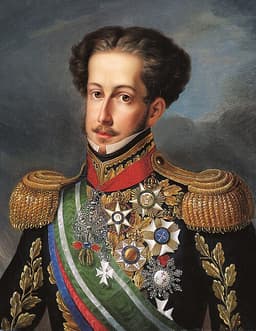
Pedro I of Brazil
Emperor · Modern
54.6Total
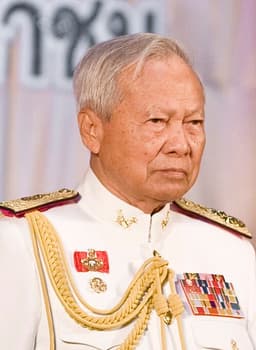
Prem Tinsulanonda
General · Modern
57.2Total
Basic Information
Born
1798
1920
Died
1834
—
Era
Modern
Modern
Nationality
Brazil
Thailand
Occupation
Emperor
General
Civilization
Western
Eastern
Score Comparison
Military (10%)
55.0
50.0
Political (20%)
62.7
59.3
Influence (20%)
59.0
54.9
Legacy (20%)
50.0
47.5
Leadership (15%)
53.2
78.0
Strategy (15%)
45.0
60.0
TOTAL
54.6
57.2
Pedro I of Brazil — Complete Timeline
1822 AD
Declaration of Independence of BrazilPolitical Action
Pedro I declared Brazil's independence from Portugal on September 7, 1822, at the Ipiranga River in S
Impact: globalprogressive
Coronation as Emperor of BrazilPolitical Action◆ Major
Pedro I was crowned Emperor of Brazil on December 1, 1822, in Rio de Janeiro. The coronation formalized the new imperial government, with Pedro I as constitutional monarch, though he retained significant executive powers.
Impact: nationalconstructive
1823 AD
War of Independence of BrazilWar◆ Major
Pedro I led Brazilian forces against Portuguese loyalists in the War of Independence. Key battles occurred in Bahia, Maranh
Impact: national
Dissolution of the Constituent AssemblyPolitical Action◆ Major
Pedro I dissolved the Constituent Assembly after conflicts over the constitution's limits on imperial power. He then imposed the 1824 Constitution, which granted the emperor extensive powers, including the Moderating Power, centralizing authority.
Impact: nationaldestructive
1831 AD
Abdication of the Brazilian ThronePolitical Action
Pedro I abdicated the Brazilian throne in favor of his five-year-old son Pedro II on April 7, 1831. He returned to Portugal to claim the Portuguese throne, leaving Brazil under a regency until his son came of age.
Impact: national
Prem Tinsulanonda — Complete Timeline
1980 AD
Appointed Prime Minister after a coupPolitical Action◆ Major
Prem Tinsulanonda was appointed Prime Minister of Thailand by the military after a coup. He served for over eight years, overseeing a period of political stability and economic growth.
Prime MinisterMilitary RuleStability
Impact: national
1981 AD
Survived a coup attemptPolitical Action◆ Major
Prem survived a coup attempt by military officers loyal to the 'Young Turks' faction. The coup failed due to lack of support and the loyalty of key military units, allowing Prem to remain in power.
Coup AttemptPolitical CrisisMilitary
Impact: national
1988 AD
Resigned as Prime MinisterPolitical Action◆ Major
Prem resigned as Prime Minister after the general election, handing over power to a civilian government led by Chatichai Choonhavan. His resignation marked a rare peaceful transition of power in Thai politics.
ResignationDemocratic TransitionPeaceful
Impact: nationalconstructive
2016 AD
Appointed Regent of ThailandPolitical Action
After the death of King Bhumibol, Prem was appointed Regent of Thailand until the ascension of King Maha Vajiralongkorn. He served as a key figure in the transition of the monarchy.
RegentMonarchyTransition
Impact: national
Expert Analysis
Prem Tinsulanonda vs Pedro I of Brazil
### The Emperor and the General: Two Paths to Power in an Age of Upheaval
On a September morning in 1822, a young prince stood beside the Ipiranga River in São Paulo, tore the blue-and-white Portuguese cockade from his uniform, and shouted, “Independence or Death!” The cry echoed across a continent, birthing an empire. A century and a half later, in a very different world, a quiet general in Bangkok accepted the premiership of a kingdom that had never been colonized, vowing to steer it through the treacherous currents of Cold War politics. Pedro I of Brazil and Prem Tinsulanonda of Thailand—one a flamboyant emperor born into revolution, the other a cautious soldier-statesman who mastered the art of survival—both shaped their nations’ destinies. Yet their paths, their triumphs, and their tragedies could not have been more different. What drove these two men, and what do their stories reveal about the nature of power itself?
### Origins: Crown and Khaki
Pedro I was born a prince of the Portuguese House of Braganza in 1798, at a time when Napoleon’s armies were redrawing the map of Europe. His family fled to Brazil when he was nine, making Rio de Janeiro the seat of a transatlantic empire. He grew up surrounded by court intrigue, Enlightenment ideas, and the simmering resentments of a colony that outgrew its motherland. His education was erratic—more horsemanship than philosophy—and his temperament fiery. He was a man of the Old World thrown into the New, a prince who would become a rebel by necessity.
Prem Tinsulanonda was born in 1920 in Songkhla, a southern province of Siam, as it was then called. The absolute monarchy had fallen in 1932, replaced by a constitutional system where the military increasingly held the real power. Prem was a product of this new order: a career soldier who rose through the ranks of the Thai army, never commanding a grand campaign but mastering the politics of the barracks. Where Pedro was born to rule, Prem earned his place through patience, discretion, and loyalty to the throne. One was a son of empire; the other, a son of a kingdom learning to navigate a world of coups and constitutions.
### Rise to Power: The Cry of the River and the Whisper of the Palace
Pedro’s rise was swift and dramatic. When his father, King João VI, returned to Portugal in 1821, leaving Pedro as regent in Brazil, the Portuguese parliament tried to reduce Brazil to colonial status. The prince refused. On September 7, 1822, he declared independence—a turning point that was both political and personal. He was crowned emperor on December 1, and then led a war against Portuguese loyalists, with key battles in Bahia, Maranhão, and elsewhere. His military score of 65 reflects a leader who fought, but whose strategy (50) was often improvised. His power came from a single, decisive act.
Prem’s ascent was slower, quieter. He was appointed prime minister in 1980 after a coup, but he was not the coup’s leader; he was a compromise candidate, a general trusted by both the military and the palace. His leadership score of 89, the highest of any attribute, speaks to his ability to hold together a fractious coalition. In 1981, he survived a coup attempt by the “Young Turks” faction, not by force of arms but by rallying the loyalty of the army and the king. Where Pedro shouted his way into history, Prem whispered his way to power.
### Leadership & Governance: Iron Fist and Velvet Glove
Pedro ruled as an emperor, not a democrat. After dissolving the Constituent Assembly in 1823—because it tried to limit his powers—he imposed a constitution that gave him broad authority. His political score of 60.2 suggests a man who understood power but not compromise. He was a reformer in some ways (he supported the abolition of the slave trade), but his autocratic style alienated the very elites who had backed independence. His reign was a series of conflicts: with the legislature, with regional factions, and with his own ministers.
Prem governed as a conciliator. During his eight-year tenure (1980–1988), he presided over a period of economic growth and political stability, navigating Thailand through the end of the Indochina wars. He did not seek to crush his opponents; he outlasted them. When he resigned in 1988 after a general election, he handed power to a civilian government—a rare act in a country where generals usually cling to office. His legacy score of 66.8 is modest, but his influence (73.9) endured: he later served as regent after King Bhumibol’s death in 2016, a testament to his role as a pillar of the monarchy.
### Triumph & Tragedy: The Emperor’s Fall and the General’s Endurance
Pedro’s greatest triumph was Brazil’s independence. His tragedy came soon after. He could not adapt to the politics of a nation he had created. By 1831, facing revolts and a loss of support, he abdicated the throne in favor of his five-year-old son, Pedro II, and returned to Portugal. He died just three years later, at 35, a man who had achieved something monumental but could not sustain it. His total score of 65.7 reflects a life cut short, a legacy incomplete.
Prem’s triumph was survival itself. He endured coup attempts, navigated the transition from military rule to democracy, and remained a trusted figure until his death at an advanced age. His tragedy, if it can be called that, was that his success was invisible. He left no great monument, no famous speech. He was a bridge, not a destination.
### Character & Destiny: Fire and Stone
Pedro was fire—impulsive, romantic, and ultimately self-destructive. “Independence or Death” was not just a slogan; it was his nature. He could not tolerate limits, whether from the Portuguese parliament or his own assembly. This passion made him a revolutionary, but it also made him a failure as a ruler.
Prem was stone—patient, resilient, and unbreakable. He understood that in Thailand, power was not seized but accumulated, not shouted but whispered. His personality was shaped by a culture that valued harmony and hierarchy. He was a general who never fought a war, a leader who never gave a fiery speech. And yet, he outlasted nearly all his contemporaries.
### Legacy: The Emperor’s Nation and the General’s Kingdom
Pedro I is remembered as the father of Brazilian independence, his image on monuments and currency. But his legacy is complicated: he left a country that struggled with authoritarianism for generations, a pattern he helped set. His influence score of 72.3 acknowledges his foundational role, but his political score of 60.2 reminds us that foundations are not enough.
Prem’s legacy is quieter but perhaps deeper. He helped stabilize Thailand during a volatile era, and his role as regent at a moment of succession ensured the monarchy’s continuity. He is not a household name outside Thailand, but within it, he is remembered as a man who held the center when the edges frayed.
### Conclusion: Two Kinds of Greatness
Pedro I and Prem Tinsulanonda were both leaders of nations in transition, but they represent two different answers to the same question: What does it take to lead a country through upheaval? Pedro’s answer was dramatic action, a break with the past, and a willingness to risk everything. Prem’s answer was patience, compromise, and a deep understanding of the institutions that endure. One created a nation; the other preserved one. Neither was perfect, but both were necessary. In the end, history judges not by the noise of the moment, but by the shape of what remains.
Rankings
🥇
Prem TinsulanondaLeader
Mil: 50.0Pol: 59.3Inf: 54.9
57.2
🥈
Pedro I of Brazil
Mil: 55.0Pol: 62.7Inf: 59.0
54.6
+2.6 behind
How This Comparison Works
Algorithm
Each figure is scored on 6 dimensions (0—100 scale) based on structured historical data: Military (10%), Political (20%), Influence (20%), Legacy (20%), Leadership (15%), Strategy (15%). The weighted total produces the final ranking.
Data Sources
Scores are computed from structured sub-indicators in the database. Scale factors adjust for era (Ancient ×0.85, Modern ×1.0) and civilization size (Eastern ×1.05, Other ×0.80) to account for differences in population and military scale.
Maximum 3 Figures
Comparisons are limited to 2—3 figures to ensure readability and statistical meaningfulness.
Error Margins
±5 points per dimension — Sub-scores are derived from historical records with inherent uncertainty. Two figures within 5 points on a dimension should be considered roughly equivalent in that area.
Total Score Accuracy
±3 points overall — The weighted combination of 6 dimensions produces a total score with approximately ±3 points of uncertainty. Differences of less than 3 points are not statistically significant— the figures are effectively tied.
Known Limitations
- Historical records are incomplete and uneven across civilizations
- Figures from oral-tradition societies may be underrepresented
- Occupation labels can misclassify multi-role figures
- Scores measure capability and impact, not moral character
- Quantitative scoring is a comparison tool, not absolute truth
Capability Radar
Military (10%) — Battles & Warfare
Battles
35
20
Win Rate
40
25
Expansion
30
10
Political (20%) — Governance & Reform
Reform
45
55
Diplomacy
50
60
Economy
30
50
Influence (20%) — Cultural & Global Reach
Cultural
40
30
Global
45
30
Legacy (20%) — Historical Impact
Historical
55
40
Longevity
50
35
Leadership (15%) — Power & Stability
Tenure
55
65
Stability
25
60
Strategy (15%) — Tactics & Innovation
Strategy
35
30
Tactics
30
30
Reform
20
35
Similar Comparisons
Comments & Discussion
Emperor's Shadow6/16/2026
Pedro I’s "Independence or Death" is pure theater—he swapped Portuguese blue for Brazilian green without true revolution. His reign collapsed due to his own vanity and a disastrous war in Cisplatina. Prem, by contrast, never craved glory but quietly stabilized Thailand through the 1970s communist insurgency. Pedro died exiled in Portugal; Prem died a revered statesman at 98. Real power isn’t a shout—it’s endurance.
冷眼史官6/16/2026
这份比较根本是个伪命题。佩德罗一世是旧制度的产物,他的独立更像是皇族之间的权力交接,巴西人民的命运并未改变。而炳·廷素拉暖不过是冷战棋局上的棋子,用军事戒严维系表面稳定。他们都在掩饰更深层的裂痕:巴西的奴隶制延续了六十年,泰国的等级制至今未变。历史不是伟人的传记,而是结构的囚笼。
CanonLoader6/16/2026
Pedro I was a genuine 19th-century Romantic hero: he co-wrote the Brazilian national anthem, died at 35 fighting for his daughter’s throne in Portugal, and personified the “temperate monarchy” that kept Brazil unified while Spanish America fractured. Prem’s quietism is admirable but often overpraised—his 1988 compromise brought democracy yet left military prerogatives untouched. Pedro gambled everything on principle; Prem hedged every bet. I prefer the emperor’s risk to the general’s risk manage
殖民地回响6/16/2026
从殖民史角度看,两人身份的本质差距远超表面。佩德罗是殖民者精英内部翻盘,用君主制维持了原葡萄牙贵族体系,至今巴西精英仍是白裔主导。炳则代表了东亚路径:利用殖民真空期的自主性,用军威巩固君主立宪。巴西至今为奴隶制遗产流血,泰国则为威权转型煎熬。这不是性格问题,而是殖民遗产的形态早已为后人的选择划好了棋谱。
DataDice6/16/2026
The comparison ignores measurable outcomes: Pedro I ruled 9 years (1822-1831) over a 5 million-plus population with 60% growth in his first decade, while Prem served 8 years (1980-1988) in a 45 million Thailand averaging 7% GDP growth. Prem’s tenure saw poverty halve; Pedro left Brazil with two revolts and a debt crisis. Popularity isn’t policy. The emperor’s charisma is seductive, but Prem’s Malaysia-like stability delivered more real prosperity per capita.