Loading...
Pedro I of Brazil vs Plutarco Elias Calles
Plutarco Elias Calles leads by 3.9 pts · 2 figures compared
…
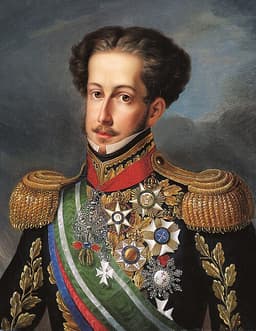
Pedro I of Brazil
Emperor · Modern
54.6Total
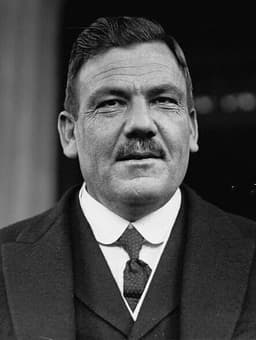
Plutarco Elias Calles
General · Modern
58.5Total
Basic Information
Born
1798
1877
Died
1834
1945
Era
Modern
Modern
Nationality
Brazil
Mexico
Occupation
Emperor
General
Civilization
Western
Western
Score Comparison
Military (10%)
55.0
40.0
Political (20%)
62.7
70.3
Influence (20%)
59.0
68.0
Legacy (20%)
50.0
40.0
Leadership (15%)
53.2
78.0
Strategy (15%)
45.0
52.5
TOTAL
54.6
58.5
Pedro I of Brazil — Complete Timeline
1822 AD
Declaration of Independence of BrazilPolitical Action
Pedro I declared Brazil's independence from Portugal on September 7, 1822, at the Ipiranga River in S
Impact: globalprogressive
Coronation as Emperor of BrazilPolitical Action◆ Major
Pedro I was crowned Emperor of Brazil on December 1, 1822, in Rio de Janeiro. The coronation formalized the new imperial government, with Pedro I as constitutional monarch, though he retained significant executive powers.
Impact: nationalconstructive
1823 AD
War of Independence of BrazilWar◆ Major
Pedro I led Brazilian forces against Portuguese loyalists in the War of Independence. Key battles occurred in Bahia, Maranh
Impact: national
Dissolution of the Constituent AssemblyPolitical Action◆ Major
Pedro I dissolved the Constituent Assembly after conflicts over the constitution's limits on imperial power. He then imposed the 1824 Constitution, which granted the emperor extensive powers, including the Moderating Power, centralizing authority.
Impact: nationaldestructive
1831 AD
Abdication of the Brazilian ThronePolitical Action
Pedro I abdicated the Brazilian throne in favor of his five-year-old son Pedro II on April 7, 1831. He returned to Portugal to claim the Portuguese throne, leaving Brazil under a regency until his son came of age.
Impact: national
Plutarco Elias Calles — Complete Timeline
1915 AD
Governorship of SonoraPolitical Action
Calles served as Governor of Sonora from 1915 to 1919, implementing radical reforms including land redistribution, anti-clerical laws, and labor rights. His governorship established him as a key figure in the Sonoran dynasty and a proponent of revolutionary change.
GovernorshipSonoraReforms
Impact: regionalconstructive
1924 AD
Presidency of MexicoPolitical Action◆ Major
Calles was elected President of Mexico in 1924, serving until 1928. His administration continued revolutionary reforms, including land reform, labor rights, and secularization, but also faced opposition from the Catholic Church and conservative groups.
PresidencyMexican RevolutionReforms
Impact: nationalconstructive
1926 AD
Cristero WarWar◆ Major
Calles enforced anti-clerical laws, including the Calles Law, which restricted the Catholic Church's role in society. This sparked the Cristero War (1926-1929), a violent rebellion by Catholic peasants against the state, resulting in tens of thousands of deaths.
Cristero WarAnti-clericalismReligious Conflict
Impact: nationaldestructive
1928 AD
MaximatoPolitical Action◆ Major
After his presidency, Calles remained the de facto ruler of Mexico during the Maximato (1928-1934), controlling puppet presidents. He continued to influence policy, but his power waned as President L
MaximatoPolitical ControlCárdenas
Impact: national
1929 AD
Founding of the National Revolutionary Party (PNR)Political Action
Calles founded the National Revolutionary Party (PNR) in 1929, which later became the Institutional Revolutionary Party (PRI). This party dominated Mexican politics for over 70 years, institutionalizing the revolution's legacy and centralizing power.
Political PartyPRIInstitutionalization
Impact: nationalconstructive
Expert Analysis
Plutarco Elias Calles vs Pedro I of Brazil
The Emperor and the Jefe
On a September morning in 1822, a young prince stood beside the Ipiranga River in São Paulo, tore the Portuguese insignia from his uniform, and shouted, “Independence or Death!” Just over a century later, in 1926, a grim-faced Mexican president signed a law that would ignite a three-year civil war, pitting the state against the Catholic Church. Pedro I of Brazil and Plutarco Elías Calles both emerged from the chaos of empire and revolution, but they built radically different nations. One was a romantic emperor who lost his throne; the other, a ruthless political architect who created a dynasty that ruled for seventy years. Why did one man’s dream of a unified empire crumble, while the other’s vision of an authoritarian state endured?
Origins
Pedro I was born into the glittering court of the Portuguese Braganza dynasty in 1798, the son of King João VI. His childhood was one of privilege and exile: when Napoleon invaded Portugal in 1807, the entire royal family fled to Rio de Janeiro, transforming a colonial backwater into the seat of a transatlantic empire. Young Pedro grew up in a world of courtly intrigue, learning to ride, fight, and command—but little of the patient arts of governance. He was impulsive, passionate, and deeply convinced of his divine right to rule.
Plutarco Elías Calles was born in 1877 in the dusty northern state of Sonora, Mexico, into a family of modest means. His father died before he was born; his mother raised him in poverty. He worked as a bartender, a teacher, and a small-time politician before the Mexican Revolution of 1910 shattered the old order. Calles had no royal blood, no inherited legitimacy—only ambition, discipline, and a cold understanding of power. Where Pedro saw a crown, Calles saw a machine.
Rise to Power
Pedro’s path was a matter of circumstance. When his father returned to Portugal in 1821, leaving him as regent in Brazil, the Brazilian elite pressured him to break with Lisbon. On September 7, 1822, he declared independence—a decisive act that scored a political turning point. He was crowned emperor on December 1, 1822, in Rio de Janeiro. His military score of 65.0 was adequate: he led Brazilian forces in the War of Independence of 1823, driving Portuguese loyalists from Bahia, Maranhão, and other strongholds. But his strategy score of 50.0 hints at the recklessness that would undo him.
Calles rose through the crucible of revolution. As governor of Sonora from 1915 to 1919, he implemented radical land redistribution and anti-clerical reforms, building a base of loyal supporters. He became president in 1924, but his true power came after his term ended: from 1928 to 1934, during the Maximato, he ruled as the *jefe máximo*—the maximum chief—controlling puppet presidents from behind the scenes. His political score of 79.8 reflects a master of institutional power, not personal glory.
Leadership & Governance
Pedro I ruled as an enlightened despot, but a despot nonetheless. He imposed Brazil’s first constitution in 1824 after dissolving the Constituent Assembly in 1823, angering liberals who wanted limits on his power. He was a reformer in principle—he supported the abolition of the slave trade—but he was also authoritarian, dismissing parliament when it opposed him. His leadership score of 74.5 captures a man who could inspire loyalty but could not compromise.
Calles governed as a secularizing modernizer. The Cristero War of 1926-1929 erupted after he enforced the Calles Law, which restricted the Catholic Church’s role in education, property, and public life. Thousands died in the conflict, but Calles never wavered. He saw the Church as a rival to state power and crushed it. His military score of 64.3 reflects a general who used force strategically, not heroically. His true genius was political: in 1929, he founded the National Revolutionary Party (PNR), which later became the Institutional Revolutionary Party (PRI). This was not a party of ideas but of control—a machine that co-opted labor, peasants, and the military, ensuring that Mexico would never again fracture into civil war.
Triumph & Tragedy
Pedro’s greatest triumph was independence itself—a bloodless break from Portugal that created a vast, unified nation. But his tragedy was his inability to hold it together. By 1831, facing revolts in the provinces and a military exhausted by the disastrous Cisplatine War (1825-1828), he abdicated the throne on April 7, 1831, in favor of his five-year-old son, Pedro II. He sailed back to Portugal, where he died three years later at age 35, a romantic hero who had failed as a statesman.
Calles’s triumph was the Maximato—a decade of iron control that stabilized Mexico after the revolution. But his tragedy was the price of that stability: the Cristero War left perhaps 100,000 dead, and his authoritarianism bred corruption and repression that would poison Mexican politics for generations. He died in 1945, exiled and bitter, having watched his creation, the PRI, outlive him.
Character & Destiny
Pedro was a man of passion, not calculation. He loved, he fought, he ruled by instinct. His downfall came because he could not adapt: he believed in monarchy in an age of republics, in personal authority in an age of institutions. Calles was the opposite—cold, patient, and utterly pragmatic. He understood that power in modern Mexico would not come from a crown but from a party, a bureaucracy, and a network of loyalists. One was the last gasp of the old world; the other, the architect of the new.
Legacy
Pedro I is remembered as the “Father of the Nation” in Brazil, a symbol of independence whose statue stands in São Paulo. But his legacy is overshadowed by his son, Pedro II, who reigned for nearly fifty years and is considered Brazil’s greatest emperor. Pedro I’s real contribution was not his rule but his act: he gave Brazil a start.
Calles’s legacy is darker and more complex. The PRI ruled Mexico until 2000, a single-party state that brought stability but suffocated democracy. He is reviled by the devout for the Cristero War, but respected by historians for forging a modern secular state. His total score of 74.5—higher than Pedro’s 65.7—reflects a man who built something that lasted, even if it was flawed.
Conclusion
Standing at the Ipiranga River, Pedro I shouted for independence and won it with a gesture. Standing in his office in Mexico City, Calles signed a law that killed thousands and built a party that ruled for seventy years. One man’s triumph was a moment; the other’s was a system. In the end, the emperor’s crown passed to his son, but the *jefe máximo*’s creation outlived him by half a century. Both men were ruthless, both were visionaries, but only one understood that in the modern world, power is not worn on a sleeve—it is built into the bones of institutions.
Rankings
🥇
Plutarco Elias CallesLeader
Mil: 40.0Pol: 70.3Inf: 68.0
58.5
🥈
Pedro I of Brazil
Mil: 55.0Pol: 62.7Inf: 59.0
54.6
+3.9 behind
How This Comparison Works
Algorithm
Each figure is scored on 6 dimensions (0—100 scale) based on structured historical data: Military (10%), Political (20%), Influence (20%), Legacy (20%), Leadership (15%), Strategy (15%). The weighted total produces the final ranking.
Data Sources
Scores are computed from structured sub-indicators in the database. Scale factors adjust for era (Ancient ×0.85, Modern ×1.0) and civilization size (Eastern ×1.05, Other ×0.80) to account for differences in population and military scale.
Maximum 3 Figures
Comparisons are limited to 2—3 figures to ensure readability and statistical meaningfulness.
Error Margins
±5 points per dimension — Sub-scores are derived from historical records with inherent uncertainty. Two figures within 5 points on a dimension should be considered roughly equivalent in that area.
Total Score Accuracy
±3 points overall — The weighted combination of 6 dimensions produces a total score with approximately ±3 points of uncertainty. Differences of less than 3 points are not statistically significant— the figures are effectively tied.
Known Limitations
- Historical records are incomplete and uneven across civilizations
- Figures from oral-tradition societies may be underrepresented
- Occupation labels can misclassify multi-role figures
- Scores measure capability and impact, not moral character
- Quantitative scoring is a comparison tool, not absolute truth
Capability Radar
Military (10%) — Battles & Warfare
Battles
35
45
Win Rate
40
50
Expansion
30
30
Political (20%) — Governance & Reform
Reform
45
85
Diplomacy
50
65
Economy
30
60
Influence (20%) — Cultural & Global Reach
Cultural
40
70
Global
45
60
Legacy (20%) — Historical Impact
Historical
55
75
Longevity
50
70
Leadership (15%) — Power & Stability
Tenure
55
70
Stability
25
55
Strategy (15%) — Tactics & Innovation
Strategy
35
55
Tactics
30
40
Reform
20
60
Similar Comparisons
Comments & Discussion
Jefe vs Emperor6/16/2026
Calles wins this hands down. Pedro I was a spoiled prince who shouted "Independence or Death!" then spent nine years losing his grip on Brazil. Calles, a Sonoran schoolteacher, outmaneuvered generals, crushed the Cristero rebellion with 100,000 dead, and built the PRI machine that ran Mexico for 71 years. One man built a dynasty; the other watched his son abdicate. Give me the Jefe’s cold calculation over romantic posturing any day. Mexico’s stability began with Calles, not a Braganza playboy.
Gilded Throne Skeptic6/16/2026
People romanticize Pedro's "Grito do Ipiranga," but he inherited a colony with no real institutions and left it as a dysfunctional empire that collapsed in 1889. Calles created the first stable post-revolutionary state in Latin America by 1929. Pedro had a treasury from Portuguese gold; Calles had nothing but a devastated country after the Mexican Revolution. The emperor's reign was a soap opera; the jefe's was a blueprint. Brazil didn't get its act together until 1930, while Calles’s system wor
帝国幻梦家6/16/2026
佩德罗一世就是个穿着制服的浪漫废物,他在伊皮兰加河边喊“独立或死亡”,但实际治国能力为零。他打了场可笑的西普拉蒂纳战争,输给阿根廷,连乌拉圭都丢了。卡列斯完全不同,他1926年发动克里斯蒂罗战争,以铁腕镇压教会武装,用60万政府军剿灭叛乱,奠定了墨西哥的现代世俗国家。佩德罗的帝国像肥皂剧,卡列斯的体系活了七十年。别把王冠当能力,现实赢家总是实干家。
冷酷建筑师6/16/2026
卡列斯是真正的政治天才,不是出身贵族,而是靠军队和计谋爬上顶峰。他创立了PNR党(革命制度党前身),用“最高领袖”机制控制总统更替,1934年把卡德纳斯捧上宝座,自己退居幕后,这招佩德罗一世想都别想。反观巴西皇帝,1823年就解散制宪会议,逼得全国暴动,1831年不得不让位给孩子。卡列斯让墨西哥陷入血海吗?是,但国家学会了服从。皇帝只会讲排场,卡列斯玩的是夺权真功夫。
Chronicler36846/16/2026
Pedro I? He’s Brazil’s footnote—a deposed emperor who died in Portugal trying to reclaim his daughter’s throne. Calles, though hated for his anti-clerical laws and the Maximato era, left a legacy: the Mexican state’s survival through Cristero War and Great Depression. Pedro’s empire crumbled because he trusted no one, fought useless wars