Loading...
Pachacuti vs Pedro I of Brazil
Pachacuti leads by 14.8 pts · 2 figures compared
…
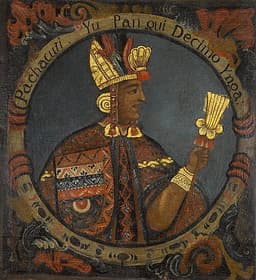
Pachacuti
Emperor · Medieval
69.4Total
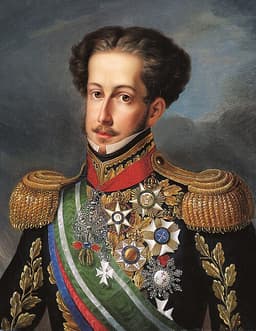
Pedro I of Brazil
Emperor · Modern
54.6Total
Basic Information
Born
1418
1798
Died
1472
1834
Era
Medieval
Modern
Nationality
Inca Empire
Brazil
Occupation
Emperor
Emperor
Civilization
Other
Western
Score Comparison
Military (10%)
78.5
55.0
Political (20%)
58.1
62.7
Influence (20%)
65.0
59.0
Legacy (20%)
72.0
50.0
Leadership (15%)
78.0
53.2
Strategy (15%)
69.2
45.0
TOTAL
69.4
54.6
Pachacuti — Complete Timeline
1438 AD
Conquest of the Chanka KingdomWar
Pachacuti led the Inca army to defeat the Chanka, a powerful rival, in a decisive battle near Cusco. This victory secured his position as Sapa Inca and initiated a period of rapid expansion, transforming the Inca from a small kingdom into a vast empire.
ConquestInca ExpansionChanka
Impact: regional
1440 AD
Reconstruction of CuscoCultural◆ Major
Pachacuti rebuilt Cusco as the imperial capital, designing it in the shape of a puma and constructing massive stone structures like Sacsayhuam
Urban PlanningArchitectureInca Empire
Impact: regionalconstructive
1450 AD
Initiation of Machu Picchu's ConstructionCultural◆ Major
Pachacuti ordered the construction of Machu Picchu, a royal estate and ceremonial site high in the Andes. The complex featured sophisticated dry-stone masonry and terraced agriculture, serving as a symbol of Inca engineering and a retreat for the emperor.
ArchitectureRoyal EstateInca Engineering
Impact: regionalconstructive
Pedro I of Brazil — Complete Timeline
1822 AD
Declaration of Independence of BrazilPolitical Action
Pedro I declared Brazil's independence from Portugal on September 7, 1822, at the Ipiranga River in S
Impact: globalprogressive
Coronation as Emperor of BrazilPolitical Action◆ Major
Pedro I was crowned Emperor of Brazil on December 1, 1822, in Rio de Janeiro. The coronation formalized the new imperial government, with Pedro I as constitutional monarch, though he retained significant executive powers.
Impact: nationalconstructive
1823 AD
War of Independence of BrazilWar◆ Major
Pedro I led Brazilian forces against Portuguese loyalists in the War of Independence. Key battles occurred in Bahia, Maranh
Impact: national
Dissolution of the Constituent AssemblyPolitical Action◆ Major
Pedro I dissolved the Constituent Assembly after conflicts over the constitution's limits on imperial power. He then imposed the 1824 Constitution, which granted the emperor extensive powers, including the Moderating Power, centralizing authority.
Impact: nationaldestructive
1831 AD
Abdication of the Brazilian ThronePolitical Action
Pedro I abdicated the Brazilian throne in favor of his five-year-old son Pedro II on April 7, 1831. He returned to Portugal to claim the Portuguese throne, leaving Brazil under a regency until his son came of age.
Impact: national
Expert Analysis
Pachacuti vs Pedro I of Brazil
### The Emperor and the Liberator: Why One Built a Mountain Paradise and the Other Lost a Throne
On a morning in 1438, a prince who was never meant to rule stood before a terrified army and turned a rout into a legend. Four centuries later, on a September afternoon in 1822, a Portuguese prince who had been raised to inherit a throne shouted “Independence or Death!” beside a river in São Paulo. Both men became emperors. Both reshaped their worlds. Yet one died in his palace, his name carved into the Andes, while the other died in exile, his crown passed to a child. The difference was not merely one of fortune, but of what each man believed an emperor should be.
### Origins
Pachacuti was born in 1418 into a world of stone and sky. The Inca were then a modest kingdom in the Cusco valley, surrounded by hostile neighbors like the Chanka. His father, Viracocha Inca, was the eighth Sapa Inca, but Pachacuti was not the heir. His name, which means “he who remakes the world,” was a prophecy that would only be fulfilled after he refused to accept his fate.
Pedro I was born in 1798 in the Queluz Palace near Lisbon, a prince of the House of Braganza. His family fled to Brazil in 1807 when Napoleon invaded Portugal, turning a colonial prince into a resident of the very empire he would one day break apart. Unlike Pachacuti, who grew up in a world of ritual warfare and sacred geography, Pedro grew up in the ferment of Enlightenment ideas and the collapse of old empires. His father, King João VI, was cautious and scholarly; Pedro was impulsive, charming, and restless.
### Rise to Power
The Chanka attack in 1438 was Pachacuti’s turning point. The Inca army had fled; Viracocha Inca abandoned Cusco. But Pachacuti rallied the remaining warriors, fought the Chanka in a desperate battle, and won. According to Inca tradition, the very stones of the battlefield rose up as allies. In that victory, Pachacuti did not just save his city—he seized the mantle of leadership from his father, who was forced to abdicate. Pachacuti became Sapa Inca not because he was born to it, but because he had proven he could remake the world.
Pedro’s path was less dramatic but no less decisive. When his father returned to Portugal in 1821, leaving Pedro as regent of Brazil, the Portuguese courts tried to reduce Brazil to colonial status. Pedro faced a choice: submit to Lisbon or lead a break. He had the support of Brazilian elites, but also the weight of his own family’s legacy. On September 7, 1822, at the Ipiranga River, he made his choice. The “Grito do Ipiranga” was a moment of pure theater—a prince declaring himself a rebel. He was crowned emperor on December 1, 1822, at the age of twenty-four.
### Leadership & Governance
Pachacuti was a builder of systems. After conquering the Chanka, he did not simply take their land—he integrated their nobles into the Inca administration, imposed Quechua as the imperial language, and created a network of roads and storehouses that bound his empire together. He rebuilt Cusco in the shape of a puma, with massive stone walls that still stand without mortar. He ordered the construction of Machu Picchu around 1450, a royal estate that was also a sacred observatory and a statement of power carved into a mountain. His military campaigns were relentless, but his governance was even more so: he invented the *mitma* system of resettling conquered peoples, and the *mit’a* system of mandatory public labor that built his roads and terraces.
Pedro I was a different kind of ruler. He had to govern a sprawling, diverse territory that had just broken from a colonial power. He fought a war of independence in 1823, leading Brazilian forces against Portuguese loyalists in Bahia and elsewhere. But his political genius was limited. He dissolved the Constituent Assembly in 1823 when it tried to limit his power, imposing a constitution that centralized authority in his hands. This made him enemies among the very elites who had supported independence. He was a charismatic leader in crisis, but an inflexible ruler in peace.
### Triumph & Tragedy
Pachacuti’s greatest triumph was the transformation of a kingdom into an empire. By his death in 1472, the Inca domain stretched from modern Ecuador to central Chile. Machu Picchu, abandoned and forgotten, would become his most enduring monument—a symbol of a civilization that had no writing but could carve a city into a cloud.
Pedro’s triumph was Brazil itself. He secured its independence without the protracted civil wars that tore apart Spanish America. But his tragedy came quickly. His wife, Empress Leopoldina, died in 1826 after a troubled marriage; his political conflicts mounted. On April 7, 1831, facing a revolt he could not control, he abdicated the throne in favor of his five-year-old son, Pedro II. He returned to Portugal, where he died in 1834 at the age of thirty-five, a man who had given Brazil its freedom but could not keep its crown.
### Character & Destiny
Pachacuti was a visionary who believed in order. His personality was that of a builder, not a liberator. He saw empire as a sacred duty, a way to bring the world under the sun god Inti. His decisions were calculated, patient, and grand. He did not seek personal glory so much as the fulfillment of a cosmic plan.
Pedro was a romantic who believed in freedom—but his own freedom above all. He was impulsive, generous, and stubborn. “I will do everything for the people, but nothing by the people,” he once said, revealing the contradiction at his heart. He wanted to be a modern monarch, but he could not accept the limits that modernity placed on power. His destiny was to be a catalyst, not a founder.
### Legacy
Pachacuti left a system. The Inca Empire would fall to the Spanish in 1532, but its roads, terraces, and administrative techniques survived. Machu Picchu, rediscovered in 1911, became one of the most recognizable symbols of human achievement. Pachacuti is remembered as the Sapa Inca who remade the world.
Pedro I left a nation. Brazil remained a monarchy until 1889, and then a republic. His son, Pedro II, became one of the most respected monarchs in the Americas. But Pedro I himself is a figure of mixed memory—the liberator who could not govern, the emperor who could not hold his throne. He is celebrated on the anniversary of independence, but his statue in Rio de Janeiro faces the palace where he once ruled, not the sea he sailed away on.
### Conclusion
Both men were emperors. Both lived in times of upheaval. But Pachacuti built a world that outlasted him, while Pedro I built a nation that outgrew him. The difference was not in ambition—both had plenty—but in patience. Pachacuti spent decades constructing an empire of stone and ritual, layer by layer. Pedro I tried to build a nation of law and liberty in a few years, with the same tools he had used as a prince. One saw himself as the servant of a cosmic order; the other, as the master of a political moment. In the end, the emperor who remade the world left a mountain. The emperor who liberated a nation left a throne for his son. Both are remembered, but only one is revered.
Rankings
🥇
PachacutiLeader
Mil: 78.5Pol: 58.1Inf: 65.0
69.4
🥈
Pedro I of Brazil
Mil: 55.0Pol: 62.7Inf: 59.0
54.6
+14.8 behind
How This Comparison Works
Algorithm
Each figure is scored on 6 dimensions (0—100 scale) based on structured historical data: Military (10%), Political (20%), Influence (20%), Legacy (20%), Leadership (15%), Strategy (15%). The weighted total produces the final ranking.
Data Sources
Scores are computed from structured sub-indicators in the database. Scale factors adjust for era (Ancient ×0.85, Modern ×1.0) and civilization size (Eastern ×1.05, Other ×0.80) to account for differences in population and military scale.
Maximum 3 Figures
Comparisons are limited to 2—3 figures to ensure readability and statistical meaningfulness.
Error Margins
±5 points per dimension — Sub-scores are derived from historical records with inherent uncertainty. Two figures within 5 points on a dimension should be considered roughly equivalent in that area.
Total Score Accuracy
±3 points overall — The weighted combination of 6 dimensions produces a total score with approximately ±3 points of uncertainty. Differences of less than 3 points are not statistically significant— the figures are effectively tied.
Known Limitations
- Historical records are incomplete and uneven across civilizations
- Figures from oral-tradition societies may be underrepresented
- Occupation labels can misclassify multi-role figures
- Scores measure capability and impact, not moral character
- Quantitative scoring is a comparison tool, not absolute truth
Capability Radar
Military (10%) — Battles & Warfare
Battles
85
35
Win Rate
90
40
Expansion
90
30
Political (20%) — Governance & Reform
Reform
92
45
Diplomacy
75
50
Economy
80
30
Influence (20%) — Cultural & Global Reach
Cultural
85
40
Global
65
45
Legacy (20%) — Historical Impact
Historical
80
55
Longevity
70
50
Leadership (15%) — Power & Stability
Tenure
85
55
Stability
82
25
Strategy (15%) — Tactics & Innovation
Strategy
88
35
Tactics
80
30
Reform
85
20
Similar Comparisons
Comments & Discussion
战术考据派6/16/2026
作为数据怀疑论者,我得说这分析把复杂历史压平了。Pachacuti的“天堂”是靠mitmaq强制迁徙和严酷劳役堆出来的,死亡率堪比任何殖民工程。Pedro I的“流放”是1831年退位后主动选的,他先传位给五岁儿子Pedro II,自己跑回葡萄牙抢王位。把一死一跑比作高低,忽略动因和代价——这根本不是命运差异,是选择差异。
CLASSICS CORNER6/16/2026
As a classics scholar, I see a tragic irony in their legitimacy claims. Pachacuti crafted a divine lineage, claiming descent from Inti the sun god, and built Machu Picchu as a sacred retreat—a mountain paradise that literally touched the heavens. Pedro I, meanwhile, was a Braganza scion who shouted “Independence or Death!” but then married into the Austrian Habsburgs, embracing European royal mystique. Both sought the sun’s favor—one found it in stone, the other in a contract.
红颜祸水论6/16/2026
作为通俗历史爱好者,我得说两位皇帝的女人决定了他们的结局。Pachacuti娶了Mama Ana Coya,一位强大的Coya(皇后),帮他巩固安第斯联盟。Pedro I却被两段婚姻拖垮:第一任Leopoldina才华横溢但抑郁早逝,第二任Amélie粘人不懂巴西政局。女人不是全部,但Pachacuti的婚姻是政治筹码,Pedro的却是感情炸弹——难怪一个死在王座上,一个死在巴黎旅馆里。
REVISIONIST CRITIC6/16/2026
Enough with the “mountain paradise” drivel. Pachacuti’s Machu Picchu was not a paradise—it was a seasonal estate for elite nobles, built on the backs of forced labor, with no sanitation for workers. Pedro I’s “loss of his throne” is overblown; he abdicated to a stable Regency that ran Brazil for a decade without him. Both men were flawed conquerors, but calling one a success and the other a failure ignores the structural violence in both reigns.
RegencyReview6/16/2026
As a military historian, I’d argue Pachacuti was a tactical genius while Pedro I was a tactical mess. Pachacuti turned a rout at the battle of Yawarpampa (the Bloody Plain) into a counterattack that crushed the Chanka, using psychological warfare with sacred stones. Pedro I, though brave, failed to consolidate his army in the Cisplatine War, losing control of the southern provinces. One built an empire from chaos; the other let his slip through his fingers while playing soldier.