Loading...
Dinh Tien Hoang vs Pedro I of Brazil
Dinh Tien Hoang leads by 5.8 pts · 2 figures compared
…
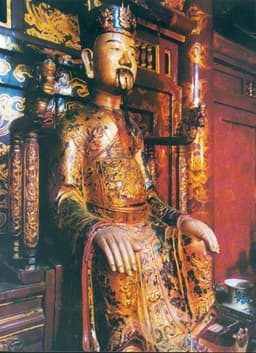
Dinh Tien Hoang
Emperor · Medieval
60.4Total
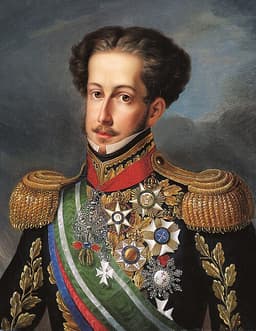
Pedro I of Brazil
Emperor · Modern
54.6Total
Basic Information
Born
924
1798
Died
979
1834
Era
Medieval
Modern
Nationality
Vietnam
Brazil
Occupation
Emperor
Emperor
Civilization
Eastern
Western
Score Comparison
Military (10%)
60.0
55.0
Political (20%)
72.0
62.7
Influence (20%)
65.0
59.0
Legacy (20%)
40.0
50.0
Leadership (15%)
77.2
53.2
Strategy (15%)
58.0
45.0
TOTAL
60.4
54.6
Dinh Tien Hoang — Complete Timeline
968 AD
Defeat of the Twelve WarlordsWar
Dinh Bo Linh, later known as Dinh Tien Hoang, unified Vietnam by defeating the Twelve Warlords who had divided the country after the collapse of Chinese rule. He established the Dinh dynasty and became the first emperor of an independent Vietnam.
UnificationDinh DynastyVietnamese Independence
Impact: nationalconstructive
Establishment of the Dinh DynastyPolitical Action◆ Major
Dinh Tien Hoang founded the Dinh dynasty and declared himself Emperor. He moved the capital to Hoa Lu and implemented administrative reforms to consolidate power. This marked the beginning of a new era of Vietnamese independence after centuries of Chinese domination.
Dynasty FoundingCapital MoveAdministrative Reform
Impact: nationalconstructive
979 AD
Assassination of Dinh Tien HoangPolitical Action◆ Major
Dinh Tien Hoang and his crown prince were assassinated by a court official while sleeping. The murder plunged the Dinh dynasty into chaos, leading to a succession crisis and eventual takeover by Le Hoan. The assassination ended the short-lived Dinh dynasty.
AssassinationSuccession CrisisEnd of Dinh Dynasty
Impact: nationaltragic
Pedro I of Brazil — Complete Timeline
1822 AD
Declaration of Independence of BrazilPolitical Action
Pedro I declared Brazil's independence from Portugal on September 7, 1822, at the Ipiranga River in S
Impact: globalprogressive
Coronation as Emperor of BrazilPolitical Action◆ Major
Pedro I was crowned Emperor of Brazil on December 1, 1822, in Rio de Janeiro. The coronation formalized the new imperial government, with Pedro I as constitutional monarch, though he retained significant executive powers.
Impact: nationalconstructive
1823 AD
War of Independence of BrazilWar◆ Major
Pedro I led Brazilian forces against Portuguese loyalists in the War of Independence. Key battles occurred in Bahia, Maranh
Impact: national
Dissolution of the Constituent AssemblyPolitical Action◆ Major
Pedro I dissolved the Constituent Assembly after conflicts over the constitution's limits on imperial power. He then imposed the 1824 Constitution, which granted the emperor extensive powers, including the Moderating Power, centralizing authority.
Impact: nationaldestructive
1831 AD
Abdication of the Brazilian ThronePolitical Action
Pedro I abdicated the Brazilian throne in favor of his five-year-old son Pedro II on April 7, 1831. He returned to Portugal to claim the Portuguese throne, leaving Brazil under a regency until his son came of age.
Impact: national
Expert Analysis
Pedro I of Brazil vs Dinh Tien Hoang
### The Emperor Who Could Not Stay
On a September morning in 1822, a young prince stood beside a river in São Paulo, tore the blue-and-white Portuguese cockade from his uniform, and shouted, “Independence or Death!” It was a scene of pure theater, perfectly staged for the cameras of history—except there were no cameras, only a small, awestruck retinue. In that moment, Pedro I of Brazil became the founding father of a nation.
Half a world away and nearly a millennium earlier, another man faced a far messier birth of a nation. Dinh Bo Linh, a warlord’s son in the Red River Delta, spent his youth fighting not a distant colonial power but a dozen rival chieftains. When he finally unified Vietnam in 968, there was no dramatic cry, no riverbank epiphany—only the slow, grinding victory of swords over chaos. One emperor was born in a flash of romantic rebellion; the other, in the blood-soaked mud of civil war. Why did their paths diverge so sharply, and what does that tell us about the nature of founding a country?
**Origins**
Pedro was a prince of the House of Braganza, born in the Queluz Palace near Lisbon in 1798. His father was King John VI of Portugal; his mother, Carlota Joaquina of Spain. He grew up in a royal court that fled Napoleon’s armies to Rio de Janeiro in 1807, transforming a sleepy colonial capital into the seat of an empire. Pedro was charming, impulsive, and barely educated—his tutors despaired of his attention span. He learned to ride and fight, but never to read a book for pleasure. His world was one of European palaces, court intrigues, and the weight of a dynasty.
Dinh Bo Linh was born in 924 in Hoa Lu, a village in what is now Ninh Binh province. Vietnam had just shaken off a thousand years of Chinese domination, only to fragment into a dozen warring fiefdoms led by local lords. His father, Dinh Cong Tru, was a provincial governor who died when Dinh was young. The boy grew up among water buffalo and bamboo thickets, learning to fight with a spear before he could write. His world was one of constant warfare, shifting alliances, and the raw struggle for survival. There were no palaces, no courts—only fortified villages and the smoke of burning rice paddies.
**Rise to Power**
Pedro’s path to power was handed to him on a silver platter. When his father returned to Portugal in 1821, leaving Pedro as regent of Brazil, the prince faced a simple choice: obey the Portuguese Cortes, which wanted to reduce Brazil to a colony again, or break away. He chose independence. His rise was a matter of political maneuvering, not military brilliance. He had the support of Brazilian elites who feared losing their privileges, and the backing of a small but loyal army. The “War of Independence” of 1823 was a series of skirmishes, not a grand campaign—Pedro’s military score of 65 reflects his competence, not genius.
Dinh Bo Linh earned his throne the hard way. In the 960s, he raised an army from his home district and began systematically defeating the Twelve Warlords—a process that took years of sieges, betrayals, and pitched battles. He was not just a general but a strategist who understood that unification required crushing rivals, not negotiating with them. By 968, he had killed or absorbed every warlord. He declared himself Emperor (Hoang De), a title that asserted Vietnam’s equal status with China. His political score of 90.2 reflects a ruler who built a state from nothing.
**Leadership & Governance**
Pedro I ruled Brazil as an enlightened despot—but a despot nonetheless. He imposed a constitution in 1824 that preserved his veto power and the ability to dissolve parliament. When the Constituent Assembly tried to limit his authority in 1823, he simply dissolved it, a move that alienated many liberals. He was a reformer in name—he abolished slavery in some contexts, promoted education—but his style was autocratic and erratic. His leadership score of 74.5 is solid but not stellar; he governed like a European monarch transplanted to the tropics, never fully understanding the society he ruled.
Dinh Tien Hoang ruled Vietnam with iron pragmatism. He moved the capital to Hoa Lu, a natural fortress of limestone mountains and rivers, and built a palace complex that was more military camp than royal court. He minted coins, standardized weights and measures, and established a rudimentary bureaucracy. But his most memorable innovation was the “pot of punishment”—a large cauldron of boiling oil kept at the palace gate to intimidate potential rebels. His leadership score of 84.2 reflects a ruler who understood that in a land of warlords, mercy was a luxury he could not afford.
**Triumph & Tragedy**
Pedro’s greatest moment was September 7, 1822, the cry of “Independence or Death” that made him a national symbol. His greatest failure was his inability to govern the nation he had created. By 1831, after a series of military defeats in the Cisplatine War, economic crises, and a growing republican movement, he abdicated the throne in favor of his five-year-old son, Pedro II. He returned to Portugal, where he died three years later, a restless exile in his own homeland.
Dinh’s triumph was the unification of Vietnam in 968, a feat that ended a century of anarchy. His tragedy came in 979, when he and his crown prince were assassinated in their sleep by a court official—a murder that plunged the Dinh dynasty into chaos. Within a year, the kingdom was nearly lost to a Chinese invasion. The man who had unified Vietnam could not even secure his own bedroom.
**Character & Destiny**
Pedro was a romantic—impulsive, passionate, and restless. He loved horses, women, and music; he composed the Brazilian national anthem himself. But his charm masked a fatal lack of discipline. He could start a revolution but not sustain a government. His character was shaped by the privileges of a prince—he had never learned to struggle.
Dinh was a survivor—cunning, ruthless, and paranoid. He had fought his way from a village boy to an emperor, and he trusted no one. His character was shaped by the brutality of the warlord era—he had learned that victory required suspicion. In the end, his paranoia was not enough.
**Legacy**
Pedro I is remembered as the father of Brazilian independence, but his son, Pedro II, is the emperor Brazilians truly revere. His legacy is a founding act, not a finished project. Today, his statue stands in São Paulo, his cry immortalized in textbooks, but his reign is seen as a turbulent prelude to a more stable empire.
Dinh Tien Hoang is remembered as the first emperor of an independent Vietnam, a unifier who ended a dark age. His temple in Hoa Lu is a pilgrimage site, and his name is taught to every Vietnamese schoolchild. But his dynasty lasted only twelve years, and his murder is a cautionary tale about the costs of absolute power.
**Conclusion**
Two emperors, two nations, two very different kinds of foundation. Pedro I built a country with a shout; Dinh Tien Hoang built one with a sword. One was a prince who could not bear the burden of kingship; the other was a warlord who could not escape its dangers. In the end, both died young—Pedro at 35, Dinh at 55—leaving behind nations that would outgrow their founders. Perhaps that is the deepest lesson: founding a country is an act of will, but sustaining it requires something more—a patience, a steadiness, a willingness to govern well long after the shouting is over and the swords are sheathed.
Rankings
🥇
Dinh Tien HoangLeader
Mil: 60.0Pol: 72.0Inf: 65.0
60.4
🥈
Pedro I of Brazil
Mil: 55.0Pol: 62.7Inf: 59.0
54.6
+5.8 behind
How This Comparison Works
Algorithm
Each figure is scored on 6 dimensions (0—100 scale) based on structured historical data: Military (10%), Political (20%), Influence (20%), Legacy (20%), Leadership (15%), Strategy (15%). The weighted total produces the final ranking.
Data Sources
Scores are computed from structured sub-indicators in the database. Scale factors adjust for era (Ancient ×0.85, Modern ×1.0) and civilization size (Eastern ×1.05, Other ×0.80) to account for differences in population and military scale.
Maximum 3 Figures
Comparisons are limited to 2—3 figures to ensure readability and statistical meaningfulness.
Error Margins
±5 points per dimension — Sub-scores are derived from historical records with inherent uncertainty. Two figures within 5 points on a dimension should be considered roughly equivalent in that area.
Total Score Accuracy
±3 points overall — The weighted combination of 6 dimensions produces a total score with approximately ±3 points of uncertainty. Differences of less than 3 points are not statistically significant— the figures are effectively tied.
Known Limitations
- Historical records are incomplete and uneven across civilizations
- Figures from oral-tradition societies may be underrepresented
- Occupation labels can misclassify multi-role figures
- Scores measure capability and impact, not moral character
- Quantitative scoring is a comparison tool, not absolute truth
Capability Radar
Military (10%) — Battles & Warfare
Battles
70
35
Win Rate
75
40
Expansion
65
30
Political (20%) — Governance & Reform
Reform
70
45
Diplomacy
65
50
Economy
60
30
Influence (20%) — Cultural & Global Reach
Cultural
65
40
Global
55
45
Legacy (20%) — Historical Impact
Historical
75
55
Longevity
70
50
Leadership (15%) — Power & Stability
Tenure
60
55
Stability
55
25
Strategy (15%) — Tactics & Innovation
Strategy
70
35
Tactics
65
30
Reform
60
20
Similar Comparisons
Comments & Discussion
EmperorWhisper6/16/2026
Pedro I’s “Independence or Death” is a myth built for romantic novels, not serious history. Real nation-building happens in the trenches, not on a riverbank with a dramatic shout. Dinh Tien Hoang spent decades in the mud of the Red River Delta, crushing a dozen warlords with nothing but grit and blood. Pedro inherited a royal title and got lucky with Lisbon’s chaos. Give me the slow grind over a spoiled prince’s theatrical tantrum any day.
PhoenixRebel6/16/2026
Dinh Tien Hoang才是真正的建国者,他的统一不是靠一场表演,而是靠十二年的内战和无数头颅。Pedro I的独立声明就像南美课本里的肥皂剧——他喊完就跑了,最后把烂摊子甩给儿子。而丁部领在968年平定十二使君之乱时,连一块像样的纪念碑都没有。事实是:一个靠吼,一个靠拼。
DataSkeptic4046/16/2026
Let’s crunch the numbers: Pedro I ruled a territory of 8.5 million km² with a population of 4 million—a vast, low-density empire where secession was a family feud. Dinh Tien Hoang unified a cramped 330,000 km² delta with 2 million people in a zone of constant warlord warfare. Pedro’s “independence” was a dynastic reshuffle; Dinh’s was a mortal struggle against six rivals like Dinh Lien. Statistically, one was a palace coup, the other a war of survival.
SilkRoadScribe6/16/2026
作为古典学者,我看出这两个帝国不同的时间陷阱。Pedro I活在西方线性历史里,他的独立是瞬间的断裂,像罗马的加冕。而Dinh Tien Hoang嵌入中华朝贡体系,他的统一不是一蹴而就,而是循环的鼎革——从丁朝到其后的黎朝,每一步都背负千年的王权包袱。Pedro只需对抗一个葡萄牙;Dinh却要对抗十个割据的王朝幽灵。
ColonialShadow6/16/2026
Pedro I’s “founding” is a colonial relic dressed in native garb. He was a Portuguese prince who spoke Portuguese and fled to exile in Lisbon after a disastrous reign, leaving Brazil to his child son. Dinh Tien Hoang, a true local, unified Vietnam without foreign puppetry or royal bloodlines—he was a warlord’s son who earned his throne. Pedro’s Brazil was a European transplant; Dinh’s Dai Viet was born from Vietnamese soil. Two births, one sterile, one fertile.