Loading...
Alexander the Great vs Pachacuti
Alexander the Great leads by 15.8 pts · 2 figures compared
…
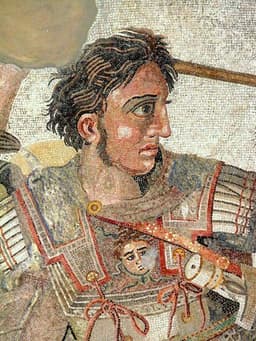
Alexander the Great
General · Ancient
85.2Total
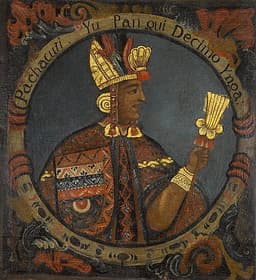
Pachacuti
Emperor · Medieval
69.4Total
Basic Information
Born
-356
1418
Died
-323
1472
Era
Ancient
Medieval
Nationality
Macedon
Inca Empire
Occupation
General
Emperor
Civilization
Western
Other
Score Comparison
Military (10%)
95.0
78.5
Political (20%)
60.0
58.1
Influence (20%)
92.0
65.0
Legacy (20%)
90.0
72.0
Leadership (15%)
80.0
78.0
Strategy (15%)
92.0
69.2
TOTAL
85.2
69.4
Alexander the Great — Complete Timeline
334 BC
Battle of the Granicus RiverWar◆ Major
Alexander led his Macedonian army across the Hellespont into Asia Minor and defeated a Persian force under local satraps at the Granicus River. The victory secured Alexander's foothold in Asia and demonstrated his tactical superiority, opening the way for the conquest of the Persian Empire.
Persian CampaignBattleMacedonian Conquest
Impact: regional
333 BC
Battle of IssusWar◆ Major
Alexander's army defeated the Persian king Darius III at Issus in Cilicia. Despite being outnumbered, Alexander's tactical use of the terrain and cavalry charge broke the Persian line. Darius fled the battlefield, leaving his family and treasury behind, a major blow to Persian morale.
Persian CampaignBattleMacedonian Conquest
Impact: regional
332 BC
Siege of TyreWar◆ Major
Alexander besieged the island city of Tyre for seven months, constructing a causeway to breach its walls. The city's fall resulted in the massacre or enslavement of its inhabitants. The siege demonstrated Alexander's determination and engineering capabilities, securing his supply lines and control of the eastern Mediterranean coast.
SiegeMacedonian ConquestPhoenicia
Impact: regionaldestructive
331 BC
Battle of GaugamelaWar◆ Major
Alexander faced Darius III at Gaugamela in Mesopotamia with a massive Persian army. Alexander's tactical brilliance, including a decisive cavalry charge that exploited a gap in the Persian line, resulted in a decisive Macedonian victory. Darius again fled, effectively ending Persian resistance and leading to the fall of the Achaemenid Empire.
Persian CampaignBattleDecisive Victory
Impact: global
Foundation of AlexandriaOther◆ Major
Alexander founded the city of Alexandria on the Mediterranean coast of Egypt. He personally selected the site and oversaw the initial planning. Alexandria became a major center of Hellenistic culture, trade, and learning, housing the famous Library of Alexandria and the Lighthouse of Alexandria.
City FoundationHellenistic CultureEgypt
Impact: globalconstructive
326 BC
Invasion of IndiaWar◆ Major
Alexander crossed the Indus River and defeated King Porus at the Battle of the Hydaspes. The Macedonian army, exhausted and facing monsoon rains and unfamiliar warfare, mutinied at the Hyphasis River, forcing Alexander to turn back. This campaign marked the easternmost extent of his conquests.
Indian CampaignBattleMutiny
Impact: regional
Pachacuti — Complete Timeline
1438 AD
Conquest of the Chanka KingdomWar
Pachacuti led the Inca army to defeat the Chanka, a powerful rival, in a decisive battle near Cusco. This victory secured his position as Sapa Inca and initiated a period of rapid expansion, transforming the Inca from a small kingdom into a vast empire.
ConquestInca ExpansionChanka
Impact: regional
1440 AD
Reconstruction of CuscoCultural◆ Major
Pachacuti rebuilt Cusco as the imperial capital, designing it in the shape of a puma and constructing massive stone structures like Sacsayhuam
Urban PlanningArchitectureInca Empire
Impact: regionalconstructive
1450 AD
Initiation of Machu Picchu's ConstructionCultural◆ Major
Pachacuti ordered the construction of Machu Picchu, a royal estate and ceremonial site high in the Andes. The complex featured sophisticated dry-stone masonry and terraced agriculture, serving as a symbol of Inca engineering and a retreat for the emperor.
ArchitectureRoyal EstateInca Engineering
Impact: regionalconstructive
Expert Analysis
Alexander the Great vs Pachacuti: Historical Comparison
Alexander the Great (356–323 BCE) of Macedon and Pachacuti (c. 1410–1471 CE) of the Inca Empire were both transformative conquerors, but operated in vastly different eras—one in the ancient Mediterranean, the other in medieval South America. Alexander’s lightning conquests and Hellenistic legacy contrast sharply with Pachacuti’s state-building and administrative consolidation.
Dimension Analysis
**Military: Alexander the Great 96 / Pachacuti 67**
Alexander’s tactical genius—phalanx combined with cavalry, siegecraft, and adaptive battlefield command—enabled him to defeat the Persian Empire and reach India, while Pachacuti’s military campaigns were effective but relied more on numerical superiority and mountain warfare, lacking comparable strategic innovation.
**Political: Alexander the Great 65 / Pachacuti 71**
Pachacuti excelled in political organization, integrating conquered peoples through the mit’a labor system, road networks, and centralized Cusco administration; Alexander’s empire fragmented after his death due to his failure to establish stable succession or local governance structures.
**Influence: Alexander the Great 90 / Pachacuti 78**
Alexander’s spread of Greek culture (Hellenism) reshaped the Mediterranean and Near East for centuries, influencing art, philosophy, and language; Pachacuti’s influence was more localized, creating a unified Inca state that lasted until Spanish conquest but did not transcend its region.
**Legacy: Alexander the Great 90 / Pachacuti 66**
Alexander’s legacy endures as a symbol of military ambition and cultural fusion, studied for millennia; Pachacuti’s legacy is primarily preserved through Inca oral traditions and archaeological sites like Machu Picchu, but his empire was short-lived after European contact.
**Leadership: Alexander the Great 82 / Pachacuti 84**
Pachacuti demonstrated superior long-term leadership, transforming the Inca from a small kingdom into a vast empire through diplomacy, religion, and infrastructure; Alexander’s charisma inspired unwavering loyalty, but his impulsive decisions and lack of succession planning undermined his achievements.
Verdict
Alexander the Great leads with a composite score of 85 to 74, driven by his unparalleled military brilliance and enduring global influence, even as Pachacuti’s political and leadership skills were more sustainable.
FAQ
Q: Who ranks higher? A: Alexander the Great ranks higher overall due to his superior military conquests, broader cultural impact, and lasting historical legacy.
Rankings
🥇
Alexander the GreatLeader
Mil: 95.0Pol: 60.0Inf: 92.0
85.2
🥈
Pachacuti
Mil: 78.5Pol: 58.1Inf: 65.0
69.4
+15.8 behind
How This Comparison Works
Algorithm
Each figure is scored on 6 dimensions (0—100 scale) based on structured historical data: Military (10%), Political (20%), Influence (20%), Legacy (20%), Leadership (15%), Strategy (15%). The weighted total produces the final ranking.
Data Sources
Scores are computed from structured sub-indicators in the database. Scale factors adjust for era (Ancient ×0.85, Modern ×1.0) and civilization size (Eastern ×1.05, Other ×0.80) to account for differences in population and military scale.
Maximum 3 Figures
Comparisons are limited to 2—3 figures to ensure readability and statistical meaningfulness.
Error Margins
±5 points per dimension — Sub-scores are derived from historical records with inherent uncertainty. Two figures within 5 points on a dimension should be considered roughly equivalent in that area.
Total Score Accuracy
±3 points overall — The weighted combination of 6 dimensions produces a total score with approximately ±3 points of uncertainty. Differences of less than 3 points are not statistically significant— the figures are effectively tied.
Known Limitations
- Historical records are incomplete and uneven across civilizations
- Figures from oral-tradition societies may be underrepresented
- Occupation labels can misclassify multi-role figures
- Scores measure capability and impact, not moral character
- Quantitative scoring is a comparison tool, not absolute truth
Capability Radar
Military (10%) — Battles & Warfare
Battles
98
85
Win Rate
99
90
Expansion
99
90
Political (20%) — Governance & Reform
Reform
75
92
Diplomacy
80
75
Economy
70
80
Influence (20%) — Cultural & Global Reach
Cultural
95
85
Global
95
65
Legacy (20%) — Historical Impact
Historical
98
80
Longevity
95
70
Leadership (15%) — Power & Stability
Tenure
60
85
Stability
55
82
Strategy (15%) — Tactics & Innovation
Strategy
98
88
Tactics
99
80
Reform
85
85
Similar Comparisons
Comments & Discussion
BattlefieldScholar6/16/2026
Alexander’s 96 military score is fair, maybe even a touch low given his record across three continents against diverse enemies—Persian Immortals, Indian war elephants, Scythian horse archers. His combined arms doctrine (phalanx + Companion cavalry + light infantry skirmishers) was revolutionary for its time, and his adaptive siegecraft at Tyre and Gaza is still taught. But let’s be honest: Pachacuti’s 67 is harsh. The Inca fought at 10,000+ feet elevation, using slings, clubs, and terrain to defeat larger tribal confederations. Their logistics—building roads and storehouses through the Andes—is a feat Alexander never faced. I’d bump Pachacuti to 75, mostly for operational mobility in extreme environments. Alexander’s political 65 is generous; his empire fragmented within a generation because he refused to delegate real authority. Macedon had no succession plan. That’s a structural failure, not just bad luck.
AncientWarNerd6/16/2026
Okay, so I just finished reading a book about the Inca, and it blows my mind that Pachacuti basically built a Roman-style empire in South America without horses or written language! Alexander had the best military tech of his age—iron weapons, siege towers, trained cavalry—and still almost got stuck in India. Meanwhile, Pachacuti’s army conquered the Andes using slings that could break Spanish steel helmets later. But 67 military? That feels low. I mean, sure, he didn’t fight in a phalanx, but you try fighting at 15,000 feet altitude while your enemy is raining rocks on you from above. Also, Alexander’s influence 90 is inflated—Greece was already spreading before him, and Hellenism mostly affected elites. Pachacuti’s mita system and terraced farming literally fed millions and changed the landscape forever. Still, Alexander is the GOAT if you only count flashy conquests. Just saying, Pachacuti deserves more respect!
Historian4806/16/2026
把亚历山大和Pachacuti放一起比,就像把项羽和秦始皇对比——一个军事天才但政治短视,一个治国高手但军事依赖集体。亚历山大让我想起项羽,巨鹿之战破釜沉舟,一路打到垓下,但最后连个像样的继承人都没有,帝国比秦朝还短命。Pachacuti更像商鞅加秦始皇,搞中央集权、修路、统一度量(印加用结绳)、推行劳役制度,可惜没有文字,否则历史地位会更高。但话说回来,西方史书总把亚历山大推成“千古一帝”,而印加帝国的制度创新在西方史学里长期被低估。评分里Pachacuti的总分73.7,我觉得至少应该上80,尤其是政治和影响力。中国读者看这个对比,会觉得西方史学的“军事至上”倾向太明显了。
DecolonialHistorian6/16/2026
This comparison reeks of Eurocentric bias dressed up in numbers. Why is Alexander’s ‘cultural fusion’ scored as influence 90 when it was essentially violent Hellenization—imposing Greek language, temples, and customs on conquered peoples? Pachacuti’s integration model—using mit’a labor for public works, building a road network that rivaled Rome’s, and fostering Quechua as a lingua franca—is at least as sophisticated, yet it gets 78. The Spanish conquest cut short his legacy, but that doesn’t mean his system was less influential; it means Europe destroyed it. And the military score gap (96 vs 67) ignores that Pachacuti’s campaigns were fought without iron, horses, or writing—against an environment that would have destroyed Alexander’s phalanx. If we used metrics like ‘sustainability’ or ‘cultural preservation through oral tradition,’ Pachacuti would win. This ranking is a textbook case of history written by the victors.
ColdMind486/16/2026
这组数据有点意思,但问题很多。亚历山大军事96,政治65——典型的“征服者偏科”现象。中国历史上像曹操,军事和政治都接近90,因为光会打仗不会治国,打下来的地盘迟早丢掉,亚历山大就是例子。Pachacuti政治71,但考虑到印加帝国没有文字,纯靠口传制度和实物管理(如结绳、驿站),能整合安第斯山脉那么多部落,实际难度不亚于秦朝统一六国——秦始皇的政治评分至少85。另外,影响力维度:亚历山大90 vs Pachacuti 78,但亚历山大的希腊化只覆盖地中海和中东部分地区,而印加帝国的道路系统和农业梯田技术至今还在影响南美洲的农业实践。应该加入“制度创新”子维度,而不是只看文化传播半径。数据模型有系统性的西方中心偏差。