Loading...
Ottokar II of Bohemia vs Zhao Kuangyin
Zhao Kuangyin leads by 9.6 pts · 2 figures compared
…

Ottokar II of Bohemia
Emperor · Medieval
61.9Total
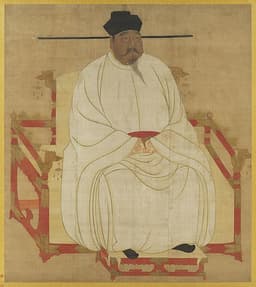
Zhao Kuangyin
Emperor · Medieval
71.5Total
Basic Information
Born
1233
927
Died
1278
976
Era
Medieval
Medieval
Nationality
Bohemia
China
Occupation
Emperor
Emperor
Civilization
Western
Eastern
Score Comparison
Military (10%)
74.7
78.0
Political (20%)
72.0
84.0
Influence (20%)
56.7
68.0
Legacy (20%)
54.0
65.0
Leadership (15%)
68.0
74.0
Strategy (15%)
58.0
68.0
TOTAL
61.9
71.5
Ottokar II of Bohemia — Complete Timeline
1260 AD
Battle of KressenbrunnWar◆ Major
Ottokar II defeated King B
Territorial ExpansionBattleAustria
Impact: regional
1273 AD
Election as King of GermanyPolitical Action◆ Major
Ottokar II was elected King of Germany by a faction of prince-electors, but he refused to accept the election of Rudolf I of Habsburg. This dispute led to conflict with Rudolf, who claimed the throne and challenged Ottokar's authority.
ElectionConflictHabsburg
Impact: regional
1278 AD
Battle on the MarchfeldWar
Ottokar II was defeated and killed by Rudolf I of Habsburg at the Battle on the Marchfeld. This battle ended Bohemian expansion and allowed the Habsburgs to gain control of Austria, Styria, and Carinthia.
BattleDeathHabsburg Rise
Impact: regionaltragic
Zhao Kuangyin — Complete Timeline
960 AD
Founded Song dynastyPolitical Action
Zhao Kuangyin, a general of Later Zhou, was proclaimed emperor by his troops at Chenqiao. He established the Song dynasty, ending the Five Dynasties period and beginning a new era of Chinese history.
Song dynastyFoundingChenqiao
Impact: globalconstructive
961 AD
Removed military power from generalsPolitical Action◆ Major
Zhao Kuangyin invited senior generals to a banquet and persuaded them to retire peacefully. This 'removal of military power over wine' prevented military coups and centralized control.
Song dynastyMilitary reformCentralization
Impact: nationalconstructive
963 AD
Unified southern ChinaWar◆ Major
Zhao Kuangyin launched campaigns to conquer the southern kingdoms, including Jingnan, Later Shu, and Southern Tang. By his death, most of China was reunified under Song rule.
Song unificationConquestSouthern kingdoms
Impact: national
Expert Analysis
Origins
Ottokar II, born around 1233, was the son of King Wenceslaus I of Bohemia and Kunigunde of Hohenstaufen. He inherited a kingdom that was part of the Holy Roman Empire, with a strong German influence. His family background gave him claims to Austria and Styria. Zhao Kuangyin was born in 927 in Luoyang, China, into a military family serving the Later Zhou dynasty. His father, Zhao Hongyin, was a general. He received a military education and rose through the ranks.
Rise to Power
Ottokar II became Margrave of Moravia in 1247 and succeeded his father as King of Bohemia in 1253. He capitalized on the weakening of the Babenberg dynasty to claim Austria and Styria. In 1260, he defeated King Béla IV of Hungary at the Battle of Kressenbrunn, securing these territories. He was elected King of Germany in 1273 by a faction of prince-electors, but the election of Rudolf I of Habsburg led to conflict. Zhao Kuangyin rose as a general under the Later Zhou. In 960, his troops proclaimed him emperor at Chenqiao, leading to the founding of the Song dynasty. He peacefully persuaded generals to retire in 961, preventing coups. He then launched campaigns to unify southern China, conquering Jingnan (963), Later Shu (965), and Southern Tang (975).
Leadership & Governance
Ottokar II was an expansionist ruler, focusing on territorial aggrandizement. He founded numerous towns and promoted German colonization, strengthening the economy. However, his governance was autocratic and he alienated the nobility. He scored 72.0 in political compared to Zhao's 84.0. Zhao Kuangyin centralized power by concentrating military authority under the emperor, creating a civilian-led government. He established the Song dynasty's civil service examination system, promoting meritocracy. His 'removal of military power over wine' was a strategic move to stabilize the state.
Triumph & Tragedy
Ottokar II's triumph was the expansion of Bohemia to its greatest territorial extent, controlling Austria, Styria, Carinthia, and Carniola. His tragedy was the Battle on the Marchfeld in 1278, where he was defeated and killed by Rudolf I. This ended Bohemian expansion and led to Habsburg ascendancy. Zhao Kuangyin's triumph was the unification of most of China under the Song dynasty, ending the Five Dynasties period. His tragedy may be his early death at age 49, leaving the northern frontier vulnerable to the Liao dynasty. He scored 78.0 in military versus Ottokar's 74.7.
Character & Destiny
Ottokar II was ambitious and confident, earning the nickname 'Iron and Golden King' for his wealth and military might. His refusal to accept Rudolf's election led to his downfall. Zhao Kuangyin was shrewd and cautious, prioritizing stability over conquest. His decision to demilitarize the generals prevented internal strife but also weakened Song military effectiveness. Historians note his humility and willingness to learn.
Legacy
Ottokar II is remembered as a powerful medieval king, but his legacy is overshadowed by the Habsburgs. His legal code, the 'Codex Ottokarianus', influenced Bohemian law. Zhao Kuangyin's legacy is profound: he founded the Song dynasty, which lasted over 300 years, and transformed Chinese governance. His emphasis on civil administration over military set a precedent. He scored 65.0 in legacy versus Ottokar's 54.0.
Conclusion
Zhao Kuangyin had greater impact. While Ottokar II's conquests were impressive, they did not endure. Zhao unified China and established a dynasty that shaped Chinese history for centuries. His political and leadership scores (84.0 and 74.0) far exceed Ottokar's (72.0 and 68.0). The total score gap of 9.6 points reflects Zhao's superior strategic consolidation.
Rankings
🥇
Zhao KuangyinLeader
Mil: 78.0Pol: 84.0Inf: 68.0
71.5
🥈
Ottokar II of Bohemia
Mil: 74.7Pol: 72.0Inf: 56.7
61.9
+9.6 behind
How This Comparison Works
Algorithm
Each figure is scored on 6 dimensions (0—100 scale) based on structured historical data: Military (10%), Political (20%), Influence (20%), Legacy (20%), Leadership (15%), Strategy (15%). The weighted total produces the final ranking.
Data Sources
Scores are computed from structured sub-indicators in the database. Scale factors adjust for era (Ancient ×0.85, Modern ×1.0) and civilization size (Eastern ×1.05, Other ×0.80) to account for differences in population and military scale.
Maximum 3 Figures
Comparisons are limited to 2—3 figures to ensure readability and statistical meaningfulness.
Error Margins
±5 points per dimension — Sub-scores are derived from historical records with inherent uncertainty. Two figures within 5 points on a dimension should be considered roughly equivalent in that area.
Total Score Accuracy
±3 points overall — The weighted combination of 6 dimensions produces a total score with approximately ±3 points of uncertainty. Differences of less than 3 points are not statistically significant— the figures are effectively tied.
Known Limitations
- Historical records are incomplete and uneven across civilizations
- Figures from oral-tradition societies may be underrepresented
- Occupation labels can misclassify multi-role figures
- Scores measure capability and impact, not moral character
- Quantitative scoring is a comparison tool, not absolute truth
Capability Radar
Military (10%) — Battles & Warfare
Battles
75
75
Win Rate
70
85
Expansion
75
75
Political (20%) — Governance & Reform
Reform
65
90
Diplomacy
65
85
Economy
70
80
Influence (20%) — Cultural & Global Reach
Cultural
60
70
Global
55
60
Legacy (20%) — Historical Impact
Historical
65
80
Longevity
50
75
Leadership (15%) — Power & Stability
Tenure
70
65
Stability
55
85
Strategy (15%) — Tactics & Innovation
Strategy
70
80
Tactics
65
70
Reform
60
90
Similar Comparisons
Comments & Discussion
No comments yet. Be the first to share your thoughts!