Loading...
Otto von Bismarck vs Peter the Great
Peter the Great leads by 7.4 pts · 2 figures compared
…
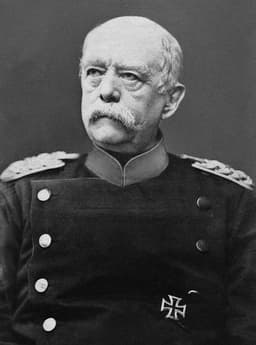
Otto von Bismarck
Politician · Modern
65.8Total
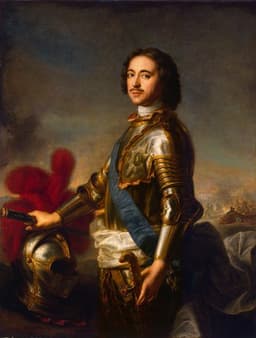
Peter the Great
Emperor · Modern
73.2Total
Basic Information
Born
1815
1672
Died
1898
1725
Era
Modern
Modern
Nationality
Germany
Russia
Occupation
Politician
Emperor
Civilization
Western
Western
Score Comparison
Military (10%)
55.0
75.0
Political (20%)
85.0
90.0
Influence (20%)
82.0
68.0
Legacy (20%)
40.0
65.0
Leadership (15%)
80.0
78.0
Strategy (15%)
50.0
72.0
TOTAL
65.8
73.2
Otto von Bismarck — Complete Timeline
1870 AD
Franco-Prussian WarWar
Bismarck provoked France into declaring war by editing the Ems Dispatch to appear insulting. The resulting conflict saw Prussia and its allies decisively defeat France, leading to the fall of Napoleon III, the capture of Paris, and the annexation of Alsace-Lorraine.
WarProvocationAnnexation
Impact: globaldestructive
1871 AD
Unification of Germany ProclaimedPolitical Action
Following the Franco-Prussian War, Bismarck orchestrated the proclamation of the German Empire in the Hall of Mirrors at Versailles. King Wilhelm I of Prussia was declared German Emperor, uniting the German states under Prussian leadership and establishing the Second Reich.
UnificationGerman EmpireNationalism
Impact: globalconstructive
1878 AD
Enactment of the Anti-Socialist LawsPolitical Action◆ Major
After two assassination attempts on Kaiser Wilhelm I, Bismarck pushed through laws banning socialist organizations, publications, and meetings. The laws remained in force until 1890, suppressing the Social Democratic Party while Bismarck simultaneously introduced welfare reforms to undercut its appeal.
RepressionSocialismWelfare State
Impact: nationaldestructive
Congress of BerlinPolitical Action◆ Major
Bismarck hosted the Congress of Berlin to revise the Treaty of San Stefano and resolve the Eastern Crisis. He acted as 'honest broker,' reducing Russian gains, granting independence to Romania, Serbia, and Montenegro, and placing Bosnia-Herzegovina under Austro-Hungarian administration.
DiplomacyBalkansBalance of Power
Impact: global
1883 AD
Establishment of the Welfare StateReform◆ Major
Bismarck introduced the Health Insurance Bill (1883), Accident Insurance Bill (1884), and Old Age and Disability Insurance Bill (1889). These laws created the first modern welfare state, providing workers with social security and aiming to reduce support for socialist movements.
Social ReformWelfareInsurance
Impact: globalprogressive
1890 AD
Dismissal as ChancellorPolitical Action◆ Major
Emperor Wilhelm II forced Bismarck to resign due to policy disagreements, particularly over anti-socialist laws and foreign policy. Bismarck's departure marked the end of an era, leading to a more aggressive German foreign policy and the eventual unraveling of his alliance system.
ResignationWilhelm IIPolicy Shift
Impact: global
Peter the Great — Complete Timeline
1697 AD
Grand EmbassyPolitical Action◆ Major
Peter the Great traveled incognito to Western Europe as part of a diplomatic mission. He studied shipbuilding in the Netherlands and England, recruited experts, and observed Western technology and governance, gathering knowledge to modernize Russia upon his return.
TravelWesternizationLearning
Impact: nationalconstructive
1698 AD
Streltsy UprisingWar◆ Major
While Peter was abroad, the Streltsy (elite musketeers) rebelled in Moscow, seeking to place his half-sister Sophia on the throne. Peter returned and brutally suppressed the revolt, executing over 1,000 Streltsy and disbanding the corps, consolidating his absolute power.
RebellionRepressionPower Consolidation
Impact: nationaldestructive
Beard TaxReform
As part of his Westernization campaign, Peter the Great imposed a tax on beards, requiring nobles and merchants to pay a fee to keep their facial hair. Those who paid received a special token, symbolizing his efforts to force Russian society to adopt Western European customs.
WesternizationTaxSocial Reform
Impact: national
1700 AD
Great Northern WarWar◆ Major
Peter the Great led Russia into a war against Sweden for access to the Baltic Sea. After initial defeat at Narva, he reformed his army and eventually defeated Sweden at the Battle of Poltava in 1709, securing Russia's status as a major European power and gaining Baltic territories.
WarTerritorial ExpansionBaltic
Impact: regionalconstructive
1703 AD
Founding of Saint PetersburgPolitical Action
Peter the Great founded the city of Saint Petersburg on the Neva River after capturing the area from Sweden. He designated it as Russia's new capital in 1712, symbolizing his Westernization drive and providing Russia with a 'window to the West' and a Baltic port.
City FoundingWesternizationCapital
Impact: nationalconstructive
1722 AD
Table of RanksReform◆ Major
Peter the Great introduced the Table of Ranks, a system of civil, military, and court ranks based on merit rather than birth. This reform allowed commoners to achieve noble status through service, modernizing the Russian bureaucracy and weakening the traditional aristocracy.
BureaucracyMeritocracySocial Reform
Impact: nationalprogressive
Expert Analysis
Peter the Great vs Otto von Bismarck
### The Iron Chancellor and the Iron Tsar
On a cold January morning in 1871, a solitary figure stood in the Hall of Mirrors at Versailles, his face a mask of controlled triumph. Otto von Bismarck had just watched the King of Prussia be proclaimed Emperor of Germany, an empire he had forged with his own hands. Less than two centuries earlier, another man had stood on the banks of the Neva River, staring at a swamp and envisioning a city that would become Russia's window to the West. Peter the Great’s St. Petersburg would rise from the mud just as Bismarck’s Germany would rise from the chaos of competing states. Both men remade their nations, but they did so through radically different means—one through the cold calculus of diplomacy and calculated war, the other through the sheer force of personal will and brutal transformation. Why did one build a welfare state while the other imposed a tax on beards? The answer lies in the worlds they inherited and the ambitions that drove them.
### Origins
Born in 1815 into the Junker nobility of Prussia, Bismarck entered a world still reeling from the Napoleonic Wars. His upbringing was one of conservative estates and a classical education, but he was no bookish idealist. As a young man, he was a notorious carouser, earning a reputation as the “mad Junker” before settling into politics. His era was one of rising nationalism and the slow, grinding pressure of liberal revolutions across Europe. Bismarck’s Germany did not yet exist; it was a patchwork of kingdoms, duchies, and free cities. He saw this fragmentation not as a tragedy but as an opportunity for a man who understood power.
Peter the Great, born in 1672, came from a very different seat of power. He was a tsar of a vast, landlocked, and deeply medieval Russia. His childhood was marked by the violent Streltsy Uprising, where he witnessed his own relatives being butchered. This trauma forged in him a visceral hatred of the old Muscovite order. Where Bismarck grew up within the stable structures of Prussian aristocracy, Peter grew up in a world of constant palace intrigue and cultural isolation. The Russia he inherited had no navy, no modern army, and no access to warm-water ports. His era was one of the Scientific Revolution and the rise of absolute monarchies in the West, and he was determined to drag his kingdom into that century by any means necessary.
### Rise to Power
Bismarck’s path to power was a masterclass in political opportunism. He entered the Prussian parliament as a reactionary, defending the king’s absolute power against liberals. His reputation for hardline conservatism caught the eye of King Wilhelm I, who was locked in a bitter struggle with parliament over military funding. In 1862, Wilhelm appointed Bismarck Minister President, and Bismarck famously declared that “the great questions of the day will not be decided by speeches and majority decisions—but by blood and iron.” He then proceeded to rule without a budget, defying the constitution, and used the army to crush Denmark, Austria, and France in a series of stunning wars.
Peter’s rise was far more chaotic and personal. He seized power from his half-sister Sophia in 1689, but his true apprenticeship began with the Grand Embassy of 1697. Traveling incognito as “Peter Mikhailov,” he worked in Dutch shipyards, studied English anatomy, and toured European factories. He returned to Russia with a vision and a fury. When the Streltsy rebelled again in 1698, he personally participated in their torture and execution, hanging hundreds from the Kremlin walls. This was not the calculated provocation of the Ems Dispatch; it was the raw, terrifying will of a tsar who would cut off his own nobility’s beards to prove a point.
### Leadership & Governance
As a ruler, Bismarck was a chess player. He governed through alliances, deceptions, and a finely tuned understanding of European power balances. His domestic policy was a paradox: he crushed socialists with the Anti-Socialist Laws of 1878, yet simultaneously pioneered the welfare state with health, accident, and old-age insurance. He was not a reformer out of compassion but out of calculation—he wanted to steal the thunder from the social democrats and bind the working class to the state. His foreign policy was equally pragmatic: the Congress of Berlin in 1878 showed him acting as the “honest broker” of Europe, a role he played to keep the continent stable and Germany secure.
Peter the Great was a builder, not a manipulator. He ruled like a foreman on a construction site, personally inspecting ships, drafting laws, and even pulling teeth. His Table of Ranks of 1722 shattered the old aristocracy by making promotion dependent on merit, not birth. He built a navy from scratch, founded St. Petersburg in 1703 as a “window to the West,” and modernized the army through relentless drilling and Western tactics. His reforms were brutal—the beard tax, the forced shaving of nobles, the conscription of peasants for endless wars—but they were aimed at one goal: making Russia a European power. Where Bismarck manipulated parliaments, Peter smashed them.
### Triumph & Tragedy
Bismarck’s greatest triumph was the unification of Germany in 1871, a moment of theatrical genius. He provoked France into declaring war by editing the Ems Dispatch to appear insulting, then orchestrated the proclamation of the German Empire in the Hall of Mirrors at Versailles—a deliberate humiliation of France. His tragedy came in 1890, when the young, arrogant Kaiser Wilhelm II forced him to resign. The Iron Chancellor, who had controlled Europe for two decades, was dismissed like a servant.
Peter’s triumph was the Great Northern War (1700–1721), which ended with Russia defeating Sweden and gaining access to the Baltic. He founded his city on conquered land, a symbol of his victory. His tragedy was personal: his son Alexei was tortured and executed for conspiring against him. Peter died in 1725, possibly from a urinary infection, without naming a clear successor, plunging Russia into a century of palace coups.
### Character & Destiny
Bismarck was a man of immense self-control and cynicism. He once said, “Politics is the art of the possible, the attainable—the art of the next best.” He was a realist who believed in the primacy of power, but he also had a deep sense of duty to the Prussian state. His personality—calculating, patient, and ruthless—shaped a Germany that was powerful but unstable, a nation forged in blood and held together by his own genius.
Peter was a man of explosive energy and visionary impatience. He was six feet seven inches tall, with a violent temper and a boundless curiosity. His personality—brutal, impulsive, and transformative—shaped a Russia that was modernized but traumatized. He wanted to create a new elite, but he did so by terrorizing the old one. His reforms were top-down, forced, and often hated, but they were effective.
### Legacy
Bismarck left behind a unified Germany, a welfare state that would inspire the modern social safety net, and a foreign policy tradition of “realpolitik.” But he also left a legacy of militarism and authoritarianism that would haunt Europe. He is remembered as the Iron Chancellor, a master of diplomacy, but also as the man who set Germany on a path to two world wars.
Peter the Great left behind a Russia that was, for the first time, a European great power. He built a navy, a capital, and a bureaucracy. His Table of Ranks and Westernization policies created a new nobility of service. But he also left a legacy of autocratic modernization—a model of change from above, enforced by violence. He is remembered as the Great, but also as the man who made Russia modern at the cost of its soul.
### Conclusion
Standing at opposite ends of the modern era, Bismarck and Peter the Great both understood that nations are not born but made. Bismarck made Germany through the art of the possible, weaving alliances and wars with the precision of a master craftsman. Peter made Russia through the art of the impossible, hammering a backward kingdom into a European shape with his own hands. One built a state that lasted; the other built a state that endured. Their differences—one coldly political, the other violently personal—reflect not just their characters but the very nature of the nations they shaped. In the end, both succeeded, and both left scars that would never fully heal.
Rankings
🥇
Peter the GreatLeader
Mil: 75.0Pol: 90.0Inf: 68.0
73.2
🥈
Otto von Bismarck
Mil: 55.0Pol: 85.0Inf: 82.0
65.8
+7.4 behind
How This Comparison Works
Algorithm
Each figure is scored on 6 dimensions (0—100 scale) based on structured historical data: Military (10%), Political (20%), Influence (20%), Legacy (20%), Leadership (15%), Strategy (15%). The weighted total produces the final ranking.
Data Sources
Scores are computed from structured sub-indicators in the database. Scale factors adjust for era (Ancient ×0.85, Modern ×1.0) and civilization size (Eastern ×1.05, Other ×0.80) to account for differences in population and military scale.
Maximum 3 Figures
Comparisons are limited to 2—3 figures to ensure readability and statistical meaningfulness.
Error Margins
±5 points per dimension — Sub-scores are derived from historical records with inherent uncertainty. Two figures within 5 points on a dimension should be considered roughly equivalent in that area.
Total Score Accuracy
±3 points overall — The weighted combination of 6 dimensions produces a total score with approximately ±3 points of uncertainty. Differences of less than 3 points are not statistically significant— the figures are effectively tied.
Known Limitations
- Historical records are incomplete and uneven across civilizations
- Figures from oral-tradition societies may be underrepresented
- Occupation labels can misclassify multi-role figures
- Scores measure capability and impact, not moral character
- Quantitative scoring is a comparison tool, not absolute truth
Capability Radar
Military (10%) — Battles & Warfare
Battles
60
85
Win Rate
70
80
Expansion
80
90
Political (20%) — Governance & Reform
Reform
90
95
Diplomacy
95
80
Economy
80
85
Influence (20%) — Cultural & Global Reach
Cultural
65
85
Global
75
85
Legacy (20%) — Historical Impact
Historical
85
90
Longevity
70
85
Leadership (15%) — Power & Stability
Tenure
85
90
Stability
70
70
Strategy (15%) — Tactics & Innovation
Strategy
85
85
Tactics
55
75
Reform
75
95
Similar Comparisons
Comments & Discussion
钢铁智谋6/16/2026
对比太表面了!彼得大帝在波尔塔瓦战役前亲自挖战壕、铸火炮,这种亲临一线的实践精神远非俾斯麦的静坐外交可比。后者虽统一德国,却在1875年战争恐慌中暴露了战略畏缩。彼得造船厂、建学校、创科学院,是真正的制度创新者;俾斯麦的福利国家不过是安抚工人的政治工具。一个用拳头打碎旧俄国,一个用合同捆住新德国——我选沙皇的热血。
Halls of Mirrors6/16/2026
Bismarck’s proclamation at Versailles in 1871 was a masterpiece of humiliation diplomacy—he deliberately chose French soil to rub salt in the wound. Meanwhile, Peter the Great built St. Petersburg from a swamp to spite Sweden and assert Russia’s Baltic destiny. Both men weaponized geography. But here’s my stake: Bismarck’s welfare state was a cynical safety valve against socialism, while Peter’s beard tax was a genuine cultural revolution. One bribed his people; the other bullied them into the f
偏见档案6/16/2026
所谓分析忽略了关键污点:俾斯麦的德国统一靠三次血腥战争——对丹麦、奥地利、法国,死伤数十万。彼得大帝的北方战争共20年,虽然残酷,但目标明确:出海口与现代军备。更糟的是,俾斯麦的社会主义者法是开历史倒车的镇压,而彼得的改革至少推进了教育和工业,尽管用农奴制作为代价。两个铁腕人物,但俾斯麦的外交至上论不过是为其保守权力服务的美化。
Krupp's Shadow6/16/2026
Let’s talk economics: Bismarck secretly funded his welfare state through grain tariffs that hurt the poor, while Peter the Great built Russia’s first ironworks and canal system. The Junker chancellor was a pragmatist who protected his class; the tsar, despite his autocracy, at least tried to create a middle class by importing Swedish engineers. Bismarck’s Germany grew rich because of geography and timing; Peter’s Russia grew because he personally oversaw every wheel and hull. I trust the man who
Chronicler64656/16/2026
Peter the Great was a barbaric visionary who literally beat modernity into Russia with a club, while Bismarck was a surgical statesman who sewed Germany together with treaties and deceptive precision. Peter taxed beards to force his nobles into Western dress—a blunt instrument approach that shows he believed change had to be physically imposed. Bismarck, by contrast, crafted constitutions and welfare programs to buy loyalty. The iron tsar swung a sledgehammer; the iron chancellor used a scalpel.