Loading...
Peter the Great vs Winston Churchill
Peter the Great leads by 1.4 pts · 2 figures compared
…
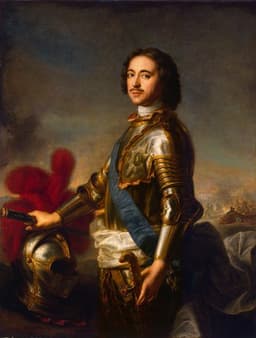
Peter the Great
Emperor · Modern
73.2Total
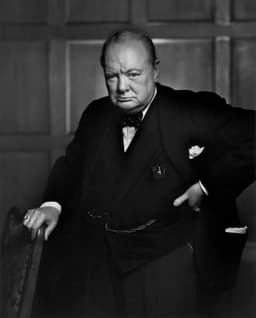
Winston Churchill
Politician · Modern
71.8Total
Basic Information
Born
1672
1874
Died
1725
1965
Era
Modern
Modern
Nationality
Russia
United Kingdom
Occupation
Emperor
Politician
Civilization
Western
Western
Score Comparison
Military (10%)
75.0
55.0
Political (20%)
90.0
78.0
Influence (20%)
68.0
75.0
Legacy (20%)
65.0
68.0
Leadership (15%)
78.0
82.0
Strategy (15%)
72.0
65.0
TOTAL
73.2
71.8
Peter the Great — Complete Timeline
1697 AD
Grand EmbassyPolitical Action◆ Major
Peter the Great traveled incognito to Western Europe as part of a diplomatic mission. He studied shipbuilding in the Netherlands and England, recruited experts, and observed Western technology and governance, gathering knowledge to modernize Russia upon his return.
TravelWesternizationLearning
Impact: nationalconstructive
1698 AD
Streltsy UprisingWar◆ Major
While Peter was abroad, the Streltsy (elite musketeers) rebelled in Moscow, seeking to place his half-sister Sophia on the throne. Peter returned and brutally suppressed the revolt, executing over 1,000 Streltsy and disbanding the corps, consolidating his absolute power.
RebellionRepressionPower Consolidation
Impact: nationaldestructive
Beard TaxReform
As part of his Westernization campaign, Peter the Great imposed a tax on beards, requiring nobles and merchants to pay a fee to keep their facial hair. Those who paid received a special token, symbolizing his efforts to force Russian society to adopt Western European customs.
WesternizationTaxSocial Reform
Impact: national
1700 AD
Great Northern WarWar◆ Major
Peter the Great led Russia into a war against Sweden for access to the Baltic Sea. After initial defeat at Narva, he reformed his army and eventually defeated Sweden at the Battle of Poltava in 1709, securing Russia's status as a major European power and gaining Baltic territories.
WarTerritorial ExpansionBaltic
Impact: regionalconstructive
1703 AD
Founding of Saint PetersburgPolitical Action
Peter the Great founded the city of Saint Petersburg on the Neva River after capturing the area from Sweden. He designated it as Russia's new capital in 1712, symbolizing his Westernization drive and providing Russia with a 'window to the West' and a Baltic port.
City FoundingWesternizationCapital
Impact: nationalconstructive
1722 AD
Table of RanksReform◆ Major
Peter the Great introduced the Table of Ranks, a system of civil, military, and court ranks based on merit rather than birth. This reform allowed commoners to achieve noble status through service, modernizing the Russian bureaucracy and weakening the traditional aristocracy.
BureaucracyMeritocracySocial Reform
Impact: nationalprogressive
Winston Churchill — Complete Timeline
1940 AD
Appointed Prime Minister of the United KingdomPolitical Action◆ Major
On May 10, 1940, Winston Churchill became Prime Minister of the United Kingdom, replacing Neville Chamberlain. His appointment came as Nazi Germany invaded France and the Low Countries, and Churchill formed a coalition government to lead Britain through World War II.
World War IILeadershipCoalition Government
Impact: globalconstructive
Delivered the 'We Shall Fight on the Beaches' SpeechOther◆ Major
On June 4, 1940, Churchill delivered a speech to the House of Commons following the evacuation of British forces from Dunkirk. He declared that Britain would fight on the beaches, landing grounds, fields, streets, and hills, and never surrender, rallying British morale during the darkest days of World War II.
World War IIOratoryMorale
Impact: nationalconstructive
1941 AD
Signed the Atlantic CharterOther◆ Major
On August 14, 1941, Churchill and U.S. President Franklin D. Roosevelt signed the Atlantic Charter aboard HMS Prince of Wales. This joint declaration outlined post-war goals including self-determination, disarmament, and free trade, and became a foundational document for the Allied war aims and the United Nations.
World War IIAllied CooperationPost-war Planning
Impact: globalconstructive
1945 AD
Attended the Yalta ConferenceOther◆ Major
In February 1945, Churchill attended the Yalta Conference with Roosevelt and Stalin to discuss the post-war reorganization of Europe. The conference agreed on the division of Germany, the establishment of the United Nations, and the fate of Eastern Europe, though Churchill later expressed regret over concessions to Stalin.
World War IIPost-war SettlementBig Three
Impact: global
1946 AD
Delivered the 'Iron Curtain' SpeechOther◆ Major
On March 5, 1946, Churchill delivered a speech at Westminster College in Fulton, Missouri, where he stated that an 'iron curtain' had descended across Europe from Stettin to Trieste. This speech is widely regarded as marking the beginning of the Cold War, as it highlighted the division between Soviet-controlled Eastern Europe and the West.
Cold WarSoviet UnionDivision of Europe
Impact: globaldestructive
1953 AD
Awarded the Nobel Prize in LiteratureOther◆ Major
In 1953, Churchill was awarded the Nobel Prize in Literature for his historical writings, particularly 'The Second World War' and 'A History of the English-Speaking Peoples'. The Nobel committee cited his mastery of historical and biographical description as well as his brilliant oratory in defending human values.
LiteratureNobel PrizeHistorical Writing
Impact: nationalconstructive
Expert Analysis
Peter the Great vs Winston Churchill
### The Reformer and the Lion
In the winter of 1940, as German bombs rained down on London, a stout, cigar-chomping man stood in the rubble of the House of Commons and declared that Britain would “never surrender.” Two centuries earlier, in the frozen marshes of the Neva River, a giant of a tsar—six feet seven inches tall—swung an axe alongside his laborers, building a city from a swamp that would become his window to the West. Winston Churchill and Peter the Great: one defended an empire, the other forged one. Both were titans of their age, yet their paths diverged as dramatically as the nations they led. Why did one become a symbol of defiance, the other a force of transformation? The answer lies not just in their deeds, but in the crucibles of their times.
### Origins
Churchill was born into the fading glow of the British Empire, the son of a prominent politician and an American heiress. His childhood was marked by neglect and a stutter, but also by a fierce ambition to restore his family’s glory. He was a product of Victorian England—a world of rigid class structures, parliamentary debate, and imperial confidence. Peter, by contrast, emerged from the chaos of Muscovy. Born in 1672 to Tsar Alexis, he grew up amid palace intrigues and a bloody uprising of the *streltsy* musketeers. At ten, he witnessed relatives murdered before his eyes. Where Churchill had textbooks and tutors, Peter had the Kremlin’s violent corridors and a fascination with foreign technology. His era was one of backwardness: Russia had no navy, no modern army, and no access to warm-water ports. Churchill inherited a system; Peter had to invent one.
### Rise to Power
Churchill’s path was slow and erratic. He entered Parliament in 1900, but his early career was a series of brilliant blunders: the disastrous Gallipoli campaign in World War I nearly ended him. He switched parties twice, earning a reputation for recklessness. Only in 1940, at age sixty-five, did he become Prime Minister—the right man for the darkest hour. Peter’s rise was swifter and more brutal. In 1689, at seventeen, he overthrew his half-sister Sophia, who had ruled as regent. But he did not seize the throne alone; he spent years in the foreign quarter of Moscow, learning shipbuilding and military tactics from Dutch and Scottish engineers. In 1697, he embarked on the Grand Embassy—a disguised tour of Europe where he worked incognito in Dutch shipyards. This was not a politician’s climb; it was a craftsman’s apprenticeship.
### Leadership & Governance
Churchill’s leadership was oratorical and inspirational. He rallied a nation through radio broadcasts and speeches, his words becoming weapons against despair. “Victory at all costs,” he thundered. His military strategy, however, was often questioned—he micromanaged campaigns and trusted his instincts over his generals. Politically, he was a master of coalition, holding together a fragile wartime alliance with Stalin and Roosevelt. Peter’s leadership was hands-on and ruthless. He personally led his army at the Battle of Poltava in 1709, crushing Sweden’s Charles XII and ending the Great Northern War. He reformed Russia from the ground up: he imposed a beard tax to force Western dress, created the Table of Ranks to replace noble birth with merit, and built St. Petersburg as a capital of stone and ambition. Churchill gave speeches; Peter gave decrees. Churchill inspired; Peter compelled.
### Triumph & Tragedy
Churchill’s greatest moment was 1940, when Britain stood alone against Nazi Germany. His defiance turned a near-defeat into a moral victory, and he lived to see the war won in 1945. But his tragedy came immediately after: he lost the 1945 election, rejected by a nation that wanted peace, not war. He returned to power in 1951, but his second term was a shadow of the first—marked by imperial decline and failing health. Peter’s triumph was the creation of modern Russia. He founded the Russian navy, expanded its borders to the Baltic, and transformed a medieval state into a European power. Yet his tragedy was personal: he ordered the torture and execution of his own son, Alexei, for suspected treason. He died in 1725, in agony from a bladder infection, leaving a nation that revered him but feared his cruelty.
### Character & Destiny
Churchill was a man of words and will. He wrote history as he made it, winning the Nobel Prize in Literature in 1953. His personality—stubborn, romantic, theatrical—was perfectly suited to a war that demanded drama. He believed in destiny, once saying, “I felt as if I were walking with destiny, and that all my past life had been but a preparation for this hour.” Peter was a man of action and force. He had no time for sentiment; he broke his enemies, his nobles, and his own family. His character was forged in the violent struggle to drag Russia into the modern world. Churchill’s destiny was to save a civilization; Peter’s was to create one. One preserved, the other transformed.
### Legacy
Churchill is remembered as the Bulldog of Britain, his image on coins and his speeches in textbooks. But his legacy is complex: he was a champion of democracy who also held imperialist views now seen as outdated. Peter is the Great, a statue in St. Petersburg, a city he built from nothing. Yet his reforms came at a terrible cost—serfdom worsened, and autocracy deepened. Both men left indelible marks. Churchill’s Britain is a smaller, quieter nation; Peter’s Russia is a vast, restless power. One legacy whispers in the halls of Parliament; the other echoes across the steppes.
### Conclusion
Standing at the edge of history, Churchill and Peter remind us that leadership is shaped by need. Churchill’s greatness was reactive—he rose to meet a threat. Peter’s was proactive—he created a future that did not yet exist. One looked back to defend an empire; the other looked forward to build one. Perhaps the true difference is this: Churchill gave his people the courage to endure; Peter gave his people the tools to change. In the end, both understood that history does not ask for perfection—it asks for resolve. And in their own ways, both gave everything they had.
Rankings
🥇
Peter the GreatLeader
Mil: 75.0Pol: 90.0Inf: 68.0
73.2
🥈
Winston Churchill
Mil: 55.0Pol: 78.0Inf: 75.0
71.8
+1.4 behind
How This Comparison Works
Algorithm
Each figure is scored on 6 dimensions (0—100 scale) based on structured historical data: Military (10%), Political (20%), Influence (20%), Legacy (20%), Leadership (15%), Strategy (15%). The weighted total produces the final ranking.
Data Sources
Scores are computed from structured sub-indicators in the database. Scale factors adjust for era (Ancient ×0.85, Modern ×1.0) and civilization size (Eastern ×1.05, Other ×0.80) to account for differences in population and military scale.
Maximum 3 Figures
Comparisons are limited to 2—3 figures to ensure readability and statistical meaningfulness.
Error Margins
±5 points per dimension — Sub-scores are derived from historical records with inherent uncertainty. Two figures within 5 points on a dimension should be considered roughly equivalent in that area.
Total Score Accuracy
±3 points overall — The weighted combination of 6 dimensions produces a total score with approximately ±3 points of uncertainty. Differences of less than 3 points are not statistically significant— the figures are effectively tied.
Known Limitations
- Historical records are incomplete and uneven across civilizations
- Figures from oral-tradition societies may be underrepresented
- Occupation labels can misclassify multi-role figures
- Scores measure capability and impact, not moral character
- Quantitative scoring is a comparison tool, not absolute truth
Capability Radar
Military (10%) — Battles & Warfare
Battles
85
55
Win Rate
80
60
Expansion
90
40
Political (20%) — Governance & Reform
Reform
95
70
Diplomacy
80
85
Economy
85
60
Influence (20%) — Cultural & Global Reach
Cultural
85
85
Global
85
85
Legacy (20%) — Historical Impact
Historical
90
90
Longevity
85
80
Leadership (15%) — Power & Stability
Tenure
90
75
Stability
70
70
Strategy (15%) — Tactics & Innovation
Strategy
85
85
Tactics
75
65
Reform
95
70
Similar Comparisons
Comments & Discussion
Bombshell Skeptic6/16/2026
Hold up, data doesn’t back the lionizing of Churchill. His Gallipoli disaster in 1915 cost 44,000 Allied casualties, and he backed poison gas use against Kurds. Peter’s Great Northern War was a slog, but his army grew from 40,000 to 200,000—tangible metrics of transformation. Churchill’s “never surrender” rhetoric feels hollow when he oversaw Bengal famine deaths that dwarfed any single battle. Numbers don’t lie: Peter built, Churchill bungled before he saved.|en
沼泽与议会6/16/2026
我作为古典学学者,斗胆说句:彼得大帝才是真正的革命者,丘吉尔不过是个守成者。彼得跑到荷兰当木匠学造船,化名混进造船厂,这种隐姓埋名学技艺的魄力,丘吉尔有吗?彼得把俄国从17世纪硬拖进18世纪,剃掉贵族胡子、改革历法、建立科学院。丘吉尔呢?他捍卫的是旧日帝国的最后一抹余晖。一个开天辟地,一个苟延残喘,高下立判。|zh
铁砧与稿纸6/16/2026
作为历史发烧友,我恨透了这种“伟人对抗”的论调。彼得大帝砍树造城,那是血腥的农奴剥削,数万劳工死于建彼得堡的沼泽。丘吉尔说“抗争到底”,背后是殖民帝国的累累白骨。比谁更“伟大”?不如说两人都是疯子——一个把国家当铁砧锻造,一个把演讲稿当武器扔出去。真要选,我取彼得,至少他亲手沾过烂泥。|zh
重塑与演说6/16/2026
作为修正主义者,我拒绝抬一个贬一个。彼得改革是粗暴的西化,他砍掉旧贵族头,却让农民更苦——农奴制在他死后更严酷。丘吉尔的“铁幕”演说更是冷战导火索,两人都留下了灰色遗产。但彼得在1703年建彼得堡时,用了全天候工制,死了10万人;丘吉尔在1940年用广播凝聚民心,救了上百万人。结果说话:活人比石头强。|zh
Historian7296/16/2026
As a military historian, I’d argue Peter wins hands down for pure impact. He personally swung an axe building St. Petersburg’s first ships, while Churchill directed battles from a bunker. Peter created a navy from nothing—Russia had 0 warships in 1696, 200 by 1725. Churchill’s finest hour was defense, not creation. Give me the tsar who bled with his men over the aristocrat who sipped brandy in his cabinet room any day.|en