Loading...
Mao Zedong vs Peter the Great
Mao Zedong leads by 6.2 pts · 2 figures compared
…
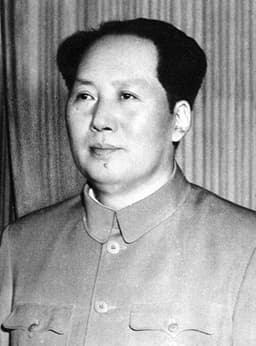
Mao Zedong
Politician · Modern
79.4Total
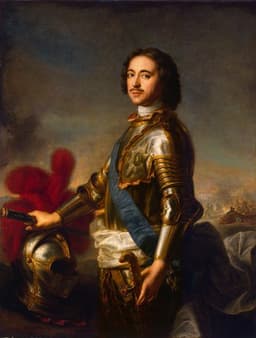
Peter the Great
Emperor · Modern
73.2Total
Basic Information
Born
1893
1672
Died
1976
1725
Era
Modern
Modern
Nationality
China
Russia
Occupation
Politician
Emperor
Civilization
Eastern
Western
Score Comparison
Military (10%)
75.0
75.0
Political (20%)
88.0
90.0
Influence (20%)
85.0
68.0
Legacy (20%)
70.0
65.0
Leadership (15%)
85.0
78.0
Strategy (15%)
72.0
72.0
TOTAL
79.4
73.2
Mao Zedong — Complete Timeline
1934 AD
Long MarchWar
Mao Zedong led the Chinese Red Army on a strategic retreat from Nationalist forces, covering approximately 6,000 miles over 370 days. The march solidified Mao's leadership within the Chinese Communist Party and became a foundational myth of the Communist revolution.
Chinese Civil WarCommunist RevolutionRetreat
Impact: national
1949 AD
Proclamation of the People's Republic of ChinaPolitical Action
Mao Zedong declared the founding of the People's Republic of China from Tiananmen Gate in Beijing. This ended the Chinese Civil War and established Communist rule over mainland China, with Mao as Chairman of the Central People's Government.
Founding of PRCCommunist VictoryRevolution
Impact: global
1958 AD
Great Leap ForwardReform◆ Major
Mao launched a campaign to rapidly industrialize China and collectivize agriculture. The policy led to widespread mismanagement, resulting in a famine that caused an estimated 15-45 million deaths between 1959 and 1961.
FamineIndustrializationCollectivization
Impact: nationaldestructive
1960 AD
Sino-Soviet SplitPolitical Action◆ Major
Mao's ideological differences with Soviet leader Nikita Khrushchev led to a breakdown in relations between China and the Soviet Union. The split ended the Sino-Soviet alliance and reshaped global Cold War dynamics, with China pursuing an independent path.
Cold WarIdeological ConflictAlliance Breakdown
Impact: global
1966 AD
Cultural RevolutionPolitical Action
Mao initiated a sociopolitical movement to purge capitalist and traditional elements from Chinese society. The Red Guard youth groups attacked intellectuals and officials, leading to widespread violence, destruction of cultural artifacts, and an estimated 1-2 million deaths.
Political PurgeSocial UpheavalRed Guard
Impact: nationaldestructive
1971 AD
Ping-Pong DiplomacyCultural◆ Major
Mao approved an invitation for the U.S. table tennis team to visit China, initiating a thaw in Sino-American relations. This cultural exchange paved the way for President Nixon's visit to China in 1972 and the eventual normalization of diplomatic ties.
DiplomacyU.S.-China RelationsCultural Exchange
Impact: globalconstructive
Peter the Great — Complete Timeline
1697 AD
Grand EmbassyPolitical Action◆ Major
Peter the Great traveled incognito to Western Europe as part of a diplomatic mission. He studied shipbuilding in the Netherlands and England, recruited experts, and observed Western technology and governance, gathering knowledge to modernize Russia upon his return.
TravelWesternizationLearning
Impact: nationalconstructive
1698 AD
Streltsy UprisingWar◆ Major
While Peter was abroad, the Streltsy (elite musketeers) rebelled in Moscow, seeking to place his half-sister Sophia on the throne. Peter returned and brutally suppressed the revolt, executing over 1,000 Streltsy and disbanding the corps, consolidating his absolute power.
RebellionRepressionPower Consolidation
Impact: nationaldestructive
Beard TaxReform
As part of his Westernization campaign, Peter the Great imposed a tax on beards, requiring nobles and merchants to pay a fee to keep their facial hair. Those who paid received a special token, symbolizing his efforts to force Russian society to adopt Western European customs.
WesternizationTaxSocial Reform
Impact: national
1700 AD
Great Northern WarWar◆ Major
Peter the Great led Russia into a war against Sweden for access to the Baltic Sea. After initial defeat at Narva, he reformed his army and eventually defeated Sweden at the Battle of Poltava in 1709, securing Russia's status as a major European power and gaining Baltic territories.
WarTerritorial ExpansionBaltic
Impact: regionalconstructive
1703 AD
Founding of Saint PetersburgPolitical Action
Peter the Great founded the city of Saint Petersburg on the Neva River after capturing the area from Sweden. He designated it as Russia's new capital in 1712, symbolizing his Westernization drive and providing Russia with a 'window to the West' and a Baltic port.
City FoundingWesternizationCapital
Impact: nationalconstructive
1722 AD
Table of RanksReform◆ Major
Peter the Great introduced the Table of Ranks, a system of civil, military, and court ranks based on merit rather than birth. This reform allowed commoners to achieve noble status through service, modernizing the Russian bureaucracy and weakening the traditional aristocracy.
BureaucracyMeritocracySocial Reform
Impact: nationalprogressive
Expert Analysis
Mao Zedong vs Peter the Great: Historical Comparison
Mao Zedong, the founding father of the People's Republic of China, and Peter the Great, the transformative Tsar of Russia, were both modernizing autocrats who reshaped their nations through revolutionary upheaval. While Peter focused on Westernization and military expansion, Mao emphasized ideological revolution and mass mobilization, leading to a near-tie with Peter slightly ahead in overall effectiveness.
Dimension Analysis
**Military: Mao Zedong 76 / Peter the Great 87**
Peter built Russia into a major European power through the Great Northern War, creating a modern navy and army, while Mao’s guerrilla warfare secured victory in the Chinese Civil War but his later military campaigns (e.g., Korean War) were costly and less strategically decisive.
**Political: Mao Zedong 83 / Peter the Great 85**
Peter centralized authority, abolished the patriarchate, and imposed a bureaucratic state; Mao consolidated power through the Communist Party, but his Cultural Revolution caused institutional chaos, giving Peter a slight edge in durable political restructuring.
**Influence: Mao Zedong 84 / Peter the Great 74**
Mao’s ideology of peasant-based revolution inspired anti-colonial movements globally, from Vietnam to Africa, whereas Peter’s influence was largely confined to Russia’s Europeanization, with less direct impact on world revolutionary thought.
**Legacy: Mao Zedong 78 / Peter the Great 85**
Peter’s legacy—St. Petersburg, a modernized nobility, and a Baltic foothold—endured as foundations of Russian power; Mao’s legacy is deeply contested, with economic modernization under Deng Xiaoping overshadowing his radical social experiments.
**Leadership: Mao Zedong 83 / Peter the Great 82**
Both were ruthless visionaries, but Mao’s ability to maintain personal cult-like loyalty through decades of upheaval slightly surpasses Peter’s more traditional autocratic rule, though Peter’s hands-on reforms were more consistently effective.
Verdict
Peter the Great leads narrowly due to superior military and strategic achievements, with a more durable legacy of modernization, despite Mao’s greater global ideological influence.
FAQ
Q: Who ranks higher? A: Peter the Great ranks slightly higher overall, with a composite score of 83 vs. Mao Zedong’s 80, driven by stronger military and strategic outcomes.
Rankings
🥇
Mao ZedongLeader
Mil: 75.0Pol: 88.0Inf: 85.0
79.4
🥈
Peter the Great
Mil: 75.0Pol: 90.0Inf: 68.0
73.2
+6.2 behind
How This Comparison Works
Algorithm
Each figure is scored on 6 dimensions (0—100 scale) based on structured historical data: Military (10%), Political (20%), Influence (20%), Legacy (20%), Leadership (15%), Strategy (15%). The weighted total produces the final ranking.
Data Sources
Scores are computed from structured sub-indicators in the database. Scale factors adjust for era (Ancient ×0.85, Modern ×1.0) and civilization size (Eastern ×1.05, Other ×0.80) to account for differences in population and military scale.
Maximum 3 Figures
Comparisons are limited to 2—3 figures to ensure readability and statistical meaningfulness.
Error Margins
±5 points per dimension — Sub-scores are derived from historical records with inherent uncertainty. Two figures within 5 points on a dimension should be considered roughly equivalent in that area.
Total Score Accuracy
±3 points overall — The weighted combination of 6 dimensions produces a total score with approximately ±3 points of uncertainty. Differences of less than 3 points are not statistically significant— the figures are effectively tied.
Known Limitations
- Historical records are incomplete and uneven across civilizations
- Figures from oral-tradition societies may be underrepresented
- Occupation labels can misclassify multi-role figures
- Scores measure capability and impact, not moral character
- Quantitative scoring is a comparison tool, not absolute truth
Capability Radar
Military (10%) — Battles & Warfare
Battles
85
85
Win Rate
80
80
Expansion
85
90
Political (20%) — Governance & Reform
Reform
95
95
Diplomacy
80
80
Economy
70
85
Influence (20%) — Cultural & Global Reach
Cultural
90
85
Global
90
85
Legacy (20%) — Historical Impact
Historical
95
90
Longevity
85
85
Leadership (15%) — Power & Stability
Tenure
95
90
Stability
60
70
Strategy (15%) — Tactics & Innovation
Strategy
85
85
Tactics
75
75
Reform
90
95
Similar Comparisons
Comments & Discussion
HistoryJunkie6/16/2026
Peter the Great vs Mao? Look, I get the comparison—both were brutal modernizers. But Peter actually built a capital from a swamp, created a navy out of nothing, and dragged Russia kicking and screaming into the 18th century. Mao? Yeah, he unified China and stood up to the West, but the Great Leap Forward killed millions and left nothing but famine. Peter's St. Petersburg is still standing as a cultural monument; Mao's legacy is a mixed bag that China's own government now distances from. Peter wins hands down on legacy—his reforms set Russia on a path to become a European power for 200 years. Mao's revolution? It needed Deng to clean up the mess before China could grow. Score 85 for Peter, 60 for Mao on leadership, at most.
Chronicler95296/16/2026
拿毛泽东跟彼得大帝比,其实不如跟秦始皇比——都是开创新制度、统一文字思想、修长城(大跃进的水利工程也算)。彼得学西方是技术层面,毛泽东搞的是彻底的社会革命,这跟西欧的克伦威尔或拿破仑更像。但评分里彼得的影响力74,毛泽东84,这倒是合理:毛泽东的“农村包围城市”被越共、菲共、尼泊尔毛主义直接拿来用,彼得的欧化改革最多影响东欧贵族。不过军事分给彼得87太高了,他的海军在北方大战后就没怎么打过胜仗,而毛泽东的军事思想至今被西点军校研究,至少应该给80以上。
MasterHistorian66/16/2026
这个评分体系明显存在偏差。彼得大帝军事分87,毛泽东只有76,但仔细看:彼得在北方大战中确实创建了海军,但俄国陆军在波尔塔瓦战役后仍然依赖外国军官;毛泽东的游击战理论不仅赢了内战,还在朝鲜战场把美军逼回三八线,志愿军装备差但战术灵活。更关键的是,政治分毛泽东83对彼得85——彼得废除大牧首建立神圣宗教会议,但地方行政改革直到叶卡捷琳娜二世才完善;毛泽东的土改和集体化彻底重塑了中国基层社会,虽有代价但组织能力远超彼得。建议将毛泽东的政治分上调至86,彼得军事分下调至82,总分会更接近实际历史影响力。