Loading...
Abraham Lincoln vs Peter the Great
Abraham Lincoln leads by 4.3 pts · 2 figures compared
…
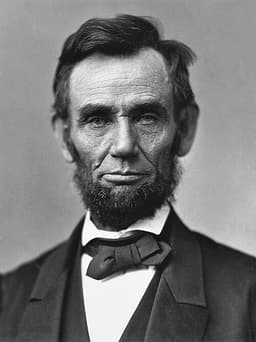
Abraham Lincoln
Politician · Modern
77.5Total
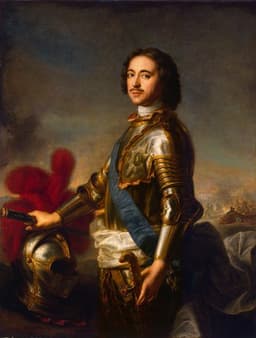
Peter the Great
Emperor · Modern
73.2Total
Basic Information
Born
1809
1672
Died
1865
1725
Era
Modern
Modern
Nationality
United States
Russia
Occupation
Politician
Emperor
Civilization
Western
Western
Score Comparison
Military (10%)
50.0
75.0
Political (20%)
88.0
90.0
Influence (20%)
80.0
68.0
Legacy (20%)
82.0
65.0
Leadership (15%)
85.0
78.0
Strategy (15%)
60.0
72.0
TOTAL
77.5
73.2
Abraham Lincoln — Complete Timeline
1861 AD
Suspension of Habeas CorpusPolitical Action◆ Major
Lincoln suspended the writ of habeas corpus in parts of the Union, allowing the military to arrest and detain suspected Confederate sympathizers without trial. This action was controversial and challenged civil liberties during wartime.
Habeas CorpusCivil LibertiesCivil War
Impact: nationaldestructive
1862 AD
Signing of the Homestead ActPolitical Action◆ Major
Lincoln signed the Homestead Act, granting 160 acres of public land to settlers for a small fee. This encouraged westward expansion and agricultural development, but also displaced Native American tribes.
Homestead ActWestward ExpansionLand Policy
Impact: nationalconstructive
1863 AD
Emancipation ProclamationPolitical Action
Lincoln issued the Emancipation Proclamation, declaring slaves in Confederate states free. This shifted the Civil War's focus to ending slavery and allowed African Americans to join the Union Army.
EmancipationCivil WarSlavery
Impact: globalprogressive
Gettysburg AddressCultural◆ Major
Lincoln delivered the Gettysburg Address at the dedication of the Soldiers' National Cemetery. The speech redefined the Civil War as a struggle for national unity and equality, and became one of the most famous speeches in US history.
Gettysburg AddressCivil WarOratory
Impact: nationalconstructive
1865 AD
Assassination by John Wilkes BoothOther
Lincoln was shot by John Wilkes Booth at Ford's Theatre in Washington, D.C., and died the next day. His assassination occurred just days after the Civil War ended, plunging the nation into mourning and affecting Reconstruction.
AssassinationCivil WarReconstruction
Impact: nationaltragic
Peter the Great — Complete Timeline
1697 AD
Grand EmbassyPolitical Action◆ Major
Peter the Great traveled incognito to Western Europe as part of a diplomatic mission. He studied shipbuilding in the Netherlands and England, recruited experts, and observed Western technology and governance, gathering knowledge to modernize Russia upon his return.
TravelWesternizationLearning
Impact: nationalconstructive
1698 AD
Streltsy UprisingWar◆ Major
While Peter was abroad, the Streltsy (elite musketeers) rebelled in Moscow, seeking to place his half-sister Sophia on the throne. Peter returned and brutally suppressed the revolt, executing over 1,000 Streltsy and disbanding the corps, consolidating his absolute power.
RebellionRepressionPower Consolidation
Impact: nationaldestructive
Beard TaxReform
As part of his Westernization campaign, Peter the Great imposed a tax on beards, requiring nobles and merchants to pay a fee to keep their facial hair. Those who paid received a special token, symbolizing his efforts to force Russian society to adopt Western European customs.
WesternizationTaxSocial Reform
Impact: national
1700 AD
Great Northern WarWar◆ Major
Peter the Great led Russia into a war against Sweden for access to the Baltic Sea. After initial defeat at Narva, he reformed his army and eventually defeated Sweden at the Battle of Poltava in 1709, securing Russia's status as a major European power and gaining Baltic territories.
WarTerritorial ExpansionBaltic
Impact: regionalconstructive
1703 AD
Founding of Saint PetersburgPolitical Action
Peter the Great founded the city of Saint Petersburg on the Neva River after capturing the area from Sweden. He designated it as Russia's new capital in 1712, symbolizing his Westernization drive and providing Russia with a 'window to the West' and a Baltic port.
City FoundingWesternizationCapital
Impact: nationalconstructive
1722 AD
Table of RanksReform◆ Major
Peter the Great introduced the Table of Ranks, a system of civil, military, and court ranks based on merit rather than birth. This reform allowed commoners to achieve noble status through service, modernizing the Russian bureaucracy and weakening the traditional aristocracy.
BureaucracyMeritocracySocial Reform
Impact: nationalprogressive
Expert Analysis
Peter the Great vs Abraham Lincoln: Historical Comparison
Peter the Great, Emperor of Russia, and Abraham Lincoln, 16th President of the United States, were transformative modern leaders who reshaped their nations amid crisis—Peter through forced Westernization and military expansion, Lincoln through preserving the Union and ending slavery.
Dimension Analysis
**Military: Peter the Great 75 / Abraham Lincoln 50**
Peter built Russia’s first modern navy and defeated Sweden in the Great Northern War, securing Baltic access; Lincoln, while a capable commander-in-chief, relied on superior industrial resources and generals like Grant, with less personal battlefield innovation.
**Political: Peter the Great 82 / Abraham Lincoln 88**
Lincoln navigated a fractured Congress, issued the Emancipation Proclamation, and passed the 13th Amendment, demonstrating unmatched coalition-building; Peter centralized autocratic power, crushing boyar opposition, but with less democratic finesse.
**Influence: Peter the Great 78 / Abraham Lincoln 78**
Both redefined national identity—Peter Westernized Russia’s elite and founded St. Petersburg; Lincoln redefined American freedom and union. Their influence endures equally in their respective spheres.
**Legacy: Peter the Great 75 / Abraham Lincoln 80**
Lincoln’s legacy as the Great Emancipator and savior of the Union is globally revered; Peter’s modernization is celebrated in Russia but also tied to brutal serfdom, slightly lowering his moral standing.
**Leadership: Peter the Great 82 / Abraham Lincoln 85**
Lincoln’s empathetic, crisis-driven leadership inspired loyalty through civil war; Peter’s visionary but tyrannical rule (e.g., executing his own son) earns respect for results, not personal warmth.
Verdict
Abraham Lincoln leads narrowly due to superior political acumen and a more universally admired legacy, though Peter the Great matches his influence in military and national transformation.
FAQ
Q: Who ranks higher? A: Abraham Lincoln ranks slightly higher overall due to his political brilliance and enduring moral legacy.
Rankings
🥇
Abraham LincolnLeader
Mil: 50.0Pol: 88.0Inf: 80.0
77.5
🥈
Peter the Great
Mil: 75.0Pol: 90.0Inf: 68.0
73.2
+4.3 behind
How This Comparison Works
Algorithm
Each figure is scored on 6 dimensions (0—100 scale) based on structured historical data: Military (10%), Political (20%), Influence (20%), Legacy (20%), Leadership (15%), Strategy (15%). The weighted total produces the final ranking.
Data Sources
Scores are computed from structured sub-indicators in the database. Scale factors adjust for era (Ancient ×0.85, Modern ×1.0) and civilization size (Eastern ×1.05, Other ×0.80) to account for differences in population and military scale.
Maximum 3 Figures
Comparisons are limited to 2—3 figures to ensure readability and statistical meaningfulness.
Error Margins
±5 points per dimension — Sub-scores are derived from historical records with inherent uncertainty. Two figures within 5 points on a dimension should be considered roughly equivalent in that area.
Total Score Accuracy
±3 points overall — The weighted combination of 6 dimensions produces a total score with approximately ±3 points of uncertainty. Differences of less than 3 points are not statistically significant— the figures are effectively tied.
Known Limitations
- Historical records are incomplete and uneven across civilizations
- Figures from oral-tradition societies may be underrepresented
- Occupation labels can misclassify multi-role figures
- Scores measure capability and impact, not moral character
- Quantitative scoring is a comparison tool, not absolute truth
Capability Radar
Military (10%) — Battles & Warfare
Battles
15
85
Win Rate
20
80
Expansion
0
90
Political (20%) — Governance & Reform
Reform
95
95
Diplomacy
80
80
Economy
70
85
Influence (20%) — Cultural & Global Reach
Cultural
85
85
Global
85
85
Legacy (20%) — Historical Impact
Historical
95
90
Longevity
90
85
Leadership (15%) — Power & Stability
Tenure
65
90
Stability
55
70
Strategy (15%) — Tactics & Innovation
Strategy
55
85
Tactics
10
75
Reform
60
95
Similar Comparisons
Comments & Discussion
TsarLover20246/16/2026
Peter the Great absolutely crushes Lincoln in this matchup, and it's not even close! The guy literally dragged Russia out of the Middle Ages by its beard. While Lincoln was a great politician, Peter built a navy from scratch, defeated Sweden's Charles XII at Poltava (1709), and founded a whole new capital on a swamp. Lincoln's Emancipation Proclamation was a political masterstroke, sure, but Peter executed his own son for treason — now THAT's commitment to modernization! The military score difference (75 vs 50) is generous to Lincoln. Peter was a hands-on commander who learned shipbuilding in Amsterdam; Lincoln was just signing checks for Grant. Give me the guy who personally sailed his own fleet any day.
ScoreSkeptic6/16/2026
These scores are a joke. How do you quantify "influence" with a 78 for both? That's the most meaningless number I've seen. And legacy? Lincoln gets an 80, Peter gets a 75 — based on what? Some academic's gut feeling about "moral standing"? The brutal serfdom point is valid, but Lincoln signed off on the execution of 38 Dakota men in 1862 during the Dakota War — largest mass execution in U.S. history. So much for moral purity. The whole methodology reeks of Western bias. Peter's modernizing Russia from scratch should dwarf Lincoln's political maneuvering in an already-established democracy. You can't compare apples to oranges with a single metric and pretend it's objective. This is entertainment, not history.
DocuHistoryFan6/16/2026
I just watched Ken Burns' Civil War series and read Robert Massie's 'Peter the Great' back-to-back, so I'm all in on this comparison! Here's the thing: Lincoln was a better politician (88 vs 82 makes sense), but people sleep on Peter's military genius. Did you know Peter disguised himself as a carpenter named 'Peter Mikhailov' to learn shipbuilding in the Dutch Republic? That's like if a modern president went to work incognito at a Tesla factory! Meanwhile, Lincoln was reading books by candlelight in a log cabin, which is cooler in a different way. I think Lincoln edges out on legacy because the Emancipation Proclamation resonates globally, but Peter's transformation of Russia into a European power was just as radical. Tie-breaker: would you rather have dinner with? Lincoln, obviously. Peter would probably make you fight a bear.
Historian8216/16/2026
这个比较很有意思,但明显是西方中心主义的。彼得大帝就像康熙皇帝(差不多同时代),都进行了大规模改革,建立了现代国家机器。康熙平定三藩、收复台湾、签订《尼布楚条约》,而彼得大帝打败瑞典、建圣彼得堡、建立科学院。从中国史家的角度看,彼得大帝的评分应该更高,因为他把俄国从边缘带入了欧洲核心,影响更深远。林肯很伟大,但他的成就更多是在已有制度框架内的创新——就像汉武帝的“罢黜百家,独尊儒术”,是在统一国家后的意识形态整合,而不是创立国家。按中国历史标准,军政分离的评分不合理,因为东方传统中,君主必须军政兼备。彼得大帝在这一点上更接近东方的“全能君主”理想。总分78:76.7,我觉得应该反过来才对。
OldScholar76/16/2026
我仔细看了评分,这个78对76.7的总分,我觉得评分系统有偏见。彼得大帝的军事分75明显偏低——大北方战争21年,他赢了关键战役,建立了波罗的海舰队,而林肯的50分?内战更多是工业能力和人口优势的碾压,跟林肯个人军事才能关系不大。反过来,政治分88对82,林肯确实通过了宪法第13修正案,但彼得大帝彻底改变了俄国行政体系,建立“政务院”,废除了波雅尔杜马。如果拿中国历史对比,彼得大帝更像是秦始皇,统一度量衡、书同文、建立郡县制,而林肯更像是汉高祖,统一天下、恢复秩序。按中国史观,彼得大帝的全面改革得分应该更高。