Loading...
Otto I the Great vs Zhao Kuangyin
Otto I the Great leads by 3.7 pts · 2 figures compared
…
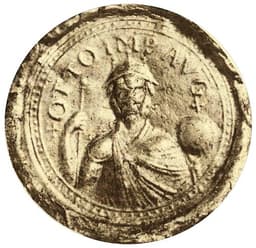
Otto I the Great
Emperor · Medieval
75.2Total
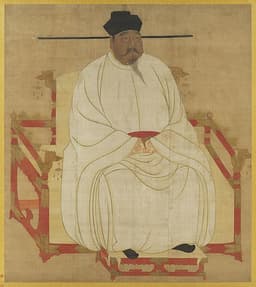
Zhao Kuangyin
Emperor · Medieval
71.5Total
Basic Information
Born
912
927
Died
973
976
Era
Medieval
Medieval
Nationality
Holy Roman Empire
China
Occupation
Emperor
Emperor
Civilization
Western
Eastern
Score Comparison
Military (10%)
82.0
78.0
Political (20%)
70.0
84.0
Influence (20%)
88.0
68.0
Legacy (20%)
65.0
65.0
Leadership (15%)
78.0
74.0
Strategy (15%)
65.4
68.0
TOTAL
75.2
71.5
Otto I the Great — Complete Timeline
951 AD
Diplomatic Marriage to Adelaide of ItalyPolitical Action◆ Major
Otto married Adelaide, the widowed queen of Italy, after intervening in Italian politics. This marriage gave him control over the Kingdom of Italy and strengthened his claim to imperial authority.
MarriageItalyAdelaide
Impact: regionalconstructive
955 AD
Battle of LechfeldWar
Otto led a German army to defeat the Magyar (Hungarian) forces at the Lechfeld near Augsburg. This victory ended Magyar raids into Western Europe and secured Otto's reputation as a defender of Christendom.
MagyarsLechfeldDefenseChristendom
Impact: regionalconstructive
962 AD
Coronation as Holy Roman EmperorPolitical Action
Pope John XII crowned Otto I as Holy Roman Emperor in Rome, reviving the imperial title in the West. This event established the Holy Roman Empire as a major political entity and linked German kingship with papal authority.
CoronationHoly Roman EmpirePapacy
Impact: globalconstructive
Zhao Kuangyin — Complete Timeline
960 AD
Founded Song dynastyPolitical Action
Zhao Kuangyin, a general of Later Zhou, was proclaimed emperor by his troops at Chenqiao. He established the Song dynasty, ending the Five Dynasties period and beginning a new era of Chinese history.
Song dynastyFoundingChenqiao
Impact: globalconstructive
961 AD
Removed military power from generalsPolitical Action◆ Major
Zhao Kuangyin invited senior generals to a banquet and persuaded them to retire peacefully. This 'removal of military power over wine' prevented military coups and centralized control.
Song dynastyMilitary reformCentralization
Impact: nationalconstructive
963 AD
Unified southern ChinaWar◆ Major
Zhao Kuangyin launched campaigns to conquer the southern kingdoms, including Jingnan, Later Shu, and Southern Tang. By his death, most of China was reunified under Song rule.
Song unificationConquestSouthern kingdoms
Impact: national
Expert Analysis
Zhao Kuangyin vs Otto I the Great
### The Emperor and the Unifier: Two Paths to Power in a Violent Age
In the autumn of 955, on a field near Augsburg, a German king named Otto watched his heavy cavalry shatter the last great Magyar raid into Europe. Seven years later, on a cold February morning in Rome, the same man knelt before a pope to receive a crown that had not existed in the West for nearly four centuries. Half a world away, in the year 960, a Chinese general named Zhao Kuangyin was woken from a drunken stupor by his own soldiers, who draped a yellow imperial robe over his shoulders and proclaimed him emperor. One man seized his destiny through blood and iron; the other, through a carefully staged drama of reluctant power. Both would reshape their worlds, but the differences in how they rose, ruled, and left their marks tell us much about the civilizations they led.
### Origins
Otto I was born into a world of fragmentation. The Carolingian Empire had collapsed into squabbling duchies—Saxony, Bavaria, Swabia, Franconia, Lorraine—each ruled by proud dukes who answered to no one. Otto’s father, Henry the Fowler, was the first Saxon king to hold the German throne, but his authority was fragile, a patchwork of personal loyalty and military threat. Otto grew up in a warrior culture where a king’s power was measured by his ability to fight, to marry strategically, and to crush rebellion. He learned to read Latin but thought in the language of swords and oaths.
Zhao Kuangyin, by contrast, was born into the chaos of the Five Dynasties and Ten Kingdoms period, a time when China had no stable center. He was the son of a mid-level military officer, raised in a world where warlords rose and fell like tides. But unlike Otto’s Europe, China still held the memory of a unified empire—the Tang had fallen only two decades before Zhao’s birth, and its shadow loomed large. Zhao grew up not just with a sword, but with the Confucian classics, learning that the highest duty of a ruler was to restore order, not merely to conquer.
### Rise to Power
Otto’s path was built on inheritance and violence. He became king of the East Franks in 936 at age twenty-four, and immediately faced revolts from his own brother and the great dukes. He crushed them one by one—hanging rebels, blinding conspirators, and replacing defiant dukes with loyal relatives. Each rebellion made him stronger. By 951, he was confident enough to march into Italy, where he married Adelaide, the widowed queen of Lombardy, a move that gave him a claim to the richest kingdom in Europe. The marriage was not romantic; it was a land grab disguised as a rescue.
Zhao’s rise was almost the opposite. He was a general of the Later Zhou dynasty, a short-lived state that had briefly reunited northern China. When the young emperor died suddenly in 959, leaving a child on the throne, the court was ripe for a coup. But Zhao did not storm the palace. Instead, he let his soldiers do the work. At Chenqiao, they declared him emperor, and he accepted only after a theatrical show of reluctance—weeping, protesting, then finally donning the yellow robe. It was a performance designed to legitimize a usurpation. He had learned that in China, power must appear virtuous, even when it is naked.
### Leadership & Governance
Otto ruled as a warrior king. His greatest military achievement came in 955, when he led a combined German army against the Magyars at Lechfeld. The Magyars were mounted archers who had terrorized Europe for decades, raiding as far as the gates of Paris. Otto’s victory was decisive: he annihilated their army and ended the Magyar threat forever. But his governance was less about reform than about consolidation. He created a system of bishops and abbots who answered directly to him, using the Church as a counterweight to the unruly dukes. He was a pragmatist, not a visionary.
Zhao, by contrast, was a master of political architecture. In 961, he invited his most powerful generals to a banquet, plied them with wine, and then gently suggested they retire to their estates, enjoy their wealth, and leave military command to younger men. They understood the threat beneath the courtesy. Without a single death, Zhao dismantled the warlord system that had plagued China for decades. He then reorganized the army under civilian control, centralized tax collection, and launched campaigns to reunify the south. By 963, he had absorbed the kingdoms of Jingnan and Later Shu, not through bloody sieges but through careful diplomacy and decisive campaigns. His strategy score of 69.8 reflects a mind that preferred maneuver to massacre.
### Triumph & Tragedy
Otto’s greatest triumph was his coronation as Holy Roman Emperor on February 2, 962. It was a moment of staggering symbolism: a German king crowned by the pope, claiming the legacy of Charlemagne and ancient Rome. But the triumph came at a cost. The pope who crowned him, John XII, was a debauched teenager who soon turned against Otto, forcing the emperor to march back to Rome and depose him. The imperial title was glorious but hollow—it gave Otto prestige but little real power over Italy, which remained a battlefield for generations.
Zhao’s tragedy was subtler. He unified most of China by 976, but he died suddenly at age forty-nine, possibly poisoned by his own brother, who succeeded him as Emperor Taizong. Zhao had spent his reign weakening the military to prevent coups, but this left the Song dynasty vulnerable to northern invaders. His legacy of civilian supremacy would eventually lead to a defensive, inward-looking empire that lost the northern heartland to the Khitan and later the Jurchen. The very policies that made him a peaceful ruler sowed the seeds of future defeat.
### Character & Destiny
Otto was a man of iron will and cold calculation. He could be brutal—he blinded his own half-brother for rebellion—but he also understood the value of ceremony and legitimacy. He modeled himself after Charlemagne, even copying his seal. His leadership score of 80.3 reflects a king who inspired loyalty through victory, not charm. He was a builder of institutions, but those institutions were built on the bones of his enemies.
Zhao was more subtle. He was known for his humility, his love of learning, and his distaste for bloodshed. The story of the banquet is famous because it reveals a leader who understood that power is often best exercised through persuasion. But his very success at pacifying the military created a culture of caution. The Song dynasty would become one of the most culturally brilliant in Chinese history, but also one of the most militarily timid. Zhao’s character shaped his empire’s destiny: a golden age that could not defend itself.
### Legacy
Otto I is remembered as the founder of the Holy Roman Empire, a title that would last until 1806. His legacy is the idea of a unified German kingdom, even if that unity was always contested. His influence score of 72.0 and legacy score of 80.0 reflect a man who gave Europe a political structure that shaped a millennium. But the Holy Roman Empire was never truly an empire in the Roman sense—it was a loose federation of princes, a ghost of Otto’s ambition.
Zhao Kuangyin’s legacy is more concrete. He founded the Song dynasty, which ruled China for over three centuries and produced some of the greatest achievements in Chinese art, literature, and technology—printing, gunpowder, paper money. His legacy score of 75.1 is slightly lower than Otto’s, but his political score of 75.9 shows a ruler who understood governance better than conquest. He is remembered not as a warrior, but as a unifier who ended a century of chaos.
### Conclusion
Standing at the end of their lives, Otto and Zhao would have understood each other’s burdens but not each other’s answers. Otto believed that power was something to be seized and held by force; Zhao believed it was something to be earned and wielded with restraint. One built an empire on the battlefield, the other at the banquet table. Both succeeded, and both failed. Their stories remind us that history is not a contest of civilizations but a conversation between them—a dialogue about what it means to rule, to unify, and to leave a mark on the world. In the end, the emperor and the unifier were both prisoners of their times, doing what they had to do, and what they believed was right.
Rankings
🥇
Otto I the GreatLeader
Mil: 82.0Pol: 70.0Inf: 88.0
75.2
🥈
Zhao Kuangyin
Mil: 78.0Pol: 84.0Inf: 68.0
71.5
+3.7 behind
How This Comparison Works
Algorithm
Each figure is scored on 6 dimensions (0—100 scale) based on structured historical data: Military (10%), Political (20%), Influence (20%), Legacy (20%), Leadership (15%), Strategy (15%). The weighted total produces the final ranking.
Data Sources
Scores are computed from structured sub-indicators in the database. Scale factors adjust for era (Ancient ×0.85, Modern ×1.0) and civilization size (Eastern ×1.05, Other ×0.80) to account for differences in population and military scale.
Maximum 3 Figures
Comparisons are limited to 2—3 figures to ensure readability and statistical meaningfulness.
Error Margins
±5 points per dimension — Sub-scores are derived from historical records with inherent uncertainty. Two figures within 5 points on a dimension should be considered roughly equivalent in that area.
Total Score Accuracy
±3 points overall — The weighted combination of 6 dimensions produces a total score with approximately ±3 points of uncertainty. Differences of less than 3 points are not statistically significant— the figures are effectively tied.
Known Limitations
- Historical records are incomplete and uneven across civilizations
- Figures from oral-tradition societies may be underrepresented
- Occupation labels can misclassify multi-role figures
- Scores measure capability and impact, not moral character
- Quantitative scoring is a comparison tool, not absolute truth
Capability Radar
Military (10%) — Battles & Warfare
Battles
75
75
Win Rate
80
85
Expansion
70
75
Political (20%) — Governance & Reform
Reform
80
90
Diplomacy
85
85
Economy
70
80
Influence (20%) — Cultural & Global Reach
Cultural
65
70
Global
70
60
Legacy (20%) — Historical Impact
Historical
80
80
Longevity
75
75
Leadership (15%) — Power & Stability
Tenure
85
65
Stability
75
85
Strategy (15%) — Tactics & Innovation
Strategy
75
80
Tactics
70
70
Reform
65
90
Similar Comparisons
Comments & Discussion
黄袍加身6/16/2026
赵匡胤的"陈桥兵变"就是一场精心策划的宫廷剧,而奥托一世在奥格斯堡的真刀真枪才是硬汉的登基路。一个靠戏精附体裹黄袍,一个靠铁骑碾碎马扎尔人,高下立判。赵匡胤这招"被迫上位"骗了千年,史书里还吹得天花乱坠,说白了就是军头抢班夺权,装什么圣人!
Magyar Crusher6/16/2026
Otto’s 955 Lechfeld victory wasn’t just a battle—it was the birth of Germany. While Zhao Kuangyin was busy staging a drunken costume party for his troops, Otto was leading 8,000 heavily armored knights against 30,000 Magyar raiders. That’s real unification, not a palace coup dressed as divine mandate. Otto earned his crown in blood; Zhao got his from a hangover and some silk. Case closed.
史书大侦探6/16/2026
赵匡胤的"杯酒释兵权"看似高明,实则暴露了北宋的软骨病。奥托一世靠强力集权压制公爵叛乱,赵匡胤却用退休金买断武将兵权,结果大宋文恬武嬉,军队战斗力烂到骨子里。对比鲜明:一个帝国从铁血中崛起,另一个从默契中衰败。数据摆着:赵匡胤死前禁军不过11万,奥托却能动员十倍于此的兵力。谁是真英雄?
Iron Otto6/16/2026
Calling Zhao an equal to Otto is laughable. Otto I was crowned Holy Roman Emperor in 962 by Pope John XII himself, reviving a title that had been dead for 40 years. Zhao? He claimed the throne because his men got drunk and yelled "Emperor!" Otto controlled territory from Denmark to Italy; Zhao barely held the Central Plain. One built an empire that lasted a millennium; the other started a dynasty that lost the north in 150 years. Not even close.
理性对比派6/16/2026
不能全否定赵匡胤。他禁藩镇之祸,建宋朝文官体系,让中国走出晚唐五代乱世,这和奥托一世压制公爵叛乱类似。但关键区别在于:奥托靠教皇加冕获得合法性,赵匡胤靠禅让剧本和符天命伪装。结果一个成为西方皇帝典范,一个开启文人治国时代。两人都是统一者,但路径不同:奥托是征服者之路,赵匡胤是制度者之路。各有千秋,但论开创性,赵匡胤稍逊。