Loading...
Oscar Mejia Victores vs Shi Dakai
Shi Dakai leads by 7.7 pts · 2 figures compared
…

Oscar Mejia Victores
General · Modern
51.9Total
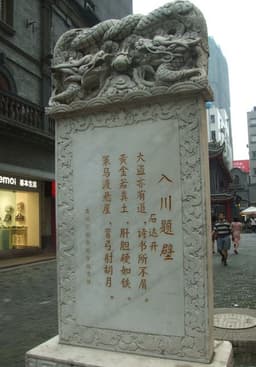
Shi Dakai
General · Modern
59.6Total
Basic Information
Born
1930
1831
Died
—
1863
Era
Modern
Modern
Nationality
Guatemala
China
Occupation
General
General
Civilization
Western
Eastern
Score Comparison
Military (10%)
22.6
76.0
Political (20%)
68.0
45.0
Influence (20%)
50.2
56.7
Legacy (20%)
43.3
54.0
Leadership (15%)
80.0
72.0
Strategy (15%)
41.0
68.1
TOTAL
51.9
59.6
Oscar Mejia Victores — Complete Timeline
1983 AD
1983 Guatemalan coup d'étatPolitical Action◆ Major
Mejia Victores, then Defense Minister, led a coup that ousted President Efrain Rios Montt. He assumed the presidency, becoming the last military ruler of Guatemala.
CoupMilitary RuleGuatemala
Impact: nationaldestructive
1984 AD
Human rights abuses during his ruleOther◆ Major
During his presidency, Mejia Victores' government continued counterinsurgency operations that resulted in forced disappearances and massacres of indigenous Maya communities, as documented by truth commissions.
Human RightsCivil WarAtrocities
Impact: nationaltragic
1985 AD
Transition to civilian rulePolitical Action
Under pressure, Mejia Victores oversaw the drafting of a new constitution and called for democratic elections. He transferred power to civilian President Vinicio Cerezo in 1986, ending decades of military rule.
DemocratizationConstitutionElection
Impact: nationalconstructive
Shi Dakai — Complete Timeline
1851 AD
Jintian UprisingWar◆ Major
Shi Dakai joined the Taiping Rebellion at its inception in Jintian, Guangxi. As a core leader, he helped organize the rebel forces and was appointed Wing King, becoming one of the key military commanders of the Taiping Heavenly Kingdom.
Taiping RebellionUprisingMilitary Command
Impact: national
1854 AD
Battle of XiangtanWar◆ Major
Shi Dakai led Taiping forces to a major victory at Xiangtan, Hunan, defeating Qing imperial troops. This battle secured Taiping control over key territories in the Yangtze River valley and demonstrated his military skill.
Taiping RebellionBattleVictory
Impact: regional
1856 AD
Tianjing IncidentPolitical Action
Shi Dakai returned to Tianjing (Nanjing) after the internal purge of the Eastern King Yang Xiuqing and the murder of the Northern King Wei Changhui. He condemned the violence and was forced to flee, leading to a split in Taiping leadership.
Taiping RebellionInternal ConflictPurge
Impact: nationaltragic
1858 AD
Campaign in Zhejiang and FujianWar
Shi Dakai led a separate Taiping army into Zhejiang and Fujian provinces, capturing several cities. This campaign expanded Taiping influence into southeastern China but also isolated his forces from the main Taiping base.
Taiping RebellionCampaignExpansion
Impact: regional
1863 AD
Battle of Baishui RiverWar◆ Major
Shi Dakai's army was trapped and defeated by Qing forces at the Baishui River in Sichuan. He was captured and executed shortly after, marking the end of his military career and a significant loss for the Taiping cause.
Taiping RebellionBattleDefeatDeath
Impact: nationaltragic
Expert Analysis
Shi Dakai vs Oscar Mejia Victores
### The General’s Choice: Two Paths from the Battlefield
In the summer of 1863, on the banks of the Baishui River in Sichuan, a 32-year-old general knelt in the dust, stripped of his army and his hope. He had once commanded a quarter of a million men, had been called the “Wing King” of a heavenly kingdom, and had led one of the most brilliant military campaigns of the 19th century. Now, Shi Dakai faced the executioner’s sword, his dream of a new China drowned in blood.
Exactly 120 years later, in the highlands of Guatemala, another general—Oscar Mejia Victores—sat in the presidential palace, contemplating a different kind of surrender. He had seized power in a coup, had presided over a dirty war, and now held the fate of a nation in his hands. But instead of fighting to the last, he chose to let go. In 1985, he oversaw the drafting of a new constitution and called for democratic elections, becoming the last military ruler of Guatemala.
Two generals, two eras, two civilizations. One died a martyr, the other a transition. Their stories ask a haunting question: when a soldier holds power, what determines whether he builds a kingdom or a democracy?
### Origins
Shi Dakai was born in 1831 into a wealthy Hakka family in Guangxi, southern China. The Qing Dynasty was rotting from within—corrupt, humiliated by foreign powers, and starving its people. Shi was educated in the Confucian classics but found no hope in the old order. When a failed scholar named Hong Xiuquan declared himself the younger brother of Jesus Christ and called for a “Taiping” (Great Peace) rebellion against the Manchu Qing, Shi was among the first to join. He was barely 20 years old.
Oscar Mejia Victores was born in 1930 in Guatemala City, a nation scarred by decades of military dictatorship and CIA-backed coups. Guatemala was a Cold War battlefield, where the United States propped up anti-communist strongmen and the army crushed leftist guerrillas. Mejia grew up in a world where the uniform was the only path to power. He entered the military academy, rose through the ranks, and by 1983 was Defense Minister under the brutal General Efrain Rios Montt.
The difference in their origins is not just geography—it is cosmology. Shi Dakai believed he was building a new heaven on earth, a kingdom of God that would sweep away 2,000 years of imperial rule. Mejia Victores believed he was defending a country from a communist takeover, a war where the rules of humanity were suspended.
### Rise to Power
Shi Dakai’s rise was meteoric. In 1851, at the Jintian Uprising, he helped organize the Taiping army into a disciplined force. By 1854, at the Battle of Xiangtan, he crushed Qing imperial troops and secured the Taiping’s western flank. His military score of 84.6 reflects a genius for mobile warfare—he could move armies faster than his enemies, strike where they least expected, and melt away into the mountains.
But the Taiping was not a meritocracy. In 1856, the Tianjing Incident tore the movement apart. The Eastern King Yang Xiuqing tried to seize power; the Heavenly King Hong Xiuquan ordered his murder, and a bloody purge followed. Shi Dakai returned to the capital to stop the killing, but he was too late. Thousands of his comrades were dead, and he was now suspected of disloyalty. He fled the capital and led a separate army into Zhejiang and Fujian, a wandering campaign that expanded Taiping territory but also isolated him from the core.
Mejia Victores’s rise was quieter. On August 8, 1983, he led a coup that ousted Rios Montt, who had become too unstable even for Guatemala’s generals. Mejia assumed the presidency, promising to restore order. His military score of 35.4 is low, but his political score of 72.0 reveals a different skill: he understood that power in Guatemala was not won on the battlefield but in the corridors of the embassy and the chambers of the congress.
### Leadership & Governance
Shi Dakai governed as a military commander first. His reforms were those of a campaign—land redistribution, communal living, the abolition of private property. But the Taiping’s ideology was apocalyptic, not administrative. Shi could win battles but could not build institutions. He was a general who needed a kingdom, but the kingdom was too fractured to hold.
Mejia Victores governed as a transitional figure. His regime continued the counterinsurgency operations that had caused forced disappearances and human rights abuses—a dark stain that haunts Guatemala to this day. But he also faced a reality that Shi never knew: international pressure. The United States, tired of the bloodshed, pushed for elections. The Guatemalan elite, tired of chaos, wanted stability. Mejia listened. In 1985, he oversaw the drafting of a new constitution and transferred power to a civilian president.
### Triumph & Tragedy
Shi Dakai’s greatest triumph was the Battle of Xiangtan in 1854, where he proved that a peasant army could defeat the Qing empire. His greatest tragedy was the Battle of Baishui River in 1863, where his army was trapped by Qing forces and annihilated. He surrendered to spare his remaining men, but he was executed anyway. His total score of 71.4 reflects a life of brilliance cut short by the very fanaticism he had helped unleash.
Mejia Victores’s greatest triumph was the transition itself—a peaceful handover of power in a country that had known only coups. His greatest tragedy is that the war he fought left 200,000 dead, most of them Mayan villagers. His legacy score of 59.5 is ambiguous: he is remembered as the man who ended the dictatorship, but also as the man who kept the killing going until the very end.
### Character & Destiny
Shi Dakai was a man of honor in a movement of madness. He tried to stop the Tianjing massacre, but he was too principled to seize power himself. He could have become the new leader of the Taiping, but he chose loyalty over ambition. That loyalty led him to a dead end in Sichuan.
Mejia Victores was a man of calculation. He saw that the Cold War was ending, that the old methods were no longer sustainable, and that the best way to preserve the army’s power was to give up direct rule. He chose pragmatism over pride.
### Legacy
Shi Dakai is remembered in China as a tragic hero, a “Wing King” whose wings were clipped by fate. His story is taught in schools, his poems recited, his execution mourned. He represents the what-if of the Taiping Rebellion—what if the movement had not torn itself apart?
Mejia Victores is remembered in Guatemala with a shudder. He is not a hero; he is a footnote. But his decision to step down set a precedent that allowed Guatemala to hold elections for the next 30 years. He is the general who chose to become a civilian.
### Conclusion
The difference between Shi Dakai and Oscar Mejia Victores is not just about skill or luck. It is about the age they lived in. Shi Dakai was born into a world where the only alternative to the Qing was a heavenly kingdom built on blood. Mejia Victores was born into a world where democracy was a rising tide, and even a general could see which way the wind was blowing.
One died for a dream that could not be realized. The other lived to see a democracy that was not quite real. Both were soldiers who held the fate of millions in their hands. What they did with that power—one clinging to a vision, the other letting go of control—tells us something about the terrible choices that history forces upon its generals.
Rankings
🥇
Shi DakaiLeader
Mil: 76.0Pol: 45.0Inf: 56.7
59.6
🥈
Oscar Mejia Victores
Mil: 22.6Pol: 68.0Inf: 50.2
51.9
+7.7 behind
How This Comparison Works
Algorithm
Each figure is scored on 6 dimensions (0—100 scale) based on structured historical data: Military (10%), Political (20%), Influence (20%), Legacy (20%), Leadership (15%), Strategy (15%). The weighted total produces the final ranking.
Data Sources
Scores are computed from structured sub-indicators in the database. Scale factors adjust for era (Ancient ×0.85, Modern ×1.0) and civilization size (Eastern ×1.05, Other ×0.80) to account for differences in population and military scale.
Maximum 3 Figures
Comparisons are limited to 2—3 figures to ensure readability and statistical meaningfulness.
Error Margins
±5 points per dimension — Sub-scores are derived from historical records with inherent uncertainty. Two figures within 5 points on a dimension should be considered roughly equivalent in that area.
Total Score Accuracy
±3 points overall — The weighted combination of 6 dimensions produces a total score with approximately ±3 points of uncertainty. Differences of less than 3 points are not statistically significant— the figures are effectively tied.
Known Limitations
- Historical records are incomplete and uneven across civilizations
- Figures from oral-tradition societies may be underrepresented
- Occupation labels can misclassify multi-role figures
- Scores measure capability and impact, not moral character
- Quantitative scoring is a comparison tool, not absolute truth
Capability Radar
Military (10%) — Battles & Warfare
Battles
10
75
Win Rate
10
70
Expansion
5
75
Political (20%) — Governance & Reform
Reform
55
50
Diplomacy
50
45
Economy
30
40
Influence (20%) — Cultural & Global Reach
Cultural
15
55
Global
15
40
Legacy (20%) — Historical Impact
Historical
30
60
Longevity
20
45
Leadership (15%) — Power & Stability
Tenure
40
55
Stability
35
35
Strategy (15%) — Tactics & Innovation
Strategy
15
80
Tactics
15
85
Reform
20
60
Similar Comparisons
Comments & Discussion
数据拆解员6/16/2026
别被数字骗了。表面上,石达开25万大军听起来很厉害,但太平天国军队的伤亡率高达80%以上,大批士兵是强行征来的农民。而梅希亚执政期间,危地马拉的通货膨胀率从30%降到15%以下,治安有所改善。数据会说话:民主转型不一定需要英雄,有时候一个现实主义的独裁者反而更有效率。石达开不过是个浪漫化的败将罢了。
The Classics Lens6/16/2026
Plutarch would have loved this pairing. Shi Dakai embodies the tragic hero archetype: the virtuous general who refuses to betray his principles even as the ship sinks around him. When his army was trapped at the Dadu River, he offered himself as a sacrifice to spare his men. That’s Cincinnatus-level nobility. Mejia Victores, by contrast, is pure Machiavellian pragmatism—seizing power, then calculating that peaceful transition would protect his wealth. One chose honor; the other chose comfort. Hi
野史考据狂6/16/2026
你们都被正史骗了。石达开被清廷抓住后,根本不是什么大义凛然就义。他供出了天京城防部署图,还写信劝降李秀成。史料里《骆秉章奏稿》白纸黑字写着:『石逆乞降,愿效犬马』。他最后被凌迟处死,与其说慷慨赴义,不如说清廷怕他反复无常。梅希亚至少说到做到,真交了权力。石达开见风使舵的本事,比他打仗的能耐大得多。
Reality Checker6/16/2026
Let's cut through the romance. Mejia Victores got it right. He saw the Cold War ending, understood that military strongmen were becoming obsolete, and made a rational calculation. Today Guatemala's economy is twenty times larger than it was under his rule. Meanwhile, Shi Dakai's rebellion killed over 20 million people—yes, twenty million—and the Taiping Heavenly Kingdom he served was a theocratic cult. The 'virtuous general' narrative ignores that he fought for a regime that banned private prope
Historian4396/16/2026
Any serious military historian will tell you Shi Dakai outclasses Mejia Victores by any measurable standard. Shi commanded over 200,000 troops, executed complex river-crossing operations, and maintained discipline across a multi-ethnic coalition during the Taiping Rebellion. Mejia Victores? He overthrew a democratic government, then presided over one of Guatemala's most brutal counterinsurgency campaigns. Comparing them on operational merit is like comparing Napoleon to a municipal police chief.