Loading...
Olusegun Obasanjo vs Shi Dakai
Olusegun Obasanjo leads by 0.6 pts · 2 figures compared
…
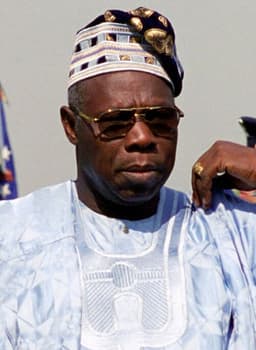
Olusegun Obasanjo
General · Modern
60.2Total
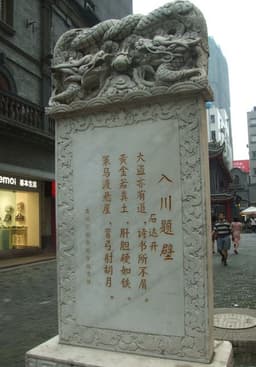
Shi Dakai
General · Modern
59.6Total
Basic Information
Born
1937
1831
Died
—
1863
Era
Modern
Modern
Nationality
Nigeria
China
Occupation
General
General
Civilization
Other
Eastern
Score Comparison
Military (10%)
45.0
76.0
Political (20%)
72.0
45.0
Influence (20%)
55.0
56.7
Legacy (20%)
54.0
54.0
Leadership (15%)
78.0
72.0
Strategy (15%)
60.0
68.1
TOTAL
60.2
59.6
Olusegun Obasanjo — Complete Timeline
1976 AD
Military coup that brought Obasanjo to powerPolitical Action
Following the assassination of General Murtala Mohammed in a failed coup, Obasanjo, as Chief of Staff, Supreme Headquarters, succeeded him as head of state. He oversaw the continuation of the transition to civilian rule.
CoupSuccessionMilitary Rule
Impact: national
1979 AD
Handover of power to civilian governmentPolitical Action
Obasanjo voluntarily handed over power to the elected civilian government of Shehu Shagari, marking the first peaceful transfer of power from military to civilian rule in Nigeria. This act established a precedent for democratic transition.
DemocracyTransitionCivilian Rule
Impact: nationalconstructive
1999 AD
Election as President of NigeriaPolitical Action
Obasanjo won the 1999 Nigerian presidential election as the candidate of the People's Democratic Party (PDP). His victory ended 16 years of military rule and began the Fourth Nigerian Republic.
ElectionDemocracyFourth Republic
Impact: nationalprogressive
2005 AD
Debt relief from Paris ClubPolitical Action◆ Major
Obasanjo's government negotiated a debt relief agreement with the Paris Club, resulting in the cancellation of $18 billion of Nigeria's external debt. This freed up resources for domestic spending and was a major economic achievement.
Debt ReliefEconomyNegotiation
Impact: nationalconstructive
2006 AD
Third term bid failurePolitical Action◆ Major
Obasanjo attempted to amend the Nigerian constitution to allow him to run for a third term. The bid was rejected by the National Assembly, marking a significant political defeat and reinforcing term limits.
Third TermConstitutionDefeat
Impact: national
Shi Dakai — Complete Timeline
1851 AD
Jintian UprisingWar◆ Major
Shi Dakai joined the Taiping Rebellion at its inception in Jintian, Guangxi. As a core leader, he helped organize the rebel forces and was appointed Wing King, becoming one of the key military commanders of the Taiping Heavenly Kingdom.
Taiping RebellionUprisingMilitary Command
Impact: national
1854 AD
Battle of XiangtanWar◆ Major
Shi Dakai led Taiping forces to a major victory at Xiangtan, Hunan, defeating Qing imperial troops. This battle secured Taiping control over key territories in the Yangtze River valley and demonstrated his military skill.
Taiping RebellionBattleVictory
Impact: regional
1856 AD
Tianjing IncidentPolitical Action
Shi Dakai returned to Tianjing (Nanjing) after the internal purge of the Eastern King Yang Xiuqing and the murder of the Northern King Wei Changhui. He condemned the violence and was forced to flee, leading to a split in Taiping leadership.
Taiping RebellionInternal ConflictPurge
Impact: nationaltragic
1858 AD
Campaign in Zhejiang and FujianWar
Shi Dakai led a separate Taiping army into Zhejiang and Fujian provinces, capturing several cities. This campaign expanded Taiping influence into southeastern China but also isolated his forces from the main Taiping base.
Taiping RebellionCampaignExpansion
Impact: regional
1863 AD
Battle of Baishui RiverWar◆ Major
Shi Dakai's army was trapped and defeated by Qing forces at the Baishui River in Sichuan. He was captured and executed shortly after, marking the end of his military career and a significant loss for the Taiping cause.
Taiping RebellionBattleDefeatDeath
Impact: nationaltragic
Expert Analysis
Shi Dakai vs Olusegun Obasanjo
# The General and the Statesman: Shi Dakai and Olusegun Obasanjo
On a Sichuan riverbank in 1863, a defeated general knelt before his captors. Shi Dakai, the "Wing King" of the Taiping Heavenly Kingdom, had led his army into a trap at the Baishui River. His execution by slow slicing would become legend—a martyr's death for a lost cause. Across the world and more than a century later, another general stood before a different fate. In 1976, Olusegun Obasanjo inherited power after his predecessor's assassination, yet he would choose a path that led not to the executioner's block but to the presidency of a democratic Nigeria. Why did one general die fighting for a crumbling kingdom, while the other helped build a nation? The answer lies not merely in talent or luck, but in the very different worlds that shaped them.
Origins
Shi Dakai was born in 1831 into a prosperous Hakka family in Guangxi, southern China. The Qing Dynasty was rotting from within—corrupt officials, opium wars, and peasant misery created a powder keg. Shi was well-educated, reading Confucian classics and military treatises, but he grew up in a world where rebellion seemed the only answer to injustice. When Hong Xiuquan, a failed scholar who claimed to be Jesus Christ's younger brother, launched the Taiping Rebellion in 1851, Shi joined immediately. He was twenty years old, idealistic, and convinced that the old order had to be destroyed.
Olusegun Obasanjo was born in 1937 in Abeokuta, southwestern Nigeria, then a British colony. His world was one of colonial rule, ethnic tension, and the slow struggle for independence. Obasanjo's father was a farmer, but the boy showed early promise in school. He joined the Nigerian Army in 1958, just two years before independence. Unlike Shi, who entered a rebellion against an established empire, Obasanjo entered a military that was itself a tool of nation-building—a force meant to hold together a fragile, newly independent country of over 250 ethnic groups.
The difference in their origins is profound. Shi Dakai's China was ancient, hierarchical, and collapsing. Obasanjo's Nigeria was young, artificial, and struggling to be born. One general fought to tear down; the other fought to hold together.
Rise to Power
Shi Dakai rose through the Taiping ranks with breathtaking speed. At the Battle of Xiangtan in 1854, he crushed Qing forces, securing Hunan for the Heavenly Kingdom. His military score of 84.6 reflects genuine brilliance—he was the Taiping's most capable field commander. But his rise was inseparable from the rebellion's apocalyptic ideology. Hong Xiuquan declared himself God's son; Shi Dakai became a "king" in a celestial hierarchy. His power came not from political maneuvering but from battlefield success within a movement that demanded absolute loyalty.
Obasanjo's rise was more conventional—and more political. He fought in the Biafran Civil War (1967-1970), commanding a division that helped keep Nigeria united. When General Murtala Mohammed took power in 1975, Obasanjo became his Chief of Staff. Then, in 1976, Mohammed was assassinated in a coup. Obasanjo, as the highest-ranking surviving officer, inherited leadership. He did not seize power; it fell upon him. This accident of history would define his path.
Leadership & Governance
Shi Dakai governed as a warlord-king. His military campaigns in Zhejiang and Fujian from 1858 expanded Taiping control, but he never developed a stable administration. The Taiping movement was consumed by internal strife—the Tianjing Incident of 1856 saw the murder of the Eastern King Yang Xiuqing and the near-destruction of the leadership. Shi returned to find his comrades killing each other. He tried to mediate, failed, and eventually left to lead his own army. His governance was that of a general on the move, always fighting, never building.
Obasanjo, by contrast, governed as a nation-builder. His first act as leader was to announce a transition to civilian rule. In 1979, he voluntarily handed power to Shehu Shagari—the first peaceful transfer of power in Nigerian history. This was extraordinary for a military ruler in Africa. Obasanjo understood that Nigeria's survival depended not on one man's rule but on institutions. His political score of 76.6 reflects this wisdom. When he returned as a civilian president in 1999, he focused on economic reforms, negotiating $18 billion in debt relief from the Paris Club in 2005. He tried to amend the constitution for a third term in 2006, but the bid failed—a rare defeat that showed even a powerful leader could be checked by democratic processes.
Triumph & Tragedy
Shi Dakai's greatest triumph was his military brilliance—the Xiangtan victory, the Zhejiang campaign. But his tragedy was total. The Battle of Baishui River in 1863 ended with his army trapped, his soldiers slaughtered, and his own execution. Legend says he asked the Qing executioner to kill him first, so he would not see his men die. The Qing agreed, but then tortured him to death slowly. His last words, according to tradition, were a poem: "My heart is like a bright mirror, always reflecting the truth." He died for a cause that had already failed.
Obasanjo's triumph was Nigeria itself. He kept the country united after civil war, oversaw democratic transition, and returned to lead it again. But his tragedy was the third term bid—a moment of hubris that stained his reputation. He had built democratic institutions, then tried to break them. The failure was humiliating but also instructive: Nigeria's democracy rejected him. Unlike Shi, who died for a lost world, Obasanjo lived to see his mistakes.
Character & Destiny
Shi Dakai was a man of principle—loyal to the Taiping cause even as it destroyed itself. His military score of 84.6 and strategy score of 81.6 show a commander who could win battles but not wars. He lacked political cunning. When the Tianjing Incident tore apart the leadership, he could not navigate the treachery. He chose honor over survival, and honor killed him.
Obasanjo was a pragmatist. His leadership score of 83.4 reflects a man who understood power's limits. He knew when to seize control and when to let go. He survived assassination, coups, and political defeats. His character was flexible—sometimes too flexible, as the third term bid showed. But he adapted to changing circumstances, while Shi Dakai remained frozen in his ideals.
Legacy
Today, Shi Dakai is remembered as a tragic hero in Chinese history—a brilliant general who fought for a noble dream and died horribly. His legacy score of 65.9 reflects this romanticized memory, but also the reality that the Taiping Rebellion ultimately failed. He is a figure of pathos, not triumph.
Obasanjo's legacy is more complicated. He is celebrated as a statesman who stabilized Nigeria, but criticized for corruption and the third term failure. His legacy score of 69.0 is modest for a man who shaped modern Nigeria. Yet his greatest achievement—the peaceful transfer of power in 1979—remains a landmark in African history. He proved that a general could become a democrat.
Conclusion
Shi Dakai and Olusegun Obasanjo both rose through military ranks to lead, but their paths diverged like rivers flowing to different seas. Shi fought to destroy an old world and died with it. Obasanjo fought to build a new one and lived to see its flaws. One was a martyr to a lost cause; the other, a flawed architect of a fragile nation. Their stories remind us that leadership is not just about talent but about context—the era, the crisis, the choices available. Shi Dakai could no more have become a democrat than Obasanjo could have died a martyr's death. They were both products of their times, and their times demanded very different things. In the end, the general who fought for a kingdom and the general who fought for a country both left behind the same lesson: that power, whether held or lost, is never the final measure of a life.
Rankings
🥇
Olusegun ObasanjoLeader
Mil: 45.0Pol: 72.0Inf: 55.0
60.2
🥈
Shi Dakai
Mil: 76.0Pol: 45.0Inf: 56.7
59.6
+0.6 behind
How This Comparison Works
Algorithm
Each figure is scored on 6 dimensions (0—100 scale) based on structured historical data: Military (10%), Political (20%), Influence (20%), Legacy (20%), Leadership (15%), Strategy (15%). The weighted total produces the final ranking.
Data Sources
Scores are computed from structured sub-indicators in the database. Scale factors adjust for era (Ancient ×0.85, Modern ×1.0) and civilization size (Eastern ×1.05, Other ×0.80) to account for differences in population and military scale.
Maximum 3 Figures
Comparisons are limited to 2—3 figures to ensure readability and statistical meaningfulness.
Error Margins
±5 points per dimension — Sub-scores are derived from historical records with inherent uncertainty. Two figures within 5 points on a dimension should be considered roughly equivalent in that area.
Total Score Accuracy
±3 points overall — The weighted combination of 6 dimensions produces a total score with approximately ±3 points of uncertainty. Differences of less than 3 points are not statistically significant— the figures are effectively tied.
Known Limitations
- Historical records are incomplete and uneven across civilizations
- Figures from oral-tradition societies may be underrepresented
- Occupation labels can misclassify multi-role figures
- Scores measure capability and impact, not moral character
- Quantitative scoring is a comparison tool, not absolute truth
Capability Radar
Military (10%) — Battles & Warfare
Battles
25
75
Win Rate
30
70
Expansion
20
75
Political (20%) — Governance & Reform
Reform
65
50
Diplomacy
75
45
Economy
55
40
Influence (20%) — Cultural & Global Reach
Cultural
45
55
Global
60
40
Legacy (20%) — Historical Impact
Historical
55
60
Longevity
50
45
Leadership (15%) — Power & Stability
Tenure
70
55
Stability
60
35
Strategy (15%) — Tactics & Innovation
Strategy
40
80
Tactics
35
85
Reform
50
60
Similar Comparisons
Comments & Discussion
ShiDaikaiShredder6/16/2026
Shi Dakai is the ultimate cautionary tale of misplaced loyalty. Sure, he was a brilliant military tactician, but his fatal flaw was refusing to seize power when he had the chance. After the Tianjing Incident, he literally chose exile over confronting Hong Xiuquan's paranoia. Meanwhile, Obasanjo coldly calculated his moves—handing power to civilians in 1979, then coming back as an elected president. One man died beautifully for a delusion; the other lived pragmatically to shape a country.
帝国碎梦砧板6/16/2026
把石达开和奥巴桑乔放在一起比?简直是拿唐朝诗人跟硅谷极客比写代码。石达开生于封建社会末期的农民战争,他唯一的出路就是死;奥巴桑乔生于冷战后的非洲独立浪潮,他可以有选择。石达开在1863年面对的是已被列强和太平军内讧掏空的帝国废墟,他投降是为了保全残部,不是懦弱。奥巴桑乔1976年接手的是刚刚诞生的国家,两者根本不在一个量子场里。
Obasanjo'sBitterPill6/16/2026
Stop romanticizing Shi Dakai. The "Wing King" was a brilliant general but a disastrous political operative. His fatal mistake was not just loyalty—it was refusing to consolidate power after the 1856 coup, then walking off with 200,000 troops into a trap. Obasanjo, by contrast, survived multiple assassination attempts, purged his rivals, and used military discipline to rebuild Nigeria's economy. Give me a leader who can win a peace, not just a battle.
数据猎手6/16/2026
你们都在谈英雄传奇,我只看死亡率。太平天国战争中,中国损失了约2000万人口,而石达开领导的远征军直接导致了四川和贵州的版图塌陷。奥巴桑乔执政期间,尼日利亚GDP从1976年的约200亿美元增长到1979年的约470亿美元,人均寿命也从47岁上升到52岁。一个以众生为代价成就了个人神话,一个以理性规划改善了集体生存。数字不会撒谎。
WingedKingInExile6/16/2026
Here's what the romantics miss: Shi Dakai's "legendary" death by slow slicing was chosen deliberately—he traded his gruesome execution for the lives of 4,000 captured Taiping soldiers. That's not defeat; that's a general choosing martyrdom for his men. Obasanjo, commendably, chose to step down after a democratic transition. Both made hard choices, but only one wore the crown of thorns. Context matters: one died for a doomed theocracy, the other built a flawed but functioning democracy.