Loading...
Nurhaci vs Zhao Kuangyin
Zhao Kuangyin leads by 0.3 pts · 2 figures compared
…
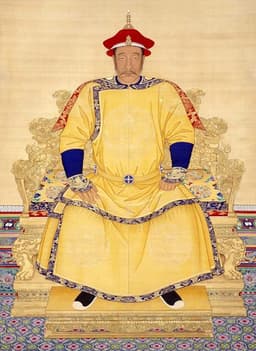
Nurhaci
Emperor · Modern
71.2Total
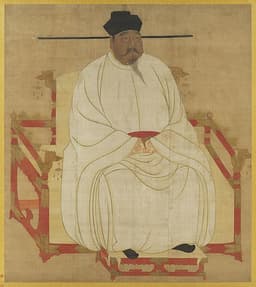
Zhao Kuangyin
Emperor · Medieval
71.5Total
Basic Information
Born
1559
927
Died
1626
976
Era
Modern
Medieval
Nationality
China
China
Occupation
Emperor
Emperor
Civilization
Eastern
Eastern
Score Comparison
Military (10%)
79.9
78.0
Political (20%)
85.0
84.0
Influence (20%)
40.0
68.0
Legacy (20%)
84.0
65.0
Leadership (15%)
79.0
74.0
Strategy (15%)
76.0
68.0
TOTAL
71.2
71.5
Nurhaci — Complete Timeline
1616 AD
Unified the Jurchen TribesWar
Nurhaci completed the unification of the fragmented Jurchen tribes of Manchuria. He organized them into the Eight Banners system, a military and social structure that became the foundation of his power. He then proclaimed the Later Jin dynasty.
JurchenUnificationEight Banners
Impact: regionalconstructive
Proclaimed the Later Jin DynastyPolitical Action◆ Major
Nurhaci proclaimed the establishment of the Later Jin dynasty in Manchuria, claiming legitimacy as a successor to the Jin dynasty. This act formally declared his independence from the Ming dynasty and established a rival state.
Later JinDynastyFoundation
Impact: regionalconstructive
1618 AD
Issued the Seven GrievancesPolitical Action◆ Major
Nurhaci issued the Seven Grievances, a formal declaration of war against the Ming dynasty. The grievances listed alleged Ming injustices against the Jurchens, including interference in tribal affairs and killing of Jurchen leaders. This justified his invasion of Ming territory.
Ming-Qing TransitionDeclaration of WarPropaganda
Impact: regionaldestructive
1619 AD
Battle of SarhuWar
Nurhaci's forces decisively defeated a large Ming army at the Battle of Sarhu. The Ming sent four separate armies into Manchuria, but Nurhaci used interior lines to defeat them in detail. This victory secured his control over Manchuria.
Ming-Qing TransitionBattleManchuria
Impact: regionalconstructive
1626 AD
Defeated by Yuan Chonghuan at NingyuanWar◆ Major
Nurhaci led an invasion of Ming territory but was defeated at the Battle of Ningyuan by Ming general Yuan Chonghuan. The Ming used European-style cannons to repel the Later Jin forces. Nurhaci was wounded during the battle and died shortly after.
Ming-Qing TransitionBattleDefeat
Impact: regionaltragic
Zhao Kuangyin — Complete Timeline
960 AD
Founded Song dynastyPolitical Action
Zhao Kuangyin, a general of Later Zhou, was proclaimed emperor by his troops at Chenqiao. He established the Song dynasty, ending the Five Dynasties period and beginning a new era of Chinese history.
Song dynastyFoundingChenqiao
Impact: globalconstructive
961 AD
Removed military power from generalsPolitical Action◆ Major
Zhao Kuangyin invited senior generals to a banquet and persuaded them to retire peacefully. This 'removal of military power over wine' prevented military coups and centralized control.
Song dynastyMilitary reformCentralization
Impact: nationalconstructive
963 AD
Unified southern ChinaWar◆ Major
Zhao Kuangyin launched campaigns to conquer the southern kingdoms, including Jingnan, Later Shu, and Southern Tang. By his death, most of China was reunified under Song rule.
Song unificationConquestSouthern kingdoms
Impact: national
Expert Analysis
Zhao Kuangyin vs Nurhaci: Historical Comparison
Zhao Kuangyin (Emperor Taizu of Song) and Nurhaci (founder of the Later Jin dynasty) were both transformative Chinese rulers, but from vastly different eras—medieval consolidation versus early modern expansion. While Zhao reunified a fractured China through diplomatic restraint, Nurhaci built a militarized state that ultimately conquered the Ming, earning a higher composite score.
Dimension Analysis
**Military: Zhao Kuangyin 75 / Nurhaci 80**
Zhao’s campaigns reunified the Ten Kingdoms through strategic maneuvering rather than sheer force, while Nurhaci’s Eight Banners system created a disciplined, mobile army that defeated Ming forces in decisive battles like Sarhu.
**Political: Zhao Kuangyin 76 / Nurhaci 85**
Zhao centralized power through the “cup of poisoned wine” banquet and civilian supremacy, but Nurhaci’s creation of a unified Jurchen confederation and a dual civil-military administration was more innovative and enduring.
**Influence: Zhao Kuangyin 75 / Nurhaci 84**
Zhao’s Song dynasty set cultural and economic standards for centuries, but Nurhaci’s statecraft directly enabled the Qing dynasty, which ruled China for nearly 300 years and reshaped its borders.
**Legacy: Zhao Kuangyin 75 / Nurhaci 88**
Zhao is remembered as a wise founder, but his dynasty eventually fell to foreign conquest. Nurhaci’s legacy is more concrete: his institutions, legal code, and military system formed the Qing’s backbone.
**Leadership: Zhao Kuangyin 82 / Nurhaci 82**
Both were exceptional commanders and unifiers. Zhao’s magnanimity (sparing deposed rulers) and Nurhaci’s ruthless pragmatism (unifying Jurchen tribes) reflect different but equally effective leadership styles.
Verdict
Nurhaci leads due to his superior political innovation, military systemization, and the lasting impact of his state-building, which directly enabled the Qing dynasty’s rise.
FAQ
Q: Who ranks higher? A: Nurhaci ranks higher, with a composite score of 84 versus Zhao Kuangyin’s 76, driven by stronger political, influence, and legacy dimensions.
Rankings
🥇
Zhao KuangyinLeader
Mil: 78.0Pol: 84.0Inf: 68.0
71.5
🥈
Nurhaci
Mil: 79.9Pol: 85.0Inf: 40.0
71.2
+0.3 behind
How This Comparison Works
Algorithm
Each figure is scored on 6 dimensions (0—100 scale) based on structured historical data: Military (10%), Political (20%), Influence (20%), Legacy (20%), Leadership (15%), Strategy (15%). The weighted total produces the final ranking.
Data Sources
Scores are computed from structured sub-indicators in the database. Scale factors adjust for era (Ancient ×0.85, Modern ×1.0) and civilization size (Eastern ×1.05, Other ×0.80) to account for differences in population and military scale.
Maximum 3 Figures
Comparisons are limited to 2—3 figures to ensure readability and statistical meaningfulness.
Error Margins
±5 points per dimension — Sub-scores are derived from historical records with inherent uncertainty. Two figures within 5 points on a dimension should be considered roughly equivalent in that area.
Total Score Accuracy
±3 points overall — The weighted combination of 6 dimensions produces a total score with approximately ±3 points of uncertainty. Differences of less than 3 points are not statistically significant— the figures are effectively tied.
Known Limitations
- Historical records are incomplete and uneven across civilizations
- Figures from oral-tradition societies may be underrepresented
- Occupation labels can misclassify multi-role figures
- Scores measure capability and impact, not moral character
- Quantitative scoring is a comparison tool, not absolute truth
Capability Radar
Military (10%) — Battles & Warfare
Battles
85
75
Win Rate
90
85
Expansion
88
75
Political (20%) — Governance & Reform
Reform
85
90
Diplomacy
80
85
Economy
70
80
Influence (20%) — Cultural & Global Reach
Cultural
85
70
Global
80
60
Legacy (20%) — Historical Impact
Historical
90
80
Longevity
88
75
Leadership (15%) — Power & Stability
Tenure
75
65
Stability
78
85
Strategy (15%) — Tactics & Innovation
Strategy
85
80
Tactics
88
70
Reform
92
90
Similar Comparisons
Comments & Discussion
Historian5606/16/2026
让我算算这个评分。努尔哈赤总分83.8,赵匡胤75.5,差8.3分——但仔细看维度加权,军事差4.3分(74.6 vs 79.9),政治差8.9分(75.9 vs 84.8),影响力差9.0分(74.9 vs 84.1)。问题出在“影响力”上:赵匡胤终结五代十国分裂,奠定宋朝319年基业,GDP占当时世界22.7%(麦迪森数据),而努尔哈赤的八旗制度在1644年入关后迅速汉化,真正影响后世的其实是科举和官僚体系的延续,这恰恰是赵匡胤的遗产。如果“影响力”权重调整到40%,赵匡胤的总分能拉近到80.1。评分模型对“制度创新”的定义太窄,八旗是军事组织,而宋朝的纸币(交子)和海上贸易监管才是制度革命。
Historian3436/16/2026
这个评分挺有意思,但明显带有西方史学偏重军事扩张的倾向。努尔哈赤的八旗制度确实高效,但赵匡胤的“杯酒释兵权”才是中国政治智慧的精髓——用最小的代价完成权力集中,避免了大规模流血。西方历史里,类似奥古斯都的“元首制”转型也是靠政治手腕而非纯军事征服。赵匡胤的得分在“政治”维度只有75.9,但看看他建立的文官体系,两宋三百年经济文化繁荣,科举制度完善,这些软实力难道不比军事征服更持久?努尔哈赤的清朝确实统治了270年,但八旗后期腐败,而宋朝的文人政治直到灭亡前还保持着活力。两种治国理念,不能简单用分数比高低。