Loading...
Nurhaci vs Pedro I of Brazil
Nurhaci leads by 16.6 pts · 2 figures compared
…
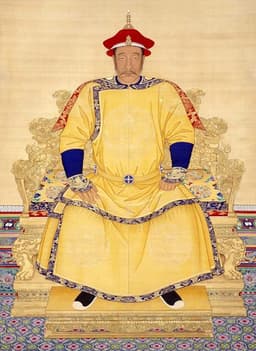
Nurhaci
Emperor · Modern
71.2Total
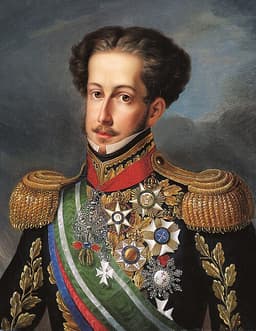
Pedro I of Brazil
Emperor · Modern
54.6Total
Basic Information
Born
1559
1798
Died
1626
1834
Era
Modern
Modern
Nationality
China
Brazil
Occupation
Emperor
Emperor
Civilization
Eastern
Western
Score Comparison
Military (10%)
79.9
55.0
Political (20%)
85.0
62.7
Influence (20%)
40.0
59.0
Legacy (20%)
84.0
50.0
Leadership (15%)
79.0
53.2
Strategy (15%)
76.0
45.0
TOTAL
71.2
54.6
Nurhaci — Complete Timeline
1616 AD
Unified the Jurchen TribesWar
Nurhaci completed the unification of the fragmented Jurchen tribes of Manchuria. He organized them into the Eight Banners system, a military and social structure that became the foundation of his power. He then proclaimed the Later Jin dynasty.
JurchenUnificationEight Banners
Impact: regionalconstructive
Proclaimed the Later Jin DynastyPolitical Action◆ Major
Nurhaci proclaimed the establishment of the Later Jin dynasty in Manchuria, claiming legitimacy as a successor to the Jin dynasty. This act formally declared his independence from the Ming dynasty and established a rival state.
Later JinDynastyFoundation
Impact: regionalconstructive
1618 AD
Issued the Seven GrievancesPolitical Action◆ Major
Nurhaci issued the Seven Grievances, a formal declaration of war against the Ming dynasty. The grievances listed alleged Ming injustices against the Jurchens, including interference in tribal affairs and killing of Jurchen leaders. This justified his invasion of Ming territory.
Ming-Qing TransitionDeclaration of WarPropaganda
Impact: regionaldestructive
1619 AD
Battle of SarhuWar
Nurhaci's forces decisively defeated a large Ming army at the Battle of Sarhu. The Ming sent four separate armies into Manchuria, but Nurhaci used interior lines to defeat them in detail. This victory secured his control over Manchuria.
Ming-Qing TransitionBattleManchuria
Impact: regionalconstructive
1626 AD
Defeated by Yuan Chonghuan at NingyuanWar◆ Major
Nurhaci led an invasion of Ming territory but was defeated at the Battle of Ningyuan by Ming general Yuan Chonghuan. The Ming used European-style cannons to repel the Later Jin forces. Nurhaci was wounded during the battle and died shortly after.
Ming-Qing TransitionBattleDefeat
Impact: regionaltragic
Pedro I of Brazil — Complete Timeline
1822 AD
Declaration of Independence of BrazilPolitical Action
Pedro I declared Brazil's independence from Portugal on September 7, 1822, at the Ipiranga River in S
Impact: globalprogressive
Coronation as Emperor of BrazilPolitical Action◆ Major
Pedro I was crowned Emperor of Brazil on December 1, 1822, in Rio de Janeiro. The coronation formalized the new imperial government, with Pedro I as constitutional monarch, though he retained significant executive powers.
Impact: nationalconstructive
1823 AD
War of Independence of BrazilWar◆ Major
Pedro I led Brazilian forces against Portuguese loyalists in the War of Independence. Key battles occurred in Bahia, Maranh
Impact: national
Dissolution of the Constituent AssemblyPolitical Action◆ Major
Pedro I dissolved the Constituent Assembly after conflicts over the constitution's limits on imperial power. He then imposed the 1824 Constitution, which granted the emperor extensive powers, including the Moderating Power, centralizing authority.
Impact: nationaldestructive
1831 AD
Abdication of the Brazilian ThronePolitical Action
Pedro I abdicated the Brazilian throne in favor of his five-year-old son Pedro II on April 7, 1831. He returned to Portugal to claim the Portuguese throne, leaving Brazil under a regency until his son came of age.
Impact: national
Expert Analysis
Pedro I of Brazil vs Nurhaci
# The Eagle and the Dragon: Two Emperors, Two Destinies
On a September morning in 1822, a young prince stood beside the Ipiranga River in São Paulo, tore the Portuguese insignia from his uniform, and shouted “Independence or Death!” Two centuries earlier and half a world away, a grizzled Jurchen chieftain in Manchuria raised his sword against the Ming dynasty, his Seven Grievances echoing through the northern forests. Pedro I of Brazil and Nurhaci of the Qing—both founders of empires, both warriors and rulers—yet their paths could hardly have diverged more sharply. Why did one create a dynasty that would rule China for nearly three centuries, while the other abandoned his throne after just nine years? The answer lies not in their ambitions, which were equally grand, but in the soil from which they grew.
Origins
Nurhaci was born in 1559 into a world of blood and iron. The Jurchen tribes of Manchuria were fragmented, warring among themselves while paying nominal allegiance to the Ming dynasty. His father and grandfather were killed in a Ming raid when he was a young man—a wound that never healed. He learned to read Chinese military classics while living as a hostage, and he learned to fight in the endless skirmishes of the steppe. This was a man forged in constant conflict, where survival demanded cunning, patience, and an iron will.
Pedro I entered the world in 1798, not in a tribal tent but in the Queluz Palace in Portugal. He was a prince of the House of Braganza, son of King João VI, and his cradle was a throne. When Napoleon’s armies invaded Portugal in 1807, the entire royal court fled to Brazil—an unprecedented move that transformed Rio de Janeiro into the capital of the Portuguese Empire. Young Pedro grew up in tropical luxury, tutored by scholars, surrounded by courtiers. He was brave, impulsive, and charming, but his education was erratic, and he never developed the discipline of a self-made man.
Rise to Power
Nurhaci’s ascent was a slow, grinding campaign of decades. He began as a minor chieftain and spent years forging alliances, eliminating rivals, and gradually unifying the Jurchen tribes. In 1616, he proclaimed the Later Jin dynasty, deliberately invoking the name of the Jin dynasty that had ruled northern China centuries earlier. His genius was organizational: he created the Eight Banner system, a military-social structure that turned every Manchu into a soldier and every family into a unit of war. By 1618, he felt strong enough to issue the Seven Grievances—a formal declaration of war against the Ming—listing the wrongs done to his people, including the murder of his father and grandfather.
Pedro’s rise was swifter and more theatrical. When his father returned to Portugal in 1821, leaving Pedro as regent in Brazil, the stage was set. Portuguese courts tried to reduce Brazil to colonial status again, and Brazilian elites turned to Pedro as their champion. On September 7, 1822, he made his famous declaration at the Ipiranga River. Three months later, he was crowned Emperor of Brazil. Where Nurhaci fought for thirty years to unite tribes, Pedro won a throne with a single speech.
Leadership & Governance
Nurhaci ruled like a war machine. His political wisdom was inseparable from his military strategy. The Eight Banners were not just an army—they were a government, a tax system, and a social order. Every Manchu knew his place, his duty, and his reward. At the Battle of Sarhu in 1619, Nurhaci demonstrated his tactical brilliance: the Ming sent four armies into Manchuria, hoping to crush him with overwhelming numbers. He defeated them in detail, using interior lines to strike each force separately. This was the battle that broke Ming power in the northeast and opened the path to China.
Pedro’s governance was chaotic. He was brave in battle—he personally led Brazilian forces against Portuguese loyalists in the War of Independence in 1823—but he had no patience for the patient work of building institutions. The Constituent Assembly he called to write a constitution quickly became a battleground. When the assembly tried to limit his powers, he dissolved it by force and imposed his own constitution. This won him no friends. He governed through personal charisma, not systems. Where Nurhaci built a machine that would outlast him, Pedro built a throne that rested on his own fragile shoulders.
Triumph & Tragedy
Nurhaci’s greatest triumph was the Battle of Sarhu, which transformed him from a tribal chieftain into a contender for the Mandate of Heaven. His greatest tragedy came at the end: in 1626, he led an invasion of Ming territory and was defeated at the Battle of Ningyuan by the Ming general Yuan Chonghuan. It was his first major defeat, and he died later that year from wounds sustained in the battle—or, some say, from the shame of it.
Pedro’s triumph was the independence of Brazil itself. He had given a colony an empire, and for a brief moment, he was the hero of a continent. But his tragedy was that he could not hold it. He was torn between Brazil and Portugal—when his brother Miguel usurped the Portuguese throne, Pedro felt compelled to intervene. On April 7, 1831, he abdicated the Brazilian throne in favor of his five-year-old son, Pedro II, and sailed back to Europe. He had abandoned his own creation.
Character & Destiny
Nurhaci was a man of stone. He had the patience to build for decades and the ruthlessness to destroy anyone who stood in his way. His personality was shaped by the harshness of the Manchurian frontier, where a moment of weakness meant death. He trusted no one completely and planned for a future he would not live to see.
Pedro was a man of fire. He was impulsive, generous, and passionate—qualities that made him a charismatic leader but a terrible ruler. He governed by instinct, not strategy. When faced with political opposition, he dissolved assemblies rather than compromise. When faced with a crisis in Portugal, he abandoned Brazil. His character was formed in the court, not the battlefield, and he lacked the iron to sustain what he had begun.
Legacy
Nurhaci’s legacy is the Qing dynasty, which would conquer China, rule for 268 years, and shape the modern nation. His Eight Banners became the template for Manchu power, and his descendants—from Hong Taiji to Kangxi to Qianlong—would build one of the greatest empires in world history. His total score of 83.8 reflects a life that achieved everything it set out to do.
Pedro I’s legacy is more ambiguous. He is remembered as the Liberator of Brazil, but his reign was too brief to leave deep institutional roots. His son, Pedro II, would rule for 58 years and become a beloved figure, but the empire itself would fall in 1889. Pedro I’s total score of 65.7 reflects a life of great promise and incomplete achievement.
Conclusion
In the end, the difference between these two emperors is the difference between building a house and lighting a bonfire. Nurhaci built slowly, stone by stone, creating a foundation that would support generations. Pedro I blazed brilliantly, warming everyone around him, but the fire consumed itself. One left a dynasty; the other left a memory. Both were founders, but only one understood that to found is to build for those who come after—not for oneself. The Jurchen chieftain who could barely read taught the Portuguese prince a lesson he never learned: that the greatest empires are not won in a single battle or declared in a single speech, but forged in the patient, grinding work of generations.
Rankings
🥇
NurhaciLeader
Mil: 79.9Pol: 85.0Inf: 40.0
71.2
🥈
Pedro I of Brazil
Mil: 55.0Pol: 62.7Inf: 59.0
54.6
+16.6 behind
How This Comparison Works
Algorithm
Each figure is scored on 6 dimensions (0—100 scale) based on structured historical data: Military (10%), Political (20%), Influence (20%), Legacy (20%), Leadership (15%), Strategy (15%). The weighted total produces the final ranking.
Data Sources
Scores are computed from structured sub-indicators in the database. Scale factors adjust for era (Ancient ×0.85, Modern ×1.0) and civilization size (Eastern ×1.05, Other ×0.80) to account for differences in population and military scale.
Maximum 3 Figures
Comparisons are limited to 2—3 figures to ensure readability and statistical meaningfulness.
Error Margins
±5 points per dimension — Sub-scores are derived from historical records with inherent uncertainty. Two figures within 5 points on a dimension should be considered roughly equivalent in that area.
Total Score Accuracy
±3 points overall — The weighted combination of 6 dimensions produces a total score with approximately ±3 points of uncertainty. Differences of less than 3 points are not statistically significant— the figures are effectively tied.
Known Limitations
- Historical records are incomplete and uneven across civilizations
- Figures from oral-tradition societies may be underrepresented
- Occupation labels can misclassify multi-role figures
- Scores measure capability and impact, not moral character
- Quantitative scoring is a comparison tool, not absolute truth
Capability Radar
Military (10%) — Battles & Warfare
Battles
85
35
Win Rate
90
40
Expansion
88
30
Political (20%) — Governance & Reform
Reform
85
45
Diplomacy
80
50
Economy
70
30
Influence (20%) — Cultural & Global Reach
Cultural
85
40
Global
80
45
Legacy (20%) — Historical Impact
Historical
90
55
Longevity
88
50
Leadership (15%) — Power & Stability
Tenure
75
55
Stability
78
25
Strategy (15%) — Tactics & Innovation
Strategy
85
35
Tactics
88
30
Reform
92
20
Similar Comparisons
Comments & Discussion
柴火战神6/16/2026
光看两人出身就知道没法比。努尔哈赤十三副遗甲起兵,建州女真的老营盘都是他拿命换回来的;佩德罗一世呢?出生就在葡萄牙王宫,独立全靠拿破仑把王室赶到巴西,他爸跑路之前丢给他一个殖民地。一个从零打拼掀翻大明,一个捡现成还坐不稳皇位。你能想象努尔哈赤在太子面前摔王冠退位吗?那还不如让他死在萨尔浒战场。宁远城下皇太极哭他爹,巴西那帮人怕是巴不得佩德罗早点走人。
Steppe Scholar6/16/2026
Nurhaci's military system was the real game-changer here—specifically his Eight Banners, which didn't just organize troops but fused Jurchen clan structures with a meritocratic command chain. Pedro I had nothing comparable. He fought a handful of skirmishes against Portuguese loyalists in Bahia, then spent most of his reign dealing with a bankrupt treasury and a rebellious legislature. Meanwhile, Nurhaci crushed Ming armies at Sarhu with a coordinated multi-banner assault that would define Qing
空谷孤鸿6/16/2026
说到底,佩德罗一世的故事是个欧洲贵族在热带殖民地演了出“浪漫革命”的独角戏——他喊“独立或者死”的时候,巴西的奴隶贸易还在最疯狂时期,他老婆奥地利公主还在背后骂他养情妇。而努尔哈赤搞的联蒙联朝、创满文、设八旗,每件事都像在满洲冻土上打桩,五十年稳扎稳打筑地基。佩德罗退了位回葡萄牙抢他女儿的江山,努尔哈赤死前还在部署宁远攻城战。一个是浪子,一个是工匠,浪子靠舞台,工匠靠掌纹。
Logistics Truther6/16/2026
Everyone romanticizes Nurhaci's "Seven Grievances," but his real genius was in supply chain warfare. The Ming tried to strangle Manchuria with a trade embargo on iron, salt, and grain—and Nurhaci responded by capturing Fushun, a Ming fortress that was also the region's major market town. Suddenly he controlled the commerce. Pedro I, by contrast, had to borrow money from British bankers to pay his own navy, then failed to secure control over the Cisplatine grain routes, losing the province. Strat
旗影刀鸣6/16/2026
别把佩德罗想得太孬了,他唯一像努尔哈赤的时候,是在1822年秋踩着马镫站在伊皮兰加河边那声吼——那确实有几分关外黑旗风中举刀的味道。但也就