Loading...
Nicolas Soult vs Shi Dakai
Nicolas Soult leads by 3.1 pts · 2 figures compared
…
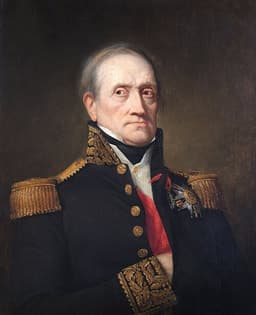
Nicolas Soult
General · Modern
62.7Total
Shi Dakai
General · Modern
59.6Total
Basic Information
Born
1769
1831
Died
1851
1863
Era
Modern
Modern
Nationality
France
China
Occupation
General
General
Civilization
Western
Eastern
Score Comparison
Military (10%)
74.7
76.0
Political (20%)
55.0
45.0
Influence (20%)
61.0
56.7
Legacy (20%)
54.0
54.0
Leadership (15%)
78.0
72.0
Strategy (15%)
65.4
68.1
TOTAL
62.7
59.6
Nicolas Soult — Complete Timeline
1805 AD
Battle of AusterlitzWar◆ Major
Soult commanded the IV Corps at Austerlitz. He led the assault on the Pratzen Heights, breaking the Allied center and securing the decisive French victory.
Napoleonic WarsBattleCorps Command
Impact: global
1806 AD
Battle of Jena-AuerstedtWar◆ Major
Soult commanded the IV Corps at Jena. His forces pursued the retreating Prussian army, capturing thousands of prisoners and contributing to the collapse of the Prussian state.
Napoleonic WarsBattlePursuit
Impact: regional
1811 AD
Battle of AlbueraWar◆ Major
Soult commanded the French army at Albuera in Spain. His forces fought a bloody battle against the Anglo-Spanish army, resulting in a tactical stalemate but strategic French withdrawal.
Peninsular WarBattleStalemate
Impact: regional
1814 AD
Battle of ToulouseWar◆ Major
Soult commanded the French army at Toulouse against Wellington. The battle occurred after Napoleon's abdication, and Soult surrendered the city, ending the Peninsular War.
Peninsular WarBattleDefeat
Impact: regional
1830 AD
Minister of WarPolitical Action◆ Major
Soult served as Minister of War under King Louis-Philippe. He reorganized the French army, introduced conscription reforms, and prepared for colonial campaigns in Algeria.
MinistryReformsJuly Monarchy
Impact: nationalconstructive
1832 AD
Prime Minister of FrancePolitical Action◆ Major
Soult served as Prime Minister of France under Louis-Philippe. His government focused on maintaining order, suppressing republican uprisings, and consolidating the July Monarchy.
Prime MinisterJuly MonarchyGovernment
Impact: national
Shi Dakai — Complete Timeline
1851 AD
Jintian UprisingWar◆ Major
Shi Dakai joined the Taiping Rebellion at its inception in Jintian, Guangxi. As a core leader, he helped organize the rebel forces and was appointed Wing King, becoming one of the key military commanders of the Taiping Heavenly Kingdom.
Taiping RebellionUprisingMilitary Command
Impact: national
1854 AD
Battle of XiangtanWar◆ Major
Shi Dakai led Taiping forces to a major victory at Xiangtan, Hunan, defeating Qing imperial troops. This battle secured Taiping control over key territories in the Yangtze River valley and demonstrated his military skill.
Taiping RebellionBattleVictory
Impact: regional
1856 AD
Tianjing IncidentPolitical Action
Shi Dakai returned to Tianjing (Nanjing) after the internal purge of the Eastern King Yang Xiuqing and the murder of the Northern King Wei Changhui. He condemned the violence and was forced to flee, leading to a split in Taiping leadership.
Taiping RebellionInternal ConflictPurge
Impact: nationaltragic
1858 AD
Campaign in Zhejiang and FujianWar
Shi Dakai led a separate Taiping army into Zhejiang and Fujian provinces, capturing several cities. This campaign expanded Taiping influence into southeastern China but also isolated his forces from the main Taiping base.
Taiping RebellionCampaignExpansion
Impact: regional
1863 AD
Battle of Baishui RiverWar◆ Major
Shi Dakai's army was trapped and defeated by Qing forces at the Baishui River in Sichuan. He was captured and executed shortly after, marking the end of his military career and a significant loss for the Taiping cause.
Taiping RebellionBattleDefeatDeath
Impact: nationaltragic
Expert Analysis
Shi Dakai vs Nicolas Soult
# The General Who Would Be Kingmaker: Shi Dakai and Nicolas Soult
On a spring morning in 1863, a 32-year-old Chinese general knelt by the Baishui River in Sichuan, awaiting execution. His army had been annihilated, his dream of a Heavenly Kingdom in ruins. Half a world away and a decade earlier, a 45-year-old French marshal stood atop the Pratzen Heights at Austerlitz, watching Napoleon’s greatest victory unfold beneath him. One man died a rebel’s death, his name whispered in legend; the other lived to become prime minister, his name inscribed in marble. Both were among the finest military minds of their age. Why did their paths diverge so dramatically?
Origins
Shi Dakai was born in 1831 into a Hakka farming family in Guangxi, southern China. The Qing Dynasty was crumbling—corrupt, weakened by opium wars, and ravaged by famine. Shi grew up in a world where rebellion was not a choice but a necessity. He was literate, unusual for a peasant, and steeped in the millenarian Christianity of Hong Xiuquan, who claimed to be the brother of Jesus Christ. The Taiping Rebellion promised to sweep away the old order and build a “Heavenly Kingdom of Great Peace.” Shi joined at sixteen, a boy soldier with a scholar’s mind.
Nicolas Soult was born in 1769 in Saint-Amans-la-Bastide, a small town in southern France. His father was a notary, a man of modest means but solid standing. The French Revolution erupted when Soult was twenty, throwing open the doors of military advancement to talent rather than birth. He joined the army as a common soldier, rose through the ranks, and by 1805 was one of Napoleon’s most trusted marshals. Where Shi saw rebellion as the only path, Soult saw revolution as opportunity.
The difference was not in ambition but in the worlds they inhabited. Shi’s China offered only two futures: submission to a dying dynasty or death in a doomed uprising. Soult’s France offered a ladder from obscurity to power—if you could survive the climb.
Rise to Power
Shi Dakai’s rise was meteoric. At the Jintian Uprising in 1851, he was one of the original five kings of the Taiping Heavenly Kingdom, commanding thousands of followers. By 1854, at the Battle of Xiangtan, he crushed Qing imperial forces in Hunan, securing the Taiping’s western flank. His reputation as the “Wing King” spread—a general who could outthink and outfight any Manchu commander. But the Taiping was not a meritocracy; it was a theocracy ruled by the unstable Hong Xiuquan.
Soult’s rise was more methodical. He earned his marshal’s baton through a decade of hard campaigning. At Austerlitz in 1805, his IV Corps broke the Allied center at the decisive moment, a feat Napoleon himself praised. At Jena in 1806, Soult’s relentless pursuit captured thousands of Prussian prisoners. He was not a flashy commander; he was a hammer, crushing whatever lay in his path. But unlike Shi, Soult served a state, not a sect. Napoleon rewarded competence; Hong Xiuquan rewarded loyalty—and punished independence.
Leadership & Governance
Shi Dakai was a brilliant tactician but a poor politician. His military scores are high—84.6—but his political score of 64.8 reflects a fatal weakness. After the Tianjing Incident of 1856, when Hong Xiuquan ordered the massacre of the Eastern King Yang Xiuqing and the Northern King Wei Changhui, Shi returned to the capital to restore order. He urged moderation, but Hong suspected him of plotting a coup. Shi fled, taking his army on a separate campaign through Zhejiang and Fujian. He was a general without a country, fighting for a cause that no longer trusted him.
Soult, by contrast, understood power. His military score of 84.3 is nearly identical to Shi’s, but his political score of 69.3 and leadership score of 84.0 reveal a man who could navigate both battlefield and bureaucracy. After Napoleon’s fall, Soult served the Bourbon restoration, then Louis-Philippe’s July Monarchy. As Minister of War in 1830, he reorganized the French army and introduced conscription reforms. As Prime Minister in 1832, he suppressed republican uprisings and kept order. He was a survivor, not an ideologue.
Triumph & Tragedy
Shi’s greatest triumph was the Battle of Xiangtan in 1854, where he demonstrated a grasp of terrain and logistics that rivaled any Western commander. His greatest tragedy was the Baishui River in 1863. Surrounded by Qing forces in Sichuan, he tried to negotiate a surrender to spare his men, but the Manchus executed him anyway. He died at thirty-two, his body displayed as a warning.
Soult’s greatest triumph was Austerlitz, where his assault on the Pratzen Heights turned the battle. His greatest tragedy was the Battle of Albuera in 1811, a bloody stalemate in Spain where he lost thousands of men in a fight that achieved nothing. But Soult lived to see his failures forgiven. He died in 1851 at eighty-two, a marshal of France and a former head of government.
Character & Destiny
Shi Dakai was a romantic—a man of principle in a movement that had none. He believed in the Taiping’s vision of equality and justice, and when the movement turned to murder and paranoia, he could not adapt. His personality was noble but rigid; he chose exile over compromise, death over dishonor.
Soult was a pragmatist. He served Napoleon, then the Bourbons, then Louis-Philippe. He changed flags as easily as changing coats. His contemporaries called him “the fox” for his cunning, and he earned the nickname. He was not a traitor; he was a survivor. He understood that history belongs to the flexible.
Legacy
Shi Dakai is remembered as a tragic hero in China—a “Wing King” who soared but was broken by a corrupt system. His legacy score of 65.9 reflects a man whose story is told in folk songs and school textbooks, but whose name never entered the global pantheon. He was a rebel, and rebels are remembered by their own.
Soult’s legacy is more complex. His legacy score of 67.6 is similar, but his influence score of 74.4 is higher. He left behind a reformed French army, a political tradition of pragmatic conservatism, and a name that appears in every history of the Napoleonic Wars. He is not loved, but he is respected.
Conclusion
Shi Dakai and Nicolas Soult were born into different worlds—one a peasant in a crumbling empire, the other a notary’s son in a revolutionary republic. Both rose on the strength of their military genius. But one died a rebel’s death, the other a statesman’s retirement. The difference was not in talent but in circumstance. Shi Dakai’s cause was doomed from the start; Soult’s cause survived its own defeats. In the end, history judges not only the general but the system he serves. The Baishui River and the Pratzen Heights are both fields of glory, but only one leads to power. The other leads to a grave.
Rankings
🥇
Nicolas SoultLeader
Mil: 74.7Pol: 55.0Inf: 61.0
62.7
🥈
Shi Dakai
Mil: 76.0Pol: 45.0Inf: 56.7
59.6
+3.1 behind
How This Comparison Works
Algorithm
Each figure is scored on 6 dimensions (0—100 scale) based on structured historical data: Military (10%), Political (20%), Influence (20%), Legacy (20%), Leadership (15%), Strategy (15%). The weighted total produces the final ranking.
Data Sources
Scores are computed from structured sub-indicators in the database. Scale factors adjust for era (Ancient ×0.85, Modern ×1.0) and civilization size (Eastern ×1.05, Other ×0.80) to account for differences in population and military scale.
Maximum 3 Figures
Comparisons are limited to 2—3 figures to ensure readability and statistical meaningfulness.
Error Margins
±5 points per dimension — Sub-scores are derived from historical records with inherent uncertainty. Two figures within 5 points on a dimension should be considered roughly equivalent in that area.
Total Score Accuracy
±3 points overall — The weighted combination of 6 dimensions produces a total score with approximately ±3 points of uncertainty. Differences of less than 3 points are not statistically significant— the figures are effectively tied.
Known Limitations
- Historical records are incomplete and uneven across civilizations
- Figures from oral-tradition societies may be underrepresented
- Occupation labels can misclassify multi-role figures
- Scores measure capability and impact, not moral character
- Quantitative scoring is a comparison tool, not absolute truth
Capability Radar
Military (10%) — Battles & Warfare
Battles
75
75
Win Rate
70
70
Expansion
65
75
Political (20%) — Governance & Reform
Reform
55
50
Diplomacy
65
45
Economy
50
40
Influence (20%) — Cultural & Global Reach
Cultural
45
55
Global
50
40
Legacy (20%) — Historical Impact
Historical
55
60
Longevity
50
45
Leadership (15%) — Power & Stability
Tenure
70
55
Stability
55
35
Strategy (15%) — Tactics & Innovation
Strategy
72
80
Tactics
78
85
Reform
60
60
Similar Comparisons
Comments & Discussion
塔防书院6/16/2026
拿石达开跟苏尔特比,首先时代背景就不同。苏尔特指挥的是法式正规军,有炮有参谋有后勤体系;石达开带的是一支靠拜上帝教凝聚起来的农民武装,连军饷都发不齐。石达开在宝庆会战里能扛住曾国藩湘军两年,已经算得上是极端条件里的极限操作了。苏尔特再能打,也没经历过“全军断粮后还能保持建制”这种事。不是同一个层面的打仗。
鐵衣舊夢6/16/2026
有人说石达开是“败军之将”,但你看他能在大渡河脱困几次,就知道他是真会打仗。1862年他孤军西征,连破清军四十余营,从江西杀到四川,几乎重现翼王旗号的锋芒。苏尔特在半岛战争里也不过是赢了几场战术胜利,却被威灵顿压着打、一路退到图卢兹。石达开输在政治格局上,不是输在军事判断上。英雄死于体制,小人活给谥号。
反光镜6/16/2026
苏尔特被拿破仑封为帝国元帅,还在路易十八手下当首相,政治嗅觉确实没得说。但别忘了,1815年滑铁卢战役里,苏尔特负责拿破仑的总参谋部居然把部队调度搞得一团糟,行军队列都乱成一锅粥。一个高级指挥官在这个层面失误,说明他最怕的不是敌人,而是自己脑子里的混乱。石达开没有这种“高配低能”的问题,他的失败是外部围剿的结果,不是内部组织塌方。
Historian4856/16/2026
Soult’s career is a masterclass in political pivoting—Royalist to Jacobin to Napoleon’s marshal to Louis XVIII’s war minister, always landing on his feet. Shi Dakai died at 32 because he stayed loyal to the Taiping cause even when its leadership turned paranoid and fratricidal. Soult lived to 82 because he never let ideology get in the way of survival. That’s not talent—that’s ideological flexibility. One man died for his god; the other, for his pension.
Chronicler70666/16/2026
The comparison leans too hard on aura. Shi Dakai commanded maybe 40,000 at his peak against Qing forces who outnumbered him 5-to-1, with no logistics corps, no artillery standardization, and an army that walked on foot. Soult led 50,000 under Napoleon with a supply train, a general staff, and conscription. Take away the romance of the riverbank execution and look at the numbers—Shi was a brilliant tactical outlaw. Soult was a state-backed general with professional resources. Apples and howitzers