Loading...
This comparison has not been analyzed yet.
One-time AI generation (~1 minute). Scores and timeline are already available below.
Mohammed bin Rashid Al Maktoum vs Mswati III
Mohammed bin Rashid Al Maktoum leads by 18.6 pts · 2 figures compared
…
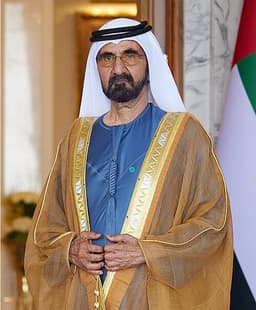
Mohammed bin Rashid Al Maktoum
Emperor · Modern
57.6Total
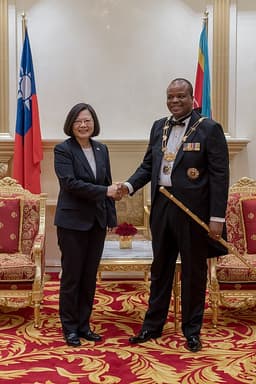
Mswati III
Emperor · Modern
39.0Total
Basic Information
Born
1949
1968
Died
—
—
Era
Modern
Modern
Nationality
UAE
Eswatini
Occupation
Emperor
Emperor
Civilization
Middle Eastern
Other
Score Comparison
Military (10%)
45.7
14.6
Political (20%)
75.0
26.4
Influence (20%)
56.7
48.6
Legacy (20%)
49.2
35.8
Leadership (15%)
72.0
64.3
Strategy (15%)
45.0
28.0
TOTAL
57.6
39.0
Mohammed bin Rashid Al Maktoum — Complete Timeline
2006 AD
Establishment of Dubai World CentralReform◆ Major
Mohammed bin Rashid initiated the Dubai World Central project, a massive logistics and aviation hub centered around Al Maktoum International Airport. The project aimed to position Dubai as a global transport and trade nexus.
InfrastructureAviationLogistics
Impact: globalconstructive
Accession as Ruler of DubaiPolitical Action◆ Major
Mohammed bin Rashid Al Maktoum became the Ruler of Dubai on January 4, 2006, following the death of his brother, Maktoum bin Rashid Al Maktoum. He also became Vice President and Prime Minister of the UAE.
SuccessionMonarchyDubai
Impact: national
2009 AD
Dubai Financial Crisis and BailoutPolitical Action◆ Major
In 2009, Dubai faced a severe debt crisis when Dubai World, a state-owned conglomerate, announced a debt standstill. Mohammed bin Rashid secured a $10 billion bailout from Abu Dhabi, averting default but highlighting Dubai's over-leverage.
Financial CrisisDebtBailout
Impact: globaldestructive
2010 AD
Launch of Dubai's Vision 2021Reform◆ Major
Mohammed bin Rashid launched the UAE Vision 2021, a national development plan focusing on economic diversification, education, healthcare, and sustainability. The plan aimed to make the UAE one of the best countries in the world by its 50th anniversary.
DevelopmentVisionEconomy
Impact: nationalconstructive
2021 AD
Expo 2020 DubaiCultural◆ Major
Mohammed bin Rashid led Dubai's successful bid to host Expo 2020, which was postponed to 2021 due to the COVID-19 pandemic. The event attracted millions of visitors and showcased Dubai's innovation and global connectivity.
ExpoGlobal EventInnovation
Impact: globalconstructive
Mswati III — Complete Timeline
1986 AD
Coronation as King of SwazilandPolitical Action◆ Major
Mswati III was crowned king of Swaziland at age 18, ending a four-year regency. His coronation continued the absolute monarchy established by his father Sobhuza II.
CoronationSuccessionMonarchy
Impact: national
2000 AD
HIV/AIDS Crisis ResponsePolitical Action◆ Major
Mswati III faced criticism for his response to the HIV/AIDS epidemic, which infected over 25% of Eswatini's population. He declared a national emergency but was accused of insufficient action and spending on royal luxuries.
Public HealthHIV/AIDSCriticism
Impact: nationaltragic
2018 AD
Renaming of Swaziland to EswatiniPolitical Action◆ Major
Mswati III officially renamed the Kingdom of Swaziland to the Kingdom of Eswatini, meaning 'land of the Swazis,' to mark 50 years of independence and shed colonial-era names.
RenamingNational IdentityDecolonization
Impact: nationalconstructive
2021 AD
Constitutional Crisis and Pro-Democracy ProtestsPolitical Action◆ Major
Mswati III faced widespread pro-democracy protests demanding political reforms and an end to absolute monarchy. Security forces cracked down, resulting in dozens of deaths and arrests. The protests were the largest in Eswatini's history.
ProtestsDemocracy MovementRepression
Impact: nationaldestructive
2022 AD
Polygamy and Royal Expenditure ControversyCultural
Mswati III's multiple marriages and lavish spending on royal palaces and cars drew criticism amid poverty in Eswatini. He defended polygamy as a cultural tradition but faced accusations of misusing public funds.
PolygamyRoyal SpendingControversy
Impact: national
This comparison has not been analyzed yet.
One-time AI generation (~1 minute). Scores and timeline are already available below.
Rankings
🥇
Mohammed bin Rashid Al MaktoumLeader
Mil: 45.7Pol: 75.0Inf: 56.7
57.6
🥈
Mswati III
Mil: 14.6Pol: 26.4Inf: 48.6
39.0
+18.6 behind
How This Comparison Works
Algorithm
Each figure is scored on 6 dimensions (0—100 scale) based on structured historical data: Military (10%), Political (20%), Influence (20%), Legacy (20%), Leadership (15%), Strategy (15%). The weighted total produces the final ranking.
Data Sources
Scores are computed from structured sub-indicators in the database. Scale factors adjust for era (Ancient ×0.85, Modern ×1.0) and civilization size (Eastern ×1.05, Other ×0.80) to account for differences in population and military scale.
Maximum 3 Figures
Comparisons are limited to 2—3 figures to ensure readability and statistical meaningfulness.
Error Margins
±5 points per dimension — Sub-scores are derived from historical records with inherent uncertainty. Two figures within 5 points on a dimension should be considered roughly equivalent in that area.
Total Score Accuracy
±3 points overall — The weighted combination of 6 dimensions produces a total score with approximately ±3 points of uncertainty. Differences of less than 3 points are not statistically significant— the figures are effectively tied.
Known Limitations
- Historical records are incomplete and uneven across civilizations
- Figures from oral-tradition societies may be underrepresented
- Occupation labels can misclassify multi-role figures
- Scores measure capability and impact, not moral character
- Quantitative scoring is a comparison tool, not absolute truth
Capability Radar
Military (10%) — Battles & Warfare
Battles
24
7
Win Rate
29
11
Expansion
30
10
Political (20%) — Governance & Reform
Reform
85
10
Diplomacy
80
20
Economy
90
15
Influence (20%) — Cultural & Global Reach
Cultural
60
20
Global
65
10
Legacy (20%) — Historical Impact
Historical
55
10
Longevity
50
15
Leadership (15%) — Power & Stability
Tenure
75
38
Stability
75
25
Strategy (15%) — Tactics & Innovation
Strategy
32
14
Tactics
34
19
Reform
39
20
Similar Comparisons
Comments & Discussion
No comments yet. Be the first to share your thoughts!