Loading...
George IV vs Mswati III
Mswati III leads by 1.0 pts · 2 figures compared
…
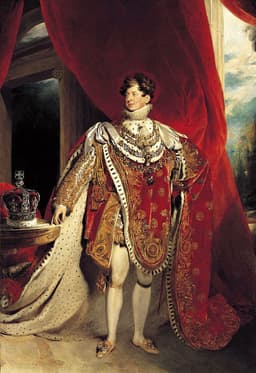
George IV
Emperor · Modern
38.0Total
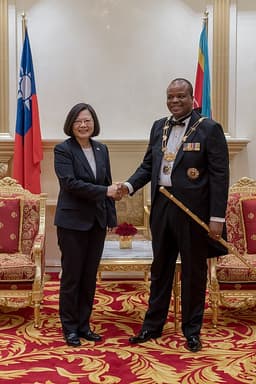
Mswati III
Emperor · Modern
39.0Total
Basic Information
Born
1762
1968
Died
1830
—
Era
Modern
Modern
Nationality
United Kingdom
Eswatini
Occupation
Emperor
Emperor
Civilization
Western
Other
Score Comparison
Military (10%)
12.4
14.6
Political (20%)
27.9
26.4
Influence (20%)
50.2
48.6
Legacy (20%)
37.5
35.8
Leadership (15%)
31.2
64.3
Strategy (15%)
60.0
28.0
TOTAL
38.0
39.0
George IV — Complete Timeline
1811 AD
Regency PeriodPolitical Action◆ Major
George IV became Prince Regent after his father George III was declared mentally unfit. He ruled as regent for nine years, overseeing the final years of the Napoleonic Wars and the Congress of Vienna. The Regency era was marked by cultural and architectural developments.
RegencyNapoleonic WarsCultural Era
Impact: national
1820 AD
Accession to the ThronePolitical Action◆ Major
George IV became king upon the death of his father George III. His accession was overshadowed by his attempt to divorce his wife Caroline of Brunswick, leading to a public scandal. He was crowned in a lavish ceremony at Westminster Abbey.
AccessionScandalCoronation
Impact: national
1829 AD
Catholic EmancipationPolitical Action◆ Major
George IV reluctantly gave royal assent to the Catholic Relief Act, which removed most restrictions on Catholics in the United Kingdom. This act allowed Catholics to sit in Parliament and hold public office. It was a major step toward religious equality.
Catholic EmancipationReligious ReformParliament
Impact: nationalconstructive
1830 AD
Death from Gastrointestinal IllnessOther
George IV died of gastrointestinal illness at Windsor Castle at age 67. He was buried in St George's Chapel. His death ended the Regency era and passed the throne to his brother William IV. His reign was marked by extravagance and scandal.
DeathSuccessionMonarchy
Impact: national
Mswati III — Complete Timeline
1986 AD
Coronation as King of SwazilandPolitical Action◆ Major
Mswati III was crowned king of Swaziland at age 18, ending a four-year regency. His coronation continued the absolute monarchy established by his father Sobhuza II.
CoronationSuccessionMonarchy
Impact: national
2000 AD
HIV/AIDS Crisis ResponsePolitical Action◆ Major
Mswati III faced criticism for his response to the HIV/AIDS epidemic, which infected over 25% of Eswatini's population. He declared a national emergency but was accused of insufficient action and spending on royal luxuries.
Public HealthHIV/AIDSCriticism
Impact: nationaltragic
2018 AD
Renaming of Swaziland to EswatiniPolitical Action◆ Major
Mswati III officially renamed the Kingdom of Swaziland to the Kingdom of Eswatini, meaning 'land of the Swazis,' to mark 50 years of independence and shed colonial-era names.
RenamingNational IdentityDecolonization
Impact: nationalconstructive
2021 AD
Constitutional Crisis and Pro-Democracy ProtestsPolitical Action◆ Major
Mswati III faced widespread pro-democracy protests demanding political reforms and an end to absolute monarchy. Security forces cracked down, resulting in dozens of deaths and arrests. The protests were the largest in Eswatini's history.
ProtestsDemocracy MovementRepression
Impact: nationaldestructive
2022 AD
Polygamy and Royal Expenditure ControversyCultural
Mswati III's multiple marriages and lavish spending on royal palaces and cars drew criticism amid poverty in Eswatini. He defended polygamy as a cultural tradition but faced accusations of misusing public funds.
PolygamyRoyal SpendingControversy
Impact: national
Expert Analysis
Origins
George IV (born 1762) was the eldest son of King George III, raised in the British royal court with a privileged but strained upbringing. His education was supervised by tutors, and he developed a taste for luxury and extravagance early on. He secretly married Maria Fitzherbert in 1785, a Catholic widow, which violated the Royal Marriages Act and created a lasting scandal. His father's mental illness led to his appointment as Prince Regent in 1811, giving him de facto rule before his formal accession in 1820.
Mswati III (born 1968) is the son of King Sobhuza II and one of his many wives. He was raised in the royal household in Swaziland (now Eswatini) and educated at primary schools in the country before attending secondary school in the United Kingdom. His father, who ruled for 82 years, died in 1982, leaving a regency that ended when Mswati was crowned king in 1986 at age 18. He inherited an absolute monarchy, with the constitution vesting all executive, legislative, and judicial powers in the king.
Rise to Power
George IV's rise was shaped by his father's incapacity. After George III's first bout of mental illness in 1788, the Regency Crisis of 1788-89 saw Parliament debate a regency, but the king recovered before a bill passed. Finally, in 1811, George III was declared unfit, and George IV became Prince Regent, a role he held for nine years. His accession as king in 1820 was marred by his attempt to divorce his wife Caroline of Brunswick, leading to a highly publicized trial in the House of Lords.
Mswati III became king at 18 after a four-year regency led by his mother, Queen Regent Dzeliwe, and later by his half-brother. His coronation in 1986 was a traditional ceremony that solidified his absolute authority. He quickly consolidated power by dismissing the prime minister and appointing loyalists, ensuring no challenge to his rule. Unlike George IV, he inherited a stable monarchy with no constitutional limits.
Leadership & Governance
George IV's leadership was characterized by his extravagant lifestyle and minimal engagement with governance. He scored 27.9 in political skill and 31.2 in leadership, reflecting his lack of interest in day-to-day administration. He delegated most matters to his ministers, notably Lord Liverpool, and focused on personal pleasures like building the Royal Pavilion in Brighton. However, he did play a role in the passage of the Catholic Emancipation Act in 1829, albeit reluctantly, after political pressure from Prime Minister Wellington. This act removed restrictions on Catholics, a major political shift. His military score of 12.4 indicates no significant military involvement.
Mswati III, with a leadership score of 64.3, exercises absolute power over Eswatini. He appoints the prime minister and cabinet, controls the judiciary, and can veto legislation. He declared a state of emergency in 1973 (technically his father's act, but continued by him) that bans political parties. His governance style is autocratic, with no checks on his authority. He has a military score of 14.6, reflecting his role as commander-in-chief but no active military campaigns. His political score of 26.4 is slightly lower than George IV's, partly due to his resistance to democratic reforms.
Triumph & Tragedy
George IV's greatest success was overseeing the Regency era, a period of British cultural and architectural development, including the construction of Regent Street and Regent's Park. However, his personal life was a tragedy: his marriage to Caroline of Brunswick was a disaster, leading to a public scandal that damaged the monarchy's reputation. He also accumulated massive debts, and his extravagance alienated the public. His death in 1830 from gastrointestinal issues ended an unpopular reign.
Mswati III's triumph is maintaining his absolute monarchy for over 35 years despite internal and external pressures. He renamed the country Eswatini in 2018, a move that boosted national pride. However, his response to the HIV/AIDS crisis, which affected over 25% of the population, has been criticized as insufficient. In 2021, pro-democracy protests erupted, leading to a violent crackdown with scores killed. His polygamy (he has over 15 wives) and lavish spending on palaces and luxury cars while most citizens live in poverty have drawn international condemnation. His legacy score of 35.8 reflects these mixed outcomes.
Character & Destiny
George IV was known for his charm, wit, and intelligence, but also his laziness, selfishness, and lack of responsibility. His character led to a reign marked by personal indulgence rather than statecraft. Historians view him as one of the least effective British monarchs, with his influence score of 50.2 being moderate due to his cultural impact rather than political. His destiny was to be a placeholder king, overshadowed by his father's madness and his own excesses.
Mswati III is seen as a traditionalist who values Swazi culture and royal authority. He is described as reserved but firm in his belief in absolute rule. His character has led to a destiny of increasing isolation as global norms shift toward democracy. His influence score of 48.6 reflects his role as a symbol of Eswatini, but his leadership is increasingly contested. He faces a choice between reform or continued repression, a destiny shaped by his unwillingness to share power.
Legacy
George IV's legacy is mixed: he left a cultural mark through the Regency style, but his political legacy is minimal. He did not modernize the monarchy; instead, his reign weakened it, paving the way for the more constitutional role of later monarchs. His total score of 38.0 reflects limited impact.
Mswati III's legacy is still unfolding. He has preserved the absolute monarchy, but at the cost of economic stagnation and human rights abuses. His legacy score of 35.8 is slightly lower than George IV's, indicating that his long-term impact may be less positive. If Eswatini transitions to democracy, he will be remembered as a obstacle; if the monarchy endures, as a defender of tradition.
Conclusion
While Mswati III holds a higher total score (39.0 vs 38.0), the margin is narrow. George IV's influence on British culture and the trajectory of the monarchy, though negative, had broader global reach due to the UK's power. Mswati III's impact is confined to a small, landlocked country. In terms of historical significance, George IV's reign, through the Regency period and Catholic Emancipation, had more far-reaching consequences. Therefore, George IV had the greater impact, despite his personal failings. His score of 50.2 in influence surpasses Mswati's 48.6, and his actions contributed to the evolution of constitutional monarchy in the UK.
Rankings
🥇
Mswati IIILeader
Mil: 14.6Pol: 26.4Inf: 48.6
39.0
🥈
George IV
Mil: 12.4Pol: 27.9Inf: 50.2
38.0
+1.0 behind
How This Comparison Works
Algorithm
Each figure is scored on 6 dimensions (0—100 scale) based on structured historical data: Military (10%), Political (20%), Influence (20%), Legacy (20%), Leadership (15%), Strategy (15%). The weighted total produces the final ranking.
Data Sources
Scores are computed from structured sub-indicators in the database. Scale factors adjust for era (Ancient ×0.85, Modern ×1.0) and civilization size (Eastern ×1.05, Other ×0.80) to account for differences in population and military scale.
Maximum 3 Figures
Comparisons are limited to 2—3 figures to ensure readability and statistical meaningfulness.
Error Margins
±5 points per dimension — Sub-scores are derived from historical records with inherent uncertainty. Two figures within 5 points on a dimension should be considered roughly equivalent in that area.
Total Score Accuracy
±3 points overall — The weighted combination of 6 dimensions produces a total score with approximately ±3 points of uncertainty. Differences of less than 3 points are not statistically significant— the figures are effectively tied.
Known Limitations
- Historical records are incomplete and uneven across civilizations
- Figures from oral-tradition societies may be underrepresented
- Occupation labels can misclassify multi-role figures
- Scores measure capability and impact, not moral character
- Quantitative scoring is a comparison tool, not absolute truth
Capability Radar
Military (10%) — Battles & Warfare
Battles
38
7
Win Rate
38
11
Expansion
45
10
Political (20%) — Governance & Reform
Reform
5
10
Diplomacy
15
20
Economy
10
15
Influence (20%) — Cultural & Global Reach
Cultural
30
20
Global
10
10
Legacy (20%) — Historical Impact
Historical
20
10
Longevity
15
15
Leadership (15%) — Power & Stability
Tenure
10
38
Stability
5
25
Strategy (15%) — Tactics & Innovation
Strategy
48
14
Tactics
48
19
Reform
50
20
Similar Comparisons
Comments & Discussion
No comments yet. Be the first to share your thoughts!