Loading...
Alexander Karađorđevic vs Mswati III
Alexander Karađorđevic leads by 5.7 pts · 2 figures compared
…
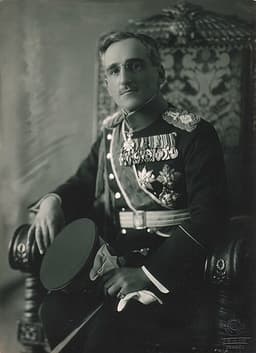
Alexander Karađorđevic
Emperor · Modern
44.7Total
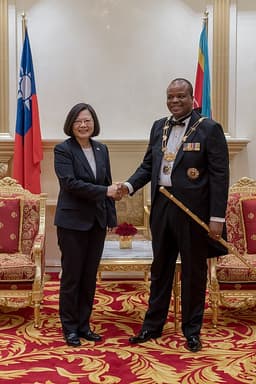
Mswati III
Emperor · Modern
39.0Total
Basic Information
Born
1806
1968
Died
1885
—
Era
Modern
Modern
Nationality
Serbia
Eswatini
Occupation
Emperor
Emperor
Civilization
Western
Other
Score Comparison
Military (10%)
22.6
14.6
Political (20%)
43.7
26.4
Influence (20%)
49.4
48.6
Legacy (20%)
42.5
35.8
Leadership (15%)
62.2
64.3
Strategy (15%)
35.7
28.0
TOTAL
44.7
39.0
Alexander Karađorđevic — Complete Timeline
1842 AD
Elected Prince of SerbiaPolitical Action◆ Major
Alexander Kara
ElectionDynasty ChangeSerbia
Impact: national
1843 AD
Implemented Administrative ReformsReform◆ Major
Prince Alexander introduced administrative reforms aimed at modernizing the Serbian state, including the establishment of a council of ministers and a more structured bureaucracy. These reforms were influenced by Western European models.
Administrative ReformModernizationGovernment
Impact: nationalconstructive
1858 AD
Abdicated the ThronePolitical Action◆ Major
Under pressure from the Ottoman Empire and internal opposition, Prince Alexander abdicated the throne. He was succeeded by Milo
AbdicationDynasty ChangeExile
Impact: national
Mswati III — Complete Timeline
1986 AD
Coronation as King of SwazilandPolitical Action◆ Major
Mswati III was crowned king of Swaziland at age 18, ending a four-year regency. His coronation continued the absolute monarchy established by his father Sobhuza II.
CoronationSuccessionMonarchy
Impact: national
2000 AD
HIV/AIDS Crisis ResponsePolitical Action◆ Major
Mswati III faced criticism for his response to the HIV/AIDS epidemic, which infected over 25% of Eswatini's population. He declared a national emergency but was accused of insufficient action and spending on royal luxuries.
Public HealthHIV/AIDSCriticism
Impact: nationaltragic
2018 AD
Renaming of Swaziland to EswatiniPolitical Action◆ Major
Mswati III officially renamed the Kingdom of Swaziland to the Kingdom of Eswatini, meaning 'land of the Swazis,' to mark 50 years of independence and shed colonial-era names.
RenamingNational IdentityDecolonization
Impact: nationalconstructive
2021 AD
Constitutional Crisis and Pro-Democracy ProtestsPolitical Action◆ Major
Mswati III faced widespread pro-democracy protests demanding political reforms and an end to absolute monarchy. Security forces cracked down, resulting in dozens of deaths and arrests. The protests were the largest in Eswatini's history.
ProtestsDemocracy MovementRepression
Impact: nationaldestructive
2022 AD
Polygamy and Royal Expenditure ControversyCultural
Mswati III's multiple marriages and lavish spending on royal palaces and cars drew criticism amid poverty in Eswatini. He defended polygamy as a cultural tradition but faced accusations of misusing public funds.
PolygamyRoyal SpendingControversy
Impact: national
Expert Analysis
Origins
Alexander Karađorđević was born on October 11, 1806, in Topola, Serbia, into the Karađorđević dynasty. His father, Karađorđe Petrović, led the First Serbian Uprising. Alexander received limited formal education but was trained in military and administrative affairs. After his father's exile, he spent years in Habsburg territory.
Mswati III was born on April 19, 1968, in Manzini, Swaziland, as Prince Makhosetive. He is the son of King Sobhuza II and one of his wives, Ntfombi Tfwala. Mswati was educated at Sherborne School in England and later at the Royal Military Academy Sandhurst, though he left early to assume the throne.
Rise to Power
Alexander Karađorđević was elected Prince of Serbia by the Skupština (assembly) in 1842 after the abdication of Miloš Obrenović. His election was supported by the Ottoman Empire and the Russian Empire, but faced opposition from the Obrenović faction. He ruled as a constitutional monarch but with limited powers, navigating between Ottoman suzerainty and Austrian influence.
Mswati III was crowned as King of Swaziland (now Eswatini) on April 25, 1986, at age 18, ending a four-year regency led by his mother. He inherited an absolute monarchy established by his father, Sobhuza II, who had abolished the constitution in 1973. Mswati's rise was smooth, with no significant opposition, as the monarchy was deeply entrenched.
Leadership & Governance
Alexander Karađorđević's leadership score of 62.2 reflects his moderate reforms. He implemented administrative reforms, including a council of ministers and a centralized bureaucracy, aiming to modernize Serbia. However, his rule was marked by instability, as he faced pressure from the Ottoman Empire and internal factions. His political score of 43.7 indicates limited success in navigating these challenges.
Mswati III, with a leadership score of 64.3, governs as an absolute monarch. He has maintained traditional structures, including the Tinkhundla system, but has resisted democratization. His political score of 26.4 is low due to his authoritarian rule and suppression of dissent. He declared a national emergency for HIV/AIDS but has been criticized for inadequate response and lavish spending.
Triumph & Tragedy
Alexander's greatest success was his administrative modernization, which laid groundwork for future Serbian state-building. His tragedy was his abdication in 1858 under Ottoman and domestic pressure, leading to the return of the Obrenović dynasty. He failed to secure lasting stability, scoring 49.4 in influence and 42.5 in legacy.
Mswati III's triumph includes maintaining stability and cultural traditions, such as the Umhlanga Reed Dance. He renamed the country to Eswatini in 2018, asserting national identity. However, his rule is marred by the HIV/AIDS crisis, with over 25% infection rate, and violent crackdowns on pro-democracy protests in 2021. His legacy score of 35.8 reflects these failures.
Character & Destiny
Alexander was cautious and reform-minded but indecisive, which contributed to his downfall. His strategy score of 35.7 shows poor long-term planning. He sought to balance great powers but ultimately lost support. His character was shaped by his father's legacy, but he lacked the charisma to unite factions.
Mswati III is assertive and traditionalist, with a strategy score of 28.0, indicating resistance to change. He has been criticized for his polygamy (multiple wives) and extravagant lifestyle, which contrasts with widespread poverty. His character is marked by a desire to preserve monarchical power, leading to isolation and international criticism.
Legacy
Alexander's legacy is mixed: he is remembered as the first prince of the Karađorđević dynasty, which later produced King Peter I, but his reign was overshadowed by the Obrenovićs. His administrative reforms influenced Serbian governance. He scores 42.5 in legacy.
Mswati III's legacy is uncertain. He remains the world's last absolute monarch in Africa, but his reign has seen economic stagnation and human rights abuses. He scores 35.8 in legacy, with potential for negative historical assessment if democratization fails.
Conclusion
Alexander Karađorđević, with a total score of 44.7, had greater impact than Mswati III's 39.0. Alexander's reforms in 19th-century Serbia contributed to modernization, while Mswati's absolutism has hindered development. Though both faced challenges, Alexander's influence on Serbian state-building was more significant than Mswati's preservation of monarchy in a small kingdom. Alexander's legacy, despite his abdication, paved the way for future constitutional development, whereas Mswati's rule has perpetuated a system under increasing pressure.
Rankings
🥇
Alexander KarađorđevicLeader
Mil: 22.6Pol: 43.7Inf: 49.4
44.7
🥈
Mswati III
Mil: 14.6Pol: 26.4Inf: 48.6
39.0
+5.7 behind
How This Comparison Works
Algorithm
Each figure is scored on 6 dimensions (0—100 scale) based on structured historical data: Military (10%), Political (20%), Influence (20%), Legacy (20%), Leadership (15%), Strategy (15%). The weighted total produces the final ranking.
Data Sources
Scores are computed from structured sub-indicators in the database. Scale factors adjust for era (Ancient ×0.85, Modern ×1.0) and civilization size (Eastern ×1.05, Other ×0.80) to account for differences in population and military scale.
Maximum 3 Figures
Comparisons are limited to 2—3 figures to ensure readability and statistical meaningfulness.
Error Margins
±5 points per dimension — Sub-scores are derived from historical records with inherent uncertainty. Two figures within 5 points on a dimension should be considered roughly equivalent in that area.
Total Score Accuracy
±3 points overall — The weighted combination of 6 dimensions produces a total score with approximately ±3 points of uncertainty. Differences of less than 3 points are not statistically significant— the figures are effectively tied.
Known Limitations
- Historical records are incomplete and uneven across civilizations
- Figures from oral-tradition societies may be underrepresented
- Occupation labels can misclassify multi-role figures
- Scores measure capability and impact, not moral character
- Quantitative scoring is a comparison tool, not absolute truth
Capability Radar
Military (10%) — Battles & Warfare
Battles
15
7
Win Rate
10
11
Expansion
10
10
Political (20%) — Governance & Reform
Reform
30
10
Diplomacy
35
20
Economy
25
15
Influence (20%) — Cultural & Global Reach
Cultural
20
20
Global
15
10
Legacy (20%) — Historical Impact
Historical
30
10
Longevity
25
15
Leadership (15%) — Power & Stability
Tenure
40
38
Stability
20
25
Strategy (15%) — Tactics & Innovation
Strategy
15
14
Tactics
10
19
Reform
20
20
Similar Comparisons
Comments & Discussion
No comments yet. Be the first to share your thoughts!