Loading...
Miguel Hidalgo vs Qin Shi Huang
Qin Shi Huang leads by 38.2 pts · 2 figures compared
…
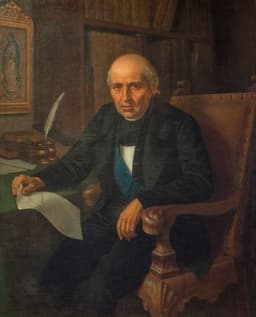
Miguel Hidalgo
Revolutionary · Modern
47.0Total
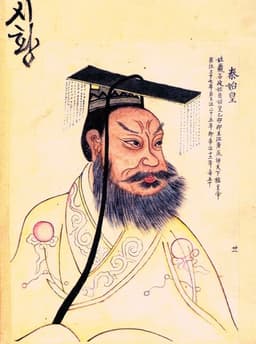
Qin Shi Huang
Emperor · Ancient
85.2Total
Basic Information
Born
1753
-259
Died
1811
-210
Era
Modern
Ancient
Nationality
Mexico
China
Occupation
Revolutionary
Emperor
Civilization
Western
Eastern
Score Comparison
Military (10%)
50.0
80.0
Political (20%)
36.5
90.0
Influence (20%)
55.0
85.0
Legacy (20%)
52.0
90.0
Leadership (15%)
39.0
78.0
Strategy (15%)
39.6
82.0
TOTAL
47.0
85.2
Miguel Hidalgo — Complete Timeline
1810 AD
Captured Guanajuato and massacred SpaniardsWar◆ Major
Hidalgo's army of 80,000 captured the city of Guanajuato on September 28, 1810. After taking the Alh
BattleMassacreViolence
Impact: regionaldestructive
Issued the Grito de DoloresPolitical Action
On September 16, 1810, Father Miguel Hidalgo rang the church bell in Dolores and called for rebellion against Spanish colonial rule. His speech, known as the Grito de Dolores, urged Mexicans to rise up against the Spanish and marked the beginning of the Mexican War of Independence.
IndependenceRebellionGrito de Dolores
Impact: nationalconstructive
1811 AD
Defeated at the Battle of Calderón BridgeWar◆ Major
Hidalgo's poorly trained army was decisively defeated by a smaller Spanish royalist force at the Battle of Calder
DefeatSpanish RoyalistsTurning Point
Impact: regionaltragic
Executed by Spanish authoritiesPolitical Action◆ Major
Hidalgo was captured in Acatita de Baj
ExecutionMartyrdomIndependence Movement
Impact: nationaltragic
Qin Shi Huang — Complete Timeline
246 BC
Construction of the Mausoleum and Terracotta ArmyOther◆ Major
Qin Shi Huang commissioned a vast mausoleum complex near Xi'an, guarded by thousands of life-sized terracotta soldiers, horses, and chariots. The project employed hundreds of thousands of workers and reflected his obsession with immortality and imperial power.
Impact: global
230 BC
Conquest of the Six Warring StatesWar
From 230 to 221 BCE, Ying Zheng led the Qin state in a series of campaigns that conquered the Han, Zhao, Wei, Chu, Yan, and Qi states. This unified China under a single ruler for the first time, ending the Warring States period.
Impact: global
221 BC
Standardization of Writing, Currency, and MeasurementsReform◆ Major
Qin Shi Huang ordered the standardization of Chinese script, currency, and weights and measures across the unified empire. This facilitated administration, trade, and cultural integration, laying a foundation for future dynasties.
Impact: globalconstructive
Proclamation of the Qin DynastyPolitical Action
After conquering the last independent state, Ying Zheng declared himself Shi Huangdi (First Emperor), founding the Qin Dynasty. He adopted a new title to signify his supreme authority and initiated centralized imperial rule.
Impact: global
214 BC
Initiation of the Great Wall ConstructionOther◆ Major
Qin Shi Huang ordered the connection and extension of existing northern fortifications to create a unified defensive wall against nomadic Xiongnu raids. This project involved massive conscripted labor and became the precursor to the later Great Wall.
Impact: regional
213 BC
Burning of Books and Burying of ScholarsPolitical Action◆ Major
On the advice of Li Si, Qin Shi Huang ordered the burning of historical records and philosophical texts not aligned with Legalist doctrine. He also had 460 Confucian scholars buried alive to suppress dissent and consolidate ideological control.
Impact: nationaldestructive
Expert Analysis
miguel-hidalgo-vs-qin-shi-huang
# The First Emperor and the Rebel Priest: Two Paths to Forge a Nation
On a September morning in 1810, a white-haired priest in the dusty town of Dolores rang his church bell and called upon his congregation to rise against three centuries of Spanish rule. Miguel Hidalgo had no army, no treasury, no battle plan—only a desperate faith that ordinary Mexicans would follow him into the unknown. Two thousand years earlier and half a world away, a young king in the state of Qin had no such uncertainty. Ying Zheng, then just thirteen years old, had inherited a war machine already grinding toward destiny. One man would create an empire from nothing but will; the other would inherit one and remake the world in its image. Both would die betrayed by the forces they unleashed.
Origins
Qin Shi Huang was born into the chaos of the Warring States period, a brutal era when seven Chinese kingdoms fought for supremacy. His father, King Zhuangxiang of Qin, ruled a state that had already embraced Legalist philosophy—a ruthless doctrine that valued order above all else. The young prince grew up surrounded by strategists and generals, learning that power was the only currency that mattered. He ascended the throne at thirteen, his regent Lü Buwei managing affairs until Ying Zheng came of age. The boy king learned early that trust was a weakness: he would eventually force Lü Buwei to commit suicide.
Miguel Hidalgo was born in 1753 to a Creole family on a hacienda in Guanajuato, a region whose silver mines made Spain rich. Unlike the Chinese emperor, Hidalgo was educated by Jesuits, immersed in Enlightenment philosophy and the works of Rousseau and Voltaire. He became a priest, but a restless one—he read banned books, questioned Church doctrine, and managed his family’s estate with such skill that he was accused of neglecting his religious duties. Where Qin Shi Huang was forged in the furnace of war, Hidalgo was shaped by the tension between European ideas of liberty and the brutal reality of colonial caste systems.
Rise to Power
Qin Shi Huang’s path was methodical and merciless. From 230 to 221 BCE, he unleashed his generals against the six rival kingdoms one by one, exploiting their internal divisions and overwhelming them with Qin’s superior military organization. The conquest of Han fell first, then Zhao fell through betrayal, Wei through siege, Chu through a campaign of deception, Yan through assassination plots and counterattacks, and finally Qi through surrender without a fight. Each victory was a lesson in the cold logic of power: divide, deceive, destroy. When the last king submitted, Ying Zheng proclaimed himself Shi Huangdi—the First Emperor—and declared that his dynasty would last ten thousand generations.
Hidalgo’s rise was the opposite: spontaneous, emotional, and doomed from the start. He was not a military man but a priest who had been part of a conspiracy of Creole intellectuals plotting independence. When the plot was discovered in 1810, Hidalgo faced a choice: flee or fight. He chose to ring the bell. Within days, his congregation swelled into an army of 80,000—indigenous peasants, mestizo laborers, and impoverished miners who had nothing to lose. They carried farming tools, slings, and a burning rage against the *gachupines*—the Spanish-born elites who held all the power. Hidalgo led them not as a general but as a prophet.
Leadership & Governance
The First Emperor ruled through a system of breathtaking efficiency and terror. He divided China into commanderies governed by civil administrators, military commanders, and imperial inspectors who reported directly to him—a three-way balance of power that prevented any regional official from growing too strong. He standardized the written script so that a decree issued in the capital could be read from the Yellow River to the Yangtze. He imposed uniform axle lengths for carts so that roads could be built to a single standard. He minted round copper coins with square holes, the design that would define Chinese currency for two millennia. And he ordered the burning of all books except those on medicine, agriculture, and divination, burying 460 scholars alive who protested. Order was everything; dissent was death.
Hidalgo governed through charisma and chaos. After capturing Guanajuato, his army stormed the Alhóndiga de Granaditas granary, where Spanish families had taken refuge. The massacre that followed—men, women, and children slaughtered—horrified even Hidalgo’s supporters. He abolished slavery and tribute payments to the Spanish crown, but he could not control his own followers. His army looted and pillaged, turning moderate Creoles against the rebellion. He had no administrative system, no treasury, no trained officers. He was a revolutionary flame, but flames cannot govern.
Triumph & Tragedy
Qin Shi Huang’s greatest triumph was the unification itself—a feat no Chinese ruler had achieved before. He connected and extended the northern fortifications into what would become the Great Wall, a symbol of Chinese civilization that endures today. His greatest tragedy was his obsession with immortality. He sent expeditions to find the elixir of life, consumed mercury pills prescribed by alchemists, and grew paranoid in his final years. When he died in 210 BCE during an inspection tour, his prime minister Li Si concealed the death and forged orders to execute the heir apparent, installing a puppet emperor instead. Within three years, the Qin Dynasty collapsed into rebellion. The First Emperor’s ten thousand generations lasted just fifteen years.
Hidalgo’s triumph was the *Grito de Dolores* itself—a moment that ignited a nation’s soul. But his tragedy unfolded with terrible speed. At the Battle of Calderón Bridge in January 1811, his massive but undisciplined army was routed by a Spanish force one-tenth its size. Hidalgo fled north, hoping to reach the United States, but was betrayed, captured, and handed over to the Inquisition. On July 30, 1811, he was executed by firing squad. His last words, according to tradition, were: “Though I die, the cause will live on.”
Character & Destiny
Qin Shi Huang was a man of iron will and absolute certainty. He believed that history began with him—hence his title “First Emperor”—and that the past had no authority over the present. His Legalist philosophy taught that human nature was inherently selfish and could only be controlled through strict laws and harsh punishments. This worldview made him effective but brittle. He could build a unified state but could not create loyalty; his empire was a machine that ran only as long as he held the lever.
Hidalgo was a man of faith and contradiction. He was a priest who fathered children, a scholar who led a mob, an intellectual who unleashed violence he could not control. He believed in liberty but could not build the institutions to sustain it. His tragedy was not that he failed—it was that he succeeded in starting something greater than himself. The rebellion he began would continue for a decade after his death, eventually winning Mexican independence in 1821.
Legacy
Qin Shi Huang’s legacy is written in the bones of China. The standardized script, currency, and measurements he imposed became the foundation of Chinese civilization. The Great Wall, though rebuilt many times, traces its origins to his command. The Terracotta Army, discovered in 1974, has become one of the world’s most famous archaeological wonders—a silent army guarding a tomb that remains unopened, perhaps booby-trapped with rivers of mercury as ancient texts describe. Yet he is remembered as both a unifier and a tyrant, the man who made China one but crushed its soul.
Hidalgo’s legacy is the soul of modern Mexico. Every September 16, the president of Mexico rings the same bell from the National Palace, reenacting the *Grito de Dolores*. Hidalgo’s face adorns the 1,000-peso note, and his name is carved into monuments across the nation. He is remembered not for his failures but for his courage—a flawed, human figure who dared to dream of freedom in a world that demanded submission.
Conclusion
Two men, two worlds, two ways of making history. The First Emperor built an empire with laws and armies, and it crumbled the moment he died. The rebel priest started a revolution with a cry and a bell, and it outlived him by centuries. Qin Shi Huang believed that order was the highest good; Hidalgo believed that freedom was worth any cost. Both were right, and both were wrong. Their stories remind us that nations are not built by perfect men but by flawed ones who, in their different ways, dared to imagine something their world had never seen. The emperor’s tomb remains sealed. The priest’s bell still rings.
Rankings
🥇
Qin Shi HuangLeader
Mil: 80.0Pol: 90.0Inf: 85.0
85.2
🥈
Miguel Hidalgo
Mil: 50.0Pol: 36.5Inf: 55.0
47.0
+38.2 behind
How This Comparison Works
Algorithm
Each figure is scored on 6 dimensions (0—100 scale) based on structured historical data: Military (10%), Political (20%), Influence (20%), Legacy (20%), Leadership (15%), Strategy (15%). The weighted total produces the final ranking.
Data Sources
Scores are computed from structured sub-indicators in the database. Scale factors adjust for era (Ancient ×0.85, Modern ×1.0) and civilization size (Eastern ×1.05, Other ×0.80) to account for differences in population and military scale.
Maximum 3 Figures
Comparisons are limited to 2—3 figures to ensure readability and statistical meaningfulness.
Error Margins
±5 points per dimension — Sub-scores are derived from historical records with inherent uncertainty. Two figures within 5 points on a dimension should be considered roughly equivalent in that area.
Total Score Accuracy
±3 points overall — The weighted combination of 6 dimensions produces a total score with approximately ±3 points of uncertainty. Differences of less than 3 points are not statistically significant— the figures are effectively tied.
Known Limitations
- Historical records are incomplete and uneven across civilizations
- Figures from oral-tradition societies may be underrepresented
- Occupation labels can misclassify multi-role figures
- Scores measure capability and impact, not moral character
- Quantitative scoring is a comparison tool, not absolute truth
Capability Radar
Military (10%) — Battles & Warfare
Battles
30
85
Win Rate
25
90
Expansion
20
90
Political (20%) — Governance & Reform
Reform
60
95
Diplomacy
30
75
Economy
20
90
Influence (20%) — Cultural & Global Reach
Cultural
70
95
Global
60
85
Legacy (20%) — Historical Impact
Historical
75
95
Longevity
70
95
Leadership (15%) — Power & Stability
Tenure
15
70
Stability
10
65
Strategy (15%) — Tactics & Innovation
Strategy
25
85
Tactics
20
80
Reform
10
95
Similar Comparisons
Comments & Discussion
秦时明月6/17/2026
拿一个敲钟的农村神父跟千古一帝比?Hidalgo连个像样的军队都没有,全靠农民拿镰刀干活,一个月就被打散了。反观嬴政,从13岁就坐拥虎狼之师,十年扫六合、书同文、车同轨,这才叫建国!Hidalgo喊了几句口号就跑了,连墨西哥独立都没活到看见。不是我说,这对比就像拿萤火虫跟太阳比光。
HorseArcherHan6/17/2026
As a military historian, I laugh at this comparison. Qin Shi Huang inherited a professional army with iron weapons, crossbows, and cavalry—the most advanced war machine of the 3rd century BCE. Hidalgo's "army" was a peasant mob armed with slings, machetes, and a stolen banner of the Virgin of Guadalupe. One conquered six states in nine years; the other was routed within months at the Bridge of Calderón. Apples and siege towers.
DoubtFirstVerify6/17/2026
Data skeptic here: the comparison breaks on basic numbers. Qin Shi Huang unified a territory of roughly 2 million square kilometers with 30 million people under a single writing system, currency, and legal code. Hidalgo’s rebellion controlled maybe 100,000 square kilometers for a few months—modern Mexico didn't even exist until 30 years after his death. You're comparing an empire that lasted 2,000 years to a fizzled uprising.
古典学批判者6/17/2026
你们都忽略了一个核心变量:时间尺度。嬴政搞的是超长期基础设施——长城、驰道、灵渠,两千多年后中国还在用。Hidalgo唯一的遗产就是那天早晨的钟声和一句口号,连独立战争都没撑到最后。一个是文明工程师,一个是情绪煽动者。要是比煽情,Hidalgo赢;比建城,嬴政完胜。
GhostEmperor6/17/2026
我最看不惯这种浪漫化起义者的历史叙事。Hidalgo放走了西班牙守军,搞了一堆屠城骚乱,最后连自己的副手伊格纳西奥·阿连德都与他决裂。而嬴政虽然暴虐,但至少达成了"书同文,车同轨,行同伦"的文明统一。一个是失败的英雄,一个是成功的暴君——我宁愿要后者的秩序,也不愿要前者的烂摊子。