Loading...
Miguel Hidalgo vs Napoleon Bonaparte
Napoleon Bonaparte leads by 23.9 pts · 2 figures compared
…
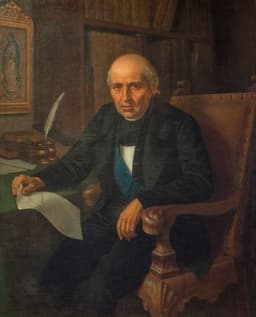
Miguel Hidalgo
Revolutionary · Modern
47.0Total

Napoleon Bonaparte
General · Modern
70.9Total
Basic Information
Born
1753
1769
Died
1811
1821
Era
Modern
Modern
Nationality
Mexico
France
Occupation
Revolutionary
General
Civilization
Western
Western
Score Comparison
Military (10%)
50.0
94.0
Political (20%)
36.5
72.0
Influence (20%)
55.0
40.0
Legacy (20%)
52.0
80.0
Leadership (15%)
39.0
78.0
Strategy (15%)
39.6
90.0
TOTAL
47.0
70.9
Miguel Hidalgo — Complete Timeline
1810 AD
Captured Guanajuato and massacred SpaniardsWar◆ Major
Hidalgo's army of 80,000 captured the city of Guanajuato on September 28, 1810. After taking the Alh
BattleMassacreViolence
Impact: regionaldestructive
Issued the Grito de DoloresPolitical Action
On September 16, 1810, Father Miguel Hidalgo rang the church bell in Dolores and called for rebellion against Spanish colonial rule. His speech, known as the Grito de Dolores, urged Mexicans to rise up against the Spanish and marked the beginning of the Mexican War of Independence.
IndependenceRebellionGrito de Dolores
Impact: nationalconstructive
1811 AD
Defeated at the Battle of Calderón BridgeWar◆ Major
Hidalgo's poorly trained army was decisively defeated by a smaller Spanish royalist force at the Battle of Calder
DefeatSpanish RoyalistsTurning Point
Impact: regionaltragic
Executed by Spanish authoritiesPolitical Action◆ Major
Hidalgo was captured in Acatita de Baj
ExecutionMartyrdomIndependence Movement
Impact: nationaltragic
Napoleon Bonaparte — Complete Timeline
1799 AD
Coup of 18 BrumaireOther◆ Major
Napoleon Bonaparte, with support from his brother Lucien and key political figures, overthrew the Directory in a bloodless coup. He established the Consulate with himself as First Consul, effectively becoming the ruler of France. This event ended the French Revolution's most unstable period.
French RevolutionCoupRise to Power
Impact: regional
1804 AD
Promulgation of the Napoleonic CodeOther◆ Major
Napoleon enacted the Civil Code of the French, known as the Napoleonic Code, a comprehensive set of laws that replaced the fragmented feudal legal systems. The code established legal equality, protected property rights, and secularized law. It became the basis for legal systems in many European and world countries.
Legal ReformNapoleonic CodeCivil Law
Impact: globalconstructive
1805 AD
Battle of AusterlitzWar◆ Major
Napoleon's Grande Arm
Napoleonic WarsBattleDecisive Victory
Impact: global
1812 AD
Invasion of RussiaWar◆ Major
Napoleon led the Grande Arm
Napoleonic WarsInvasionDisaster
Impact: globaldestructive
1815 AD
Battle of WaterlooWar◆ Major
Napoleon's French army was defeated by the combined forces of the Duke of Wellington's Anglo-Allied army and Gebhard Leberecht von Bl
Napoleonic WarsBattleFinal Defeat
Impact: globaldestructive
Expert Analysis
miguel-hidalgo-vs-napoleon-bonaparte
# The Emperor and the Priest
On a crisp September morning in 1810, a sixty-year-old priest in a small Mexican town rang a church bell and changed history. Half a world away, a thirty-year-old Corsican artillery officer had already redrawn the map of Europe. Both men reached for greatness; one grasped an empire, the other a martyr's crown. The question is not merely who succeeded, but why their paths diverged so dramatically—and what their stories tell us about the nature of leadership itself.
Origins
Napoleon Bonaparte was born in 1769 on the island of Corsica, a place that had been French for barely a year. His family was minor nobility, poor but proud. He spoke Italian before French, and his childhood was marked by resentment of French domination. This outsider's hunger would drive him. At the military academy of Brienne, he was mocked for his accent and small stature. He responded by devouring books on military history and artillery mathematics.
Miguel Hidalgo y Costilla was born in 1753 on a hacienda in Guanajuato, New Spain. Unlike Napoleon, he came from a family of criollo elites—Spaniards born in the colonies. He studied at the Jesuit College of San Francisco Javier and later at the Royal and Pontifical University of Mexico. Where Napoleon was forged in the cold discipline of military academies, Hidalgo was shaped by the liberal ideas of the Enlightenment. He read Rousseau, Voltaire, and the French Encyclopedists. He was a priest who questioned doctrine, a scholar who farmed, and a man who saw the faces of the poor every day.
The difference in their origins was not merely one of geography but of vision. Napoleon saw the world as a chessboard; Hidalgo saw it as a congregation.
Rise to Power
Napoleon's ascent was a masterpiece of timing and talent. The French Revolution had devoured its generals. By 1795, when he was just twenty-six, he saved the revolutionary government from a royalist uprising with a "whiff of grapeshot"—a brutal artillery barrage in the streets of Paris. Two years later, he conquered Italy. By 1799, he had seized power in a coup. The speed was breathtaking: from obscure artillery lieutenant to First Consul in a decade.
Hidalgo's rise was different. For years, he served as a parish priest in Dolores, where he cultivated vineyards, taught Indians to make pottery, and read forbidden books. The Spanish Inquisition investigated him. He was not ambitious in the Napoleonic sense; he was angry. When Napoleon invaded Spain in 1808, creating a power vacuum in the colonies, Hidalgo did not see an opportunity for himself—he saw a chance for justice.
On September 16, 1810, he rang the church bell and issued the Grito de Dolores. "Long live the Virgin of Guadalupe! Death to the Spaniards!" He had no army, no plan, only a moral fury. Within weeks, 80,000 men—Indians, mestizos, peasants—joined him with machetes and slings.
Leadership & Governance
Napoleon governed like a machine. He centralized the state, created the Napoleonic Code, established the Bank of France, and reformed education. He promoted men based on merit, not birth. "A soldier," he said, "will fight long and hard for a bit of colored ribbon." His military genius lay in speed, artillery concentration, and the ability to turn a battlefield into a trap. At Austerlitz in 1805, he crushed the combined armies of Austria and Russia. His scores reflect this: Military 94, Strategy 93, Leadership 80.
Hidalgo governed like a fire. He abolished slavery, ended tribute payments for Indians, and returned lands to villages. But he had no administrative structure, no treasury, no discipline. His army was a mob. When they captured Guanajuato on September 28, 1810, they massacred Spaniards in the Alhóndiga de Granaditas grain fortress—men, women, and children. Hidalgo could not control them. His scores tell the story: Military 42, Strategy 45, Leadership 43.
The difference was not just talent but context. Napoleon inherited a revolutionary state with a professional army. Hidalgo inherited a colony with a caste system and no army at all.
Triumph & Tragedy
Napoleon's greatest triumph was the Empire itself. By 1812, he controlled Europe from Spain to Poland. His greatest tragedy was the invasion of Russia, where he lost 500,000 men to winter, hunger, and guerrilla warfare. He was exiled to Elba, returned for a hundred days, and finally defeated at Waterloo in 1815. He died in 1821 on Saint Helena, a prisoner.
Hidalgo's tragedy was faster. At the Battle of Calderón Bridge on January 17, 1811, his 80,000 poorly armed men were routed by 6,000 Spanish regulars. He fled north, was betrayed, captured, and executed on July 30, 1811. The Spanish Inquisition defrocked him first; then a firing squad shot him. His head was displayed in Guanajuato for ten years.
Character & Destiny
Napoleon believed in his own star. He was ruthless, calculating, and endlessly ambitious. "Impossible," he once said, "is a word to be found only in the dictionary of fools." His character drove him to conquer, but also to overreach. He could not stop.
Hidalgo believed in his own conscience. He was idealistic, generous, and impulsive. He started a revolution he could not control, led an army he could not command, and died for a cause he did not live to see succeed. His character made him a symbol, not a ruler.
Legacy
Napoleon's legacy is a paradox. He spread the ideals of the French Revolution—equality before the law, secular government, meritocracy—across Europe, but he did so through conquest and dictatorship. The Napoleonic Code still shapes law in dozens of countries. He is remembered as a military genius and a tyrant.
Hidalgo's legacy is simpler. He failed as a general and as a leader, but he succeeded as a spark. Mexico's independence was achieved in 1821, a decade after his death. Every year on September 16, the President of Mexico rings the same bell and repeats his cry. Hidalgo is not remembered for winning battles; he is remembered for beginning them.
Conclusion
Napoleon and Hidalgo both rose from obscurity to shake the world. One built an empire that collapsed; the other started a revolution that endured. Napoleon’s scores total 82.4, Hidalgo’s 58.4. But numbers cannot measure what they meant. Napoleon changed how nations fight; Hidalgo changed how people hope. In the end, the priest who failed may have left a deeper mark than the emperor who conquered—because he did not conquer for himself, but for others. And that is a kind of victory that no score can capture.
Rankings
🥇
Napoleon BonaparteLeader
Mil: 94.0Pol: 72.0Inf: 40.0
70.9
🥈
Miguel Hidalgo
Mil: 50.0Pol: 36.5Inf: 55.0
47.0
+23.9 behind
How This Comparison Works
Algorithm
Each figure is scored on 6 dimensions (0—100 scale) based on structured historical data: Military (10%), Political (20%), Influence (20%), Legacy (20%), Leadership (15%), Strategy (15%). The weighted total produces the final ranking.
Data Sources
Scores are computed from structured sub-indicators in the database. Scale factors adjust for era (Ancient ×0.85, Modern ×1.0) and civilization size (Eastern ×1.05, Other ×0.80) to account for differences in population and military scale.
Maximum 3 Figures
Comparisons are limited to 2—3 figures to ensure readability and statistical meaningfulness.
Error Margins
±5 points per dimension — Sub-scores are derived from historical records with inherent uncertainty. Two figures within 5 points on a dimension should be considered roughly equivalent in that area.
Total Score Accuracy
±3 points overall — The weighted combination of 6 dimensions produces a total score with approximately ±3 points of uncertainty. Differences of less than 3 points are not statistically significant— the figures are effectively tied.
Known Limitations
- Historical records are incomplete and uneven across civilizations
- Figures from oral-tradition societies may be underrepresented
- Occupation labels can misclassify multi-role figures
- Scores measure capability and impact, not moral character
- Quantitative scoring is a comparison tool, not absolute truth
Capability Radar
Military (10%) — Battles & Warfare
Battles
30
95
Win Rate
25
90
Expansion
20
95
Political (20%) — Governance & Reform
Reform
60
95
Diplomacy
30
80
Economy
20
85
Influence (20%) — Cultural & Global Reach
Cultural
70
85
Global
60
90
Legacy (20%) — Historical Impact
Historical
75
95
Longevity
70
90
Leadership (15%) — Power & Stability
Tenure
15
85
Stability
10
70
Strategy (15%) — Tactics & Innovation
Strategy
25
95
Tactics
20
98
Reform
10
92
Similar Comparisons
Comments & Discussion
No comments yet. Be the first to share your thoughts!