Loading...
Michael Collins vs Miguel Hidalgo
Miguel Hidalgo leads by 2.4 pts · 2 figures compared
…

Michael Collins
Revolutionary · Modern
44.6Total
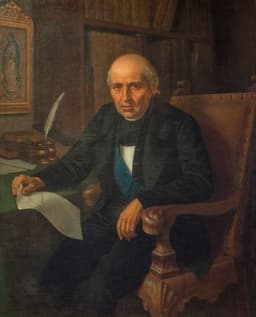
Miguel Hidalgo
Revolutionary · Modern
47.0Total
Basic Information
Born
1890
1753
Died
1922
1811
Era
Modern
Modern
Nationality
Ireland
Mexico
Occupation
Revolutionary
Revolutionary
Civilization
Western
Western
Score Comparison
Military (10%)
45.0
50.0
Political (20%)
33.6
36.5
Influence (20%)
51.8
55.0
Legacy (20%)
44.2
52.0
Leadership (15%)
33.5
39.0
Strategy (15%)
60.0
39.6
TOTAL
44.6
47.0
Michael Collins — Complete Timeline
1916 AD
Easter Rising ParticipationWar◆ Major
Collins fought in the Easter Rising as a volunteer in the General Post Office garrison. He was captured and interned in Frongoch camp in Wales. The experience radicalized him and he emerged as a key figure in the independence movement.
Easter RisingIrish IndependenceInternment
Impact: national
1919 AD
Director of Intelligence for the IRAWar◆ Major
Collins became Director of Intelligence for the Irish Republican Army (IRA) during the War of Independence. He organized a network of spies and assassins, targeting British intelligence agents and police. His methods included the 'Squad' assassination unit.
IntelligenceIRAWar of Independence
Impact: national
1920 AD
Bloody Sunday (1920)War◆ Major
On November 21, 1920, Collins's 'Squad' assassinated 14 British intelligence officers in Dublin. In retaliation, British forces opened fire on a crowd at a Gaelic football match at Croke Park, killing 14 civilians. The day escalated the conflict.
Bloody SundayAssassinationReprisal
Impact: nationaldestructive
1921 AD
Anglo-Irish Treaty NegotiationsPolitical Action
Collins was a key negotiator of the Anglo-Irish Treaty in London, which established the Irish Free State. He signed the treaty despite personal misgivings, believing it was a stepping stone to full independence. The treaty caused a split in the independence movement.
TreatyIrish Free StateCompromise
Impact: national
1922 AD
Death at Beal na BlathWar◆ Major
Collins was killed in an ambush by anti-Treaty IRA forces at Beal na Blath, County Cork, on August 22, 1922. His death was a major blow to the pro-Treaty side and deepened the bitterness of the Irish Civil War.
DeathCivil WarAmbush
Impact: nationaltragic
Chairman of the Provisional GovernmentPolitical Action◆ Major
Collins became Chairman of the Provisional Government of the Irish Free State in January 1922. He worked to establish the new state's institutions while facing opposition from anti-Treaty republicans, leading to the Irish Civil War.
Provisional GovernmentCivil WarState Building
Impact: nationalconstructive
Miguel Hidalgo — Complete Timeline
1810 AD
Captured Guanajuato and massacred SpaniardsWar◆ Major
Hidalgo's army of 80,000 captured the city of Guanajuato on September 28, 1810. After taking the Alh
BattleMassacreViolence
Impact: regionaldestructive
Issued the Grito de DoloresPolitical Action
On September 16, 1810, Father Miguel Hidalgo rang the church bell in Dolores and called for rebellion against Spanish colonial rule. His speech, known as the Grito de Dolores, urged Mexicans to rise up against the Spanish and marked the beginning of the Mexican War of Independence.
IndependenceRebellionGrito de Dolores
Impact: nationalconstructive
1811 AD
Defeated at the Battle of Calderón BridgeWar◆ Major
Hidalgo's poorly trained army was decisively defeated by a smaller Spanish royalist force at the Battle of Calder
DefeatSpanish RoyalistsTurning Point
Impact: regionaltragic
Executed by Spanish authoritiesPolitical Action◆ Major
Hidalgo was captured in Acatita de Baj
ExecutionMartyrdomIndependence Movement
Impact: nationaltragic
Expert Analysis
Origins
Michael Collins was born on October 16, 1890, in Clonakilty, County Cork, Ireland, into a farming family. His father, also Michael Collins, was a nationalist who died when Collins was six. He attended local schools and later moved to London to work as a clerk, where he joined the Irish Republican Brotherhood (IRB). Miguel Hidalgo y Costilla was born on May 8, 1753, in Pénjamo, Guanajuato, New Spain (modern-day Mexico), into a Creole family. He studied at the Colegio de San Nicolás in Valladolid (now Morelia), where he became a priest and later a professor and rector. Hidalgo was influenced by Enlightenment ideas and criticized Spanish rule.
Rise to Power
Collins rose through the Irish republican movement. He participated in the Easter Rising (1916) as a volunteer in the General Post Office garrison, was captured and interned at Frongoch camp in Wales. There, he emerged as a leader. After release, he became Director of Intelligence for the Irish Republican Army (IRA) during the War of Independence (1919-1921). He organized a network of spies and a 'Squad' that assassinated British intelligence officers. His key turning point was the Bloody Sunday operation (November 21, 1920), when his Squad killed 14 British officers, leading to a British reprisal that killed 14 civilians. Hidalgo's rise began as a priest in Dolores, where he promoted economic activities for indigenous people. On September 16, 1810, he issued the Grito de Dolores, calling for rebellion against Spanish rule. His army quickly swelled to 80,000, capturing Guanajuato on September 28, 1810, where his forces massacred Spaniards in the Alhóndiga de Granaditas. Hidalgo's leadership was charismatic but lacked military discipline.
Leadership & Governance
Collins served as Chairman of the Provisional Government of the Irish Free State from January 1922. He worked to establish state institutions while trying to prevent civil war. He scored 33.5 in leadership and 60.0 in strategy, reflecting his tactical but not administrative focus. Hidalgo, with a leadership score of 39.0 and strategy of 39.6, was a charismatic figure but poor military commander. He abolished slavery and issued decrees, but his governance was chaotic. Collins signed the Anglo-Irish Treaty, which established the Irish Free State but partitioned Northern Ireland, a controversial decision that led to civil war.
Triumph & Tragedy
Collins's greatest success was negotiating the Anglo-Irish Treaty, securing Irish independence from Britain. His intelligence network was highly effective. His tragedy was being killed in an ambush on August 22, 1922, during the Irish Civil War, at age 31. He died as a symbol of the conflict between treaty supporters and opponents. Hidalgo's triumph was sparking the Mexican War of Independence, which eventually succeeded. His Grito de Dolores is celebrated annually. His tragedy was his defeat at the Battle of Calderón Bridge (January 17, 1811), where his poorly trained army was routed by a smaller Spanish force. He was captured, defrocked by the Inquisition, and executed on July 30, 1811. His movement fragmented after his death.
Character & Destiny
Collins was pragmatic, ruthless, and strategic, willing to compromise for independence. His decision to sign the treaty, despite knowing it would divide his country, showed his belief in political reality. He scored 51.8 in influence and 44.2 in legacy. Hidalgo was idealistic, inspired by Enlightenment ideals, but impulsive and militarily inept. His lack of discipline led to massacres that alienated Creole support. His influence score of 55.0 reflects his symbolic power, but his legacy of 52.0 is tied to his role as father of independence.
Legacy
Collins is remembered as a key figure in Irish independence, but his legacy is complicated by the civil war. His intelligence methods influenced guerrilla tactics. The Irish Free State evolved into the Republic of Ireland. Hidalgo is the 'Father of Mexican Independence'; his Grito de Dolores is a national holiday. His legacy inspired later revolutionaries. However, his military failures and lack of sustained governance limit his practical impact. Collins scored 44.6 total, Hidalgo 47.0, but Collins's strategic impact on state-building was more concrete.
Conclusion
While Hidalgo's symbolic role is immense, Michael Collins had greater practical impact: he negotiated a treaty that created an independent state, albeit partitioned. Hidalgo's rebellion failed militarily and was followed by a decade of war. Collins's scores in strategy (60.0 vs 39.6) and his direct role in governance give him a more tangible legacy. Therefore, Michael Collins had greater impact as a revolutionary who achieved statehood.
Rankings
🥇
Miguel HidalgoLeader
Mil: 50.0Pol: 36.5Inf: 55.0
47.0
🥈
Michael Collins
Mil: 45.0Pol: 33.6Inf: 51.8
44.6
+2.4 behind
How This Comparison Works
Algorithm
Each figure is scored on 6 dimensions (0—100 scale) based on structured historical data: Military (10%), Political (20%), Influence (20%), Legacy (20%), Leadership (15%), Strategy (15%). The weighted total produces the final ranking.
Data Sources
Scores are computed from structured sub-indicators in the database. Scale factors adjust for era (Ancient ×0.85, Modern ×1.0) and civilization size (Eastern ×1.05, Other ×0.80) to account for differences in population and military scale.
Maximum 3 Figures
Comparisons are limited to 2—3 figures to ensure readability and statistical meaningfulness.
Error Margins
±5 points per dimension — Sub-scores are derived from historical records with inherent uncertainty. Two figures within 5 points on a dimension should be considered roughly equivalent in that area.
Total Score Accuracy
±3 points overall — The weighted combination of 6 dimensions produces a total score with approximately ±3 points of uncertainty. Differences of less than 3 points are not statistically significant— the figures are effectively tied.
Known Limitations
- Historical records are incomplete and uneven across civilizations
- Figures from oral-tradition societies may be underrepresented
- Occupation labels can misclassify multi-role figures
- Scores measure capability and impact, not moral character
- Quantitative scoring is a comparison tool, not absolute truth
Capability Radar
Military (10%) — Battles & Warfare
Battles
35
30
Win Rate
40
25
Expansion
20
20
Political (20%) — Governance & Reform
Reform
40
60
Diplomacy
35
30
Economy
25
20
Influence (20%) — Cultural & Global Reach
Cultural
45
70
Global
35
60
Legacy (20%) — Historical Impact
Historical
55
75
Longevity
40
70
Leadership (15%) — Power & Stability
Tenure
30
15
Stability
15
10
Strategy (15%) — Tactics & Innovation
Strategy
50
25
Tactics
55
20
Reform
45
10
Similar Comparisons
Comments & Discussion
No comments yet. Be the first to share your thoughts!