Loading...
Marouf al-Bakhit vs Tokugawa Ieyasu
Tokugawa Ieyasu leads by 40.2 pts · 2 figures compared
…
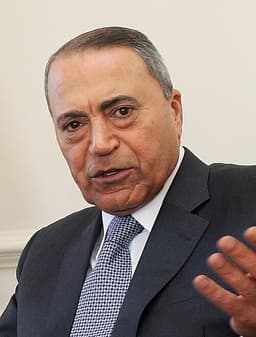
Marouf al-Bakhit
General · Modern
41.6Total
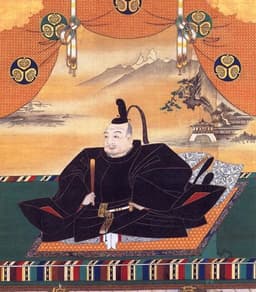
Tokugawa Ieyasu
General · Modern
81.8Total
Basic Information
Born
1947
1543
Died
—
1616
Era
Modern
Modern
Nationality
Jordan
Japan
Occupation
General
General
Civilization
Middle Eastern
Eastern
Score Comparison
Military (10%)
10.2
78.0
Political (20%)
61.3
82.0
Influence (20%)
48.6
88.0
Legacy (20%)
38.3
75.0
Leadership (15%)
40.0
85.0
Strategy (15%)
36.8
82.0
TOTAL
41.6
81.8
Marouf al-Bakhit — Complete Timeline
2005 AD
Appointed Prime Minister of JordanPolitical Action◆ Major
King Abdullah II appointed Marouf al-Bakhit as Prime Minister of Jordan in November 2005, following the 2005 Amman bombings. Al-Bakhit, a former intelligence chief, was tasked with restoring security and stability.
JordanPrime MinisterAppointment
Impact: national
2007 AD
Resigned as Prime MinisterPolitical Action
Marouf al-Bakhit resigned as Prime Minister of Jordan in November 2007 after parliamentary elections. His resignation followed criticism of economic policies and political reforms.
JordanPrime MinisterResignation
Impact: national
2011 AD
Appointed Prime Minister for Second TermPolitical Action◆ Major
King Abdullah II appointed Marouf al-Bakhit as Prime Minister again in February 2011, during the Arab Spring protests. Al-Bakhit was tasked with implementing political reforms to address public demands.
JordanArab SpringPrime Minister
Impact: national
Resigned as Prime Minister for Second TermPolitical Action
Marouf al-Bakhit resigned as Prime Minister in October 2011, after failing to satisfy protesters' demands for faster political reforms. His resignation marked the end of his second term.
JordanArab SpringResignation
Impact: national
Tokugawa Ieyasu — Complete Timeline
1600 AD
Battle of SekigaharaWar
Tokugawa Ieyasu led the Eastern Army to victory over Ishida Mitsunari's Western Army at Sekigahara. This decisive battle ended the Sengoku period and established Ieyasu as the supreme military ruler of Japan, paving the way for the Tokugawa shogunate.
Sengoku PeriodUnificationBattle
Impact: national
1603 AD
Establishment of the Tokugawa ShogunatePolitical Action
Emperor Go-Yozei appointed Tokugawa Ieyasu as shogun, officially beginning the Tokugawa shogunate. Ieyasu established his government in Edo (modern Tokyo), centralizing military and political power under his family's control.
ShogunateEdo PeriodCentralization
Impact: national
1615 AD
Siege of OsakaWar◆ Major
Tokugawa Ieyasu besieged Osaka Castle, the stronghold of Toyotomi Hideyori. The castle fell, and Hideyori committed suicide. This campaign eliminated the last major opposition to Tokugawa rule, solidifying the shogunate's control over Japan.
Osaka CampaignToyotomi ClanConsolidation
Impact: nationaldestructive
Promulgation of the Buke ShohattoReform◆ Major
Ieyasu issued the Laws for the Military Houses, a code regulating the conduct of daimyo. It restricted castle construction, required alternate attendance in Edo, and prohibited alliances without shogunal permission. This law helped control the feudal lords.
Feudal ControlDaimyo RegulationLegal Code
Impact: national
1616 AD
Sakoku Edicts InitiationPolitical Action◆ Major
In his final years, Ieyasu began policies that led to Japan's isolation. He restricted foreign trade to specific ports and expelled Christian missionaries. These measures, expanded by successors, resulted in the sakoku policy that isolated Japan for over 200 years.
IsolationismForeign PolicyChristianity
Impact: national
Expert Analysis
Tokugawa Ieyasu vs Marouf al-Bakhit
### The Shogun and the General: Two Paths of Power in a Turbulent World
In the early morning of October 21, 1600, a dense fog lifted over the valley of Sekigahara in central Japan. On one side stood Tokugawa Ieyasu, a weathered general in his late fifties, commanding an army built on decades of patient alliances. On the other, Ishida Mitsunari led a coalition loyal to the young Toyotomi heir. The battle would last less than a day, but its outcome would shape Japan for more than two centuries. Ieyasu, through a mix of betrayal, strategy, and sheer timing, emerged victorious. Four hundred years later, in November 2005, another general—Marouf al-Bakhit, a former Jordanian intelligence chief—was appointed prime minister of his kingdom, tasked with restoring order after a devastating terrorist attack. Both men wielded power in times of crisis. Yet one founded a dynasty that closed his nation to the world; the other cycled through office, unable to quiet the streets. Why did their fates diverge so sharply?
**Origins**
Tokugawa Ieyasu was born in 1543 into a minor samurai family in Mikawa Province, during the chaotic Sengoku period—a century of civil war when warlords fought to unify a fractured Japan. His childhood was a crucible of violence and hostage-taking. At age four, he was sent as a pawn to the Imagawa clan, where he learned patience, deception, and the art of waiting. His era demanded survival above all, and Ieyasu absorbed the lesson: power is not taken, but accumulated, grain by grain.
Marouf al-Bakhit was born in 1947 in Salt, Jordan, a country carved from the ruins of the Ottoman Empire and shaped by the Cold War. He grew up in a Hashemite kingdom where loyalty to the throne was paramount, and where the military and intelligence services were the backbone of stability. Unlike Ieyasu, Bakhit did not inherit a world of warring states; he inherited a state forged by colonial borders and sustained by foreign aid. His training was not in swordplay but in security—a career in the Jordanian military and intelligence apparatus that taught him to manage crises, not to create a new order.
**Rise to Power**
Ieyasu’s ascent was a slow, calculated march. After the death of the unifier Oda Nobunaga in 1582, he allied with Toyotomi Hideyoshi, the second great unifier, but never fully submitted. He bided his time, expanding his domain through strategic marriages and land swaps. The turning point came with Hideyoshi’s death in 1598, when a power vacuum erupted. Ieyasu secretly courted daimyo who felt slighted by the Toyotomi regency, and at Sekigahara in 1600, he crushed his rivals in a single, decisive stroke. Three years later, Emperor Go-Yozei appointed him shogun, officializing his rule.
Bakhit’s rise followed a different script. He earned his stripes as a security expert, serving as director of Jordan’s General Intelligence Department in the 1990s. In 2005, after al-Qaeda bombings in Amman killed 60 people, King Abdullah II turned to Bakhit as a steady hand. His appointment was not a conquest but a commission. He was not a warlord; he was a fixer. His second term, in 2011, came amid the Arab Spring protests—again, the king summoned him to calm the storm. But Bakhit never commanded a private army or forged his own alliances. His power was borrowed.
**Leadership & Governance**
Ieyasu’s genius lay in institutional design. After Sekigahara, he did not destroy his enemies; he absorbed them. He redistributed land to loyal vassals, forced hostile daimyo to move to new domains, and issued the *Buke Shohatto* (Laws for the Military Houses) in 1615, which restricted castle construction, regulated marriage alliances, and required daimyo to spend every other year in the capital, Edo. This *sankin kotai* system drained their wealth and energy. He also began the *Sakoku* edicts, limiting foreign trade to the port of Nagasaki and banning Christianity, sealing Japan into 250 years of peace.
Bakhit governed in a different key. His first term focused on security: cracking down on militants and reforming the intelligence sector. But he had little room for long-term vision. Jordan’s economy was fragile, its politics a balancing act between Palestinian refugees, Bedouin tribes, and Islamists. In 2011, protesters demanded political reform, not just security. Bakhit offered incremental changes—new election laws, anti-corruption measures—but the street wanted faster democracy. He resigned after eight months, unable to bridge the gap between the throne’s caution and the people’s impatience.
**Triumph & Tragedy**
Ieyasu’s greatest triumph was the Siege of Osaka in 1615, where he destroyed the last Toyotomi stronghold, forcing Hideyori to commit suicide. This ended all serious opposition. Yet his tragedy was the isolation he imposed. Japan grew inward, stagnating culturally and technologically while the rest of the world industrialized. The peace he won became a prison.
Bakhit’s triumph was quieter: he kept Jordan stable during the 2005 bombings, preventing a spiral into sectarian violence. But his tragedy was his irrelevance. He was a caretaker in a system that did not allow him to be a creator. The protests of 2011 outran his ability to respond, and he left office as he entered—a loyal servant, not a shaper of history.
**Character & Destiny**
Ieyasu was famously patient. A proverb attributed to him says, “Life is like walking along a long path with a heavy load on your back; there is no need to hurry.” He was calculating, frugal, and ruthless when necessary. His personality mirrored his era: a time when trust was a weakness and time was a weapon. Destiny favored him because he bent his character to its demands.
Bakhit was also patient—a bureaucrat’s patience, not a warlord’s. He was loyal, competent, and cautious. But his destiny was circumscribed by Jordan’s position as a small state in a volatile region, and by a monarchy that held the real power. He could not create a new world; he could only manage the old one.
**Legacy**
Today, Ieyasu is remembered as one of Japan’s three great unifiers, the founder of the Edo period, and a symbol of strategic genius. His scores in history are high—85 for legacy and leadership—because he built something that outlasted him. Bakhit’s legacy is thin. He is a footnote in Jordanian history, a general who served twice and faded. His total score of 56.3 reflects a life of service, not transformation.
**Conclusion**
The difference between these two men is not simply a matter of talent or ambition. It is a question of context. Ieyasu lived in an age when a single general could forge a nation from chaos, when the tools of power—land, swords, alliances—were in his hands. Bakhit lived in an age of states, borders, and kings, where power was delegated, not seized. One closed his country to the world; the other tried to open it just enough to survive. In the end, both were products of their times. But Ieyasu made his time; Bakhit was made by his. That is the difference between a founder and a functionary.
Rankings
🥇
Tokugawa IeyasuLeader
Mil: 78.0Pol: 82.0Inf: 88.0
81.8
🥈
Marouf al-Bakhit
Mil: 10.2Pol: 61.3Inf: 48.6
41.6
+40.2 behind
How This Comparison Works
Algorithm
Each figure is scored on 6 dimensions (0—100 scale) based on structured historical data: Military (10%), Political (20%), Influence (20%), Legacy (20%), Leadership (15%), Strategy (15%). The weighted total produces the final ranking.
Data Sources
Scores are computed from structured sub-indicators in the database. Scale factors adjust for era (Ancient ×0.85, Modern ×1.0) and civilization size (Eastern ×1.05, Other ×0.80) to account for differences in population and military scale.
Maximum 3 Figures
Comparisons are limited to 2—3 figures to ensure readability and statistical meaningfulness.
Error Margins
±5 points per dimension — Sub-scores are derived from historical records with inherent uncertainty. Two figures within 5 points on a dimension should be considered roughly equivalent in that area.
Total Score Accuracy
±3 points overall — The weighted combination of 6 dimensions produces a total score with approximately ±3 points of uncertainty. Differences of less than 3 points are not statistically significant— the figures are effectively tied.
Known Limitations
- Historical records are incomplete and uneven across civilizations
- Figures from oral-tradition societies may be underrepresented
- Occupation labels can misclassify multi-role figures
- Scores measure capability and impact, not moral character
- Quantitative scoring is a comparison tool, not absolute truth
Capability Radar
Military (10%) — Battles & Warfare
Battles
5
85
Win Rate
5
90
Expansion
5
75
Political (20%) — Governance & Reform
Reform
30
90
Diplomacy
40
85
Economy
30
88
Influence (20%) — Cultural & Global Reach
Cultural
10
85
Global
10
70
Legacy (20%) — Historical Impact
Historical
10
90
Longevity
10
95
Leadership (15%) — Power & Stability
Tenure
40
95
Stability
35
95
Strategy (15%) — Tactics & Innovation
Strategy
10
92
Tactics
10
88
Reform
10
80
Similar Comparisons
Comments & Discussion
Historian1336/16/2026
The Sekigahara fog hides a dirty secret—Ieyasu didn't win through skill but through bribery. Mitsunari's own generals flipped sides mid-battle because Ieyasu had spent years buying loyalty with land promises. Compare that to al-Bakhit, who tried the same tribal patronage game in Jordan but lacked the decisive battlefield moment to enforce it. History rewards the timing of corruption, not its purity.塞外人语|zh|拿一个四百年前的封建军阀跟现代反恐总理比,简直是驴唇不对马嘴。Ieyasu把日本锁国两百年,文化窒息、科技停滞;al-Bakhit再无能,至少没把约旦变成监狱国家。真要类比,该把I