Loading...
Francisco Morazan vs Marouf al-Bakhit
Francisco Morazan leads by 16.4 pts · 2 figures compared
…
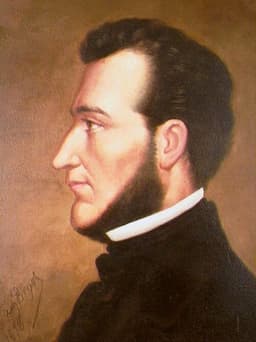
Francisco Morazan
General · Modern
58.0Total
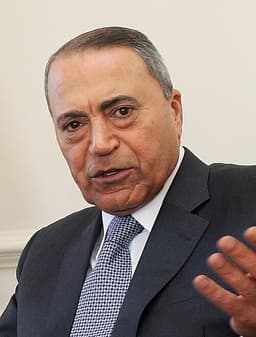
Marouf al-Bakhit
General · Modern
41.6Total
Basic Information
Born
1792
1947
Died
1842
—
Era
Modern
Modern
Nationality
Honduras
Jordan
Occupation
General
General
Civilization
Western
Middle Eastern
Score Comparison
Military (10%)
52.5
10.2
Political (20%)
60.0
61.3
Influence (20%)
62.0
48.6
Legacy (20%)
50.0
38.3
Leadership (15%)
68.0
40.0
Strategy (15%)
55.0
36.8
TOTAL
58.0
41.6
Francisco Morazan — Complete Timeline
1824 AD
Abolition of slavery in Central AmericaReform◆ Major
As a key leader in the liberal movement, Moraz
AbolitionSlaveryLiberal Reform
Impact: regionalprogressive
1827 AD
Battle of La TrinidadWar◆ Major
Morazán led a liberal army to victory against conservative forces at La Trinidad, Honduras. This battle was a key turning point in the Central American civil war, allowing Morazán to consolidate power and eventually become president of the federation.
BattleLiberal VictoryCivil War
Impact: regional
1830 AD
Presidency of the Federal Republic of Central AmericaPolitical Action
Morazán was elected president of the Federal Republic of Central America, a union of Guatemala, El Salvador, Honduras, Nicaragua, and Costa Rica. He pursued liberal reforms including separation of church and state, free trade, and land reform, facing opposition from conservatives.
Federal RepublicLiberal ReformsCentral America
Impact: regionalconstructive
1842 AD
Execution by firing squadPolitical Action
After a failed attempt to restore the Federal Republic, Moraz
ExecutionEnd of FederationLiberal Defeat
Impact: regionaltragic
Marouf al-Bakhit — Complete Timeline
2005 AD
Appointed Prime Minister of JordanPolitical Action◆ Major
King Abdullah II appointed Marouf al-Bakhit as Prime Minister of Jordan in November 2005, following the 2005 Amman bombings. Al-Bakhit, a former intelligence chief, was tasked with restoring security and stability.
JordanPrime MinisterAppointment
Impact: national
2007 AD
Resigned as Prime MinisterPolitical Action
Marouf al-Bakhit resigned as Prime Minister of Jordan in November 2007 after parliamentary elections. His resignation followed criticism of economic policies and political reforms.
JordanPrime MinisterResignation
Impact: national
2011 AD
Appointed Prime Minister for Second TermPolitical Action◆ Major
King Abdullah II appointed Marouf al-Bakhit as Prime Minister again in February 2011, during the Arab Spring protests. Al-Bakhit was tasked with implementing political reforms to address public demands.
JordanArab SpringPrime Minister
Impact: national
Resigned as Prime Minister for Second TermPolitical Action
Marouf al-Bakhit resigned as Prime Minister in October 2011, after failing to satisfy protesters' demands for faster political reforms. His resignation marked the end of his second term.
JordanArab SpringResignation
Impact: national
Expert Analysis
Francisco Morazan vs Marouf al-Bakhit
# The General as Statesman: Two Paths of Power in Turbulent Times
On a November morning in 2005, a Jordanian general named Marouf al-Bakhit stepped into the prime minister’s office in Amman, tasked with restoring order after al-Qaeda bombings had shattered the capital’s hotels. Across the Atlantic and a century earlier, another general—Francisco Morazán—rode into Guatemala City in 1830, hailed as the liberator of Central America from conservative tyranny. Both men were soldiers who became political leaders in moments of national crisis. Yet one would die before a firing squad, his dream of a united isthmus crumbling with him, while the other would twice resign the premiership, leaving behind a stable kingdom. What separates the victor from the martyr? The answer lies not in their courage, but in the worlds they inhabited.
Origins
Marouf al-Bakhit was born in 1947 into a Jordan of fragile borders and dynastic rule. The Hashemite monarchy, planted by British mandate, had survived wars and assassinations by balancing tribal loyalties, Western patronage, and a growing Palestinian population. Young al-Bakhit joined the military, rising through intelligence—a world of shadows, where survival meant reading the room before acting. His Jordan was a small state hemmed in by larger neighbors, where power flowed from the palace, not the ballot box.
Francisco Morazán, born in 1792 in Spanish Honduras, came of age in a different storm. The collapse of Spanish rule had left Central America a patchwork of provinces, each with its own caudillos, its own grudges. Morazán was a child of the Enlightenment, devouring Rousseau and Voltaire in a region still ruled by church and landed oligarchy. Where al-Bakhit learned discretion, Morazán learned ideology. His world was not a kingdom but a vacuum, where a man with a sword and a vision could remake nations.
Rise to Power
Al-Bakhit’s ascent was quiet, bureaucratic. He served as director of General Intelligence for years, a man who knew the kingdom’s secrets. When King Abdullah II needed a steady hand after the 2005 Amman bombings, he turned to this general who had never commanded an army in battle but had mastered the art of surveillance—a skill more valuable than any cavalry charge in modern Jordan.
Morazán’s rise was the stuff of epic. In 1827, at the Battle of La Trinidad, he led a ragged liberal army against conservative forces and won through sheer tactical daring. He was thirty-five, charismatic, and utterly convinced that Central America could be a single republic—free, secular, and progressive. By 1830, he was president of the Federal Republic, having conquered his way to power with the sword of a liberator and the pen of a reformer.
Leadership & Governance
As prime minister, al-Bakhit governed not through grand vision but through crisis management. His first term (2005–2007) focused on security after the bombings: cracking down on extremists while trying to soothe public anger. He was a manager, not a reformer. When protests erupted in 2011 during the Arab Spring, the king recalled him—but al-Bakhit’s response was to offer slow, cautious change. He raised salaries, promised political reforms, but moved at the pace of a man who knew that in Jordan, the monarchy was the only real power. His leadership score of 77.9 reflects competence, not inspiration.
Morazán governed as a revolutionary. He abolished slavery in 1824, secularized education, reduced church power, and promoted free trade. He was a liberal firebrand in a conservative age, believing that laws could transform societies. But his political score of 72.0 belies a fatal flaw: he governed by decree, alienating the very regions he sought to unite. Where al-Bakhit bowed to the king, Morazán bowed to no one—and that pride would undo him.
Triumph & Tragedy
Al-Bakhit’s triumph was survival. He navigated Jordan through the 2005 bombings and the 2011 protests without the state collapsing. His tragedy was irrelevance: he resigned in 2007 after elections, and again in 2011, unable to satisfy protesters who wanted real democracy. He was a placeholder, not a shaper of history.
Morazán’s triumph was breathtaking: he held the Federal Republic together for nearly a decade, a union of five states that had never agreed on anything. His tragedy was total. In 1842, after a failed attempt to restore the republic, he was captured in Costa Rica and executed by firing squad. He died shouting, “I am not ashamed of my principles.”
Character & Destiny
Al-Bakhit’s character was molded by the intelligence service: cautious, loyal, pragmatic. He saw politics as a series of problems to be managed, not a crusade. His destiny was to serve a king who held all the cards. Morazán’s character was that of the romantic revolutionary: brave, brilliant, but blind to the limits of force. He believed that if he could just win one more battle, the republic would hold. It never did.
The difference between them is the difference between a man who reads the room and a man who tries to rebuild it. Al-Bakhit understood that Jordan’s stability depended on the monarchy; Morazán believed that Central America’s future depended on him.
Legacy
Today, al-Bakhit is largely forgotten outside Jordan—a footnote in a stable kingdom. His legacy score of 50.0 reflects a life of service without transformation. Morazán, with a legacy of 68.9, is a different story. He is a national hero in Honduras, his face on currency, his name on streets. He failed, but his dream of a united Central America still haunts the region.
Conclusion
Standing at the end of their stories, one sees two generals who took power in times of chaos. Al-Bakhit chose order; Morazán chose vision. One died in bed, the other before a firing squad. But the question lingers: which man truly served his people better? The one who kept the peace, or the one who died for a dream? Perhaps the answer is as unstable as the lands they governed—a reminder that history judges not by intentions, but by the world we leave behind.
Rankings
🥇
Francisco MorazanLeader
Mil: 52.5Pol: 60.0Inf: 62.0
58.0
🥈
Marouf al-Bakhit
Mil: 10.2Pol: 61.3Inf: 48.6
41.6
+16.4 behind
How This Comparison Works
Algorithm
Each figure is scored on 6 dimensions (0—100 scale) based on structured historical data: Military (10%), Political (20%), Influence (20%), Legacy (20%), Leadership (15%), Strategy (15%). The weighted total produces the final ranking.
Data Sources
Scores are computed from structured sub-indicators in the database. Scale factors adjust for era (Ancient ×0.85, Modern ×1.0) and civilization size (Eastern ×1.05, Other ×0.80) to account for differences in population and military scale.
Maximum 3 Figures
Comparisons are limited to 2—3 figures to ensure readability and statistical meaningfulness.
Error Margins
±5 points per dimension — Sub-scores are derived from historical records with inherent uncertainty. Two figures within 5 points on a dimension should be considered roughly equivalent in that area.
Total Score Accuracy
±3 points overall — The weighted combination of 6 dimensions produces a total score with approximately ±3 points of uncertainty. Differences of less than 3 points are not statistically significant— the figures are effectively tied.
Known Limitations
- Historical records are incomplete and uneven across civilizations
- Figures from oral-tradition societies may be underrepresented
- Occupation labels can misclassify multi-role figures
- Scores measure capability and impact, not moral character
- Quantitative scoring is a comparison tool, not absolute truth
Capability Radar
Military (10%) — Battles & Warfare
Battles
55
5
Win Rate
60
5
Expansion
40
5
Political (20%) — Governance & Reform
Reform
70
30
Diplomacy
45
40
Economy
50
30
Influence (20%) — Cultural & Global Reach
Cultural
45
10
Global
35
10
Legacy (20%) — Historical Impact
Historical
50
10
Longevity
40
10
Leadership (15%) — Power & Stability
Tenure
55
40
Stability
30
35
Strategy (15%) — Tactics & Innovation
Strategy
55
10
Tactics
50
10
Reform
45
10
Similar Comparisons
Comments & Discussion
CuneiformJoe6/16/2026
Morazán was the last gasp of the Enlightenment general—quoting Rousseau while charging with a saber. Al-Bakhit is the postmodern officer: silent, efficient, wears a suit, and knows the CIA’s number by heart. One believed in the power of ideas, the other in the power of networks. That’s why Morazán is a tragic hero in textbooks and al-Bakhit is a footnote in cables.
乡土史学家6/16/2026
我跑过中美洲的乡村档案馆,当地老人说起Morazán时眼里有光,因为他确实废除了教会什一税,让农民少交了一份钱。al-Bakhit呢?他在约旦山村里没留下任何口头传说。一个是被诅咒的理想主义者,一个是称职的官僚。历史记住的不是谁更成功,而是谁的故事更好听。
SergeantWriter6/16/2026
Look at the body count difference. Morazán died in front of a squad because he tried to build a nation without the army’s permission. Al-Bakhit resigned twice and is still alive because he understood the first rule of military politics: never threaten the throne. Morazán was a better general, but al-Bakhit was a smarter survivor. Call it the choice between a martyr’s statue and a pension.
数据判官6/16/2026
数据不会撒谎:Morazán统治了十年中央联邦,GDP增长率接近零,内战不断;al-Bakhit在2005-2007年担任首相期间,约旦GDP年均增长6.8%。Morazán的“解放”只是换了批贵族掌权,al-Bakhit至少带来了公路、学校和稳定的货币。所谓英雄,往往是统计报表上最难看的那个。
StoneridgeScholar6/16/2026
Both were reactionaries dressed as reformers. Morazán centralized power under a liberal elite that looked just like the old colonial class, just spoke Spanish instead of Latin. Al-Bakhit cracked down on Islamists with preemptive arrests before they even planned a protest. Neither actually trusted ordinary people to think for themselves. The difference? One failed spectacularly, the other failed quietly.