Loading...
Marouf al-Bakhit vs Saladin
Saladin leads by 22.5 pts · 2 figures compared
…
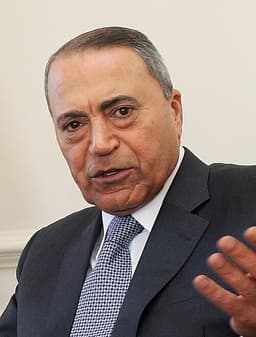
Marouf al-Bakhit
General · Modern
41.6Total
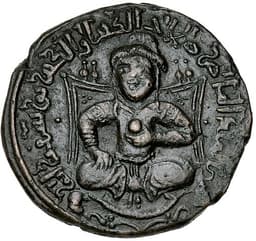
Saladin
General · Medieval
64.1Total
Basic Information
Born
1947
1137
Died
—
1193
Era
Modern
Medieval
Nationality
Jordan
Ayyubid Sultanate
Occupation
General
General
Civilization
Middle Eastern
Middle Eastern
Score Comparison
Military (10%)
10.2
75.0
Political (20%)
61.3
69.6
Influence (20%)
48.6
65.2
Legacy (20%)
38.3
52.0
Leadership (15%)
40.0
62.0
Strategy (15%)
36.8
76.0
TOTAL
41.6
64.1
Marouf al-Bakhit — Complete Timeline
2005 AD
Appointed Prime Minister of JordanPolitical Action◆ Major
King Abdullah II appointed Marouf al-Bakhit as Prime Minister of Jordan in November 2005, following the 2005 Amman bombings. Al-Bakhit, a former intelligence chief, was tasked with restoring security and stability.
JordanPrime MinisterAppointment
Impact: national
2007 AD
Resigned as Prime MinisterPolitical Action
Marouf al-Bakhit resigned as Prime Minister of Jordan in November 2007 after parliamentary elections. His resignation followed criticism of economic policies and political reforms.
JordanPrime MinisterResignation
Impact: national
2011 AD
Appointed Prime Minister for Second TermPolitical Action◆ Major
King Abdullah II appointed Marouf al-Bakhit as Prime Minister again in February 2011, during the Arab Spring protests. Al-Bakhit was tasked with implementing political reforms to address public demands.
JordanArab SpringPrime Minister
Impact: national
Resigned as Prime Minister for Second TermPolitical Action
Marouf al-Bakhit resigned as Prime Minister in October 2011, after failing to satisfy protesters' demands for faster political reforms. His resignation marked the end of his second term.
JordanArab SpringResignation
Impact: national
Saladin — Complete Timeline
1187 AD
Battle of HattinWar
Saladin's forces defeated the Crusader army at Hattin, near Tiberias. He captured King Guy of Jerusalem and the True Cross relic. The victory decimated the Crusader military and opened the way for the recapture of Jerusalem.
BattleCrusadesVictory
Impact: regional
Recapture of JerusalemWar
Saladin's army besieged and captured Jerusalem from the Crusaders after 88 years of Christian rule. He allowed the inhabitants to leave peacefully or be ransomed, contrasting with the Crusaders' massacre in 1099. This event triggered the Third Crusade.
ConquestJerusalemCrusades
Impact: global
1189 AD
Siege of AcreWar◆ Major
Saladin faced a prolonged siege of Acre by Crusader forces under Richard the Lionheart and Philip Augustus. After nearly two years, the city fell to the Crusaders. Saladin's inability to relieve the siege was a major setback.
SiegeCrusadesDefeat
Impact: regional
1191 AD
Battle of ArsufWar◆ Major
Saladin's forces attacked Richard the Lionheart's army marching south from Acre. Richard's disciplined infantry repelled the attacks, inflicting heavy losses on Saladin's troops. The battle ended in a tactical Crusader victory, but Saladin's army remained intact.
BattleCrusadesRichard the Lionheart
Impact: regional
1192 AD
Treaty of RamlaPolitical Action◆ Major
Saladin and Richard the Lionheart signed the Treaty of Ramla, ending the Third Crusade. The treaty granted Crusaders control of a coastal strip from Jaffa to Acre, while Muslims retained Jerusalem. Christian pilgrims were allowed access to holy sites.
TreatyCrusadesDiplomacy
Impact: regional
Expert Analysis
Saladin vs Marouf al-Bakhit
# The Sultan and the Spy: Two Men Who Shaped the Middle East
In the summer of 1187, Saladin stood before the walls of Jerusalem, a city that had been in Christian hands for nearly nine decades. He could have ordered a massacre—the Crusaders had done exactly that when they took the city in 1099—but instead he offered terms of surrender, allowed ransoms for the poor, and walked through the gates to pray. Eight centuries later, in the spring of 2011, Marouf al-Bakhit sat in his office in Amman, watching protests swell in the streets below. He had been appointed prime minister of Jordan just weeks before, tasked with calming a nation shaken by the Arab Spring. Where Saladin had united a fractured region through war and chivalry, al-Bakhit would try to hold a fragile kingdom together through intelligence and compromise. Both were generals, both were Middle Eastern leaders, but their worlds could not have been more different—and their fates reflect the chasm between medieval glory and modern survival.
Origins
Saladin was born in 1137 in Tikrit, present-day Iraq, into a Kurdish family that served the Zengid dynasty. His father, Najm ad-Din Ayyub, was a military commander, and his uncle Shirkuh was a legendary warrior. The young Saladin grew up in a world of shifting alliances, where Sunni and Shia factions vied for power, and Crusader states clung to the Levantine coast. He was educated in Islamic law and military arts, but he was also a man of deep piety, reciting the Quran and studying theology. His era was one of holy war—jihad—and the memory of the First Crusade’s atrocities still burned in Muslim memory.
Marouf al-Bakhit was born in 1947 in Mahis, Jordan, a small town west of Amman. His family was of modest means, and he rose through the ranks of the Jordanian military and intelligence services. He earned a PhD in political science from the University of Southern California in 1990, a degree that gave him a Western education but also a deep understanding of the security state. His era was one of nation-building, Cold War tensions, and later, the rise of Islamist extremism. Where Saladin faced crusaders from Europe, al-Bakhit faced suicide bombers and political protesters. The difference in their origins—one born into a world of empires and faith, the other into a world of borders and intelligence files—shaped everything that followed.
Rise to Power
Saladin did not seize power through a coup. He rose as a loyal lieutenant to Nur ad-Din, the Zengid ruler who dreamed of uniting Syria and Egypt against the Crusaders. In 1169, Saladin was sent to Egypt to support the faltering Fatimid Caliphate, and he quickly proved his military skill. When the Fatimid vizier died, Saladin was appointed his successor—and then, when Nur ad-Din died in 1174, Saladin declared independence. He spent the next decade fighting fellow Muslims—the Zengids, the Assassins, and others—to unite Syria, Egypt, and Mesopotamia under his rule. His rise was a slow, bloody process of conquest and diplomacy, driven by a vision of Islamic unity.
Marouf al-Bakhit rose through the Jordanian General Intelligence Directorate (GID), the kingdom’s feared security service. He served as director of the GID from 1999 to 2005, during which he oversaw surveillance, counterterrorism, and the suppression of dissent. In November 2005, after al-Qaeda bombed three hotels in Amman, killing 60 people, King Abdullah II appointed al-Bakhit as prime minister. His job was to restore order, not to conquer. His rise was a reward for loyalty and efficiency, not for battlefield victories. The path to power for al-Bakhit was paved with files and phone taps, not swords and arrows.
Leadership & Governance
Saladin ruled as a sultan, combining military command with religious authority. He was known for his justice and mercy—after capturing Jerusalem, he allowed Christian inhabitants to leave with their belongings, a stark contrast to the Crusader massacre of 1099. He also reformed the tax system, built schools and mosques, and patronized scholars. But his leadership was tested most on the battlefield. At the Battle of Hattin in 1187, he lured the Crusader army into a waterless desert, then surrounded and destroyed them. He captured King Guy of Jerusalem and the True Cross, a relic that symbolized Christian power. His strategy was patient and cunning, relying on logistics and terrain rather than brute force.
Marouf al-Bakhit governed as a technocrat and security manager. During his first term from 2005 to 2007, he focused on economic reforms and fighting corruption, but his government was criticized for slow progress. When he returned to power in February 2011, during the Arab Spring, his mandate was to enact political reforms—but his instincts were those of a spy chief. He offered concessions, such as a new election law, but he also cracked down on protests, using the security apparatus he knew so well. His political score of 63.0 reflects his ability to navigate Jordan’s tribal and political landscape, but his military score of just 19.9 shows how far he was from Saladin’s world. Al-Bakhit’s governance was about survival, not conquest.
Triumph & Tragedy
Saladin’s greatest triumph was the recapture of Jerusalem in 1187, a moment that echoed across the Islamic world and beyond. He had achieved what no Muslim leader had done in nearly a century: unite the fractured Near East and strike at the heart of the Crusader states. But his tragedy came during the Third Crusade, when he faced Richard the Lionheart. At the Siege of Acre in 1189-1191, Saladin’s forces were worn down by a relentless Crusader assault, and the city fell after two years. At the Battle of Arsuf in 1191, Richard’s disciplined infantry repelled Saladin’s cavalry, proving that the Crusaders could still win in open battle. The Treaty of Ramla in 1192 ended the war, leaving the Crusaders with a coastal strip—a compromise that Saladin accepted but never celebrated.
Marouf al-Bakhit’s triumphs were quieter: he prevented Jordan from descending into the chaos that engulfed Syria and Egypt during the Arab Spring. He maintained stability, kept the security forces intact, and avoided a civil war. But his tragedy was that he failed to satisfy the protesters’ demands for faster political reform. In October 2011, he resigned for the second time, his reputation tarnished by accusations of authoritarianism. His legacy score of 50.0 reflects this ambiguity—he was neither a hero nor a villain, but a man who held the line at a terrible cost.
Character & Destiny
Saladin was a man of deep faith, but also of pragmatism. He could be ruthless—he executed Reynald de Châtillon, a Crusader lord who had attacked Muslim caravans—but he also showed mercy, sparing the lives of civilians in Jerusalem. His character was shaped by the ideals of chivalry, which he shared with his enemy Richard the Lionheart. Their mutual respect, captured in stories of gift-giving and negotiations, has become legendary. Saladin’s destiny was to be remembered as a unifier and a liberator, a man who transcended his era.
Marouf al-Bakhit was a man of the security state, shaped by the cold logic of intelligence work. He was loyal to the monarchy, distrustful of popular movements, and convinced that stability required control. His character was not shaped by chivalry but by pragmatism—he did what was necessary to keep Jordan intact. His destiny was to be a footnote in history, a prime minister who served twice but changed little. The difference between them is the difference between a sultan who changed the world and a spy who held it together.
Legacy
Saladin’s legacy is vast. He is remembered as a hero in the Muslim world, a symbol of resistance against foreign invasion. His name adorns streets, schools, and even a fortress in Cairo. His chivalry has become a model for leadership, and his recapture of Jerusalem remains a touchstone of Islamic identity. His total score of 73.5 reflects his enduring influence, even if his empire crumbled after his death.
Marouf al-Bakhit’s legacy is smaller. He is remembered, if at all, as a caretaker prime minister during a turbulent time. His reforms were modest, his security methods controversial. He did not unite a region or capture a holy city; he kept a small kingdom stable. His total score of 56.3 places him in the shadows of history.
Conclusion
Standing on the walls of Jerusalem in 1187, Saladin saw a city that would define his legacy. Eight centuries later, Marouf al-Bakhit saw protests that would define his. Both were generals, both were Middle Eastern leaders, but their worlds were galaxies apart. Saladin’s era allowed for glory, conquest, and chivalry; al-Bakhit’s demanded compromise, surveillance, and survival. The difference between them is not just one of time—it is a reminder that history writes its heroes not from their intentions, but from the opportunities their age provides.
Rankings
🥇
SaladinLeader
Mil: 75.0Pol: 69.6Inf: 65.2
64.1
🥈
Marouf al-Bakhit
Mil: 10.2Pol: 61.3Inf: 48.6
41.6
+22.5 behind
How This Comparison Works
Algorithm
Each figure is scored on 6 dimensions (0—100 scale) based on structured historical data: Military (10%), Political (20%), Influence (20%), Legacy (20%), Leadership (15%), Strategy (15%). The weighted total produces the final ranking.
Data Sources
Scores are computed from structured sub-indicators in the database. Scale factors adjust for era (Ancient ×0.85, Modern ×1.0) and civilization size (Eastern ×1.05, Other ×0.80) to account for differences in population and military scale.
Maximum 3 Figures
Comparisons are limited to 2—3 figures to ensure readability and statistical meaningfulness.
Error Margins
±5 points per dimension — Sub-scores are derived from historical records with inherent uncertainty. Two figures within 5 points on a dimension should be considered roughly equivalent in that area.
Total Score Accuracy
±3 points overall — The weighted combination of 6 dimensions produces a total score with approximately ±3 points of uncertainty. Differences of less than 3 points are not statistically significant— the figures are effectively tied.
Known Limitations
- Historical records are incomplete and uneven across civilizations
- Figures from oral-tradition societies may be underrepresented
- Occupation labels can misclassify multi-role figures
- Scores measure capability and impact, not moral character
- Quantitative scoring is a comparison tool, not absolute truth
Capability Radar
Military (10%) — Battles & Warfare
Battles
5
78
Win Rate
5
72
Expansion
5
82
Political (20%) — Governance & Reform
Reform
30
68
Diplomacy
40
88
Economy
30
65
Influence (20%) — Cultural & Global Reach
Cultural
10
85
Global
10
78
Legacy (20%) — Historical Impact
Historical
10
82
Longevity
10
80
Leadership (15%) — Power & Stability
Tenure
40
75
Stability
35
70
Strategy (15%) — Tactics & Innovation
Strategy
10
85
Tactics
10
80
Reform
10
70
Similar Comparisons
Comments & Discussion
数据拆弹手6/16/2026
把萨拉丁和巴希特放一起比?这根本是拿米开朗基罗和街头涂鸦比。萨拉丁围城战动辄数万人命,巴希特治下的约旦人口才六百万,GDP还没中世纪十字军东征的军费高。历史语境差了一千年,变量完全不同。除非你能控制科技、经济、教派结构这些变量,否则这种比较就是伪命题。
Classics Scholar6/16/2026
Saladin's chivalrous capture of Jerusalem in 1187 is celebrated, but let's not forget his brutal campaigns against fellow Muslims in Syria and Egypt. He united the region through warfare, not poetry. Al-Bakhit, as a former intelligence chief, understood that modern statecraft is about survival, not glory. Saladin could afford to be magnanimous after victory; al-Bakhit faced a daily struggle where there were no winners, only survivors.
春秋笔法6/16/2026
萨拉丁的"宽容"本质是政治表演,就跟现在中东强人搞的"开明独裁"一样。他放走十字军俘虏时,早就把耶路撒冷的财宝运走了。巴希特倒是实在人,情报总监出身,知道约旦就是个火药桶上的小舢板,他用的是镇压+收买的老套路。萨拉丁能打出一个帝国,巴希特只能守住一条国境线——别把枭雄和管家混为一谈。
Revisionist Critic6/16/2026
Comparing a Kurdish sultan who massacred Templars at Hattin to an intelligence chief who crushed Jordan's Muslim Brotherhood? The only link is the Arab Spring's romantic myth-making. Saladin's 'unity' narrative was crafted centuries later by Arab nationalists. Al-Bakhit's tactics—surveillance, media control, foreign aid—are the dull tools of a modern autocrat. One built a legend on horseback, the other on a PowerPoint. Stop the hero worship.
Chronicler52036/16/2026
Saladin wasn't just a conqueror; he was a master of psychological warfare. Offering Jerusalem terms instead of slaughter wasn't mercy—it was strategy. He knew that brutality would fuel future Crusades, while clemency made him a legend in European courts. Meanwhile, al-Bakhit's intelligence background made him a shadow operator in a kingdom that survives by playing all sides. Saladin built a legacy; al-Bakhit just held a ticking time bomb.