Loading...
Marouf al-Bakhit vs Ranoji Scindia
Ranoji Scindia leads by 15.4 pts · 2 figures compared
…
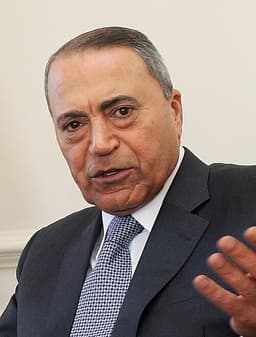
Marouf al-Bakhit
General · Modern
41.6Total
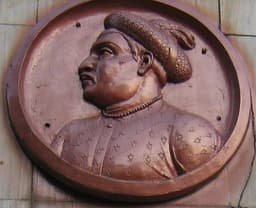
Ranoji Scindia
General · Modern
57.0Total
Basic Information
Born
1947
1700
Died
—
1745
Era
Modern
Modern
Nationality
Jordan
India
Occupation
General
General
Civilization
Middle Eastern
Indian
Score Comparison
Military (10%)
10.2
50.0
Political (20%)
61.3
54.7
Influence (20%)
48.6
58.0
Legacy (20%)
38.3
54.0
Leadership (15%)
40.0
65.0
Strategy (15%)
36.8
60.0
TOTAL
41.6
57.0
Marouf al-Bakhit — Complete Timeline
2005 AD
Appointed Prime Minister of JordanPolitical Action◆ Major
King Abdullah II appointed Marouf al-Bakhit as Prime Minister of Jordan in November 2005, following the 2005 Amman bombings. Al-Bakhit, a former intelligence chief, was tasked with restoring security and stability.
JordanPrime MinisterAppointment
Impact: national
2007 AD
Resigned as Prime MinisterPolitical Action
Marouf al-Bakhit resigned as Prime Minister of Jordan in November 2007 after parliamentary elections. His resignation followed criticism of economic policies and political reforms.
JordanPrime MinisterResignation
Impact: national
2011 AD
Appointed Prime Minister for Second TermPolitical Action◆ Major
King Abdullah II appointed Marouf al-Bakhit as Prime Minister again in February 2011, during the Arab Spring protests. Al-Bakhit was tasked with implementing political reforms to address public demands.
JordanArab SpringPrime Minister
Impact: national
Resigned as Prime Minister for Second TermPolitical Action
Marouf al-Bakhit resigned as Prime Minister in October 2011, after failing to satisfy protesters' demands for faster political reforms. His resignation marked the end of his second term.
JordanArab SpringResignation
Impact: national
Ranoji Scindia — Complete Timeline
1726 AD
Appointed Subedar of MalwaPolitical Action◆ Major
Ranoji Scindia was appointed as the Maratha subedar of Malwa by Peshwa Baji Rao I. This gave him control over a large territory and laid the foundation for the Scindia dynasty of Gwalior.
Maratha EmpireMalwaScindia Dynasty
Impact: regionalconstructive
1737 AD
Battle of DelhiWar◆ Major
Ranoji Scindia participated in the Maratha raid on Delhi under Baji Rao I. The attack on the Mughal capital demonstrated Maratha power and led to the extraction of tribute.
Maratha-Mughal WarsDelhiRaid
Impact: national
1739 AD
Battle of VasaiWar
Ranoji Scindia fought alongside Malhar Rao Holkar in the siege of Vasai against the Portuguese. The victory ended Portuguese control in the Konkan region.
Maratha-Portuguese WarsSiegeKonkan
Impact: regional
1740 AD
Founded Gwalior as CapitalPolitical Action◆ Major
Ranoji Scindia established his capital at Gwalior, fortifying the Gwalior Fort and building a palace. This city became the center of Scindia power for over a century.
FoundingGwaliorScindia Dynasty
Impact: regionalconstructive
1745 AD
Death in BattleWar
Ranoji Scindia was killed in a battle against the Nizam of Hyderabad's forces near the Narmada River. His death occurred during a Maratha campaign to expand into the Deccan.
DeathBattleMaratha-Nizam Wars
Impact: regionaltragic
Expert Analysis
Marouf al-Bakhit vs Ranoji Scindia
# The General’s Two Destinies
On a dusty battlefield near the Narmada River in 1745, Ranoji Scindia fell, his blood soaking into the soil of a land he had spent two decades conquering. He died as he had lived—in combat, sword in hand, fighting for a Maratha empire that was still in its fiery adolescence. One hundred and sixty-two years later, in a quiet Amman office in 2005, Marouf al-Bakhit received a phone call from King Abdullah II, asking him to become Prime Minister of Jordan. He would serve, resign, and serve again, each time navigating not bullets and cavalry charges, but parliamentary motions and street protests. Two generals, two centuries, two worlds. Yet both men were defined by the same cruel paradox: the skills that make a great soldier are rarely the ones that make a great ruler.
Origins
Ranoji Scindia was born in 1700 into a humble Maratha family in the Deccan plateau. His world was one of constant warfare—the Mughal Empire was crumbling, the Marathas were rising, and opportunity lay in the saddle of a horse. He entered service under the young, brilliant Peshwa Baji Rao I, a man who dreamed of Maratha banners fluttering from Delhi to the Arabian Sea. Ranoji was not a Brahmin like his master, nor a hereditary noble; he was a grinder, a man who proved his worth in skirmishes and sieges.
Marouf al-Bakhit was born in 1947 in the Jordanian town of Mahis, into a different kind of turbulence. The Hashemite Kingdom was a fragile state carved from the collapse of the Ottoman Empire, surrounded by enemies and propped up by British alliances. He chose the military as a career, rising through the ranks of the Jordanian army and eventually becoming head of the General Intelligence Department—the feared Mukhabarat. His was a world of shadows, not open fields; of informants and interrogations, not cavalry charges.
Rise to Power
Ranoji’s ascent was forged in fire. In 1726, Peshwa Baji Rao I appointed him Subedar of Malwa, a vast province that had been under Mughal control. It was a grant of land, but more importantly, a grant of trust. Ranoji was given the task of extracting tribute, suppressing rebellions, and holding the frontier against the Nizam of Hyderabad. He did not inherit power; he seized it, region by region, fort by fort.
Al-Bakhit’s rise was quieter but no less decisive. His intelligence work earned him the trust of the royal family. In 2005, after the Amman bombings—a coordinated attack by Al-Qaeda on three hotels that killed 60 people—King Abdullah II needed a steady hand. Al-Bakhit was appointed Prime Minister, tasked with restoring security and confidence. He was not a conqueror; he was a stabilizer.
Leadership & Governance
As a ruler, Ranoji Scindia was a builder. In 1740, he established his capital at Gwalior, fortifying its ancient hill fort and constructing a palace that would become the seat of one of India’s most powerful dynasties. He governed through a mix of military coercion and political alliance, extracting revenue from villages and rewarding loyal chieftains. His style was personal, direct, and violent when necessary. He was a frontier lord in an age when frontiers were won by the sword.
Al-Bakhit governed through bureaucracy. As Prime Minister, he managed a cabinet, faced a parliament, and answered to a king. His first term (2005–2007) was marked by a focus on security and economic reform, but he was ultimately constrained by Jordan’s fragile political system—a monarchy that tolerated limited democracy. His second term, in 2011, came during the Arab Spring. Protesters demanded political freedoms, an end to corruption, and faster reforms. Al-Bakhit offered incremental change, but the streets wanted revolution. He could not deliver.
Triumph & Tragedy
Ranoji’s greatest moment came in 1737, when he participated in the Maratha raid on Delhi under Baji Rao I. The Maratha cavalry thundered into the Mughal capital, a psychological blow that shattered the illusion of Mughal invincibility. It was a triumph of mobility and daring. But his tragedy was his death, in 1745, cut down in battle against the Nizam’s forces. He died young, at 45, his dynasty barely founded.
Al-Bakhit’s triumph was survival—he kept Jordan stable through the 2005 bombings and the 2011 protests. But his tragedy was that stability came at the cost of progress. He resigned in 2007 after elections, and again in 2011, unable to satisfy either the king or the people. He was a general who never lost a battle, but who never won the peace.
Character & Destiny
Ranoji Scindia was a man of action, not reflection. His personality was forged in war: decisive, courageous, ruthless. He believed that power flowed from the barrel of a musket and the edge of a sword. His destiny was to found a dynasty that would rule Gwalior for two centuries, but his own life was cut short by the very violence he mastered.
Al-Bakhit was a man of caution. His career in intelligence taught him to see threats everywhere, to trust slowly, and to move carefully. He believed that stability was the highest good. But in a time of revolution, caution can look like cowardice. His destiny was to be a caretaker, not a founder; to manage decline, not to build empires.
Legacy
Ranoji Scindia is remembered as the founder of the Scindia dynasty, one of the great Maratha houses. His descendants would fight the British, rule Gwalior, and shape modern Indian politics. His name is carved into the stone of Gwalior Fort.
Marouf al-Bakhit is remembered, if at all, as a footnote in Jordan’s modern history—a general who served his king and his country, but who could not change its course. His legacy is the stability he preserved, but also the reforms he failed to enact.
Conclusion
What drove the difference between these two generals? The answer lies not in their character, but in their times. Ranoji Scindia lived in an age when a man could carve a kingdom from a horse and a sword. Marouf al-Bakhit lived in an age when power was negotiated, not seized; when generals became prime ministers, not kings. The skills that made Ranoji great—violence, ambition, risk-taking—would have destroyed al-Bakhit. The skills that made al-Bakhit effective—patience, discretion, caution—would have left Ranoji forgotten. Both were the right men for their times. And both were, in the end, prisoners of them.
Rankings
🥇
Ranoji ScindiaLeader
Mil: 50.0Pol: 54.7Inf: 58.0
57.0
🥈
Marouf al-Bakhit
Mil: 10.2Pol: 61.3Inf: 48.6
41.6
+15.4 behind
How This Comparison Works
Algorithm
Each figure is scored on 6 dimensions (0—100 scale) based on structured historical data: Military (10%), Political (20%), Influence (20%), Legacy (20%), Leadership (15%), Strategy (15%). The weighted total produces the final ranking.
Data Sources
Scores are computed from structured sub-indicators in the database. Scale factors adjust for era (Ancient ×0.85, Modern ×1.0) and civilization size (Eastern ×1.05, Other ×0.80) to account for differences in population and military scale.
Maximum 3 Figures
Comparisons are limited to 2—3 figures to ensure readability and statistical meaningfulness.
Error Margins
±5 points per dimension — Sub-scores are derived from historical records with inherent uncertainty. Two figures within 5 points on a dimension should be considered roughly equivalent in that area.
Total Score Accuracy
±3 points overall — The weighted combination of 6 dimensions produces a total score with approximately ±3 points of uncertainty. Differences of less than 3 points are not statistically significant— the figures are effectively tied.
Known Limitations
- Historical records are incomplete and uneven across civilizations
- Figures from oral-tradition societies may be underrepresented
- Occupation labels can misclassify multi-role figures
- Scores measure capability and impact, not moral character
- Quantitative scoring is a comparison tool, not absolute truth
Capability Radar
Military (10%) — Battles & Warfare
Battles
5
45
Win Rate
5
50
Expansion
5
55
Political (20%) — Governance & Reform
Reform
30
30
Diplomacy
40
45
Economy
30
35
Influence (20%) — Cultural & Global Reach
Cultural
10
30
Global
10
30
Legacy (20%) — Historical Impact
Historical
10
50
Longevity
10
55
Leadership (15%) — Power & Stability
Tenure
40
40
Stability
35
40
Strategy (15%) — Tactics & Innovation
Strategy
10
45
Tactics
10
40
Reform
10
35
Similar Comparisons
Comments & Discussion
Desert Dagger6/16/2026
I'm taking the side of Ranoji Scindia here, and here's why: Marouf al-Bakhit was a desk general who never faced a real cavalry charge. Scindia died sword in hand, building an empire from nothing but grit and Maratha horse. Bakhit's biggest challenge was a parliamentary motion? Please. Real generalship means bleeding for your soil, not shuffling papers in Amman. History remembers men who fell on battlefields, not those who resigned gracefully.
数据铁面6/16/2026
事实是:Ranoji Scindia在1745年阵亡时只控制了不到10万平方公里领土,而Marouf al-Bakhit管理的约旦近9万平方公里。但Sindia的战死数据有争议——马拉地史料说他死于战斗,英国殖民记录却暗示他可能是暗杀。炒作"战死神话"忽略了一个关键点:18世纪印度将军的阵亡率高达40%,活下来才是本事。Bakhit两度任相,在动荡中东活了74岁,这才是硬核生存能力。
历史老饕6/16/2026
我站Bakhit。你们浪漫化Sindia的战场死亡,但别忘了:1745年的马拉地联邦本质上是个掠夺集团,Sindia的"帝国建设"就是烧杀抢掠北方。Bakhit在2005年接任首相时,约旦正面临恐怖袭击威胁和难民潮,他靠军事背景稳住了安全部门。Sindia死后十年,马拉地就差点被阿富汗人打崩;Bakhit辞职后,约旦至今是中东稳定岛。战死容易,治国难,懂?
Revisionist Rage6/16/2026
Both generals were failures, just in different flavors. Scindia conquered territory that immediately fragmented after his death—classic Maratha overreach. Bakhit's "success" was managing Jordan's status as a Western client state, not building anything real. We fetishize Scindia's battlefield death while ignoring his strategic bankruptcy, and we praise Bakhit's stability while forgetting he crushed protests. The only honest verdict: one died for a fantasy empire, the other for a puppet kingdom.
Chronicler61046/16/2026
As a classics scholar, I see a mirror of Plutarch's parallel lives here. Ranoji Scindia embodies the Homeric ideal—Achilles choosing a short, glorious life over a long, obscure one. Marouf al-Bakhit represents Cicero's statesman: power through negotiation, not violence. Scindia's death on the Narmada is pure epic material, but Bakhit's quiet service in Amman? That's the unsung tragedy of modernity: the general as bureaucrat. Both are heroic, but one has poetry, the other only policy.