Loading...
Aulus Plautius vs Mark Antony
Mark Antony leads by 4.3 pts · 2 figures compared
…

Aulus Plautius
General · Ancient
51.3Total
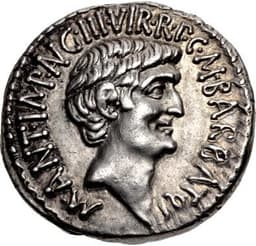
Mark Antony
General · Ancient
55.6Total
Basic Information
Born
-5
-83
Died
57
-30
Era
Ancient
Ancient
Nationality
Roman Empire
Roman Republic
Occupation
General
General
Civilization
Western
Western
Score Comparison
Military (10%)
82.0
85.0
Political (20%)
25.0
36.5
Influence (20%)
57.2
55.0
Legacy (20%)
50.0
58.0
Leadership (15%)
47.3
50.7
Strategy (15%)
55.0
58.0
TOTAL
51.3
55.6
Aulus Plautius — Complete Timeline
43 AD
Invasion of Britain (Aulus Plautius)War
Plautius commanded the Roman invasion force of four legions that landed in Britain. He defeated the local tribes led by Caratacus at the Battle of the Medway and the Battle of the Thames, establishing a bridgehead for Roman conquest.
Roman Conquest of BritainInvasionLegions
Impact: regional
Capture of CamulodunumWar◆ Major
Plautius captured the tribal capital of the Catuvellauni at Camulodunum (modern Colchester). This victory broke the main resistance in southeastern Britain and allowed the Romans to establish a fortified base and administrative center.
SiegeBritainCapital
Impact: regional
Appointment as First Governor of BritainPolitical Action◆ Major
Emperor Claudius appointed Plautius as the first Roman governor of the new province of Britannia. Plautius oversaw the initial organization of the province, including the establishment of a client kingdom for the Iceni and the construction of roads.
Provincial AdministrationClaudiusBritannia
Impact: regionalconstructive
47 AD
Ovation in RomeCultural
Plautius was granted an ovation (a lesser triumph) by Claudius for his conquest of Britain. He was the first Roman general to receive this honor for a campaign in Britain. The ovation included a procession and the display of captured spoils.
HonorTriumphClaudius
Impact: nationalconstructive
Mark Antony — Complete Timeline
42 BC
Battle of PhilippiWar◆ Major
Antony, as part of the Second Triumvirate, defeated the assassins of Caesar, Brutus and Cassius, at Philippi in Macedonia. The victory consolidated the Triumvirs' control over the Roman world.
Civil WarTriumvirateCaesar's Assassins
Impact: global
41 BC
Alliance with CleopatraPolitical Action◆ Major
Antony summoned Cleopatra to Tarsus and became her lover, forming a political and personal alliance. He used Egyptian resources for his Parthian campaign and later married her, alienating Octavian.
AllianceEgyptCleopatra
Impact: regional
34 BC
Donations of AlexandriaPolitical Action◆ Major
Antony granted Roman territories to Cleopatra and her children, including Caesarion, in a ceremony in Alexandria. This act was used by Octavian to portray Antony as a traitor to Rome.
Territorial GrantPropagandaEgypt
Impact: regionaldestructive
31 BC
Battle of ActiumWar
Antony and Cleopatra's fleet was decisively defeated by Octavian's navy under Agrippa at Actium in Greece. The defeat forced Antony to flee to Egypt, leading to his downfall.
Civil WarNaval BattleOctavian
Impact: globaltragic
30 BC
Suicide of Mark AntonyOther◆ Major
After Octavian's forces captured Alexandria, Antony attempted suicide by stabbing himself. He died in Cleopatra's arms, ending the civil war and paving the way for Octavian's sole rule.
DeathCivil WarEnd of Republic
Impact: globaltragic
Expert Analysis
Origins
Aulus Plautius, born around 15 BC into a prominent Roman senatorial family, rose through the ranks as a military commander under Emperor Claudius. His early career included service as suffect consul in AD 29 and as governor of Pannonia, where he gained experience in frontier warfare. Plautius was a loyal servant of the Julio-Claudian dynasty, known for his competence rather than political ambition.
Mark Antony, born in 83 BC into a plebeian family, was a distant relative of Julius Caesar. His father died when he was young, and he fell into debt before joining Caesar's staff in Gaul. Antony served as a cavalry commander and tribune, proving himself a capable lieutenant. His early life was marked by a lack of discipline but exceptional courage, which Caesar valued.
Rise to Power
Plautius's defining moment came in AD 43 when Claudius appointed him to lead the invasion of Britain. He commanded four legions (Legio II Augusta, IX Hispana, XIV Gemina, and XX Valeria Victrix) and auxiliary troops totaling about 40,000 men. The invasion faced initial resistance from the Catuvellauni under Caratacus and Togodumnus. Plautius defeated them at the Battle of the Medway, forcing a crossing of the River Medway in a two-day battle. He then advanced to the Thames, where he defeated the Britons again. After capturing Camulodunum (Colchester), he consolidated control over southeastern Britain. Claudius personally arrived to lead the final advance into Camulodunum, but Plautius had done the hard work.
Antony's rise was tied to Caesar. He served as tribune in 49 BC, vetoing measures against Caesar, and fled to join Caesar at the start of the civil war. He commanded Caesar's left wing at Pharsalus in 48 BC. After Caesar's assassination in 44 BC, Antony took control of the state as consul, but faced opposition from Octavian. He formed the Second Triumvirate with Octavian and Lepidus in 43 BC, proscribing enemies. At Philippi in 42 BC, Antony defeated the assassins Brutus and Cassius in two battles, securing the triumvirs' power.
Leadership & Governance
Plautius governed Britain as its first governor from AD 43 to 47. He focused on establishing Roman administration, building roads, and securing alliances with local tribes. He was pragmatic, allowing some British kings to remain as client rulers. His leadership style was methodical, emphasizing logistics and consolidation over risky advances. He did not seek personal glory, but diligently executed Claudius's orders.
Antony was a charismatic but erratic leader. As ruler of the East after Philippi, he governed through a combination of force and diplomacy. He reformed provincial administration but also alienated Roman elites by his alliance with Cleopatra. His Donations of Alexandria in 34 BC granted Roman territories to Cleopatra's children, a clear violation of Roman norms. Antony's leadership was driven by passion and ambition, leading to strategic errors. He scored 50.7 in leadership versus Plautius's 47.3, but his lack of political acumen (36.5) contrasts with Plautius's quiet competence.
Triumph & Tragedy
Plautius's triumph was the successful conquest of Britain, a feat that had eluded Caesar. He earned an ovation (lesser triumph) in AD 47, a rare honor. His tragedy is relative obscurity: despite his achievements, he is little remembered compared to figures like Agricola. He may have been overshadowed by Claudius's personal involvement.
Antony's greatest triumph was Philippi, where he defeated Caesar's murderers. He also expanded Roman influence in the East. His tragedy was Actium (31 BC), where he lost to Octavian due to poor strategy and Cleopatra's flight. He committed suicide in 30 BC, ending the civil war. Antony's legacy is marred by his portrayal as a traitor and lover, not a statesman.
Character & Destiny
Plautius was disciplined, loyal, and competent. He avoided political intrigue and focused on military duty. His destiny was to be a successful but secondary figure, a tool of Claudius's ambitions. His character ensured a quiet retirement after his recall.
Antony was bold, impulsive, and charismatic. His courage in battle was matched by his recklessness in politics. His fatal flaw was his infatuation with Cleopatra, which led him to prioritize personal desires over Roman interests. His destiny was a tragic fall from power, immortalized in literature. Historians like Plutarch note his generosity but also his lack of self-control.
Legacy
Plautius's legacy is the Roman province of Britain, which lasted for nearly 400 years. He established the foundations of Roman rule, including roads and towns. However, his personal legacy is minimal; he is known only to specialists.
Antony's legacy is immense as a symbol of passion and tragedy. He influenced Roman history by his role in the transition from Republic to Empire. His defeat paved the way for Augustus's principate. In culture, Antony and Cleopatra are iconic lovers. His military score of 85.0 is higher than Plautius's 82.0, and his total score of 55.6 exceeds Plautius's 51.3.
Conclusion
Mark Antony had greater historical impact due to his role in the civil wars that ended the Roman Republic and his enduring cultural legacy. While Plautius's conquest of Britain was strategically important, it did not change the course of Roman history as fundamentally as Antony's actions. Antony's military prowess (85.0) and influence (55.0) surpass Plautius's (82.0 and 57.2 respectively). The 4.3-point score gap reflects Antony's wider significance. Plautius was a competent general; Antony was a world-historical figure whose failures shaped the Empire.
Rankings
🥇
Mark AntonyLeader
Mil: 85.0Pol: 36.5Inf: 55.0
55.6
🥈
Aulus Plautius
Mil: 82.0Pol: 25.0Inf: 57.2
51.3
+4.3 behind
How This Comparison Works
Algorithm
Each figure is scored on 6 dimensions (0—100 scale) based on structured historical data: Military (10%), Political (20%), Influence (20%), Legacy (20%), Leadership (15%), Strategy (15%). The weighted total produces the final ranking.
Data Sources
Scores are computed from structured sub-indicators in the database. Scale factors adjust for era (Ancient ×0.85, Modern ×1.0) and civilization size (Eastern ×1.05, Other ×0.80) to account for differences in population and military scale.
Maximum 3 Figures
Comparisons are limited to 2—3 figures to ensure readability and statistical meaningfulness.
Error Margins
±5 points per dimension — Sub-scores are derived from historical records with inherent uncertainty. Two figures within 5 points on a dimension should be considered roughly equivalent in that area.
Total Score Accuracy
±3 points overall — The weighted combination of 6 dimensions produces a total score with approximately ±3 points of uncertainty. Differences of less than 3 points are not statistically significant— the figures are effectively tied.
Known Limitations
- Historical records are incomplete and uneven across civilizations
- Figures from oral-tradition societies may be underrepresented
- Occupation labels can misclassify multi-role figures
- Scores measure capability and impact, not moral character
- Quantitative scoring is a comparison tool, not absolute truth
Capability Radar
Military (10%) — Battles & Warfare
Battles
65
75
Win Rate
70
60
Expansion
75
70
Political (20%) — Governance & Reform
Reform
20
30
Diplomacy
50
70
Economy
30
40
Influence (20%) — Cultural & Global Reach
Cultural
40
65
Global
45
60
Legacy (20%) — Historical Impact
Historical
55
70
Longevity
50
65
Leadership (15%) — Power & Stability
Tenure
40
60
Stability
45
30
Strategy (15%) — Tactics & Innovation
Strategy
65
65
Tactics
60
70
Reform
30
30
Similar Comparisons
Comments & Discussion
No comments yet. Be the first to share your thoughts!