Loading...
Gnaeus Julius Agricola vs Mark Antony
Mark Antony leads by 3.1 pts · 2 figures compared
…
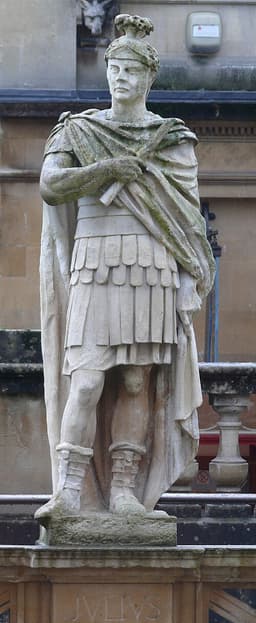
Gnaeus Julius Agricola
General · Ancient
52.5Total
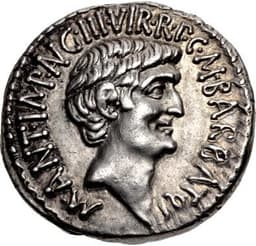
Mark Antony
General · Ancient
55.6Total
Basic Information
Born
40
-83
Died
93
-30
Era
Ancient
Ancient
Nationality
Roman Empire
Roman Republic
Occupation
General
General
Civilization
Western
Western
Score Comparison
Military (10%)
72.0
85.0
Political (20%)
35.1
36.5
Influence (20%)
54.1
55.0
Legacy (20%)
47.5
58.0
Leadership (15%)
61.1
50.7
Strategy (15%)
55.0
58.0
TOTAL
52.5
55.6
Gnaeus Julius Agricola — Complete Timeline
74 AD
Governorship of AquitaniaPolitical Action
Agricola was appointed governor of Aquitania, a Roman province in Gaul. He administered the province for three years, focusing on legal and financial reforms. This post prepared him for higher command and demonstrated his administrative skills.
Provincial AdministrationGaulCareer
Impact: regionalconstructive
78 AD
Conquest of the OrdovicesWar◆ Major
As governor of Britain, Agricola launched a campaign against the Ordovices tribe in northern Wales. He defeated them and then conquered the island of Anglesey, a stronghold of Druids and resistance, completing the Roman subjugation of Wales.
Roman BritainWalesMilitary Campaign
Impact: regional
83 AD
Battle of Mons GraupiusWar◆ Major
Agricola's army defeated a large Caledonian force led by Calgacus at Mons Graupius in northern Scotland. The Roman victory was decisive, but Agricola did not pursue the defeated tribes into the Highlands, leaving the conquest of Scotland incomplete.
BattleScotlandCaledonia
Impact: regional
Circumnavigation of BritainOther
Agricola ordered a Roman fleet to circumnavigate Britain, proving it was an island. The fleet sailed around the northern coast, encountering the Orkney Islands. This exploration provided valuable geographical knowledge and demonstrated Roman naval power.
ExplorationNavyGeography
Impact: regionalconstructive
Mark Antony — Complete Timeline
42 BC
Battle of PhilippiWar◆ Major
Antony, as part of the Second Triumvirate, defeated the assassins of Caesar, Brutus and Cassius, at Philippi in Macedonia. The victory consolidated the Triumvirs' control over the Roman world.
Civil WarTriumvirateCaesar's Assassins
Impact: global
41 BC
Alliance with CleopatraPolitical Action◆ Major
Antony summoned Cleopatra to Tarsus and became her lover, forming a political and personal alliance. He used Egyptian resources for his Parthian campaign and later married her, alienating Octavian.
AllianceEgyptCleopatra
Impact: regional
34 BC
Donations of AlexandriaPolitical Action◆ Major
Antony granted Roman territories to Cleopatra and her children, including Caesarion, in a ceremony in Alexandria. This act was used by Octavian to portray Antony as a traitor to Rome.
Territorial GrantPropagandaEgypt
Impact: regionaldestructive
31 BC
Battle of ActiumWar
Antony and Cleopatra's fleet was decisively defeated by Octavian's navy under Agrippa at Actium in Greece. The defeat forced Antony to flee to Egypt, leading to his downfall.
Civil WarNaval BattleOctavian
Impact: globaltragic
30 BC
Suicide of Mark AntonyOther◆ Major
After Octavian's forces captured Alexandria, Antony attempted suicide by stabbing himself. He died in Cleopatra's arms, ending the civil war and paving the way for Octavian's sole rule.
DeathCivil WarEnd of Republic
Impact: globaltragic
Expert Analysis
Origins
Gnaeus Julius Agricola was born in 40 AD in the Roman colony of Forum Julii (modern Fréjus, France) to a senatorial family. His father, Julius Graecinus, was a praetor executed under Caligula. Agricola was educated in Massilia and later in Rome, studying philosophy and law. He began his military career as a tribune in Britain under Suetonius Paulinus, gaining early experience in the province he would later govern.
Mark Antony was born in 83 BC in Rome to a distinguished plebeian family. His father, Marcus Antonius Creticus, was a praetor who died in Crete. His mother, Julia Antonia, was a distant cousin of Julius Caesar. Antony was raised in the shadow of his father's failures and his uncles' consulships. He fled to Greece to avoid debt, studying rhetoric and military tactics, before joining the staff of Aulus Gabinius in Syria.
Rise to Power
Agricola's rise was steady and bureaucratic. He served as quaestor in Asia under Salvius Titianus, then as tribune of the plebs and praetor in Rome. His appointment as governor of Aquitania (73-76 AD) showcased his administrative skills. Emperor Vespasian recognized his talents and, in 77 AD, made him governor of Britain, where he spent seven years expanding Roman control.
Antony's rise was meteoric and tied to Caesar. He served as a cavalry commander in Gaul and at the Battle of Alesia (52 BC). As tribune in 49 BC, he vetoed the senate's decree against Caesar and fled to Ravenna. He commanded the left wing at Pharsalus (48 BC) and became Caesar's master of horse. After Caesar's assassination, Antony rallied the Caesarians, forming the Second Triumvirate with Octavian and Lepidus in 43 BC. He defeated Brutus and Cassius at Philippi in 42 BC, securing his position.
Leadership & Governance
Agricola governed Britain with a blend of military force and Romanization. He built forts, roads, and towns, encouraged the adoption of Roman customs among Britons, and supported education for local elites. His administration was efficient, focusing on tax reform and justice. He scored 61.1 in leadership, reflecting his ability to command loyalty and maintain order.
Antony governed the East as a semi-autonomous ruler. He relied on client kings, especially Cleopatra, to administer Egypt and the eastern provinces. His Donations of Alexandria in 34 BC granted Roman territories to Cleopatra's children, alienating Roman senators. He was a charismatic leader but lacked the administrative discipline of Octavian. His political score of 36.5 reflects his inability to navigate Roman politics effectively.
Triumph & Tragedy
Agricola's greatest triumph was the conquest of the Ordovices in 77 AD and the subsequent Battle of Mons Graupius in 83 AD, where his 20,000 troops defeated a Caledonian army of 30,000 under Calgacus. He also ordered the circumnavigation of Britain, proving it was an island. His tragedy came after his recall to Rome in 85 AD; he lived in obscurity and possibly was poisoned by Domitian. He died in 93 AD at age 53, his achievements not fully exploited.
Antony's triumph was at Philippi, where he defeated the assassins of Caesar, avenging his mentor. He also secured the East and allied with Cleopatra, amassing wealth and resources. His tragedy was the defeat at Actium in 31 BC, where his fleet was routed by Agrippa. He fled to Egypt, and his subsequent suicide ended his ambitions. His political miscalculations, including the Donations of Alexandria, turned Rome against him.
Character & Destiny
Agricola was disciplined, modest, and loyal to the empire. He avoided political intrigue, which may have cost him a larger role. Tacitus, his son-in-law, portrays him as the ideal Roman general: competent, just, and dutiful. His fate was to be overshadowed by Domitian's jealousy.
Antony was impulsive, charismatic, and driven by passion. He was a brilliant orator and soldier but lacked strategic restraint. His affair with Cleopatra and his focus on the East alienated the Roman elite. His character led to his downfall, as he could not match Octavian's cold calculation.
Legacy
Agricola's legacy is primarily historical. His campaigns in Britain laid the groundwork for Roman rule that lasted until 410 AD. Tacitus's biography, the 'Agricola', is a key source on Roman Britain. He scored 47.5 in legacy, reflecting his limited long-term impact beyond the province.
Antony's legacy is immense. He was a central figure in the transition from Republic to Empire. His defeat at Actium allowed Octavian to become Augustus. His relationship with Cleopatra became a cultural archetype. Shakespeare's 'Antony and Cleopatra' immortalized him. He scored 58.0 in legacy, higher than Agricola.
Conclusion
Mark Antony had a greater impact on world history than Agricola. With a total score of 55.6 versus Agricola's 52.5, Antony's actions directly shaped the rise of the Roman Empire. Agricola was a competent governor and general, but his influence was confined to Britain. Antony's political and military maneuvers, though flawed, determined the course of Roman history for centuries.
Rankings
🥇
Mark AntonyLeader
Mil: 85.0Pol: 36.5Inf: 55.0
55.6
🥈
Gnaeus Julius Agricola
Mil: 72.0Pol: 35.1Inf: 54.1
52.5
+3.1 behind
How This Comparison Works
Algorithm
Each figure is scored on 6 dimensions (0—100 scale) based on structured historical data: Military (10%), Political (20%), Influence (20%), Legacy (20%), Leadership (15%), Strategy (15%). The weighted total produces the final ranking.
Data Sources
Scores are computed from structured sub-indicators in the database. Scale factors adjust for era (Ancient ×0.85, Modern ×1.0) and civilization size (Eastern ×1.05, Other ×0.80) to account for differences in population and military scale.
Maximum 3 Figures
Comparisons are limited to 2—3 figures to ensure readability and statistical meaningfulness.
Error Margins
±5 points per dimension — Sub-scores are derived from historical records with inherent uncertainty. Two figures within 5 points on a dimension should be considered roughly equivalent in that area.
Total Score Accuracy
±3 points overall — The weighted combination of 6 dimensions produces a total score with approximately ±3 points of uncertainty. Differences of less than 3 points are not statistically significant— the figures are effectively tied.
Known Limitations
- Historical records are incomplete and uneven across civilizations
- Figures from oral-tradition societies may be underrepresented
- Occupation labels can misclassify multi-role figures
- Scores measure capability and impact, not moral character
- Quantitative scoring is a comparison tool, not absolute truth
Capability Radar
Military (10%) — Battles & Warfare
Battles
65
75
Win Rate
70
60
Expansion
75
70
Political (20%) — Governance & Reform
Reform
45
30
Diplomacy
50
70
Economy
40
40
Influence (20%) — Cultural & Global Reach
Cultural
35
65
Global
30
60
Legacy (20%) — Historical Impact
Historical
55
70
Longevity
40
65
Leadership (15%) — Power & Stability
Tenure
55
60
Stability
50
30
Strategy (15%) — Tactics & Innovation
Strategy
72
65
Tactics
68
70
Reform
30
30
Similar Comparisons
Comments & Discussion
No comments yet. Be the first to share your thoughts!