Loading...
Jiang Wei vs Mark Antony
Mark Antony leads by 2.1 pts · 2 figures compared
…

Jiang Wei
General · Ancient
53.5Total
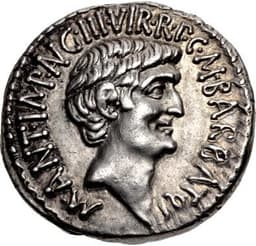
Mark Antony
General · Ancient
55.6Total
Basic Information
Born
202
-83
Died
264
-30
Era
Ancient
Ancient
Nationality
China
Roman Republic
Occupation
General
General
Civilization
Eastern
Western
Score Comparison
Military (10%)
70.0
85.0
Political (20%)
35.1
36.5
Influence (20%)
55.7
55.0
Legacy (20%)
50.0
58.0
Leadership (15%)
54.2
50.7
Strategy (15%)
66.3
58.0
TOTAL
53.5
55.6
Jiang Wei — Complete Timeline
234 AD
Became successor to Zhuge LiangPolitical Action◆ Major
After Zhuge Liang's death, Jiang Wei was appointed as the commander of Shu Han's military forces, tasked with continuing the Northern Expeditions against Wei. He was given command of the remaining troops.
Shu HanZhuge LiangSuccession
Impact: nationalconstructive
238 AD
Led the first Northern ExpeditionWar
Jiang Wei launched his first major campaign against Wei, attacking the Wei-held territories of Longxi and Nan'an. The campaign achieved limited gains but failed to capture key cities.
Northern ExpeditionsShu HanMilitary Campaign
Impact: regional
Conducted eleven Northern ExpeditionsWar◆ Major
Over the course of his career, Jiang Wei launched eleven separate campaigns against Wei, each with varying degrees of success. These campaigns drained Shu Han's resources and manpower without achieving a decisive breakthrough.
Northern ExpeditionsShu HanMilitary Strategy
Impact: nationaldestructive
255 AD
Defeated by Deng Ai at the Battle of TaoxiWar◆ Major
Jiang Wei's forces were decisively defeated by Deng Ai at Taoxi. The defeat forced Jiang Wei to retreat and weakened Shu Han's military position.
Northern ExpeditionsDeng AiBattle
Impact: regionaldestructive
263 AD
Surrendered to Deng Ai after the fall of ShuPolitical Action
After Deng Ai's surprise attack on Chengdu, Jiang Wei surrendered to the Wei general. He later attempted to restore Shu by conspiring with Zhong Hui, but the plot failed and he was killed.
Shu HanFall of ShuSurrender
Impact: nationaltragic
Mark Antony — Complete Timeline
42 BC
Battle of PhilippiWar◆ Major
Antony, as part of the Second Triumvirate, defeated the assassins of Caesar, Brutus and Cassius, at Philippi in Macedonia. The victory consolidated the Triumvirs' control over the Roman world.
Civil WarTriumvirateCaesar's Assassins
Impact: global
41 BC
Alliance with CleopatraPolitical Action◆ Major
Antony summoned Cleopatra to Tarsus and became her lover, forming a political and personal alliance. He used Egyptian resources for his Parthian campaign and later married her, alienating Octavian.
AllianceEgyptCleopatra
Impact: regional
34 BC
Donations of AlexandriaPolitical Action◆ Major
Antony granted Roman territories to Cleopatra and her children, including Caesarion, in a ceremony in Alexandria. This act was used by Octavian to portray Antony as a traitor to Rome.
Territorial GrantPropagandaEgypt
Impact: regionaldestructive
31 BC
Battle of ActiumWar
Antony and Cleopatra's fleet was decisively defeated by Octavian's navy under Agrippa at Actium in Greece. The defeat forced Antony to flee to Egypt, leading to his downfall.
Civil WarNaval BattleOctavian
Impact: globaltragic
30 BC
Suicide of Mark AntonyOther◆ Major
After Octavian's forces captured Alexandria, Antony attempted suicide by stabbing himself. He died in Cleopatra's arms, ending the civil war and paving the way for Octavian's sole rule.
DeathCivil WarEnd of Republic
Impact: globaltragic
Expert Analysis
Origins
Jiang Wei (202–264) was born in Tianshui, Gansu, during the late Eastern Han dynasty. His father died early, and he was raised by his mother. He joined the Wei army as a minor official but later defected to Shu Han after Zhuge Liang recognized his talent. His background was modest, with no formal military education beyond on-the-job training.
Mark Antony (83–30 BCE) was born in Rome into a patrician family. His father died young, and his mother remarried. He served under Julius Caesar in Gaul, gaining military experience. His early life was marked by debt and a reputation for debauchery, but his family connections gave him access to Roman politics.
Rise to Power
Jiang Wei rose to prominence after Zhuge Liang's death in 234. Zhuge Liang had appointed him as his successor, and Jiang Wei quickly became the commander of Shu Han's military. His first major campaign was in 240, but his authority was limited by internal politics. He gained full control of military affairs only after 253, when he launched his first Northern Expedition against Wei.
Mark Antony rose as a lieutenant of Julius Caesar. He served as consul in 44 BCE and led Caesar's forces after his assassination. He formed the Second Triumvirate with Octavian and Lepidus in 43 BCE, defeating the assassins at Philippi in 42 BCE. This victory made him the master of the eastern provinces, where he later allied with Cleopatra.
Leadership & Governance
Jiang Wei's leadership was characterized by aggressive but poorly resourced offensives. He launched eleven Northern Expeditions between 240 and 262, each draining Shu's limited manpower and treasury. He often ignored advice from other generals, such as Fei Yi, who advocated defensive strategies. His governance was subordinated to military goals; he failed to address internal corruption or improve civil administration.
Mark Antony governed the East with a focus on personal enrichment and alliance with Egypt. He reorganized provinces but alienated Roman traditionalists by granting Roman territories to Cleopatra's children (Donations of Alexandria, 34 BCE). His political score (36.5) reflects his inability to build stable support in Rome, unlike Octavian's masterful propaganda. Antony's military score (85.0) is high due to early victories, but his strategic score (58.0) is lower because of poor decisions like the disastrous Parthian campaign of 36 BCE.
Triumph & Tragedy
Jiang Wei's greatest triumph was his victory at the Battle of Taoxi in 255, where he defeated Wei forces under Wang Jing. He captured the city of Didao and killed 10,000 Wei soldiers. However, his greatest failure was the overextension of Shu's resources. By 262, his campaigns had exhausted the state, contributing to its fall in 263. His surrender to Deng Ai and failed conspiracy with Zhong Hui ended in his death.
Mark Antony's triumph was the victory at Philippi (42 BCE), which avenged Caesar and secured his power. His tragedy was the defeat at Actium (31 BCE) and subsequent suicide. Antony's alliance with Cleopatra was both a personal and political disaster, as Octavian used it to paint him as a traitor. His death ended the Roman Republic's civil wars and paved the way for the Empire.
Character & Destiny
Jiang Wei was determined and loyal but overly ambitious. He continued Zhuge Liang's strategy despite limited resources, showing persistence but poor judgment. His character—stubborn and trusting—led him to surrender to Deng Ai and later conspire with Zhong Hui, a plan that failed due to lack of support. Historians like Chen Shou criticized his inability to adapt.
Mark Antony was charismatic and brave but impulsive and hedonistic. His decision to stay with Cleopatra instead of consolidating power in Rome was a fatal error. His character—driven by passion and honor—made him a great soldier but a poor politician. Plutarch described him as "a man who was the slave of his own passions."
Legacy
Jiang Wei is remembered as a loyal but flawed successor to Zhuge Liang. His legacy scores 50.0, reflecting his limited impact: Shu fell soon after his death, and his campaigns are seen as a model of overreach. In Chinese folklore, he is a tragic hero, but historically, his influence is minor compared to Zhuge Liang.
Mark Antony's legacy (58.0) is more significant. His actions helped end the Republic and usher in the Roman Empire under Octavian (Augustus). He is also a cultural icon through Shakespeare's "Antony and Cleopatra." However, his political failures meant he is often cast as the villain in Octavian's narrative. His military reputation remains high, but his strategic errors are well-known.
Conclusion
Mark Antony had greater overall impact than Jiang Wei. With a total score of 55.6 versus 53.5, Antony's role in the transition from Republic to Empire shaped Western history for centuries. Jiang Wei's campaigns, while persistent, only accelerated Shu's decline without altering China's unification under the Jin dynasty. Antony's military prowess (85.0) and cultural legacy outweigh Jiang Wei's strategic consistency (66.3). However, both were ultimately failures who lost everything—Antony lost his life and the Republic; Jiang Wei lost his state and his life.
Rankings
🥇
Mark AntonyLeader
Mil: 85.0Pol: 36.5Inf: 55.0
55.6
🥈
Jiang Wei
Mil: 70.0Pol: 35.1Inf: 55.7
53.5
+2.1 behind
How This Comparison Works
Algorithm
Each figure is scored on 6 dimensions (0—100 scale) based on structured historical data: Military (10%), Political (20%), Influence (20%), Legacy (20%), Leadership (15%), Strategy (15%). The weighted total produces the final ranking.
Data Sources
Scores are computed from structured sub-indicators in the database. Scale factors adjust for era (Ancient ×0.85, Modern ×1.0) and civilization size (Eastern ×1.05, Other ×0.80) to account for differences in population and military scale.
Maximum 3 Figures
Comparisons are limited to 2—3 figures to ensure readability and statistical meaningfulness.
Error Margins
±5 points per dimension — Sub-scores are derived from historical records with inherent uncertainty. Two figures within 5 points on a dimension should be considered roughly equivalent in that area.
Total Score Accuracy
±3 points overall — The weighted combination of 6 dimensions produces a total score with approximately ±3 points of uncertainty. Differences of less than 3 points are not statistically significant— the figures are effectively tied.
Known Limitations
- Historical records are incomplete and uneven across civilizations
- Figures from oral-tradition societies may be underrepresented
- Occupation labels can misclassify multi-role figures
- Scores measure capability and impact, not moral character
- Quantitative scoring is a comparison tool, not absolute truth
Capability Radar
Military (10%) — Battles & Warfare
Battles
65
75
Win Rate
40
60
Expansion
30
70
Political (20%) — Governance & Reform
Reform
50
30
Diplomacy
45
70
Economy
40
40
Influence (20%) — Cultural & Global Reach
Cultural
55
65
Global
30
60
Legacy (20%) — Historical Impact
Historical
60
70
Longevity
55
65
Leadership (15%) — Power & Stability
Tenure
60
60
Stability
35
30
Strategy (15%) — Tactics & Innovation
Strategy
60
65
Tactics
70
70
Reform
55
30
Similar Comparisons
Comments & Discussion
No comments yet. Be the first to share your thoughts!