Loading...
Mangal Pandey vs Sun Yat-sen
Sun Yat-sen leads by 3.9 pts · 2 figures compared
…
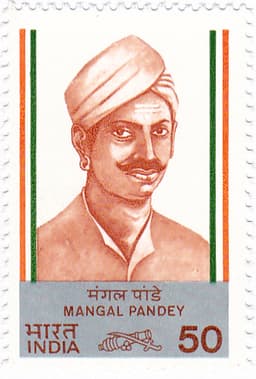
Mangal Pandey
Revolutionary · Modern
48.6Total
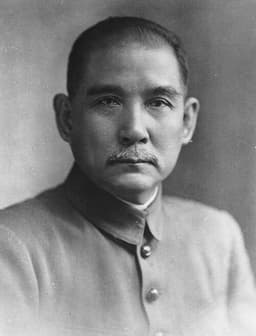
Sun Yat-sen
Revolutionary · Modern
52.5Total
Basic Information
Born
1827
1866
Died
1857
1925
Era
Modern
Modern
Nationality
India
China
Occupation
Revolutionary
Revolutionary
Civilization
Indian
Eastern
Score Comparison
Military (10%)
39.9
45.0
Political (20%)
35.0
68.0
Influence (20%)
51.8
61.0
Legacy (20%)
46.7
58.0
Leadership (15%)
62.6
33.5
Strategy (15%)
53.8
30.3
TOTAL
48.6
52.5
Mangal Pandey — Complete Timeline
1857 AD
Attack on British officers at BarrackporePolitical Action◆ Major
Mangal Pandey attacked two British officers at the Barrackpore military cantonment. He was arrested after the attack, and his actions sparked widespread unrest among Indian sepoys, leading to the 1857 rebellion.
Indian Rebellion of 1857Trigger Event
Impact: regional
Execution by hangingPolitical Action◆ Major
Mangal Pandey was tried by a British military court and executed by hanging at Barrackpore. His execution made him a martyr and a symbol of resistance against British rule in India.
Indian Rebellion of 1857ExecutionMartyr
Impact: regionaltragic
Sun Yat-sen — Complete Timeline
1894 AD
Founded the Revive China SocietyPolitical Action◆ Major
Sun Yat-sen founded the Revive China Society (Xingzhonghui) in Honolulu, the first modern revolutionary organization among overseas Chinese. The society aimed to overthrow the Qing dynasty and establish a republic, marking the beginning of organized revolutionary activity.
RevolutionOverseas ChineseRepublic
Impact: nationalconstructive
1911 AD
Led the Xinhai RevolutionPolitical Action
Sun Yat-sen's revolutionary activities culminated in the Wuchang Uprising of October 1911, which sparked the Xinhai Revolution. The uprising spread across China, leading to the abdication of the Qing emperor in 1912 and the end of 2,000 years of imperial rule.
RevolutionQing DynastyRepublic
Impact: globalconstructive
1912 AD
Proclaimed the Republic of ChinaPolitical Action
On January 1, 1912, Sun Yat-sen was inaugurated as the provisional president of the Republic of China in Nanjing. He proclaimed the establishment of the first republic in Asia, based on his Three Principles of the People: nationalism, democracy, and livelihood.
RepublicPresidencyThree Principles
Impact: globalconstructive
Resigned Presidency in Favor of Yuan ShikaiPolitical Action◆ Major
To secure the abdication of the Qing emperor and avoid civil war, Sun Yat-sen resigned the provisional presidency in February 1912 in favor of Yuan Shikai. This decision, while pragmatic, allowed Yuan to consolidate power and later attempt to restore the monarchy.
Power TransferYuan ShikaiCompromise
Impact: national
1919 AD
Reorganized the KuomintangPolitical Action◆ Major
Sun Yat-sen reorganized the Chinese Revolutionary Party into the Kuomintang (KMT) in 1919, with a more centralized structure. He later accepted Soviet aid and CCP members into the party under the policy of 'alliance with Russia and the Communists,' reshaping the revolutionary movement.
KuomintangSoviet AllianceCCP
Impact: nationalconstructive
Expert Analysis
Sun Yat-sen vs Mangal Pandey
### The Spark and the Architect
On a March morning in 1857, a sepoy named Mangal Pandey stood on the parade ground at Barrackpore, near Calcutta, and fired his musket at his British officers. The shot missed its immediate target but struck the brittle edifice of empire, triggering a cataclysm—the Indian Rebellion—that would consume a continent. Nearly half a century later, on the other side of the world, a Chinese exile named Sun Yat-sen stood in a Honolulu drawing room and founded a revolutionary society. His act was quieter, a whisper in the wind, yet it would eventually topple 2,000 years of imperial rule. Both men were revolutionaries. One was a spark that flared and died; the other was an architect who built, watched his work crumble, and rebuilt again. Why did their paths diverge so sharply? The answer lies not in their courage, which both possessed, but in the soil of their times, the reach of their vision, and the merciless logic of history.
### Origins: The Sepoy and the Exile
Mangal Pandey was born in 1827 into a high-caste Brahmin family in a village in what is now Uttar Pradesh. His India was a patchwork of princely states, all under the tightening grip of the British East India Company. He entered the Company’s army as a sepoy—a soldier with a fine musket, a uniform, and a simmering resentment. His horizon was the regiment, his grievances immediate: the new Enfield rifle cartridges greased with cow and pig fat, an insult to both Hindu and Muslim sepoys. Mangal Pandey’s revolution was a soldier’s mutiny, born of a single, visceral wound.
Sun Yat-sen, born in 1866 in a village in Guangdong, grew up in a China reeling from the Opium Wars and the humiliation of unequal treaties. His family was poor, but his older brother had made a modest fortune in Hawaii. Sun’s education was a hybrid: Confucian classics in childhood, then a missionary school in Honolulu, then medical school in Hong Kong. He saw not just the grievances of a sepoy but the sickness of an entire civilization. His revolution was not a mutiny but a diagnosis—and a prescription for a nation.
### Rise to Power: The Bullet and the Ballot
Mangal Pandey’s rise was a single, desperate act. On March 29, 1857, he charged his musket and attacked his officers. He was overpowered, tried by a military court, and hanged on April 8. His entire “career” as a revolutionary lasted ten days. He left no writings, no organization, no plan. He was a symbol, pure and tragic.
Sun Yat-sen’s rise was a long, grinding campaign of exile, fundraising, and failed uprisings. In 1894, he founded the Revive China Society in Honolulu—a tiny seed. Over the next seventeen years, he traveled the world, from London to Tokyo, gathering support among overseas Chinese. He led ten attempted uprisings, all of which failed. He was kidnapped, narrowly escaped execution, and never set foot in China for years at a time. His power was not military but moral and intellectual. When the Wuchang Uprising finally succeeded in October 1911, Sun was in Denver, Colorado, reading about it in a newspaper.
### Leadership & Governance: The Visionary and the Martyr
Mangal Pandey never governed anything. His leadership was that of a martyr, not a ruler. He inspired others to die, but he had no strategy for what came after. His rebellion, for all its fury, was crushed within a year, and the British response was brutal: mass executions, the abolition of the Company, and the imposition of direct Crown rule.
Sun Yat-sen, by contrast, became the provisional president of the Republic of China on January 1, 1912. It was a triumph—and a tragedy. He held power for only 44 days. To secure the Qing emperor’s abdication and avoid civil war, he resigned in favor of the general Yuan Shikai, a man he did not trust. It was a devastating political miscalculation. Yuan soon declared himself emperor, and China descended into warlord chaos. Sun spent the rest of his life trying to reclaim the revolution. He reorganized the Kuomintang in 1919, built a party machine, and forged an alliance with the Soviet Union. He was a better visionary than a tactician, a man whose ideas outran his ability to execute them.
### Triumph & Tragedy: The Martyr’s Crown and the Unfinished Republic
Mangal Pandey’s triumph was his death. In the weeks after his execution, his name became a battle cry. The Indian Rebellion of 1857, though bloody and ultimately defeated, shattered the myth of British invincibility and planted the first seeds of a national consciousness. His tragedy was that he did not live to see it—and that his rebellion was too localized, too spontaneous, to succeed.
Sun Yat-sen’s triumph was the Xinhai Revolution itself: the end of 2,000 years of imperial rule. His tragedy was that he died in 1925, in Beijing, a disappointed man. His Republic had become a battlefield. He never saw the country unified. His last words were said to be: “Peace, struggle, salvation.” He left behind a party that would soon split, a nation still in agony, and a set of ideas—the Three Principles of the People—that would shape two Chinas for generations.
### Character & Destiny: The Soldier’s Fury and the Doctor’s Patience
Mangal Pandey was a man of action, not words. His anger was pure, his loyalty to his faith and his comrades absolute. But that same fury made him a flash in the pan. He could not build; he could only break. History needed his spark, but it could not build a new world on it alone.
Sun Yat-sen was a man of words and patience—sometimes too patient. He was a doctor who diagnosed the disease of China with extraordinary clarity: imperialism, feudalism, poverty. But his prescriptions—nationalism, democracy, livelihood—were often too abstract for a country of illiterate peasants and warring generals. He was a perennial exile, a dreamer in a world of guns. Yet his very persistence, his refusal to give up after a decade of failures, defined his character. He was the persistent architect, not the burning martyr.
### Legacy: The Icon and the Father
Mangal Pandey is remembered as the first martyr of the Indian independence movement. His name is on streets, stamps, and films. But he is a symbol, not a blueprint. He inspired a rebellion that failed, but that failure became the foundation of a later success.
Sun Yat-sen is remembered as the Father of the Nation—in both the People’s Republic of China and the Republic of China on Taiwan. His portrait hangs in Tiananmen Square. His Three Principles are still taught. Yet his legacy is deeply contested. Communists claim him as a precursor; Nationalists claim him as their founder. He is a unifying figure in a divided country, a man whose ideas outlived his failures.
### Conclusion
Two men, two revolutions, two fates. Mangal Pandey fired a musket and died; Sun Yat-sen wrote a constitution and died. One was a spark that lit a fire he could not control; the other was an architect who drew plans he could not complete. History needs both: the martyr who shatters the old world, and the builder who tries to raise a new one. Neither succeeded in his own lifetime. But their shadows stretch across the centuries, reminding us that revolutions are not made by perfect men, but by men who, in their different ways, refuse to accept the world as it is.
Rankings
🥇
Sun Yat-senLeader
Mil: 45.0Pol: 68.0Inf: 61.0
52.5
🥈
Mangal Pandey
Mil: 39.9Pol: 35.0Inf: 51.8
48.6
+3.9 behind
How This Comparison Works
Algorithm
Each figure is scored on 6 dimensions (0—100 scale) based on structured historical data: Military (10%), Political (20%), Influence (20%), Legacy (20%), Leadership (15%), Strategy (15%). The weighted total produces the final ranking.
Data Sources
Scores are computed from structured sub-indicators in the database. Scale factors adjust for era (Ancient ×0.85, Modern ×1.0) and civilization size (Eastern ×1.05, Other ×0.80) to account for differences in population and military scale.
Maximum 3 Figures
Comparisons are limited to 2—3 figures to ensure readability and statistical meaningfulness.
Error Margins
±5 points per dimension — Sub-scores are derived from historical records with inherent uncertainty. Two figures within 5 points on a dimension should be considered roughly equivalent in that area.
Total Score Accuracy
±3 points overall — The weighted combination of 6 dimensions produces a total score with approximately ±3 points of uncertainty. Differences of less than 3 points are not statistically significant— the figures are effectively tied.
Known Limitations
- Historical records are incomplete and uneven across civilizations
- Figures from oral-tradition societies may be underrepresented
- Occupation labels can misclassify multi-role figures
- Scores measure capability and impact, not moral character
- Quantitative scoring is a comparison tool, not absolute truth
Capability Radar
Military (10%) — Battles & Warfare
Battles
5
15
Win Rate
5
10
Expansion
5
5
Political (20%) — Governance & Reform
Reform
5
85
Diplomacy
5
60
Economy
5
20
Influence (20%) — Cultural & Global Reach
Cultural
40
70
Global
40
65
Legacy (20%) — Historical Impact
Historical
60
80
Longevity
50
75
Leadership (15%) — Power & Stability
Tenure
5
30
Stability
5
15
Strategy (15%) — Tactics & Innovation
Strategy
5
20
Tactics
10
10
Reform
5
40
Similar Comparisons
Comments & Discussion
教条拆解员6/16/2026
数据不会骗人:孙逸仙流亡32年,回国后三个月就被袁世凯赶走。他的同盟会成员80%是海外华侨,跟中国农民毫无关系。而Mangal Pandey只需一次起义就动员了英属印度全境——从旁遮普到孟加拉,从士兵到地主。一个写了本没人读得懂的三民主义,另一个连名字都没留下完整的“Mangal Pandey”就被处以极刑。时间证明了谁的革命更能点燃地狱。
Symmetry Breaker6/16/2026
The real difference isn't courage—it's timing. Both men were victims of modernity's uneven arrival. Pandey's 1857 rebellion was a last gasp of feudal resistance, doomed by incompatible interests between Hindu and Muslim soldiers. Sun Yat-sen's 1911 revolution succeeded precisely because he waited for the telegraph and railroads to unify China's elite. If Pandey had been born forty years later, he'd have been a nationalist strategist. Historical clocks matter more than personal fire.
符号考古者6/16/2026
你们都在比“革命性”,却忽略了荒谬的细节。Mangal Pandey临刑前嘴里含着红辣椒——据说是英军怕他念咒语。而孙逸仙被中国人封为“国父”时,自己的墓碑上写着“Leon Kun”。一个被殖民者恐惧到迷信,另一个被同胞遗忘到用假名。历史的黑色幽默在于:真正改变世界的疯子,永远不会被当成人来纪念。
Legacy Alchemist6/16/2026
None of you see the deeper symmetry. Pandey's rebellion forced the British Crown to dissolve the East India Company—creating modern colonial bureaucracy. Sun Yat-sen's revolution toppled the Qing but birthed the warlord era. Both men lit fires that consumed their own worlds. The question isn't who was better, but why we keep ranking rebels when their real work was showing empires how to die beautifully. That's a talent neither pragmatist nor romantic can claim.
Chronicler20526/16/2026
Calling Mangal Pandey just a "spark" sells him short. His attack directly triggered the largest anti-colonial uprising of the 19th century, one historians call India's First War of Independence. Sun Yat-sen's ten failed revolts never even got off the ground in his lifetime. Mangal's single cartridge destroyed an empire's confidence; Sun's endless exiles barely scratched the Qing facade. One man fought, the other fundraised. Whose legacy really burned brighter?