Loading...
Mangal Pandey vs Shamil Basayev
Mangal Pandey leads by 5.5 pts · 2 figures compared
…
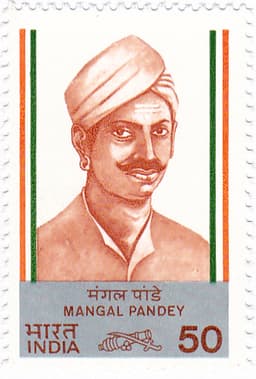
Mangal Pandey
Revolutionary · Modern
48.6Total
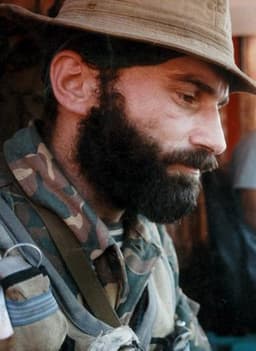
Shamil Basayev
Revolutionary · Modern
43.1Total
Basic Information
Born
1827
1965
Died
1857
—
Era
Modern
Modern
Nationality
India
Chechnya
Occupation
Revolutionary
Revolutionary
Civilization
Indian
Western
Score Comparison
Military (10%)
39.9
40.0
Political (20%)
35.0
35.0
Influence (20%)
51.8
45.5
Legacy (20%)
46.7
35.0
Leadership (15%)
62.6
57.1
Strategy (15%)
53.8
51.7
TOTAL
48.6
43.1
Mangal Pandey — Complete Timeline
1857 AD
Attack on British officers at BarrackporePolitical Action◆ Major
Mangal Pandey attacked two British officers at the Barrackpore military cantonment. He was arrested after the attack, and his actions sparked widespread unrest among Indian sepoys, leading to the 1857 rebellion.
Indian Rebellion of 1857Trigger Event
Impact: regional
Execution by hangingPolitical Action◆ Major
Mangal Pandey was tried by a British military court and executed by hanging at Barrackpore. His execution made him a martyr and a symbol of resistance against British rule in India.
Indian Rebellion of 1857ExecutionMartyr
Impact: regionaltragic
Shamil Basayev — Complete Timeline
1995 AD
Budyonnovsk Hospital Hostage CrisisWar◆ Major
Basayev led a raid on the Russian town of Budyonnovsk, taking over 1,000 hostages in a hospital. The crisis ended with a negotiated settlement that allowed him to return to Chechnya. This attack demonstrated Chechen reach into Russia.
Hostage CrisisTerrorismChechnya
Impact: nationaldestructive
1999 AD
Invasion of DagestanWar
Basayev led Chechen and Islamist fighters into Dagestan to support local rebels. This invasion triggered the Second Chechen War as Russia responded with a full-scale military campaign. The invasion failed to gain local support.
DagestanChechnyaInvasion
Impact: regionaldestructive
2002 AD
Moscow Theater Hostage CrisisWar◆ Major
Basayev orchestrated the Moscow theater hostage crisis, where Chechen militants took 850 people hostage. Russian forces ended the siege with gas, killing 130 hostages. The attack increased international condemnation of Chechen rebels.
Hostage CrisisTerrorismMoscow
Impact: nationaldestructive
2004 AD
Beslan School SiegeWar◆ Major
Basayev planned the Beslan school siege, where militants took over 1,100 people hostage. The siege ended in a bloody assault, resulting in 334 deaths, mostly children. This attack was widely condemned globally.
Hostage CrisisTerrorismBeslan
Impact: globaltragic
2006 AD
Killed by Russian ExplosivesWar◆ Major
Basayev was killed in Ingushetia when a truck loaded with explosives detonated. Russian intelligence claimed responsibility. His death removed the most prominent Chechen rebel commander.
AssassinationChechnyaRussia
Impact: regional
Expert Analysis
Shamil Basayev vs Mangal Pandey
# The Revolutionary's Path: Mangal Pandey and Shamil Basayev
On a sweltering March morning in 1857, a lone sepoy named Mangal Pandey stood at attention on the parade ground at Barrackpore, near Calcutta. He had loaded his musket with live ammunition. As British officers approached, he raised the weapon and fired. The shot missed, but it echoed across continents. Nearly a century and a half later, on a September morning in 2004, a different kind of explosion ripped through a school in Beslan, North Ossetia. The man who had planned it, Shamil Basayev, was not present. He was watching from afar, as he often did, orchestrating violence with the cold precision of a chess master. Two revolutionaries, two worlds, two very different kinds of fire.
Origins
Mangal Pandey was born in 1827 into a high-caste Brahmin family in the village of Nagwa, in what is now Uttar Pradesh. He grew up in a land that had been under British domination for decades, where the East India Company ruled with an iron hand disguised as commerce. The India of his youth was a place of simmering resentment, where ancient traditions collided with foreign arrogance. Pandey was literate, proud, and deeply religious. He joined the Company's army as a sepoy, a career that offered status but also subjected him to the casual humiliations of colonial rule.
Shamil Basayev was born in 1965 in the village of Dyshne-Vedeno, in the mountainous Chechen-Ingush Autonomous Republic of the Soviet Union. His world was one of Soviet collectivism and suppressed nationalism. Chechnya had been conquered by the Russian Empire in the 19th century, and the memory of resistance ran deep. Basayev grew up hearing stories of his namesake, Imam Shamil, the legendary Chechen leader who had fought the Russians for decades. He was a child of the Soviet collapse, a time when old certainties crumbled and new, violent possibilities emerged.
Rise to Power
Pandey's rise to historical significance was almost accidental. He was not a leader of men or a planner of campaigns. He was a soldier who, on March 29, 1857, decided he had had enough. The immediate cause was the introduction of new rifle cartridges greased with animal fat—offensive to both Hindu and Muslim sepoys. But the deeper cause was a century of accumulated grievance. Pandey's attack on his British officers at Barrackpore was a spontaneous act of rage. He was quickly subdued, tried, and executed by hanging on April 8, 1857. His entire "rise" lasted ten days.
Basayev's path was entirely different. He emerged from the chaos of the First Chechen War (1994–1996) as a charismatic and ruthless commander. He had trained in Soviet military schools and later fought in the war between Armenia and Azerbaijan. By the mid-1990s, he was a legend among Chechen rebels. His first major operation was the Budyonnovsk hospital hostage crisis in June 1995, where he led a raid into Russian territory, taking over 1,000 hostages. The crisis ended with a negotiated settlement and a ceasefire—a victory for Basayev. He had learned that terror could achieve what conventional warfare could not.
Leadership & Governance
Pandey never governed anything. He was a sepoy, not a statesman. His leadership was symbolic, not strategic. He inspired others by his example, but he had no vision for a post-British India beyond the act of rebellion itself. His military score of 28.2 and political score of 32.3 reflect this: he was a spark, not a fire.
Basayev, by contrast, was a commander and a planner. His military score of 55.8 and strategy score of 45.6 show a man who understood the mechanics of war. He led the invasion of Dagestan in August 1999, an operation that triggered the Second Chechen War and brought the full force of the Russian military back to Chechnya. He orchestrated the Moscow theater hostage crisis in October 2002, where 850 people were taken captive. He planned the Beslan school siege in September 2004, where over 1,100 hostages were held. These were not random attacks; they were carefully calculated acts of psychological warfare. Yet his political score of 38.8 reveals a fatal weakness: he could destroy, but he could not build.
Triumph & Tragedy
Pandey's triumph was his martyrdom. His execution made him a symbol of resistance. The rebellion he sparked spread across northern India, shaking the British Empire to its foundations. His tragedy was that he did not live to see it. He died alone, on a gallows, while others carried the fight forward.
Basayev's triumphs were the Beslan siege and the Moscow theater attack—both of which ended in catastrophic bloodshed. In Beslan, over 330 people died, half of them children. In Moscow, 130 hostages were killed when Russian forces pumped a narcotic gas into the theater. These were not victories; they were massacres. Basayev's tragedy was that he became the very thing he fought against: a terrorist who killed civilians without distinction, a man who had lost the moral high ground he claimed to defend.
Character & Destiny
Pandey was a man of faith and pride. He acted on impulse, driven by a sense of outrage that could no longer be contained. His destiny was to be a catalyst—a man whose death mattered more than his life.
Basayev was a man of calculation and ruthlessness. He was not impulsive; he was patient, methodical, and utterly without mercy. His destiny was to be a destroyer. He was killed on July 10, 2006, in Ingushetia, when a truck loaded with explosives detonated. Russian intelligence claimed responsibility. He died as he had lived: by the bomb.
Legacy
Mangal Pandey is remembered in India as a martyr and a hero. His image appears on postage stamps, his name adorns streets and schools. He is the first flame of the 1857 rebellion, a man who dared to strike back. His legacy score of 62.7 reflects this enduring reverence.
Shamil Basayev is remembered differently. In Chechnya, some still call him a freedom fighter. In Russia and the West, he is a terrorist. His legacy score of 47.7 is ambiguous, contested. He left behind no institutions, no government, no lasting peace—only ruins and grief.
Conclusion
Two revolutionaries, separated by time and culture, bound by the same desperate logic: that violence can redeem oppression. Pandey fired a single shot and changed history. Basayev orchestrated a decade of horror and changed nothing. The difference lies not in their courage but in their vision. Pandey struck at the symbol of empire; Basayev struck at civilians. One became a martyr; the other, a monster. Their stories remind us that the line between heroism and terror is not drawn by the act itself, but by what it destroys—and what it hopes to build.
Rankings
🥇
Mangal PandeyLeader
Mil: 39.9Pol: 35.0Inf: 51.8
48.6
🥈
Shamil Basayev
Mil: 40.0Pol: 35.0Inf: 45.5
43.1
+5.5 behind
How This Comparison Works
Algorithm
Each figure is scored on 6 dimensions (0—100 scale) based on structured historical data: Military (10%), Political (20%), Influence (20%), Legacy (20%), Leadership (15%), Strategy (15%). The weighted total produces the final ranking.
Data Sources
Scores are computed from structured sub-indicators in the database. Scale factors adjust for era (Ancient ×0.85, Modern ×1.0) and civilization size (Eastern ×1.05, Other ×0.80) to account for differences in population and military scale.
Maximum 3 Figures
Comparisons are limited to 2—3 figures to ensure readability and statistical meaningfulness.
Error Margins
±5 points per dimension — Sub-scores are derived from historical records with inherent uncertainty. Two figures within 5 points on a dimension should be considered roughly equivalent in that area.
Total Score Accuracy
±3 points overall — The weighted combination of 6 dimensions produces a total score with approximately ±3 points of uncertainty. Differences of less than 3 points are not statistically significant— the figures are effectively tied.
Known Limitations
- Historical records are incomplete and uneven across civilizations
- Figures from oral-tradition societies may be underrepresented
- Occupation labels can misclassify multi-role figures
- Scores measure capability and impact, not moral character
- Quantitative scoring is a comparison tool, not absolute truth
Capability Radar
Military (10%) — Battles & Warfare
Battles
5
45
Win Rate
5
40
Expansion
5
15
Political (20%) — Governance & Reform
Reform
5
5
Diplomacy
5
10
Economy
5
5
Influence (20%) — Cultural & Global Reach
Cultural
40
20
Global
40
20
Legacy (20%) — Historical Impact
Historical
60
25
Longevity
50
15
Leadership (15%) — Power & Stability
Tenure
5
10
Stability
5
5
Strategy (15%) — Tactics & Innovation
Strategy
5
35
Tactics
10
55
Reform
5
20
Similar Comparisons
Comments & Discussion
VedenoValor6/16/2026
Mangal Pandey’s rebellion was a shot that missed but sparked a continent’s awakening. Basayev’s Beslan massacre? That was engineered terror targeting children, not soldiers. Pandey fought a colonial army with a musket; Basayev slaughtered innocents with bombs. One is a martyr for national liberation, the other a war criminal. The comparison dishonors Pandey’s cause entirely. Context matters: 1857 was about home rule, 2004 was about indiscriminate death. End of story.
巴拉克波尔哨6/16/2026
把孟加拉·潘迪和沙米尔·巴萨耶夫并排比,简直是历史盲的狂欢。潘迪是为了反抗殖民压迫,用一颗子弹点燃印度民族起义的导火索。巴萨耶夫呢?别斯兰劫持上千名师生,死了186个孩子。这不是革命,是恐怖主义的顶峰。数字不说谎:1857年印度起义死的是军人;2004年别斯兰死的是儿童。洗白这种对比的人,要么无知,要么无耻。
SkepticalSentry6/16/2026
The analysis romanticizes both figures by ignoring their strategic failures. Pandey fired one shot that missed, then was captured and hanged within a week—hardly a masterstroke. Basayev’s Beslan attack backfired tactically, causing a Russian crackdown that decimated the Chechen rebellion. Both “revolutionaries” left their movements weaker than before. Let’s stop pretending martyrdom equals effectiveness. Real revolutionaries win; these two just made dramatic exits.
汗血铁骑6/16/2026
军事角度看,巴萨耶夫更像雇佣兵而不是革命家。他在第一次车臣战争后靠绑架和勒索养活手下,潘迪却是因为拒绝使用猪油涂过的子弹而反抗体制信仰。数据对比:巴萨耶夫参与策划的恐怖事件造成超1000平民死亡;潘迪事件总共死了9个英国人。手段决定本质,潘迪是信仰的殉道者,巴萨耶夫是暴力的雇佣者。
ClassicsCutter6/16/2026
The essay tries to frame both as products of oppression, but it flattens history. Pandey’s rebellion was rooted in a specific caste grievance—high-caste sepoys revolting against animal-fat cartridges that violated religious taboos. Basayev’s war was ethnic nationalism mixed with jihadism, importing Wahhabi ideology that wasn’t native to Chechnya. One fight was about preserving ancestral purity; the other about imposing a foreign dream of caliphate. Apples and oranges, but both poisonous in their
墨香子6/16/2026
我读历史三十年,最烦这种不负责的并列。潘迪的事迹被印度民族主义神话了:史料显示他当时可能精神不稳定,甚至对战友开枪。巴萨耶夫呢?别