Loading...
Louis XI vs Zhu Zhanji
Louis XI leads by 3.6 pts · 2 figures compared
…
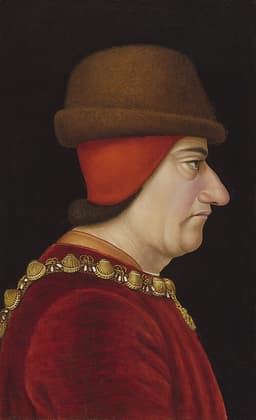
Louis XI
Emperor · Medieval
67.7Total
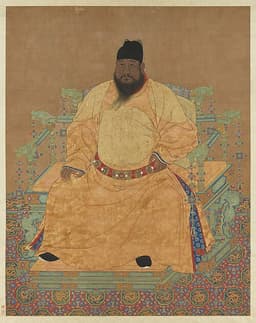
Zhu Zhanji
Emperor · Medieval
64.1Total
Basic Information
Born
1423
1399
Died
1483
1435
Era
Medieval
Medieval
Nationality
France
China
Occupation
Emperor
Emperor
Civilization
Western
Eastern
Score Comparison
Military (10%)
45.0
50.0
Political (20%)
78.0
59.3
Influence (20%)
68.0
72.0
Legacy (20%)
65.0
58.0
Leadership (15%)
85.0
79.8
Strategy (15%)
55.0
57.5
TOTAL
67.7
64.1
Louis XI — Complete Timeline
1464 AD
Established the Postal SystemReform
Louis XI created a royal postal system with relay stations across France, enabling faster communication between the crown and provincial officials. This administrative reform improved governance and intelligence gathering.
AdministrationCommunicationReform
Impact: nationalconstructive
1465 AD
Defeated the League of the Public WealWar◆ Major
Louis XI faced a coalition of powerful nobles, the League of the Public Weal, led by Charles the Bold of Burgundy. Although the Battle of Montlh
Civil WarNoble RebellionBurgundy
Impact: national
1475 AD
Treaty of PicquignyPolitical Action◆ Major
Louis XI negotiated the Treaty of Picquigny with Edward IV of England, ending English military intervention in France. Louis paid a large pension to Edward in exchange for English withdrawal, avoiding a costly war and securing his northern border.
TreatyDiplomacyEngland
Impact: regionalconstructive
1477 AD
Acquired BurgundyPolitical Action
After Charles the Bold's death at the Battle of Nancy, Louis XI seized the Duchy of Burgundy and other Burgundian territories, including Picardy and the Somme towns. This expansion significantly increased royal domain and weakened the Burgundian state.
Territorial ExpansionBurgundyRoyal Domain
Impact: regionalconstructive
1481 AD
Annexed Anjou and MainePolitical Action
Louis XI annexed the counties of Anjou and Maine after the death of Charles of Anjou, incorporating them into the royal domain. This further consolidated French territory and reduced the power of the Angevin nobility.
Territorial ExpansionAnjouMaine
Impact: nationalconstructive
Zhu Zhanji — Complete Timeline
1425 AD
Accession as Xuande EmperorPolitical Action◆ Major
Zhu Zhanji ascended the Ming throne as the Xuande Emperor after the sudden death of his father, the Hongxi Emperor. His reign continued the shift toward civilian governance and cultural patronage, marking a period of stability.
Ming DynastySuccessionStability
Impact: nationalconstructive
1426 AD
Suppression of the Rebellion of Zhu GaoxuWar◆ Major
The Xuande Emperor personally led a campaign against his uncle, Zhu Gaoxu, who rebelled in Shandong. The rebellion was quickly crushed, and Zhu Gaoxu was executed, consolidating the emperor's authority and deterring future princely revolts.
RebellionMing DynastyCivil War
Impact: national
Reform of the Grand SecretariatReform◆ Major
The Xuande Emperor formalized the role of the Grand Secretariat, appointing scholar-officials like Yang Shiqi and Yang Rong as senior advisors. This institutionalized a cabinet system that improved administrative efficiency and reduced eunuch influence.
Government ReformGrand SecretariatBureaucracy
Impact: nationalconstructive
Patronage of the Arts and PorcelainCultural◆ Major
The Xuande Emperor became a renowned patron of painting, calligraphy, and ceramics. He personally oversaw the production of Xuande porcelain at Jingdezhen, which became highly prized for its quality and design, influencing Chinese art for centuries.
ArtPorcelainCultural Patronage
Impact: globalconstructive
1430 AD
Continued Suspension of Maritime ExpeditionsPolitical Action◆ Major
The Xuande Emperor maintained his father's policy of suspending Zheng He's treasure fleet voyages, though he authorized a final expedition in 1430-1433. This decision cemented the end of China's era of naval exploration and shifted focus to land borders.
Maritime PolicyZheng HeIsolation
Impact: global
1435 AD
Death and Succession of Zhu QizhenOther◆ Major
The Xuande Emperor died at age 36, likely from illness, after a reign of ten years. He was succeeded by his young son Zhu Qizhen, whose minority led to a regency and later the Tumu Crisis, undoing much of Xuande's stability.
DeathSuccessionMing Dynasty
Impact: nationaltragic
Expert Analysis
Origins
Louis XI, born in 1423 at Bourges, France, was the son of Charles VII and Marie of Anjou. His childhood was marked by the Hundred Years' War and his father's struggle against the English. He received a practical education in statecraft and military strategy. Early on, he showed a rebellious streak, joining the Praguerie revolt against his father in 1440, which failed but taught him the value of patience and deception.
Zhu Zhanji, born in 1399 in Beijing, was the grandson of the Yongle Emperor and son of the Hongxi Emperor. He grew up in the imperial palace, tutored by Confucian scholars. His grandfather personally oversaw his education, emphasizing classical texts, calligraphy, and military arts. He accompanied the Yongle Emperor on campaigns against the Mongols, gaining firsthand military experience.
Rise to Power
Louis XI became king in 1461 upon his father's death. His early reign was marked by conflict with the powerful feudal lords, culminating in the League of the Public Weal (1465). At the Battle of Montlhéry, Louis fought Charles the Bold of Burgundy to a stalemate, but he later outmaneuvered the League diplomatically, making treaties that dissolved the coalition without major concessions.
Zhu Zhanji ascended the throne in 1425 after his father's sudden death. His accession was challenged by his uncle Zhu Gaoxu, who rebelled in Shandong. The Xuande Emperor personally led a campaign against the rebellion, capturing his uncle and executing him, thus securing his rule.
Leadership & Governance
Louis XI was a master of political manipulation, earning the nickname 'Universal Spider' for his web of intrigue. He centralized royal power by breaking the power of feudal nobility, using bribery, diplomacy, and strategic marriages. He established a royal postal system, improved tax collection, and promoted commerce. His governance was pragmatic, often favoring low-born advisors over nobles.
Zhu Zhanji continued the Ming dynasty's shift towards civilian governance. He reformed the Grand Secretariat, appointing capable scholar-officials like Yang Shiqi and Yang Rong, who advised on policy. He reduced the power of eunuchs and emphasized frugality and justice. His reign is known for efficient administration and cultural flourishing.
Triumph & Tragedy
Louis XI's greatest triumph was acquiring the Duchy of Burgundy after Charles the Bold's death in 1477, incorporating Burgundy, Picardy, and the Franche-Comté into France. He also annexed Anjou and Maine. His major failure was his inability to secure a lasting peace with England; the Treaty of Picquigny (1475) bought off Edward IV but did not end English claims.
Zhu Zhanji's triumphs include suppressing the Rebellion of Zhu Gaoxu and his patronage of the arts, particularly Xuande porcelain, which reached new heights. His greatest failure was continuing the suspension of maritime expeditions, ending the treasure fleet voyages that had projected Ming power under Yongle. This decision turned China inward.
Character & Destiny
Louis XI was secretive, suspicious, and ruthless. He surrounded himself with astrologers and spies, often changing allies. His character allowed him to outmaneuver enemies but also made him feared and isolated. He died in 1483, having consolidated France but leaving a legacy of paranoia.
Zhu Zhanji was cultured, intelligent, and benevolent. He was a patron of painters and calligraphers, and his personal involvement in art set a standard. However, his preference for peace and frugality led to the cessation of maritime exploration, which altered China's global trajectory.
Legacy
Louis XI's legacy is the unification of France under a strong monarchy, laying the groundwork for the absolutist state. His political innovations, like the postal system, endured. He scored 65.0 in legacy, while Zhu Zhanji scored 58.0. Louis XI's influence (68.0) also surpassed Zhu Zhanji's (72.0) in terms of lasting political structures.
Zhu Zhanji's legacy is primarily cultural: Xuande porcelain is highly prized, and his patronage shaped Ming art. His administrative reforms strengthened the Grand Secretariat, but his inward turn reduced China's global engagement. His leadership score (79.8) is lower than Louis XI's (85.0).
Conclusion
Louis XI had a greater impact on history. His political cunning and centralization of power fundamentally changed France's governance, creating a unified kingdom that would become a major European power. Zhu Zhanji's cultural contributions are significant, but his decision to end maritime expeditions represents a missed opportunity for China. Louis XI's total score of 67.7 vs Zhu Zhanji's 64.1 reflects his greater effectiveness in shaping the political landscape. Therefore, Louis XI stands as the more consequential figure.
Rankings
🥇
Louis XILeader
Mil: 45.0Pol: 78.0Inf: 68.0
67.7
🥈
Zhu Zhanji
Mil: 50.0Pol: 59.3Inf: 72.0
64.1
+3.6 behind
How This Comparison Works
Algorithm
Each figure is scored on 6 dimensions (0—100 scale) based on structured historical data: Military (10%), Political (20%), Influence (20%), Legacy (20%), Leadership (15%), Strategy (15%). The weighted total produces the final ranking.
Data Sources
Scores are computed from structured sub-indicators in the database. Scale factors adjust for era (Ancient ×0.85, Modern ×1.0) and civilization size (Eastern ×1.05, Other ×0.80) to account for differences in population and military scale.
Maximum 3 Figures
Comparisons are limited to 2—3 figures to ensure readability and statistical meaningfulness.
Error Margins
±5 points per dimension — Sub-scores are derived from historical records with inherent uncertainty. Two figures within 5 points on a dimension should be considered roughly equivalent in that area.
Total Score Accuracy
±3 points overall — The weighted combination of 6 dimensions produces a total score with approximately ±3 points of uncertainty. Differences of less than 3 points are not statistically significant— the figures are effectively tied.
Known Limitations
- Historical records are incomplete and uneven across civilizations
- Figures from oral-tradition societies may be underrepresented
- Occupation labels can misclassify multi-role figures
- Scores measure capability and impact, not moral character
- Quantitative scoring is a comparison tool, not absolute truth
Capability Radar
Military (10%) — Battles & Warfare
Battles
45
55
Win Rate
40
60
Expansion
65
45
Political (20%) — Governance & Reform
Reform
80
70
Diplomacy
95
75
Economy
70
80
Influence (20%) — Cultural & Global Reach
Cultural
55
80
Global
60
55
Legacy (20%) — Historical Impact
Historical
75
65
Longevity
70
60
Leadership (15%) — Power & Stability
Tenure
75
65
Stability
65
85
Strategy (15%) — Tactics & Innovation
Strategy
70
55
Tactics
55
50
Reform
60
40
Similar Comparisons
Comments & Discussion
No comments yet. Be the first to share your thoughts!