Loading...
Cleisthenes vs Louis XI
Cleisthenes leads by 10.6 pts · 2 figures compared
…
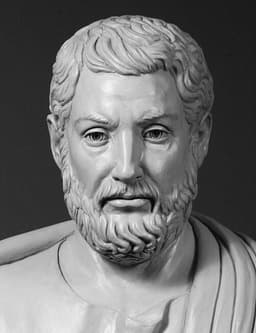
Cleisthenes
Politician · Ancient
78.3Total
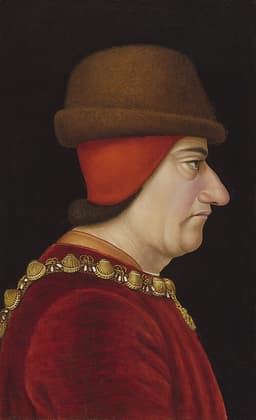
Louis XI
Emperor · Medieval
67.7Total
Basic Information
Born
-570
1423
Died
-508
1483
Era
Ancient
Medieval
Nationality
Greece
France
Occupation
Politician
Emperor
Civilization
Western
Western
Score Comparison
Military (10%)
49.4
45.0
Political (20%)
62.7
78.0
Influence (20%)
92.0
68.0
Legacy (20%)
92.0
65.0
Leadership (15%)
72.0
85.0
Strategy (15%)
71.3
55.0
TOTAL
78.3
67.7
Cleisthenes — Complete Timeline
510 BC
Expulsion of the PeisistratidsPolitical Action◆ Major
Cleisthenes, with the support of the Alcmaeonid family and Spartan assistance, led the overthrow of the tyrant Hippias, son of Peisistratus. This ended the Peisistratid tyranny in Athens and opened the way for democratic reforms.
Tyranny OverthrownAthensSparta
Impact: nationalconstructive
508 BC
Reforms of CleisthenesReform
Cleisthenes reorganized the Athenian citizen body into ten new tribes based on demes, replacing the old four Ionian tribes. He established the Council of 500 (Boule) and introduced ostracism, creating a system of isonomia (equal rights) that is considered the foundation of Athenian democracy.
Athenian DemocracyConstitutional ReformAncient Greece
Impact: globalprogressive
507 BC
Introduction of OstracismReform◆ Major
Cleisthenes instituted ostracism, a procedure allowing Athenian citizens to vote annually to exile a prominent citizen deemed a threat to democracy for ten years. This mechanism aimed to prevent the rise of a new tyrant and stabilize the democratic system.
Athenian DemocracyPolitical MechanismExile
Impact: national
Louis XI — Complete Timeline
1464 AD
Established the Postal SystemReform
Louis XI created a royal postal system with relay stations across France, enabling faster communication between the crown and provincial officials. This administrative reform improved governance and intelligence gathering.
AdministrationCommunicationReform
Impact: nationalconstructive
1465 AD
Defeated the League of the Public WealWar◆ Major
Louis XI faced a coalition of powerful nobles, the League of the Public Weal, led by Charles the Bold of Burgundy. Although the Battle of Montlh
Civil WarNoble RebellionBurgundy
Impact: national
1475 AD
Treaty of PicquignyPolitical Action◆ Major
Louis XI negotiated the Treaty of Picquigny with Edward IV of England, ending English military intervention in France. Louis paid a large pension to Edward in exchange for English withdrawal, avoiding a costly war and securing his northern border.
TreatyDiplomacyEngland
Impact: regionalconstructive
1477 AD
Acquired BurgundyPolitical Action
After Charles the Bold's death at the Battle of Nancy, Louis XI seized the Duchy of Burgundy and other Burgundian territories, including Picardy and the Somme towns. This expansion significantly increased royal domain and weakened the Burgundian state.
Territorial ExpansionBurgundyRoyal Domain
Impact: regionalconstructive
1481 AD
Annexed Anjou and MainePolitical Action
Louis XI annexed the counties of Anjou and Maine after the death of Charles of Anjou, incorporating them into the royal domain. This further consolidated French territory and reduced the power of the Angevin nobility.
Territorial ExpansionAnjouMaine
Impact: nationalconstructive
Expert Analysis
Cleisthenes vs Louis XI
# The Weaver and the Spinner: How Two Men Forged Democracy and Empire from Chaos
On a spring morning in 508 BCE, a Greek aristocrat stood before an assembly of his fellow citizens in Athens and proposed something radical: that the city’s entire social order be torn down and rebuilt not around bloodlines, but around neighborhoods. Fifteen hundred years later, in a drafty French castle, a king with a face like a weasel and a mind like a trap sat reading dispatches from his network of spies, plotting the destruction of his greatest rival. Both men are remembered as founders—one of democracy, the other of modern France. But their paths could not have been more different.
Origins
Cleisthenes was born around 570 BCE into the Alcmaeonid clan, one of Athens’ most powerful and controversial families. His ancestors had been cursed, exiled, and accused of sacrilege—but they had also been reformers. From childhood, Cleisthenes understood that in a city of fractious aristocrats, power depended on alliances, not birthright. He had seen tyranny firsthand under the Peisistratids and had tasted exile. These experiences taught him that stability required more than one man’s will.
Louis XI entered the world in 1423 as the son of Charles VII, a king who had been disinherited by his own father and saved only by Joan of Arc. The France of Louis’s youth was a patchwork of semi-independent duchies, where the king’s authority barely extended beyond the Île-de-France. Louis grew up in a court seething with betrayal—his own father distrusted him so deeply that the prince spent years in open rebellion. He learned early that trust was a luxury he could not afford.
Rise to Power
Cleisthenes came to power not through conquest but through a coup. In 510 BCE, with Spartan help, he overthrew the tyrant Hippias. But when a rival aristocrat, Isagoras, seized control and invited the Spartans back to purge the city, Cleisthenes did something unprecedented: he appealed to the people. He promised them power in exchange for support. The Athenian demos—the common citizens—rose up, besieged the Acropolis, and drove out the Spartans. Cleisthenes did not seize power; he was carried into it by a popular revolution he had helped ignite.
Louis XI’s rise was far more solitary. He became king in 1461 upon his father’s death—a death he had long awaited from the shadows. Unlike Cleisthenes, Louis did not trust the people. He trusted no one. His path to power had been paved with secret treaties, double-crosses, and a willingness to wait years for revenge. Where Cleisthenes built his authority by giving power away, Louis built his by taking it from everyone else.
Leadership & Governance
The two men’s governing philosophies were mirror opposites. Cleisthenes’ reforms of 508 BCE reorganized Athens into ten new tribes based on local residence, not family loyalty. He created a council of five hundred citizens chosen by lot, ensuring that every region had a voice. He introduced ostracism in 507 BCE—a safety valve that let the city exile a dangerous politician without violence. His genius was to channel conflict into institutions. He did not rule Athens; he gave Athens the tools to rule itself.
Louis XI governed through information and isolation. In 1464, he established France’s first royal postal system, with relay stations every few miles—not for the public, but for his spies. He spent hours reading reports from his agents across Europe, knowing that knowledge was more powerful than armies. When nobles formed the League of the Public Weal in 1465, he did not crush them in a single battle; he outmaneuvered them, divided them, and waited. When Charles the Bold of Burgundy died in 1477, Louis was ready. He seized Burgundy not through glorious war but through legal claims, bribery, and timing.
Triumph & Tragedy
Cleisthenes’ greatest triumph was the survival of his reforms. In 507 BCE, the Spartans invaded to restore tyranny—and the new Athenian democracy held. The people fought for a system they now owned. But Cleisthenes himself faded from history soon after; he was not a tyrant who clung to power, but a founder who stepped back. His tragedy was that ostracism, his tool for preventing tyranny, was later used against his own allies.
Louis XI’s triumph came in 1475 with the Treaty of Picquigny. Facing an English invasion, he did not fight—he bought off Edward IV with a pension and a promise. He ended the Hundred Years’ War not with a sword, but with a contract. His tragedy was personal: he died in 1483, alone in his castle, obsessed with astrology and terrified of death, having alienated everyone who might have mourned him.
Character & Destiny
Cleisthenes was an aristocrat who believed in equality—not because he loved the common man, but because he understood that a stable city needed him. His political score of 66.6 reflects a pragmatist who built institutions that outlasted him. Louis XI, with his political score of 69.6, was equally pragmatic but far darker. He was called the Universal Spider because he wove webs—but spiders also consume their prey alive.
Their characters shaped their destinies. Cleisthenes’ willingness to share power gave Athens the resilience to defeat Persia and birth Western philosophy. Louis’s paranoia and cunning gave France the centralized monarchy that would dominate Europe for centuries. One created a system that allowed individuals to flourish; the other created a state that consumed them.
Legacy
Cleisthenes is remembered as the Father of Athenian Democracy, with an influence score of 90.0. His reforms lasted nearly two centuries and inspired the architects of modern democratic systems. Every time a citizen votes in a precinct, they are echoing his demes.
Louis XI’s legacy is more ambiguous. With a legacy score of 80.0, he is remembered as the unifier of France—but also as a king who ruled through fear. His postal system became the foundation of French administration; his acquisitions of Burgundy, Anjou, and Maine created the borders of modern France. But he left behind no institutions of self-rule, only a throne that grew ever more absolute.
Conclusion
Two men, two visions. Cleisthenes looked at a city of warring factions and saw the potential for shared governance. Louis XI looked at a kingdom of rival princes and saw only obstacles to be removed. One built a stage where ordinary people could act; the other built a machine that only he could operate. Their differences were not just personal but epochal—ancient Greece’s city-state democracy versus medieval France’s centralized monarchy. Yet both succeeded beyond measure. Perhaps the deepest lesson is this: the tools of power are neutral. It is the hands that wield them—and the minds that imagine what society could become—that determine whether a legacy is a light or a shadow.
Rankings
🥇
CleisthenesLeader
Mil: 49.4Pol: 62.7Inf: 92.0
78.3
🥈
Louis XI
Mil: 45.0Pol: 78.0Inf: 68.0
67.7
+10.6 behind
How This Comparison Works
Algorithm
Each figure is scored on 6 dimensions (0—100 scale) based on structured historical data: Military (10%), Political (20%), Influence (20%), Legacy (20%), Leadership (15%), Strategy (15%). The weighted total produces the final ranking.
Data Sources
Scores are computed from structured sub-indicators in the database. Scale factors adjust for era (Ancient ×0.85, Modern ×1.0) and civilization size (Eastern ×1.05, Other ×0.80) to account for differences in population and military scale.
Maximum 3 Figures
Comparisons are limited to 2—3 figures to ensure readability and statistical meaningfulness.
Error Margins
±5 points per dimension — Sub-scores are derived from historical records with inherent uncertainty. Two figures within 5 points on a dimension should be considered roughly equivalent in that area.
Total Score Accuracy
±3 points overall — The weighted combination of 6 dimensions produces a total score with approximately ±3 points of uncertainty. Differences of less than 3 points are not statistically significant— the figures are effectively tied.
Known Limitations
- Historical records are incomplete and uneven across civilizations
- Figures from oral-tradition societies may be underrepresented
- Occupation labels can misclassify multi-role figures
- Scores measure capability and impact, not moral character
- Quantitative scoring is a comparison tool, not absolute truth
Capability Radar
Military (10%) — Battles & Warfare
Battles
58
45
Win Rate
62
40
Expansion
59
65
Political (20%) — Governance & Reform
Reform
95
80
Diplomacy
70
95
Economy
40
70
Influence (20%) — Cultural & Global Reach
Cultural
85
55
Global
85
60
Legacy (20%) — Historical Impact
Historical
90
75
Longevity
95
70
Leadership (15%) — Power & Stability
Tenure
30
75
Stability
60
65
Strategy (15%) — Tactics & Innovation
Strategy
62
70
Tactics
67
55
Reform
72
60
Similar Comparisons
Comments & Discussion
KINGMAKER_REVISIONIST6/16/2026
People keep calling Cleisthenes a "democracy founder," but that's a romantic fairy tale. He just reconfigured the oligarchy so his family could keep winning. Those ten new tribes? A gerrymandering scheme dressed as reform. Athens stayed an aristocratic playground until Pericles let commoners into real office decades later. Give Louis his due—he at least crushed actual feudal rivals and built a working bureaucracy. Cleisthenes rearranged chairs on the Titanic.
历史还原派6/16/2026
说克利斯提尼发明民主?别搞笑了。他只是把雅典的血统政治换成了地缘政治,贵族该掌权还是掌权。五百人会议成员都是抽签选的不假,可穷人有时间抽签吗?奴隶连抽签资格都没有。比起路易十一用邮驿网络和常备军实打实削藩,克利斯提尼的改革就是个换壳游戏。敢不敢说清楚:他的"民主"实际上给谁带来了好处?