Loading...
Louis XI vs Lucius Junius Brutus
Lucius Junius Brutus leads by 5.0 pts · 2 figures compared
…
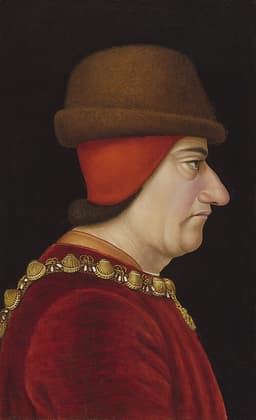
Louis XI
Emperor · Medieval
67.7Total
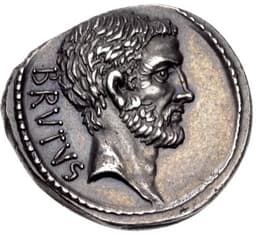
Lucius Junius Brutus
Politician · Ancient
72.7Total
Basic Information
Born
1423
-540
Died
1483
-509
Era
Medieval
Ancient
Nationality
France
Roman Republic
Occupation
Emperor
Politician
Civilization
Western
Western
Score Comparison
Military (10%)
45.0
45.0
Political (20%)
78.0
72.0
Influence (20%)
68.0
75.0
Legacy (20%)
65.0
90.0
Leadership (15%)
85.0
71.0
Strategy (15%)
55.0
54.8
TOTAL
67.7
72.7
Louis XI — Complete Timeline
1464 AD
Established the Postal SystemReform
Louis XI created a royal postal system with relay stations across France, enabling faster communication between the crown and provincial officials. This administrative reform improved governance and intelligence gathering.
AdministrationCommunicationReform
Impact: nationalconstructive
1465 AD
Defeated the League of the Public WealWar◆ Major
Louis XI faced a coalition of powerful nobles, the League of the Public Weal, led by Charles the Bold of Burgundy. Although the Battle of Montlh
Civil WarNoble RebellionBurgundy
Impact: national
1475 AD
Treaty of PicquignyPolitical Action◆ Major
Louis XI negotiated the Treaty of Picquigny with Edward IV of England, ending English military intervention in France. Louis paid a large pension to Edward in exchange for English withdrawal, avoiding a costly war and securing his northern border.
TreatyDiplomacyEngland
Impact: regionalconstructive
1477 AD
Acquired BurgundyPolitical Action
After Charles the Bold's death at the Battle of Nancy, Louis XI seized the Duchy of Burgundy and other Burgundian territories, including Picardy and the Somme towns. This expansion significantly increased royal domain and weakened the Burgundian state.
Territorial ExpansionBurgundyRoyal Domain
Impact: regionalconstructive
1481 AD
Annexed Anjou and MainePolitical Action
Louis XI annexed the counties of Anjou and Maine after the death of Charles of Anjou, incorporating them into the royal domain. This further consolidated French territory and reduced the power of the Angevin nobility.
Territorial ExpansionAnjouMaine
Impact: nationalconstructive
Lucius Junius Brutus — Complete Timeline
509 BC
Battle of Silva ArsiaWar◆ Major
Brutus led the Roman army against the forces of Tarquinius Superbus and his Etruscan allies at Silva Arsia. During the battle, Brutus and Arruns Tarquinius, the king's son, killed each other in single combat, but the Romans ultimately won the battle, securing the Republic's survival.
BattleSingle CombatFounding Myth
Impact: nationaltragic
Expulsion of the TarquinsPolitical Action
Lucius Junius Brutus led a revolt against the Tarquin monarchy after the rape of Lucretia by Sextus Tarquinius. He organized the Senate and the people to expel the royal family, ending the Roman Kingdom and establishing the Roman Republic with himself as one of the first consuls.
RevolutionFounding of RepublicOverthrow of Monarchy
Impact: globalprogressive
Execution of His SonsPolitical Action◆ Major
Brutus discovered that his own sons, Titus and Tiberius, had conspired to restore the Tarquins. As consul, he ordered their arrest, trial, and execution by beheading in the Forum, demonstrating his unwavering commitment to the Republic over family loyalty.
ExecutionConspiracyRepublican Virtue
Impact: nationaltragic
Oath of BrutusPolitical Action◆ Major
After the expulsion of the Tarquins, Brutus made the Roman people swear an oath never to allow a king to rule Rome again. This oath became a foundational principle of the Republic, reinforcing the commitment to liberty and opposition to tyranny.
OathRepublican IdeologyAnti-Monarchy
Impact: nationalprogressive
Expert Analysis
Lucius Junius Brutus vs Louis XI
# The Spider and the Father: Louis XI and Lucius Junius Brutus
On a winter morning in 1477, a spider-like figure sat in his chamber at Plessis-lès-Tours, spinning threads of intrigue across France. Louis XI had just learned that his greatest enemy, Charles the Bold of Burgundy, lay dead on a frozen battlefield. Across the centuries and the gulf of time, another man had faced a different kind of family tragedy: Lucius Junius Brutus, founder of the Roman Republic, watched as his own sons were executed for treason. Both men reshaped their worlds through political will, but their paths could not have been more different.
Origins
Louis XI was born in 1423 into a France ravaged by the Hundred Years' War. His father, Charles VII, was a king who had been saved by Joan of Arc, but young Louis grew up in a court rife with suspicion. The dauphin was rebellious, clashing with his father and even fleeing to the court of Burgundy for refuge. This early experience taught him that loyalty was a commodity to be bought and sold, and that the web of power extended far beyond royal bloodlines.
Lucius Junius Brutus emerged from a very different world. Born around 540 BCE, he lived in a Rome ruled by Etruscan kings, the Tarquins. His own family had suffered under tyranny: his father and brother had been murdered by the king's order. Brutus survived by playing the fool—feigning idiocy to escape suspicion. The name "Brutus" itself meant "dullard," a mask he wore until the moment was ripe.
Rise to Power
The rape of Lucretia in 509 BCE shattered Rome's patience. Brutus, who had hidden his intelligence for years, seized the moment. He led the revolt that expelled the Tarquins, becoming one of the first two consuls of the newly founded Roman Republic. His rise was a single, explosive act of revolution—a man stepping from shadow to sunlight in a matter of days.
Louis XI's ascent was slower and more treacherous. He became king in 1461, inheriting a fractured realm where nobles like the Duke of Burgundy commanded armies larger than the king's own. His first years were marked by the League of the Public Weal in 1465, a coalition of powerful lords who nearly unseated him. Louis lost the military confrontation but won the political aftermath, buying off his enemies with money and promises he had no intention of keeping.
Leadership and Governance
Here the two men diverge like rivers from a common source. Louis XI governed through patience and guile. He established a royal postal system in 1464, with relay stations that let his commands travel faster than any noble's. He negotiated the Treaty of Picquigny in 1475, paying Edward IV of England to leave France rather than fighting him. When Charles the Bold died in 1477, Louis moved with swift precision, seizing Burgundy, Anjou, and Maine through legal claims and quiet pressure rather than open war. His military score of 14.5 reflects a man who avoided battle whenever possible.
Brutus governed through iron principle. As consul, he enforced the laws of the new Republic without favor. When his own sons conspired to restore the Tarquins, Brutus did not hesitate: he ordered their execution, watching as they were beaten and beheaded before the Roman assembly. His military score of 34.8 reflects his willingness to fight—he died in battle at Silva Arsia, leading the Roman army against the exiled king's Etruscan allies.
Triumph and Tragedy
Louis XI's greatest triumph was the unification of France. By his death in 1483, he had broken the power of the great nobles, absorbed Burgundy, and created the foundations of a centralized state. His tragedy was the loneliness of his methods—he died surrounded by astrologers and spies, trusted by no one, not even his own family.
Brutus's triumph was the birth of the Republic itself. His Oath of Brutus, sworn by the Roman people never to allow a king again, became the founding myth of Roman liberty. His tragedy was absolute: he sacrificed his sons for a principle, died in battle against the old order, and left no legacy of personal power—only the fragile institution of the Republic.
Character and Destiny
Louis XI was the Universal Spider, a man who saw politics as an endless web of connections, debts, and threats. He was physically frail, superstitious, and deeply suspicious, but possessed a patience that bordered on genius. His character shaped his destiny: he could not inspire love, but he could outlast any enemy.
Brutus was the stern father, a man who believed that principle must trump blood. His character was forged in the crucible of tyranny—he had learned to hate kings with a passion that became his ruling star. His destiny was to destroy the monarchy and then die defending the Republic, leaving behind a legend that would inspire conspirators for two thousand years.
Legacy
Louis XI's legacy is the modern French state. His political score of 69.6 and influence of 67.0 reflect a man who transformed a medieval kingdom into a centralized monarchy. He is remembered as a cunning realist, the architect of absolutism, a figure more respected than loved.
Brutus's legacy is the Roman Republic itself. His political score of 64.0 and influence of 80.0 understate his true impact: he became a symbol of republican virtue, of the citizen willing to sacrifice everything for liberty. His name was invoked by assassins and revolutionaries for centuries, from Caesar's murderers to the French revolutionaries who saw him as a model.
Conclusion
What drove these two men to such different outcomes? Louis XI believed that power was a web to be woven; Brutus believed that power was a trust to be guarded. The Spider saw politics as endless negotiation, the Father as eternal vigilance. One unified a kingdom through patient cunning; the other founded a Republic through violent sacrifice. Both succeeded, but their successes were mirrors of their souls: Louis left a throne for his son; Brutus left an oath for his people. In the end, the question is not which was greater, but which kind of legacy we choose to remember—and why.
Rankings
🥇
Lucius Junius BrutusLeader
Mil: 45.0Pol: 72.0Inf: 75.0
72.7
🥈
Louis XI
Mil: 45.0Pol: 78.0Inf: 68.0
67.7
+5.0 behind
How This Comparison Works
Algorithm
Each figure is scored on 6 dimensions (0—100 scale) based on structured historical data: Military (10%), Political (20%), Influence (20%), Legacy (20%), Leadership (15%), Strategy (15%). The weighted total produces the final ranking.
Data Sources
Scores are computed from structured sub-indicators in the database. Scale factors adjust for era (Ancient ×0.85, Modern ×1.0) and civilization size (Eastern ×1.05, Other ×0.80) to account for differences in population and military scale.
Maximum 3 Figures
Comparisons are limited to 2—3 figures to ensure readability and statistical meaningfulness.
Error Margins
±5 points per dimension — Sub-scores are derived from historical records with inherent uncertainty. Two figures within 5 points on a dimension should be considered roughly equivalent in that area.
Total Score Accuracy
±3 points overall — The weighted combination of 6 dimensions produces a total score with approximately ±3 points of uncertainty. Differences of less than 3 points are not statistically significant— the figures are effectively tied.
Known Limitations
- Historical records are incomplete and uneven across civilizations
- Figures from oral-tradition societies may be underrepresented
- Occupation labels can misclassify multi-role figures
- Scores measure capability and impact, not moral character
- Quantitative scoring is a comparison tool, not absolute truth
Capability Radar
Military (10%) — Battles & Warfare
Battles
45
10
Win Rate
40
10
Expansion
65
10
Political (20%) — Governance & Reform
Reform
80
90
Diplomacy
95
40
Economy
70
30
Influence (20%) — Cultural & Global Reach
Cultural
55
70
Global
60
70
Legacy (20%) — Historical Impact
Historical
75
80
Longevity
70
80
Leadership (15%) — Power & Stability
Tenure
75
30
Stability
65
40
Strategy (15%) — Tactics & Innovation
Strategy
70
10
Tactics
55
10
Reform
60
20
Similar Comparisons
Comments & Discussion
FATHER-KILLER FANBOY6/16/2026
Look, I get why people fetishize Brutus—he executed his own sons for treason, very dramatic, very Stoic. But do not pretend that’s harder than maneuvering an actual medieval kingdom out of feudal chaos. Louis XI spent decades outwitting the entire Burgundian state, the English, and his own nobles without an army of legend. Brutus had a single theatrical moment. Give me the Spider King’s long game any day. Institutional survival beats family martyrdom.|
数据侦探老张6/16/2026
历史传记作者为了营造戏剧对立,拼命给路易十一贴“蜘蛛”标签,可统计一下他统治期间法国实际兼并的领土面积:勃艮第、阿图瓦、皮卡第、普罗旺斯。从1350到1500,没有哪个法国国王扩张了这么多。布鲁图斯呢?他只留下了一个共和制度,这个制度不到五百年就崩溃了。数字不会撒谎,路易十一才是真正的制度建造者。|
THE FOUNDER'S GHOST6/16/2026
You revisionists love to sneer at Brutus as “just myth,” but you miss the point: he created a template of civic duty that directly inspired every subsequent Roman reformer. His sons died not because he was cold, but because he understood that the Republic could not survive if the ruler’s family got a pass. Louis XI burned his own brother alive in politics, yes. But that’s just dynastic realism. Brutus invented the concept of impartial law. That’s the harder choice.|
罗马铁杆粉6/16/2026
路易十一确实狡诈,但别混淆了“狡诈”和“革命”。布鲁图斯亲手把自己的儿子送上刑场,就为了一个还没有成型的政治理念——共和。他不是在巩固家族统治,而是在拆除它。路易十一再怎么编织阴谋,他最终目的还是把权力集中到自己的血统里。一个是在摧毁旧制度,一个是在优化老游戏。难度根本不在一个层次。|
CURATOR OF RUINS6/16/2026
Both men were failures if you measure by happiness. Louis XI died paranoid in a fortress, convinced everyone wanted to poison him. Brutus died in battle, his Republic barely born, and his sons dead by his command. But at least Brutus died fighting for something he built—Louis died hiding from the very world he’d manipulated. I’ll take the battlefield death over the bedchamber rot any century. Authenticity matters.|
时间旅行者阿钟6/16/2026
你们都在争论谁更伟大,但忽略了一个根本区别:布鲁图斯的敌人是外来的暴君家族,他的行动是全国性的起义。路易十一的敌人是自己的贵族、自己的弟弟、自己的父亲。在一个四分五裂的封建法国,你没法靠一次干净利落的起义解决问题,你得每天在宴会上微笑,然后在夜里